
You build a 4×4 raised bed filled with Mel’s Mix—compost, peat moss, and vermiculite—then divide it into sixteen 1-foot squares for precise planting. Each square holds a specific number of plants based on size, maximizing yield while minimizing work. You install a grid to guide placement, rotate crops yearly, and refresh soil to sustain productivity. Vertical growing saves space, and no-till methods with mulch control weeds. You’ll uncover smarter ways to enhance harvests with every season. Buying garden tool sets as a kit usually costs less than the same pieces bought one at a time.
TLDR
- Square foot gardening divides a 4×4-foot raised bed into 16 one-foot squares for efficient, organized planting.
- Each square is planted based on crop size—1, 4, 9, or 16 plants per square—maximizing yield and minimizing waste.
- Beds are filled with Mel’s Mix: equal parts compost, peat moss (or coir), and vermiculite for ideal soil structure.
- A grid layout prevents soil compaction, simplifies crop rotation, and supports sustainable, long-term garden planning.
- Vertical growing, succession planting, and no-till practices like mulching enhance productivity and reduce maintenance.
What Is Square Foot Gardening?
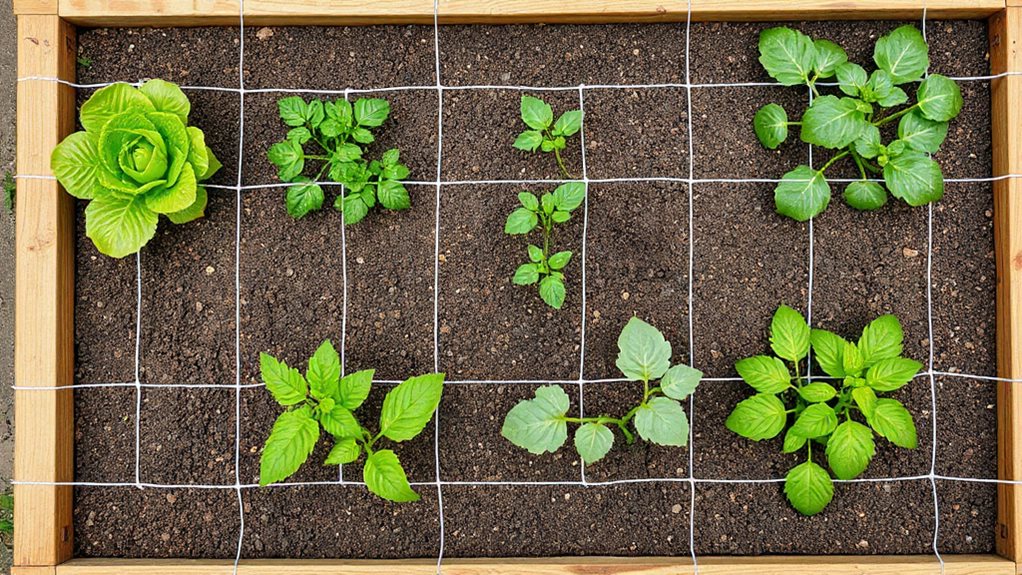
Imagine converting your gardening space into a highly productive, well-organized system—starting with just a 4×4-foot raised bed divided into sixteen 1-foot squares.
You’ll use a grid to separate sections, planting crops based on size, like 16 radishes or one cabbage per square.
This method maximizes yield, minimizes work, and creates a sustainable, efficient garden anyone can manage.
For best results, use a soil mix like Miracle-Gro® Raised Bed Soil to support healthy root development in the densely planted squares.
Containers such as 5-gallon buckets are a good alternative for growing peppers when you don’t have raised beds.
Build Your First Raised Bed (4×4 Feet)
You’ve learned how square foot gardening turns a small space into a high-yield, organized growing system, and now it’s time to build the foundation: your first 4×4-foot raised bed.
Cut two 8-foot 2x6s into four 4-foot pieces, pre-drill ends, and screw them into a square.
Use untreated cedar or pine, place on level ground over terrain fabric, and fill to 12 inches for ideal, easy-access gardening success.
Keep mulch at least 18 inches away from structures to reduce fire risk.
Fill It With the Perfect Soil Mix
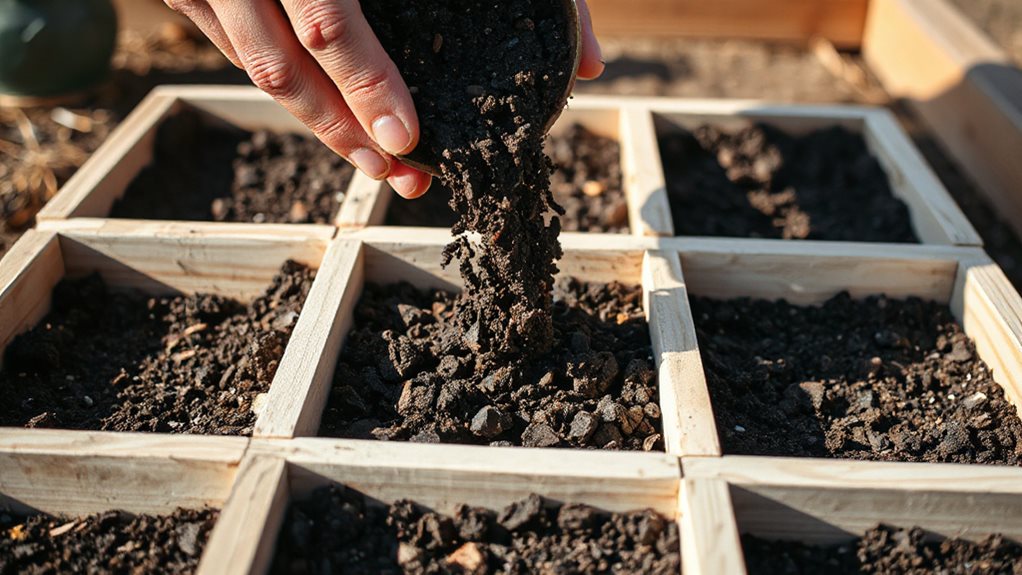
You’ll fill your raised bed with Mel’s Mix, a balanced blend of equal parts compost, peat moss (or coconut coir), and coarse vermiculite that delivers nutrients, retains moisture, and stays loose for strong root growth.
This “fill and forget” method means you won’t need to amend or replace the soil each season, saving time and effort while supporting healthy plants.
For best results, use compost from at least three sources to guarantee a diverse range of nutrients and microbial life.
Dual-chamber tumblers can provide a steady supply of finished compost for Mel’s Mix when you need it, so consider adding a dual-chamber tumbler to your composting setup.
Perfect Soil Composition
While traditional garden soils often require tilling and frequent amendments, the foundation of a successful square foot garden lies in building a carefully balanced, no-dig mix from the start.
You’ll combine equal parts compost, peat moss, and vermiculite for ideal structure, nutrition, and moisture control.
Use blended compost from multiple sources, or try coconut coir and perlite as sustainable substitutes—this mix supports healthy roots, resists compaction, and thrives in raised beds.
Fill And Forget Method
Now that you’ve got the ideal soil blend ready—crafted from equal parts compost, peat moss, and vermiculite—it’s time to put that mix to work by filling your raised bed using the Fill and Forget Method.
Fill the bed once with your moistened mix, combining homemade and bagged soils as needed, then forget digging or tilling forever.
This no-fuss approach locks in fertility, guarantees great drainage, and sets the stage for abundant, low-maintenance harvests year after year.
Divide and Conquer: Grid Your Garden
You can maximize your garden’s potential by dividing the surface into 1-foot squares using string, wooden slats, or a ready-made system like Garden Grid™, which also waters your plants.
Each square acts as a mini-bed where you’ll plant a specific number of crops based on their mature size, following spacing guidelines that allow for closer, more efficient growth than traditional rows.
This structured layout makes it easy to plan what goes where, rotate crops yearly, and keep track of succession planting without stepping on the soil.
For improved moisture control and drainage, consider using raised beds or containers with built-in reservoirs like the Keter Urban Bloomer water gauge to match square-foot spacing.
Grid Layout Basics
A single 4×4-foot raised bed, neatly divided into sixteen 1-foot squares, forms the foundation of an efficient square foot garden.
You can create the grid using string, wood lath, or old blinds, marking every foot along the bed’s edges.
Connect the marks to form squares, ensuring precise spacing.
This layout maximizes yield, simplifies planting, and keeps your garden organized, accessible, and productive—all without stepping on the soil.
Square Spacing Guide
Typically, successful square foot gardening hinges on precise plant spacing—dividing each square into uniform sections guarantees peak growth, airflow, and yield.
You’ll plant 1 per square for extra-large veggies like broccoli, 4 for large such as lettuce, 9 for medium including beans, 16 for small like carrots, and use 2–4 squares for oversize plants.
You can adjust for humidity or trellising, ensuring ideal harvests.
Easy Crop Planning
Breaking ground on a productive garden starts with smart planning—by dividing your space into a structured grid, you turn chaos into order and maximize every square foot.
You assign each square a purpose based on plant needs, spacing, and sun exposure.
Pairing this layout with succession planting and vertical trellising guarantees steady harvests, optimizes yield, and makes gardening more efficient, rewarding, and deeply satisfying.
How Many Plants Fit in Each Square?
Maximize your garden’s potential by matching each plant to its ideal spacing category based on mature size. You’ll fit 1 extra-large plant per square, like broccoli or tomatoes.
Large crops, such as lettuce or peppers, allow 4 per square. Medium ones, like beans or spinach, fit 9, while small plants—carrots or onions—thrive at 16 per square. This method guarantees healthy growth and abundant harvests. Cool-season grasses can germinate in as little as 30 days when soil and air temperatures are ideal, making them a good choice for cool-season grass planting windows.
Grow Up, Not Out: Use Vertical Space
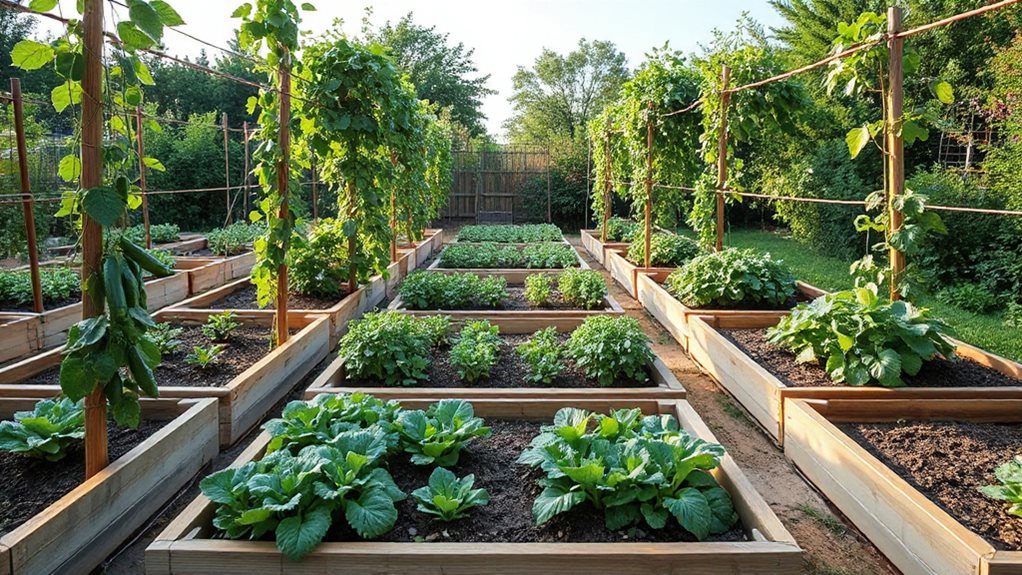
Make the most of your garden’s footprint by training plants to climb, freeing up precious ground space for other crops.
You can grow vining tomatoes, cucumbers, and pole beans vertically using trellises, cages, or arched supports. This enhances sunlight exposure, improves airflow, and makes pest checks easier.
Place structures on the north or east side to avoid shading, and install them before planting.
Vertical gardening saves 20% space, cuts water use by 90%, and reduces weeding and maintenance markedly.
Plant the Right Crops in Every Square
Now that you’ve set up your vertical supports to save space and improve plant health, it’s time to focus on what goes in each square.
Choose crops based on spacing needs: 1 per square for tomatoes or peppers, up to 16 for radishes or green onions.
Match plants to seasons, rotate wisely, and group by family to balance nutrients, ensuring your garden thrives all season long.
Keep Weeds Out With No-Till Care
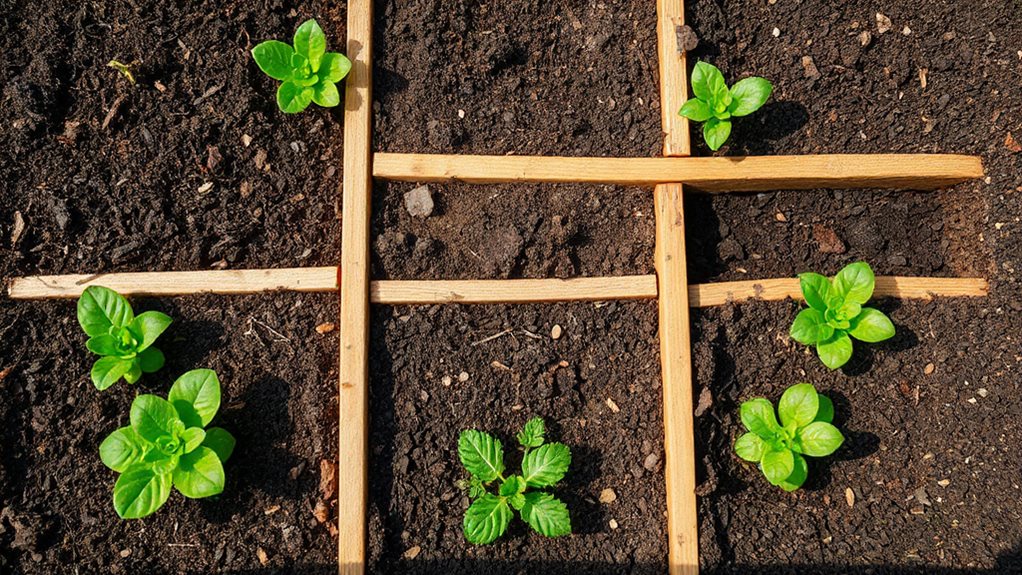
With your crops carefully spaced and growing strong, keeping weeds at bay becomes essential to maintaining a healthy, productive square foot garden—especially when using no-till methods that prioritize soil structure and long-term fertility.
Apply 2–4 inches of organic mulch like straw or compost to block sunlight and suppress weeds, replenishing it as it breaks down.
Use cardboard barriers beneath mulch for extra protection, and control emerging weeds with flame weeding or the stale seedbed technique—keeping soil disturbance to a minimum while safeguarding your garden’s ecosystem.
Rotate Crops and Refresh Soil Every Year
While your square foot garden thrives with careful spacing and minimal disturbance, maintaining its long-term productivity means you’ll need to rotate crops and refresh the soil each year.
Swap plant families annually to prevent pests and nutrient loss, using the grid to track changes.
Add compost and cover crops, test your soil, and let legumes improve the earth—simple steps that keep your garden strong, sustainable, and ready for abundant harvests season after season.
Final Note
You’ve built your 4×4 bed, filled it with rich soil, and set up your grid—now it’s time to grow. By spacing plants properly, using vertical supports, and rotating crops yearly, you’ll maximize yield and minimize weeds. Stick to the square foot method, and you’ll enjoy fresh produce with less work. Keep the soil healthy, stay organized, and you’ll harvest more than you thought possible in such a small space.

Nathan McPhail is a garden and home DIY expert who writes practical, easy-to-follow advice for homeowners and gardeners. Through Yardique, he shares hands-on tips covering gardening, lawn care, landscaping, home improvement, repairs, tools, and outdoor living. His focus is on helping readers solve everyday household and yard problems with straightforward guidance, useful techniques, and practical solutions.