Mix a 50/50 blend of topsoil and compost to give your raised beds a balanced foundation, then stir in perlite for aeration, gypsum to loosen clay, well‑rotted manure for nutrients, and peat moss for moisture retention. Add ¼–⅕ volume worm castings and a slow‑release fertilizer to support seedlings, and keep depth appropriate—6 in for greens, 12–18 in for beans or carrots, and 24–36 in for tomatoes. Top‑off with 2–4 in fresh compost each season, mulch, and plant legumes or cereals as cover crops to protect soil and elevate organic matter, and you’ll see healthier plants and richer soil.
TLDR
- Use a 50/50 mix of topsoil and compost, adding perlite or peat moss for aeration and water retention.
- Incorporate 2–3 inches of worm castings or well‑rotted manure to supply slow‑release nutrients and improve soil structure.
- Apply a 2–4 inch top‑dressing of compost each fall or early spring to replenish organic matter and nutrients.
- Plant cover crops (legumes and cereals) between seasons to fix nitrogen, suppress weeds, and add organic residues.
- Maintain appropriate depth (6 in for herbs, 12–18 in for vegetables, 24–36 in for deep‑rooted crops) and mulch to protect the surface.
Create a Nutrient‑Rich Soil Mix for Raised Beds in 5 Steps
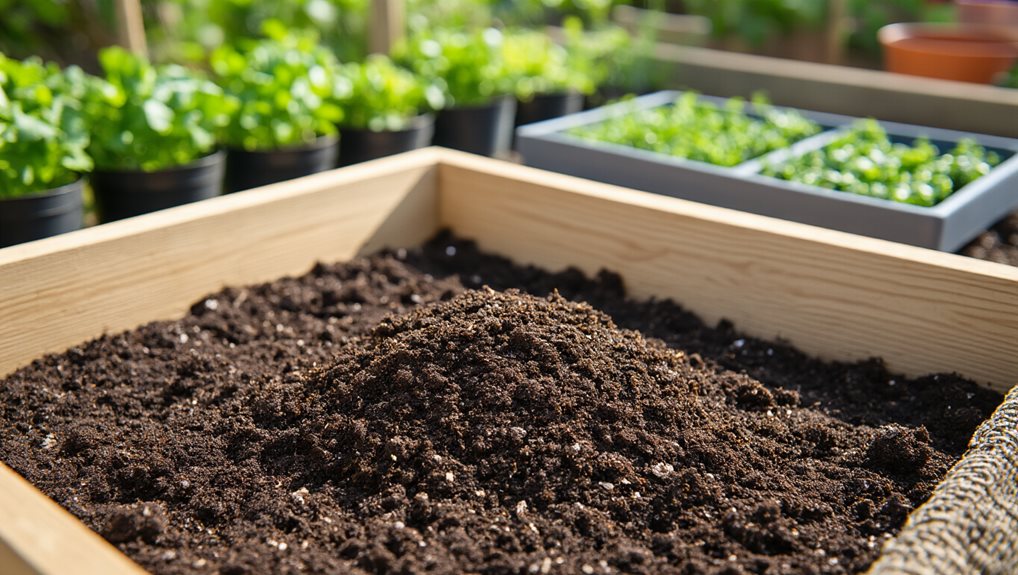
A nutrient‑rich soil mix for raised beds starts with a solid foundation, so begin by loosening the existing soil to a depth of 6–8 inches with a garden fork, rocking it back and forth without flipping it, and removing any surface weeds or grass that could compete with your crops.
Then add topsoil, compost, perlite, and worm castings in measured layers, blend thoroughly, and water to settle, creating a balanced, aerated medium that supports healthy root growth and community shared success.
Organic matter should make up 25‑50 % by volume in the mix to ensure nutrient availability.
DIRECTIONS:
– Incorporate 2–3 inches of compost into the top 8–12 inches of soil to improve texture, drainage, and fertility, and to support a thriving microbial community. Soil testing can guide the timing and type of amendments to optimize results.
Why a 50/50 Topsoil‑to‑Compost Ratio Is the Ideal Starting Mix
The 50/50 topsoil‑to‑compost ratio works well because it blends the structural stability of mineral soil with the nutrient‑rich, moisture‑retentive qualities of compost, giving raised‑bed plants a balanced medium that promotes healthy root development and disease resistance.
You’ll find this mix supplies enough organic matter to enhance water infiltration and nutrient release while avoiding excess moisture, creating a supportive, community‑like foundation that encourages consistent growth and easy maintenance.
Add Perlite, Gypsum, Manure, and Peat Moss to Your Raised Bed Soil Mix
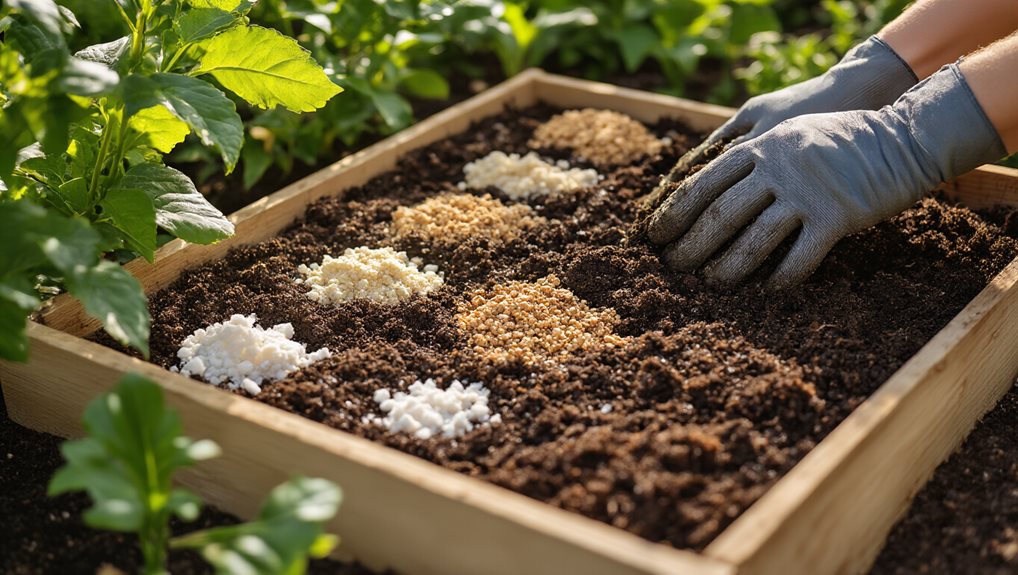
By mixing perlite, gypsum, manure, and peat moss you’ll boost aeration and drainage, creating air pockets that keep roots healthy while preventing waterlogging. The combination also balances pH and supplies calcium, sulfur, and slow‑release nutrients, enhancing availability without over‑acidifying the soil. Together they improve structure and moisture retention, lightening heavy textures and holding just enough water for steady growth. Transplant timing and acclimation guidance from best practices can further support healthy establishment by protecting roots during early growth cool, overcast periods and shielding from harsh sun and wind.
Improved Aeration and Drainage
Enhance your raised‑bed soil with a blend of perlite, gypsum, well‑rotted manure, and peat moss to create a mix that drains efficiently while still holding enough moisture for plant roots. This combination opens air pockets, loosens compacted particles, and balances water retention, so roots receive oxygen and moisture without waterlogging.
You’ll notice steadier infiltration, reduced pooling, and healthier, deeper root systems that sustain vigorous growth.
Balanced pH and Nutrient Availability
How can you keep your raised‑bed soil both pH‑stable and nutrient‑rich? Mix perlite for neutral, inert aeration, gypsum to buffer pH without shifting it, and well‑composted manure for macro‑ and micronutrients, while adding peat moss to gently acidify where needed and boost organic matter. This blend maintains chemical balance, supplies essential nutrients, and creates a supportive environment for thriving plants.
Enhanced Soil Structure and Moisture Retention
Ever wondered why some raised‑bed vegetables Thrive while others struggle?
You can enhance structure and moisture retention by mixing perlite, gypsum, well‑rotted manure, and peat moss.
Perlite creates airy pockets, preventing waterlogging and holding moisture; gypsum loosens clay, manure adds tilth and microbes; peat moss stores water and nutrients.
Combine them throughout the top foot for balanced aeration, drainage, and sustained hydration.
Boost Seedlings With Worm Castings and Slow‑Release Fertilizer
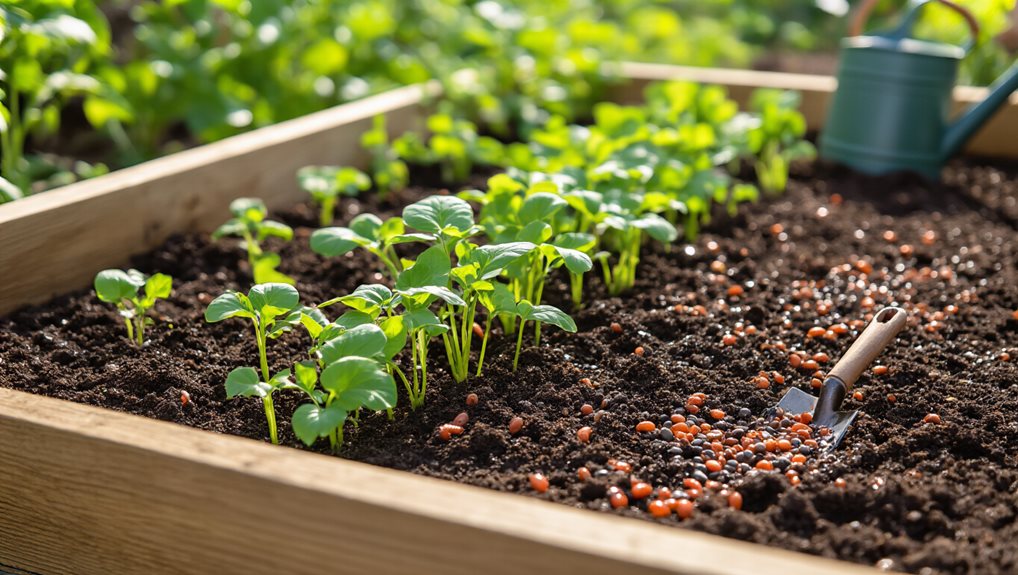
You’ll notice that worm castings supply a balanced suite of nutrients—nitrates, potassium, magnesium, calcium, and phosphorus—while keeping the pH neutral, so your seedlings get steady nourishment without the risk of burn. A well-managed vermicompost system also emphasizes proper moisture, aeration, and temperature control to maintain a thriving worm population that continually replenishes castings temperature range 60–75°F and prevents odors or pests.
Worm Castings Benefits
What makes worm castings a standout amendment for raised‑bed seedlings is their ability to deliver nutrients slowly yet steadily while simultaneously improving soil texture. You’ll notice richer humic acids, better water retention, and enhanced aeration, which together boost root development and leaf growth; mixing ¼‑⅕ volume reduces transplant shock, strengthens stems, and encourages beneficial microbes that suppress disease, fostering a thriving, cohesive garden community.
Slow‑Release Fertilizer Timing
When you time slow‑release fertilizer correctly, you give raised‑bed seedlings a steady nutrient stream that complements the slow, steady release from worm castings.
Plant your seeds, sprinkle the granular mix into each hole, backfill, then water.
Apply a second surface dose after seedlings emerge, and repeat at the eight‑week mark or mid‑season, ensuring steady growth without burn or leaching.
Integrated Nutrient Application Strategies
Timing your slow‑release fertilizer to coincide with the nutrient burst from worm castings creates a synergistic enhancement for seedlings in raised beds, ensuring they receive a balanced supply of nitrogen, phosphorus, and potassium throughout early growth.
Mix 2‑4 inches of castings into the top 5‑6 inches, blend 50 % compost with 50 % slow‑release granules, and hand‑till gently; this integration boosts texture, water retention, microbial health, and steady NPK delivery, fostering resilient, thriving plants.
Depth Requirements for Greens, Herbs, and Deep‑Rooted Vegetables
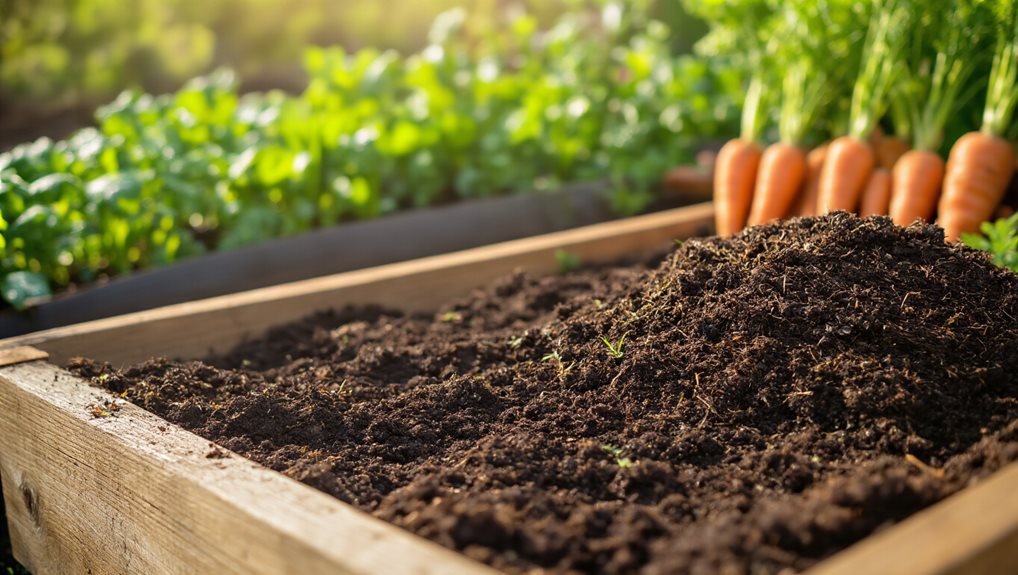
How deep should your raised‑bed soil be to keep greens, herbs, and deep‑rooted vegetables thriving? Aim for at least six inches for lettuce, spinach, and most herbs, twelve to eighteen inches for beans, carrots, and peppers, and twenty‑four to thirty‑six inches for tomatoes, pumpkins, and asparagus. A versatile twelve‑inch bed covers most crops, while eighteen inches gives extra buffer for mixed plantings, ensuring healthy roots and consistent moisture. Deep roots help plants access moisture during dry spells and improve overall bed resilience.
How to Manage Soil Settling and Keep a Level Bed Surface
Why does your raised‑bed surface sink over time? Decomposition of organic matter, natural compaction, and water infiltration reduce volume, especially with high‑clay topsoil. A 50/50 topsoil‑compost blend improves structure and fertility, while adding sand for drainage helps prevent layering and settling. Incorporating worm castings or recycled forest amendments for structure supports long‑term tilth and microbial health. The Fill and Forget Method encourages stable bed surfaces by avoiding repeated digging. Top off after the first season, mulch in six‑inch layers, and refresh 1–2 inches of compost annually to keep the surface level. Mulch depth helps protect soil and conserve moisture while reducing further settling.
How Much Compost to Add Each Year and When to Apply It
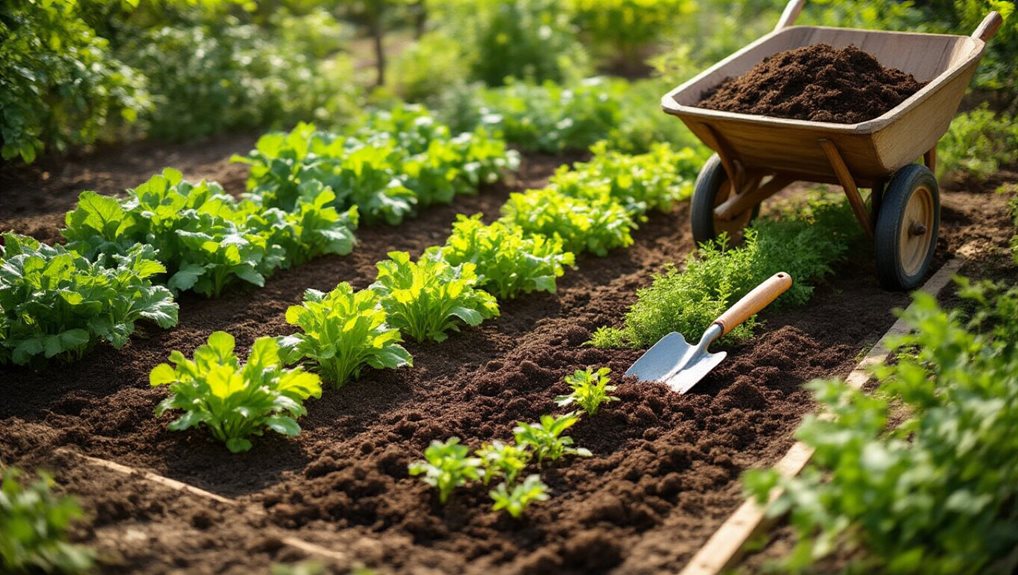
When you’re planning the yearly care of your raised beds, the key is to balance nutrient replenishment with structural stability, so you’ll typically add 1–2 inches of compost to the top 6–8 inches of soil each season, aiming for a total compost proportion that stays under 25 % of the blend to prevent compaction. Apply the fresh layer at the season’s start for quick release, then top‑off in fall or early spring with 2–4 inches to replenish nutrients, improve structure, and suppress weeds, adjusting amounts for climate, bed depth, and plant demand.
Cover Crops for Raised Beds: Protect Soil and Add Organic Matter Between Seasons
Ever wondered how a simple green carpet can keep your raised beds healthy between harvests?
Plant legumes like winter pea or crimson clover to fix nitrogen, while cereals such as rye or oats form a dense mat that suppresses weeds, intercepts rain, and protects soil structure. Their roots nurture microbes, improve infiltration, and their residues add organic matter, ensuring a thriving, resilient ecosystem for your next planting season.
Final Note
By following these five steps, you’ll create a balanced, nutrient‑rich mix that supports healthy growth, reduces settling, and sustains productivity year after year. The 50/50 topsoil‑to‑compost foundation, enhanced with perlite, gypsum, manure, peat moss, worm castings, and slow‑release fertilizer, supplies essential aeration, moisture retention, and nutrients. Adjust depth for each crop, apply compost annually, and rotate cover crops to protect the soil, ensuring your raised beds remain fertile and productive with minimal effort.

Nathan McPhail is a garden and home DIY expert who writes practical, easy-to-follow advice for homeowners and gardeners. Through Yardique, he shares hands-on tips covering gardening, lawn care, landscaping, home improvement, repairs, tools, and outdoor living. His focus is on helping readers solve everyday household and yard problems with straightforward guidance, useful techniques, and practical solutions.