You can improve clay soil by adding a 2–3 inch layer of compost and tilling it into the top 8–12 inches, enhancing structure and nutrient retention. Work the soil when it’s moist but not wet to prevent compaction, ideally in late winter or fall. Incorporate cover crops like rye or daikon radish to loosen dense layers. Use raised beds for better drainage, and choose clay-tolerant plants like coneflowers or hostas—there’s more to optimizing your soil health with the right long-term strategies.
TLDR
- Test soil in fall or early spring to guide amendments, ensuring it’s moist but not wet when working.
- Incorporate 2–3 inches of compost into the top 8–12 inches of soil to improve structure and drainage.
- Add organic matter like leaf mold, aged manure, or wood chips to boost microbial activity and porosity.
- Plant cover crops such as daikon radish or rye in fall to break up compaction and enrich the soil.
- Build raised beds filled with quality soil to bypass drainage issues and reduce compaction risks.
Why Clay Soil Is So Hard to Work With
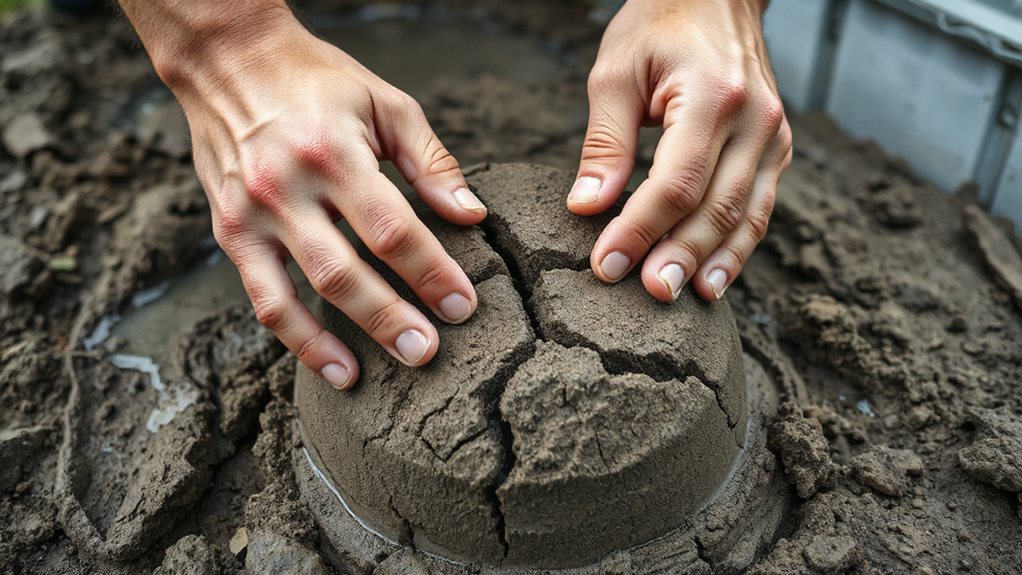
While you mightn’t think soil type makes that much of a difference, working with clay quickly reveals why so many gardeners struggle.
You face poor drainage, compaction, and crusty surfaces that block roots and seeds. Clay swells when wet and hardens when dry, stressing plants. Standard tools often fail, making cultivation tough. High water-holding capacity contributes to these issues by retaining excess moisture, which limits air movement and can suffocate roots. Adding organic matter like peat moss can improve aeration and moisture balance over time.
Recognize the Benefits of Improving Clay Soil
You’ll see better nutrient retention when you improve clay soil, since its fine particles hold onto essential minerals like calcium and potassium, reducing how often you need to fertilize.
Strong root development happens naturally as plants gain a firm anchor, allowing perennials like echinacea and prairie species to thrive with deep, stabilizing taproots.
With these benefits, your garden becomes more resilient and productive over time.
Laboratory analysis with lab-verified tests can give precise nutrient levels to guide amendments.
Enhanced Nutrient Retention
Because clay soil naturally attracts and holds essential nutrients, improving its structure enhances your garden’s ability to retain fertility over time.
You benefit from reduced leaching, steady nutrient release, and less frequent fertilizing.
With high cation exchange capacity and strong pH buffering, clay keeps nutrients available and stable, supporting healthier plants.
Your garden becomes a resilient, fertile space where both you and your plants can truly thrive.
Improved Root Development
Clay soil’s natural ability to hold nutrients sets the stage for fertile gardens, and when you improve its structure, you also create conditions for stronger, more extensive root systems.
Test Your Soil Before You Amend It
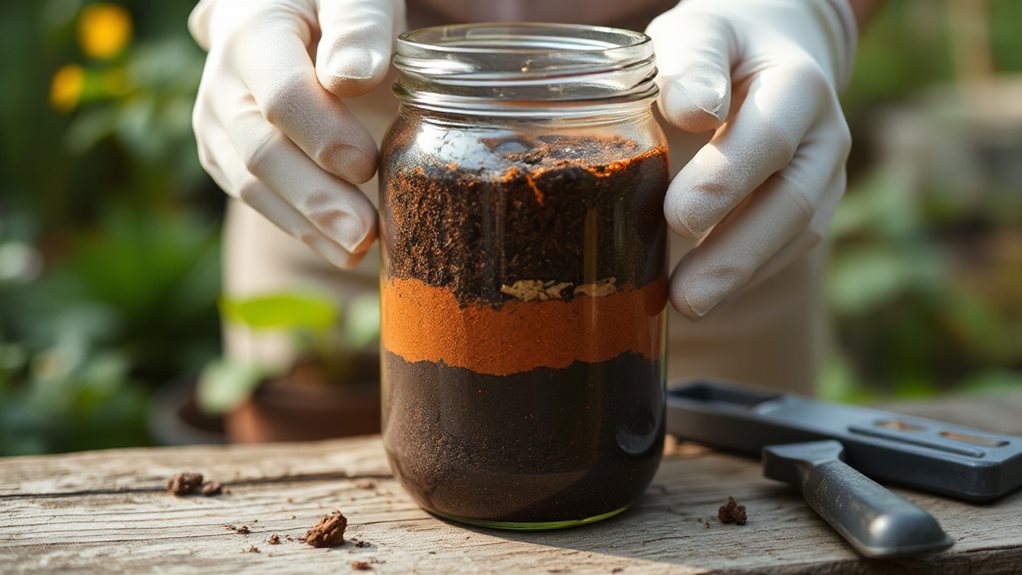
While your garden’s success often depends on what lies beneath the surface, skipping a soil test can lead to misguided efforts and wasted resources.
You’ll want to check nutrient levels, pH, and soil health before amending, so you apply only what’s needed.
Test in fall or early spring, avoid wet soil, and sample at the right depth—this guarantees accurate, actionable results customized to your garden’s goals.
Remember that knowing whether your soil is residual or transported can affect amendment choices and long-term fertility management.
Add Compost and Organic Matter the Right Way
Kick off your soil improvement by mixing in a 2–3 inch layer of compost across the surface, then tilling it into the top 8–12 inches to break up compacted layers and kickstart structural changes.
Add leaf mold, aged manure, or wood chips alongside compost to enhance organic matter.
Apply in fall or winter so microbes can work through dormancy, gradually building humus and improving texture, drainage, and fertility over time.
For larger gardens, consider using an expandable stationary bin to store and mature bigger volumes of compost before incorporation.
Work the Soil at the Right Time of Year
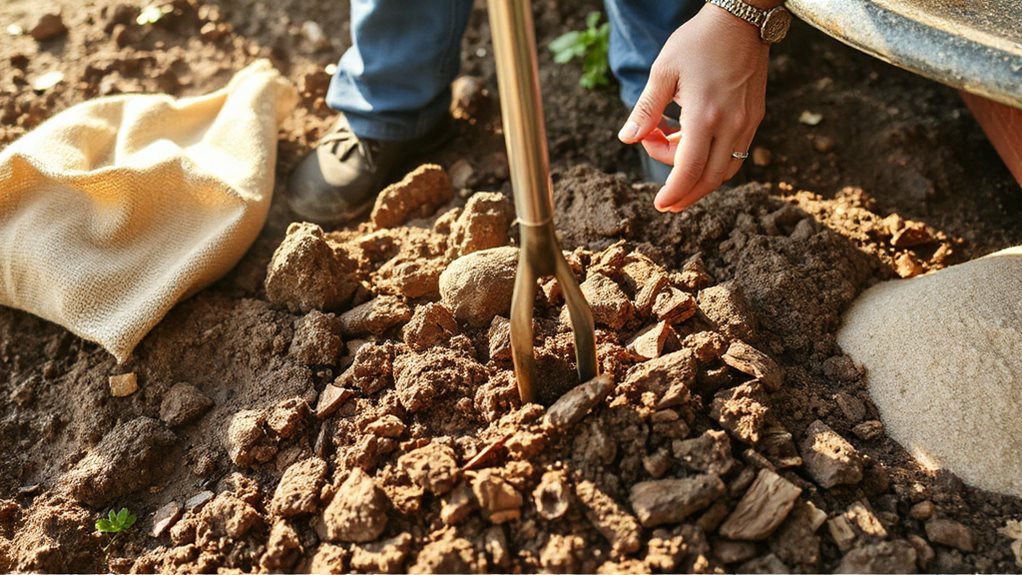
You’ll get the best results when you time your soil work right, so aim for dry conditions in fall or late winter to avoid compacting clay.
Working the soil when it’s too wet leads to clumping and poor structure, but waiting until it’s dry allows air pockets to form and compost to mix in deeply.
Fall is especially smart because it gives organic matter months to break down, enhancing nutrients and soil texture before spring planting.
Consistent moisture checks are still important, since soil moisture affects how and when you should work clay.
Timing Is Crucial
When the soil is neither too wet nor too dry, late winter offers the ideal window to amend clay-heavy gardens, setting the stage for sturdy spring growth. You’ll work amendments in easily, improve structure, and enhance fertility.
Fall increases microbial activity, while planting time lets you mix in organic matter deeply. Off-season cover crops, like daikon radish, break up compacted layers, and dry periods allow gradual, effective changes without clumping.
Avoid Wet Conditions
While winter rains saturate the ground and leave clay soils stubbornly sticky, it’s essential to resist the urge to work them prematurely, as wet conditions turn even well-structured clay into a dense, compacted mess.
Wait until the soil is moist but not saturated, so you avoid damaging its structure and guarantee better drainage, root growth, and long-term garden health.
Prepare In Autumn
Though the growing season may be winding down, autumn is far from a time to put your garden tools away—preparing your clay soil now sets the foundation for sturdy plant growth come spring.
Clear plant debris, compost kitchen scraps and fall leaves, then till deeply to loosen compacted soil. Add organic matter like compost or straw, and consider cover crops like rye or clover to enhance the earth all winter.
Use Raised Beds When Clay Is Too Dense
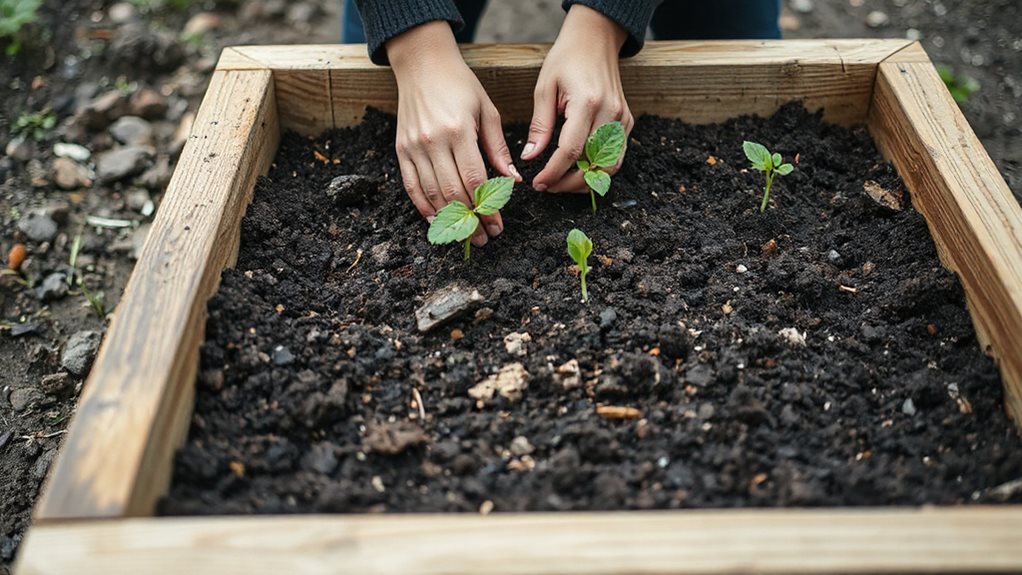
Building up instead of fighting through heavy clay can revolutionize your garden’s potential.
You can install raised beds 8–12 inches high to bypass poor drainage and compaction, filling them with quality soil, compost, and organic matter.
Concrete blocks add durability while improving airflow and warmth.
Raised beds reduce erosion, deter pests, and make gardening more accessible, especially on slopes or small plots, giving you better harvests with less effort.
Choose Plants That Thrive in Clay Soil
Tap into your clay soil’s potential by selecting plants naturally equipped to thrive in its dense, moisture-retentive structure. Choose daylilies, coneflowers, or bearded irises for sunny spots, while astilbe and hostas shine in shade.
Shrubs like chokeberry and dogwood anchor borders, and natives such as milkweed support local ecosystems—all thriving with strong roots that handle compaction and wet-dry cycles effortlessly.
Care for Clay Soil Through the Seasons
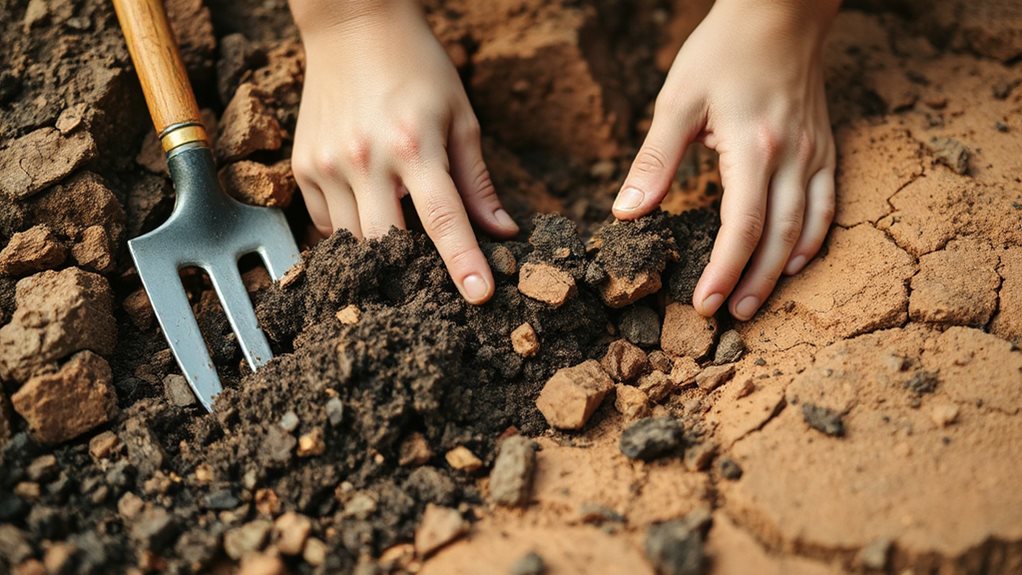
Now that you’ve selected plants suited to clay soil’s heavy texture and moisture-holding capacity, it’s time to match your care routine to the seasons for long-term success.
Work soil only when crumbly in spring, water deeply in summer, and improve with compost in autumn.
Let winter frost break up clumps, and aerate yearly, adding grit to improve drainage while mulching to support earthworms and retain moisture.
Final Note
You’ve tested your soil, added compost, and chosen the right plants—now you’re set for success. By amending clay soil properly and timing your work wisely, you improve drainage and structure over time. Raised beds help when compaction persists, while seasonal care keeps nutrients balanced. With consistent effort, clay converts from a challenge into a fertile foundation, supporting healthy, thriving gardens year after year.

Nathan McPhail is a garden and home DIY expert who writes practical, easy-to-follow advice for homeowners and gardeners. Through Yardique, he shares hands-on tips covering gardening, lawn care, landscaping, home improvement, repairs, tools, and outdoor living. His focus is on helping readers solve everyday household and yard problems with straightforward guidance, useful techniques, and practical solutions.
Pingback: Pergola vs. Gazebo: Which Outdoor Shelter Is Right for You?