
Wet grass sticks together, so clippings become sticky and cling under the deck, blocking the lift airflow that normally disperses them; tall or overgrown blades add weight and create dense mats that overwhelm the mower’s vacuum, while dull blades tear instead of cleanly cutting, producing ragged pieces that clump more easily. A partially clogged deck further restricts airflow, causing the mower to strain and the clumps to accumulate in the bag or mulcher. Adjusting deck height gradually, sharpening blades, and keeping the deck clean will reduce clumping, and the next sections explain how speed, throttle, and accessories can help. Hold a string trimmer so the line cuts at full speed, since half throttle frays the stems instead of slicing them.
TLDR
- Damp clippings stick to the deck, blocking airflow and forming clumps.
- Dull or ragged blades tear grass, increasing stickiness and causing uneven cuts.
- Cutting grass that is too long or reducing height too drastically overloads the mower and creates dense clumps.
- Insufficient deck lift or low vacuum speed prevents clippings from being expelled, leading to buildup.
- A clogged or improperly cleaned deck restricts airflow, causing clumps to accumulate under the mower.
Why Wet Grass Creates Stubborn Grass Clumps
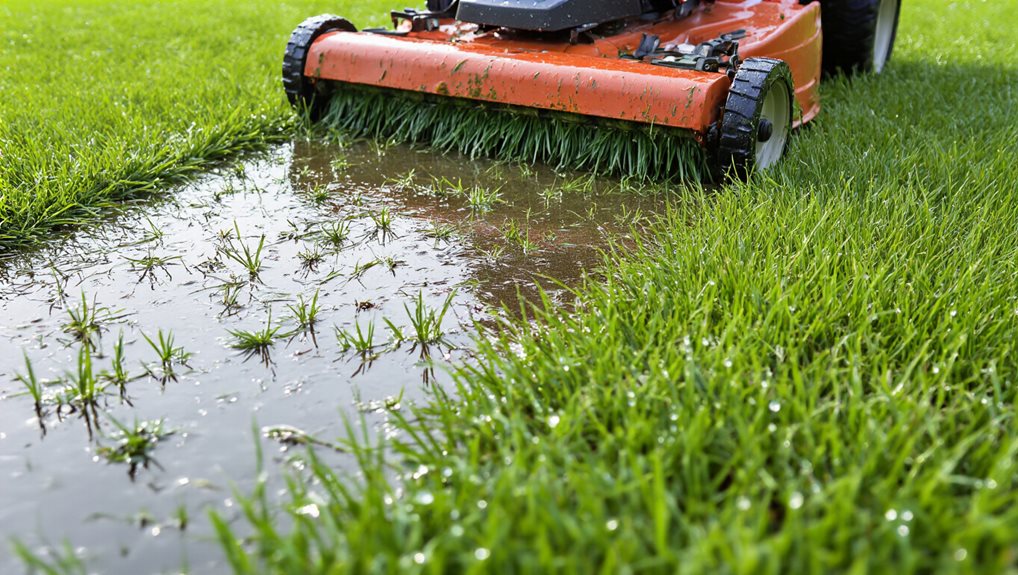
Moisture makes clippings sticky, so they cling together under the deck, blocking airflow and causing clogs.
The heavy, longer pieces pile up, smothering roots and inviting disease, while dull blades tear and exacerbate stickiness.
You’ll notice uneven cuts, engine strain, and a soggy lawn, signaling it’s time to wait for drier conditions.
Managing the mower’s blade sharpness and keeping the deck clean can help minimize clumping on damp days, especially when working with slower speeds and lighter passes. ACME Valves
How Long Grass and Height Cuts Cause Grass Clumps
When the grass grows too long, the mower gets overloaded, and the excess material clumps together because the deck can’t disperse it efficiently; cutting the height dramatically in one pass only worsens the problem by forcing the blades to handle more than their capacity, which creates dense piles of clippings.
Maintaining a moderate, gradual reduction—about one‑third of the blade length each time—keeps airflow under the deck adequate and prevents the clumps that form when long blades are suddenly trimmed. Regularly inspecting and cleaning the deck helps maintain optimal airflow and prevents buildup that can contribute to clumping. Storage conditions can also influence mower performance, as stored equipment that is not kept dry and clean may experience reduced efficiency over time.
Overgrown Grass Overloads Mower
What happens when grass grows past the mower’s optimal height is that the machine quickly becomes overloaded, and the clippings start to clump together. Long blades form dense mats that choke airflow, so the deck and catcher fill with heavy, wet clumps; your mower sinks, the engine strains, and the lawn looks patchy.
Cutting gradually, raising the deck, and mowing every one to two weeks keeps the load manageable and prevents clumping.
Sudden Height Reduction Creates Clumps
Ever notice how a single, drastic cut of overgrown grass can turn your mower’s deck into a clumping machine? When you remove more than one‑third of blade height at once, airflow stalls, clippings stick together, and the engine bogs down, forcing ragged edges that dry unevenly. To stay in the loop, trim gradually, mow slower, and clean the deck often, keeping the lawn looking cohesive.
Inadequate Dispersion With Long Blades
Why does long grass make your mower’s deck struggle to scatter clippings evenly? Long blades encounter dense, heavy strands that exceed the one‑third‑length removal limit, slowing rotation and reducing vacuum airflow; the deck’s discharge chute then fills with large clumps.
Higher cutting heights worsen the issue, because longer pieces overwhelm the airflow capacity, preventing proper ejection and leaving matting in the centerline.
Why Dull Blades Produce Grass Clumps and How to Fix Them
Do you notice clumps of grass sticking together after each mow, and wonder why the problem persists even when you keep the mower clean? Dull blades tear rather than slice, creating ragged tips that clump, especially when damp; the reduced speed and airflow under the deck prevent proper dispersal. Sharpen or replace blades every 20‑25 hours, balance them, and maintain clean airflow to restore clean cuts and eliminate clumps. Color charts and plant-specific guidance help ensure you interpret results correctly and select appropriate soil or turf improvements for better mowing outcomes.
How a Clogged Deck Magnifies Grass Clumps
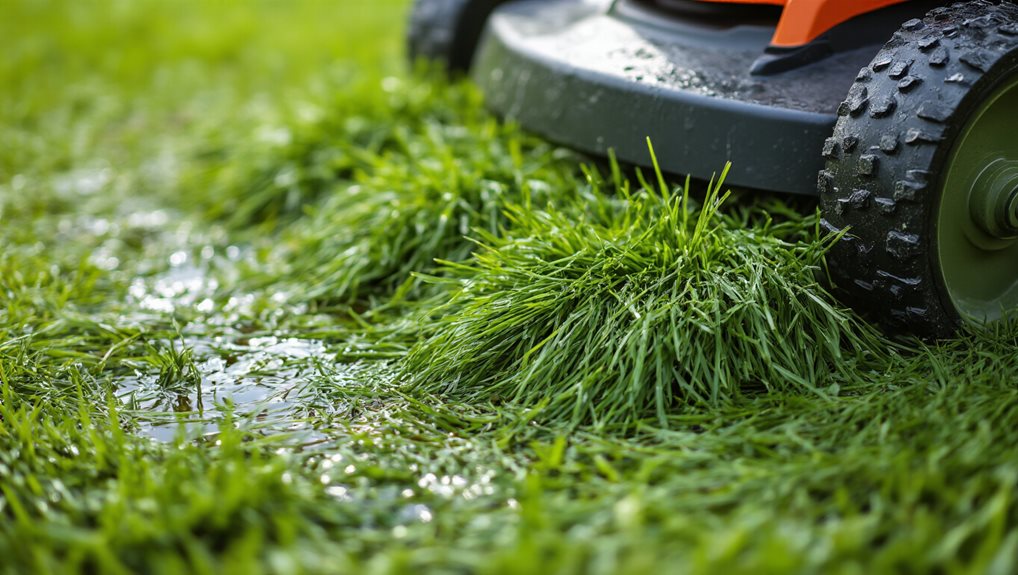
A clogged deck quickly turns a routine cut into a clumping nightmare because the grass that builds up on the underside blocks the airflow pathway the mower relies on to lift and disperse clippings. Regularly cleaning and drying the deck restores airflow, preserving suction and preventing clump buildup. Consistent maintenance also helps protect the mower’s overall lifespan by keeping the deck free of moisture and residue that can accelerate wear. airflow pathway
Mowing Speed, Throttle, and Deck Height Tricks to Stop Clumps
Ever wondered how a few simple adjustments to speed, throttle, and deck height can keep your mower from spewing clumps?
Slow the deck just enough to preserve vacuum airflow, but not so much that blade lift falters; increase throttle when grass is damp to maintain cutting power; raise the deck incrementally, respecting the one‑third rule, and mow frequently so clippings stay light, dispersed, and clump‑free.
Mower Setups and Accessories That Eliminate Grass Clumps
Wearing proper maintenance can help keep clumps from forming during mowing, and you can also combine a high‑lift deck design with a mulching kit for even better results soundproofing and quieter operation.
High‑Lift Deck Design
Why does a high‑lift deck make a difference when you’re battling clumpy grass? Its pronounced upward curve creates a strong upward airflow that lifts blades upright, preventing uneven cuts and keeping clippings from re‑accumulating on the deck.
Pair it with the right discharge chute or bagging system, raise the deck height, and you’ll see cleaner, more consistent results, especially on tall or dense turf.
Mulching Kit Installation
Where does a mulching kit fit into a mower’s workflow, and why is proper installation essential for eliminating grass clumps?
You start by removing the spark plug boot, emptying fuel, and laying cardboard under the deck, then secure old blades with a block, detach the collector, and flip the deck. Install kit blades with the bottom side down, align the star pattern, add Loctite, tighten to 70‑90 ft‑lb, fit baffles and the mulch plug, reassemble, reconnect spark, and refuel, ensuring each step is precise for a clump‑free lawn.
Final Note
By keeping your mower’s deck clean, blades sharp, and cutting height appropriate, you’ll prevent wet or tall grass from forming clumps. Adjust your mowing speed and throttle to maintain a steady feed, and consider accessories like mulching kits or baggers for finer shredding. Regular maintenance—checking for debris, sharpening blades, and calibrating deck height—ensures consistent, even cuts, reducing clump formation and promoting a healthier, more uniform lawn.

Nathan McPhail is a garden and home DIY expert who writes practical, easy-to-follow advice for homeowners and gardeners. Through Yardique, he shares hands-on tips covering gardening, lawn care, landscaping, home improvement, repairs, tools, and outdoor living. His focus is on helping readers solve everyday household and yard problems with straightforward guidance, useful techniques, and practical solutions.