Check the battery voltage with a multimeter; a 12‑V mower should read close to 12 V and an 18‑V lithium pack about 20 V, then tighten any corroded terminals and verify the safety switch and fuses are intact. Make sure/ensure the fuel tank is full of fresh gasoline, inspect the vent, lines, filter, and pump for blockages, and confirm the carburetor isn’t clogged. Examine the spark plug for wear, test for a strong spark, and verify the ignition coil and wiring. Finally, clean or replace the air filter to ensure/unrestrict airflow, and you’ll find more detailed troubleshooting steps if you keep going.
TLDR
- Low battery voltage or corroded terminals prevent sufficient power for the starter.
- Blown fuses or faulty safety switches block the charging and starting circuits.
- Empty, stale, or contaminated fuel hinders proper fuel delivery to the carburetor.
- Worn or fouled spark plug, weak coil, or incorrect ignition gap stops spark generation.
- Clogged carburetor jets, dirty air filter, or incorrect fuel‑air mixture restricts engine combustion.
Verify Battery Charge, Safety Switches, and Basic Mechanics
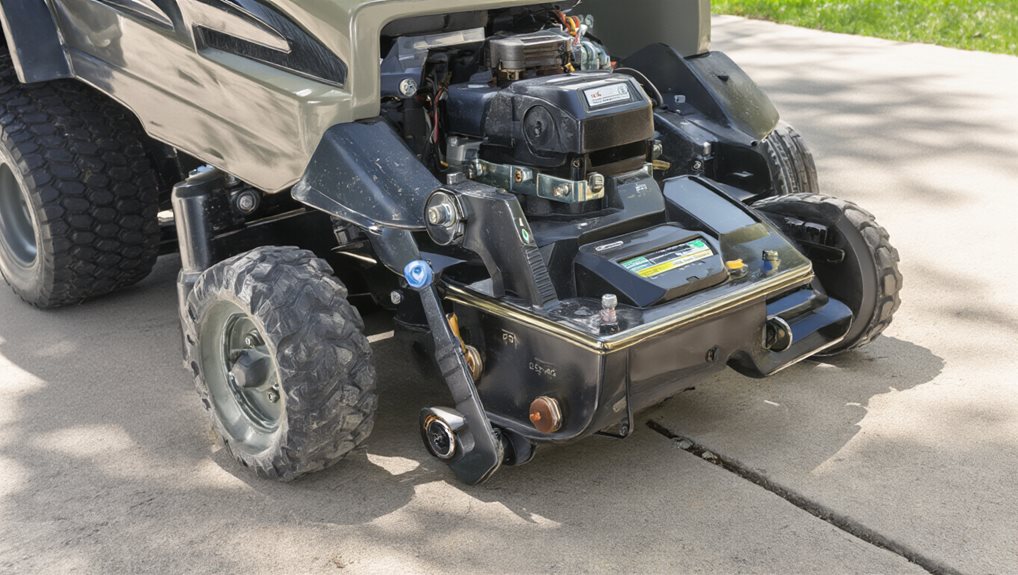
How can you quickly tell whether your mower’s power source is the root of the start‑up problem? Check the battery voltage with a multimeter; a healthy 12‑V mower reads near 12 V, while a lithium‑ion pack shows 20 V for 18‑V systems. Inspect terminals for corrosion, tighten clamps, and verify the safety switch engages. Test fuses for continuity and replace any blown 20‑ or 30‑amp units. A blown fuse can prevent the alternator from delivering charge to the battery.
Inspect Fuel Level, Quality, and Delivery When Mower Won’t Start
Ever wondered why a perfectly healthy mower still refuses to fire up?
Check the tank first—empty or nearly empty fuel stops the engine, so fill with fresh gasoline, especially after winter storage.
Verify the fuel’s age and quality; stale, ethanol‑laden gas clogs the carburetor.
Inspect the vent, lines, filter, and pump for blockages, and clean or replace components as needed to restore proper delivery.
Never overlook performing a quick safety check to ensure there are no fuel leaks or damaged lines, which can affect starting and operation. fuel system
Check Spark Plug and Ignition for Mower Won’t Start
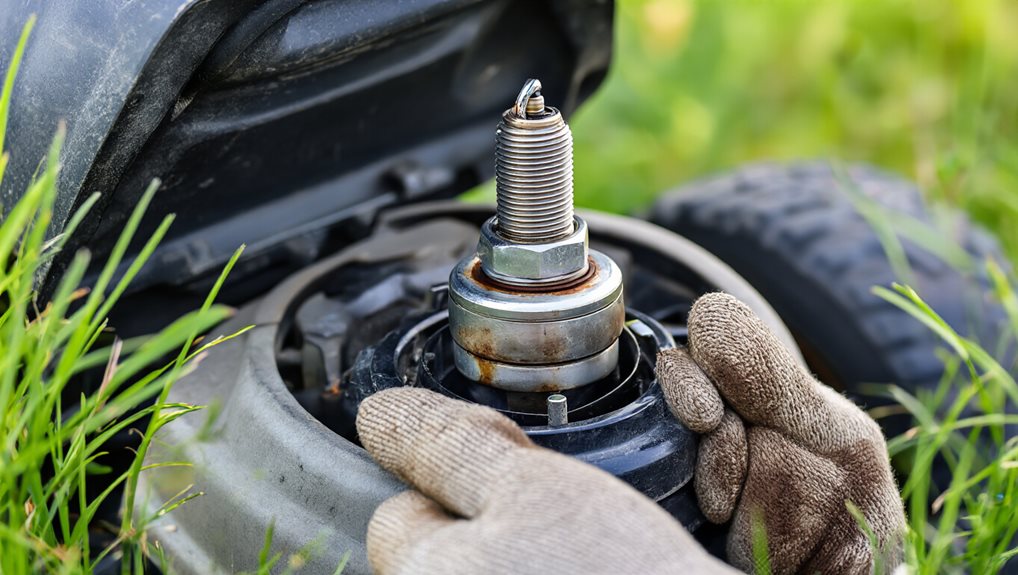
After confirming that the fuel is fresh and reaching the carburetor, the next step is to examine the spark plug and the ignition system, because even a perfectly supplied engine won’t fire without a proper spark.
Remove the plug, look for carbon, oil, cracks, and verify the gap; test with a spark tester while pulling the starter.
Check the stop switch, wire resistance, and coil‑flywheel air gap, replacing any faulty parts to restore reliable ignition.
Ensure you understand the applicable HOA rules and maintenance guidelines to keep yard equipment and operations compliant with community standards and any required inspections or approvals. HOA rules
Clear Carburetor Clogs and Correct Fuel‑Mix Issues
Why does your mower keep stumbling on start‑up? Clear carburetor clogs by spraying cleaner into jets, gaskets, and choke plates, then wiping residue.
Run the engine dry before storage to prevent buildup.
Use fresh gasoline, add stabilizer, and replace the fuel filter regularly to keep the air‑fuel mix correct, preventing stalls, rough running, and excessive fuel consumption.
Examine Air Filter and Airflow Restrictions
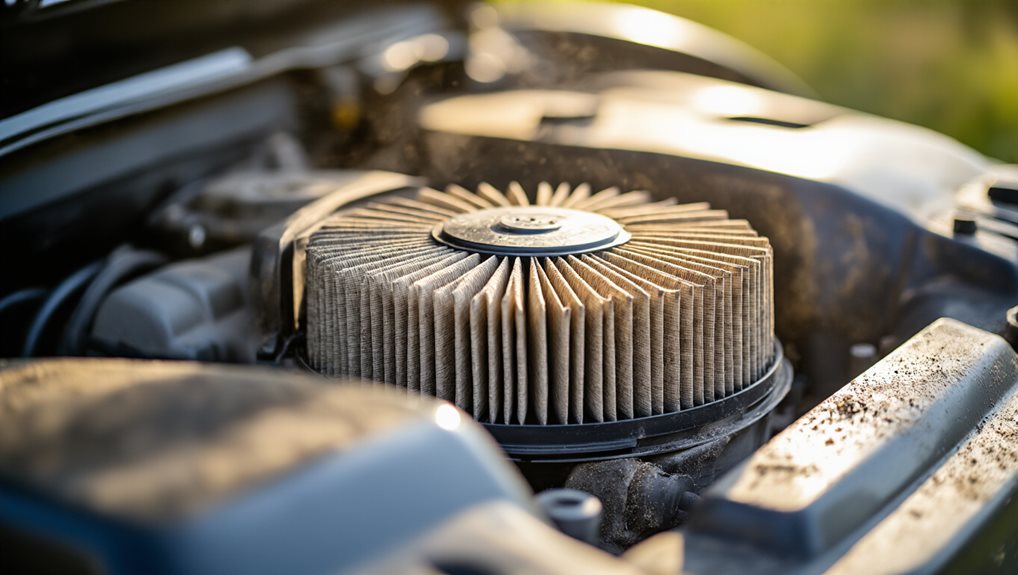
After clearing carburetor clogs, the next step is to check the air filter and any airflow restrictions, because a clean fuel system won’t help if the engine can’t draw enough air.
A dirty filter darkens, blocks light, and causes bogging, hard starts, black smoke, and excess fuel use.
Remove it, test idle, and replace or clean according to the manual, ensuring dry, proper‑fit replacement for reliable performance.
Final Note
By confirming the battery’s charge, checking safety switches, and reviewing basic mechanics, you eliminate the most common start‑up barriers. Verifying fuel level, quality, and delivery guarantees the engine receives proper combustion material, while inspecting the spark plug and ignition system addresses ignition failures. Clearing carburetor clogs and correcting fuel‑mix ratios restores optimal fuel‑air balance, and examining the air filter removes airflow restrictions. Together, these steps diagnose and resolve most mower‑starting problems efficiently.

Nathan McPhail is a garden and home DIY expert who writes practical, easy-to-follow advice for homeowners and gardeners. Through Yardique, he shares hands-on tips covering gardening, lawn care, landscaping, home improvement, repairs, tools, and outdoor living. His focus is on helping readers solve everyday household and yard problems with straightforward guidance, useful techniques, and practical solutions.