
A mower backfire happens when an unburned air‑fuel mixture ignites at the wrong moment, usually because a faulty spark plug, a lean or rich carburetor setting, or a clogged air filter disrupts proper combustion, causing a sharp pop from the intake or exhaust. Lean mixtures ignite early in the intake, while rich mixtures leave excess fuel that ignites in the hot exhaust, especially during deceleration. Faulty plugs, dirty carburetor jets, or blocked filters can create these conditions, so checking and cleaning these components often resolves the issue, and the guide will show you exactly how.
TLDR
- A faulty or worn spark plug creates a weak or mistimed spark, allowing unburned fuel to ignite outside the intended combustion moment.
- An excessively lean air‑fuel mixture ignites the intake charge prematurely, causing a sharp pop or backfire through the intake valve.
- An overly rich mixture leaves unburned fuel in the exhaust; when hot exhaust gases ignite it, a loud “bang” occurs.
- Clogged air filters, dirty carburetor jets, or high‑alcohol fuel can disturb the fuel‑air ratio, leading to backfiring.
- Deceleration or sudden throttle changes can dump excess fuel into the exhaust, triggering a backfire if the mixture isn’t properly adjusted.
What Exactly Is a Mower Backfire and Why It Happens?
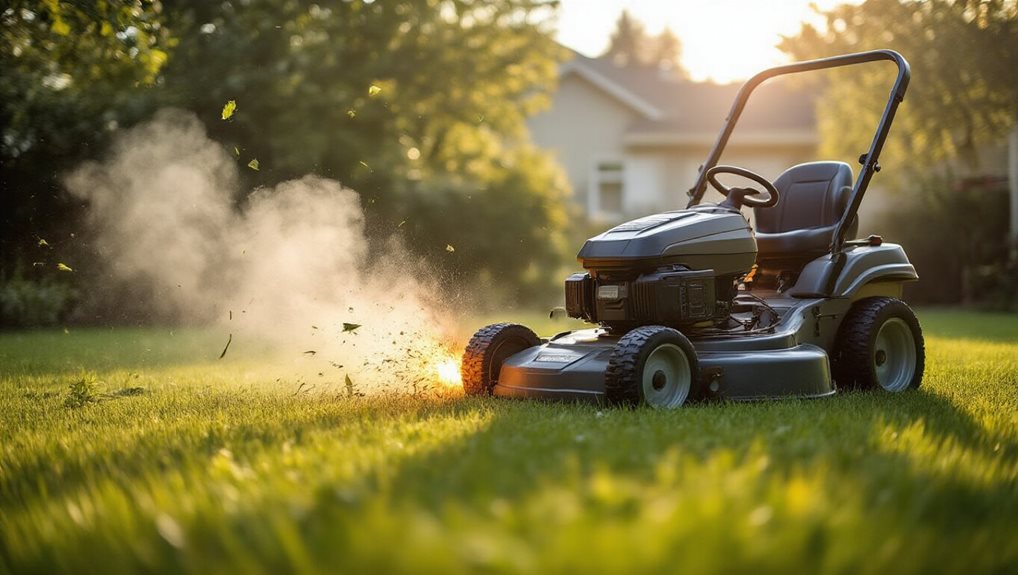
What exactly is a mower backfire, and why does it happen? You’ll hear a sharp pop when the air‑fuel mixture ignites before the spark’s intended moment, often because a faulty spark plug, worn gap, or valve timing issue lets unburned fuel explode in the intake or exhaust.
Clogged filters, a dirty carburetor, or high engine temperature can also disturb combustion, causing that sudden, potentially damaging burst. Old gasoline can break down after a month, leading to an improper fuel‑air ratio that contributes to backfiring.
Lean vs. Rich Mixture and Mower Backfire
If your mower’s mixture is too lean, you’ll most likely see intake backfire, because the excess air creates hot spots that ignite fuel before it reaches the spark plug.
When the mixture runs rich, unburned fuel piles up in the exhaust and ignites there, producing the classic exhaust backfire.
Understanding which condition you’re dealing with lets you target the right fix—clean the air filter or adjust the carburetor for a lean problem, and replace stale fuel or correct carburetor settings for a rich one.
Lean Mixture Causes Intake Backfire
Why does a lawn mower backfire through the intake? When the air‑fuel ratio runs lean, excess air prevents complete combustion, so unburned mixture ignites as the intake valve opens, pushing a flame back toward the carburetor.
Clogged filters, overly lean carburetor settings, high‑alcohol fuel, or rapid deceleration can create this condition, leading to popping sounds, sputtering, and loss of power under load.
Adjust the carburetor, replace the filter, and use low‑alcohol gasoline to restore balance.
Rich Mixture Triggers Exhaust Backfire
After addressing intake backfire caused by a lean mixture, it’s important to recognize that an overly rich fuel‑air blend produces a very different problem—exhaust backfire.
When the carburetor over‑delivers fuel, unburned vapors slip into the hot exhaust, ignite during deceleration, and pop loudly in the muffler.
Clean clogged jets, adjust the choke, and avoid high‑alcohol gasoline to keep the mixture balanced and prevent pressure spikes.
Common Culprits of Mower Backfire: Air Filter, Spark Plug, Carburetor
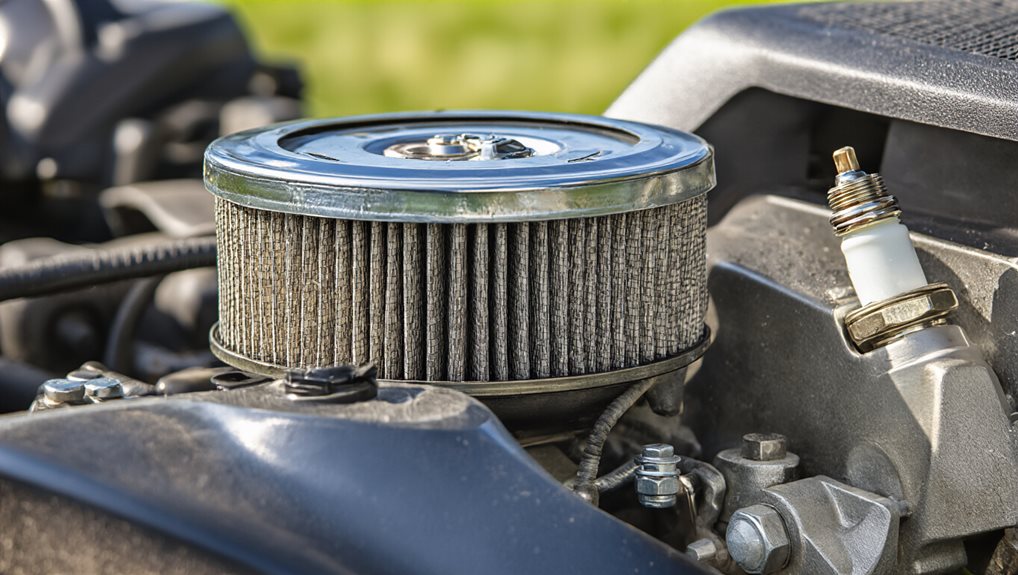
You’ll often find that a clogged air filter starves the engine of oxygen, forcing a rich mixture that can trigger backfires, while a faulty spark plug may produce a weak or mistimed spark that lets unburned fuel ignite in the exhaust.
A dirty carburetor, with its mis‑adjusted fuel‑to‑air ratio, can also cause misfires that lead to backfiring during acceleration or deceleration.
Checking and cleaning these three components regularly will keep your mower running smoothly and reduce the chance of unwanted pops.
Clogged Air Filter
Ever notice that your mower pops like a cannon when you pull the starter, yet the spark plug looks wet and the engine still won’t stay running?
A clogged air filter restricts airflow, creating a lean mixture that ignites prematurely, causing backfires through the carburetor.
Inspect the filter, clean or replace it, and verify the intake isn’t blocked; regular checks prevent damage and keep your mower running smoothly.
Faulty Spark Plug
A faulty spark plug is often the hidden trigger behind a mower’s sudden pop or backfire, because when the electrode gap is worn, fouled, or set incorrectly, the spark weakens or misses entirely, leaving unburned fuel to ignite in the hot exhaust.
Check the gap with a feeler gauge, replace a fouled plug, and keep inspections regular so you stay confidently reliable on the lawn.
Dirty Carburetor Adjustments
When a spark plug is fouled, the unburned fuel it leaves behind often ends up in the exhaust, creating the perfect conditions for a backfire; the same symptom can stem from a carburetor that’s out of adjustment.
A dirty carburetor skews the fuel‑air mix, pushing excess fuel into the muffler where vapors ignite, so cleaning the bowl, blowing compressed air through passages, and fine‑tuning choke position restore the sweet spot and keep the mower firing smoothly.
Valve & Muffler Issues That Cause Mower Backfire
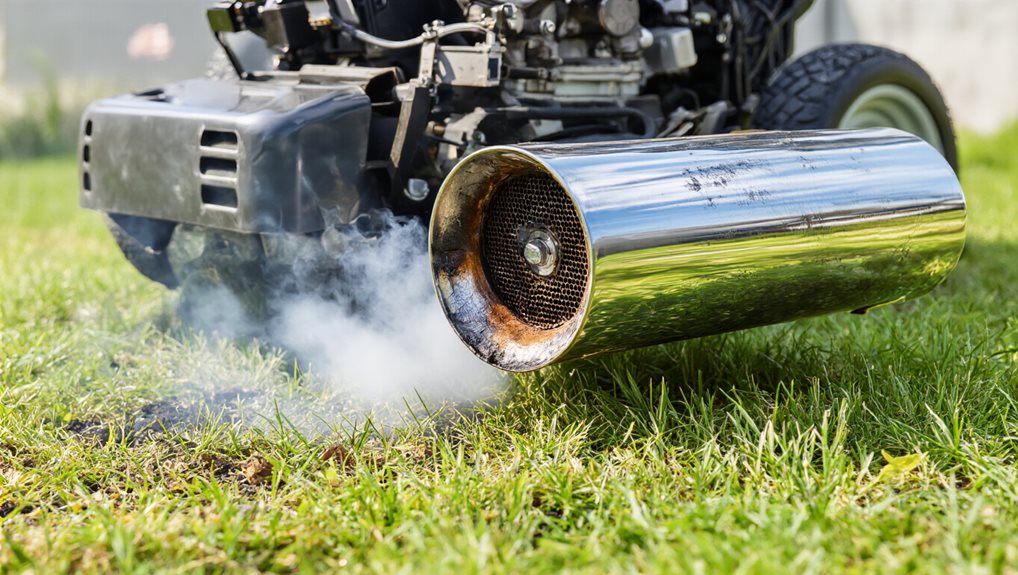
Why does a mower backfire when the valve and muffler systems aren’t working together properly?
If the intake valve fails to seal, combustion ignites too early, while a stuck‑open exhaust valve lets the air‑fuel mix escape during compression, creating pops.
Bent or stuck valves, muffler debris, and faulty baffling all disrupt exhaust flow, raise pressure, and ignite unburned fuel, producing the characteristic backfire sound.
Quick Checklist to Diagnose Mower Backfire
Ever wonder how to pinpoint the exact cause of a mower’s backfire without dismantling the whole engine? Check fuel: sniff for stale gasoline, verify pressure, inspect pump and filter, ensure proper mix. Examine air filter: look for dirt, clean or replace. Inspect spark plugs: assess wear, gap, and firing timing. Review carburetor: clean, adjust, and confirm correct fuel‑air ratio proper fuel-air ratio.
Step‑by‑Step Fixes for Mower Backfire: Clean, Adjust, Replace
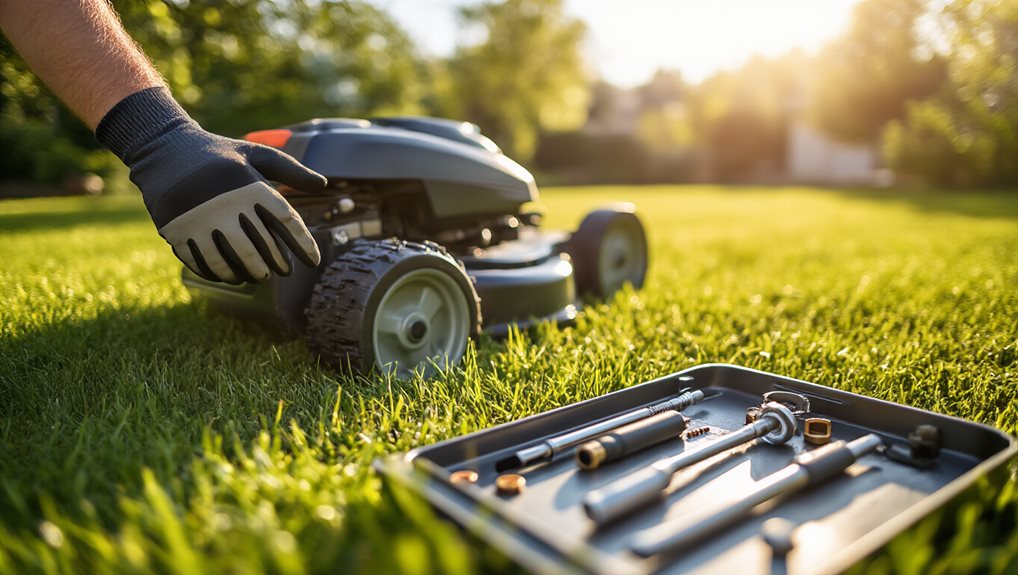
After checking the fuel, air filter, spark plugs, and carburetor for obvious problems, the next step is to address the specific components that most often cause a mower to backfire. Clean the air filter by tapping out dirt, washing foam, or blowing paper filters, then reinstall securely. Spray carburetor cleaner into all jets, clear debris with compressed air, and adjust idle and mixture screws to specs. Replace fouled spark plugs, gap new ones, and verify a strong blue spark. Perimeter and yard work plans should also consider long-lasting outdoor protections, such as perimeter granules or spray options, to help maintain a well-kept lawn environment. carburetor cleaner
Preventive Habits to Keep Your Mower Backfire‑Free
One of the most effective ways to keep your mower from backfiring is to adopt a set of simple, regular habits that address the engine’s critical systems before problems start. Check and replace the air filter every 25 hours, use fresh 87‑plus octane fuel with stabilizer, clean the carburetor jets during tune‑ups, inspect and replace the spark plug annually, idle down before shutdown, and store the mower in a ventilated space. Incorporate proper soil and garden maintenance routines, since well‑maintained equipment performs more reliably in all conditions, and ensure you follow the recommended pruning and storage practices for the best overall performance. air filtration
Final Note
By regularly checking the air filter, spark plug, and carburetor, adjusting the fuel‑air mixture, and ensuring the valve and muffler are intact, you’ll prevent most backfires. Keep a maintenance schedule, replace worn parts promptly, and run the mower at proper speed to avoid lean or rich conditions. These simple habits will keep your mower running smoothly, reduce unexpected sparks, and extend its service life.

Nathan McPhail is a garden and home DIY expert who writes practical, easy-to-follow advice for homeowners and gardeners. Through Yardique, he shares hands-on tips covering gardening, lawn care, landscaping, home improvement, repairs, tools, and outdoor living. His focus is on helping readers solve everyday household and yard problems with straightforward guidance, useful techniques, and practical solutions.