
You’re getting uneven cuts because dull or bent blades tear grass, a misaligned deck changes the cutting height, and incorrect tire pressure or worn tires tilt the mower, while grass buildup blocks airflow and reduces lift. Sharpen or replace blades every 20‑25 mowing hours, balance them after grinding, and swap out bent ones. Then check deck alignment on a flat surface, adjust brackets until heights match within a quarter inch, and ensure front and rear tires are inflated to the same pressure—typically about 10 psi rear and 15 psi front. Clean the deck after each pass and power‑wash weekly to keep airflow clear. Proper maintenance will restore a smooth, even cut, and the next sections will show how to troubleshoot spindle issues and mowing technique mistakes.
TLDR
- Dull or bent blades tear grass and create uneven strips; sharpen every 20‑25 mowing hours and replace damaged blades.
- An out‑of‑level deck produces uneven cuts; check alignment on a flat surface and adjust brackets or spacers to within ¼ inch.
- Unequal tire pressure causes the mower to lean; inflate rear tires to ~10 psi and front tires to ~15 psi for a level deck.
- Worn or low‑tread tires destabilize the mower; replace them with OEM‑equivalent pneumatic tires and torque lug nuts correctly.
- Grass buildup blocks airflow and lift; clear clippings after each pass and power‑wash the deck regularly.
Sharpen or Replace Dull Blades for Clean Uneven Mower Cuts
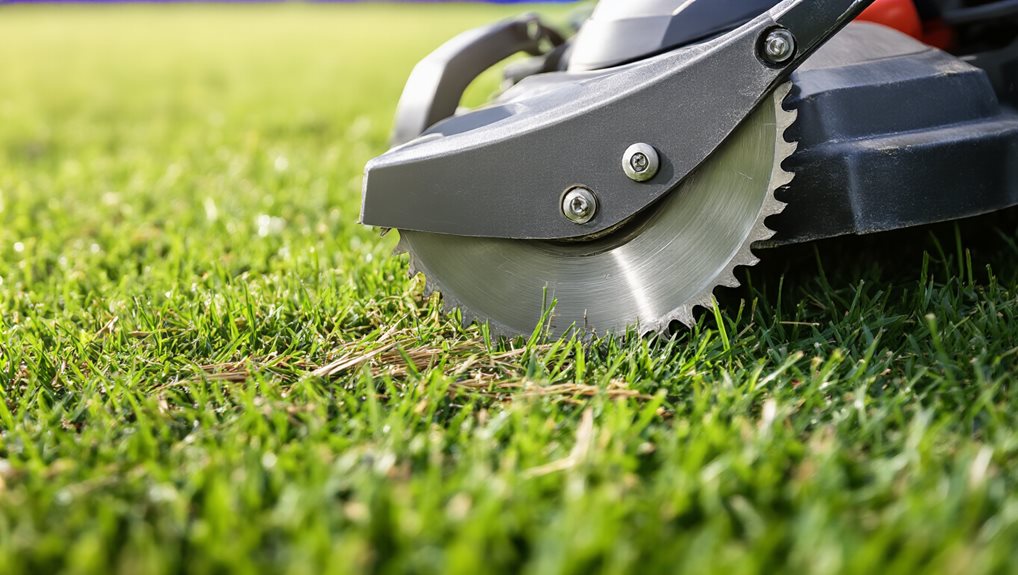
Why do uneven cuts keep showing up in your lawn? You’re likely mowing with dull blades, which tear grass, create jagged edges, and invite disease, so sharpen or replace them. Sharpen every 20‑25 mowing hours, balance blades after grinding, and swap out bent or heavily worn ones. Clean cuts reduce engine strain, fuel use, and emissions, keeping your lawn healthy and your mower lasting longer. Sharp blades also improve lawn appearance by providing a uniform, carpet‑like finish.
Fix Deck Misalignment for Even Cutting Height and Uneven Mower Cuts
Even if your blades are sharp, an out‑of‑level deck can still produce uneven strips, so after sharpening or replacing dull blades you should check the deck’s alignment. Park the mower on a flat surface, turn blades perpendicular, and measure height at several points; if differences exceed ¼ inch, loosen side‑to‑side brackets or threaded rods, adjust with nuts or spacers, retighten, then repeat front‑to‑rear checks, ensuring the deck hangs evenly without tilt. Regular preheating and maintenance habits from recommended oven care remind us to keep alerts for any burning residues or unusual odors during work and maintenance to prevent degraded performance over time preheating benefits.
Check & Inflate Tire Pressure to Stop Leaning and Uneven Mower Cuts
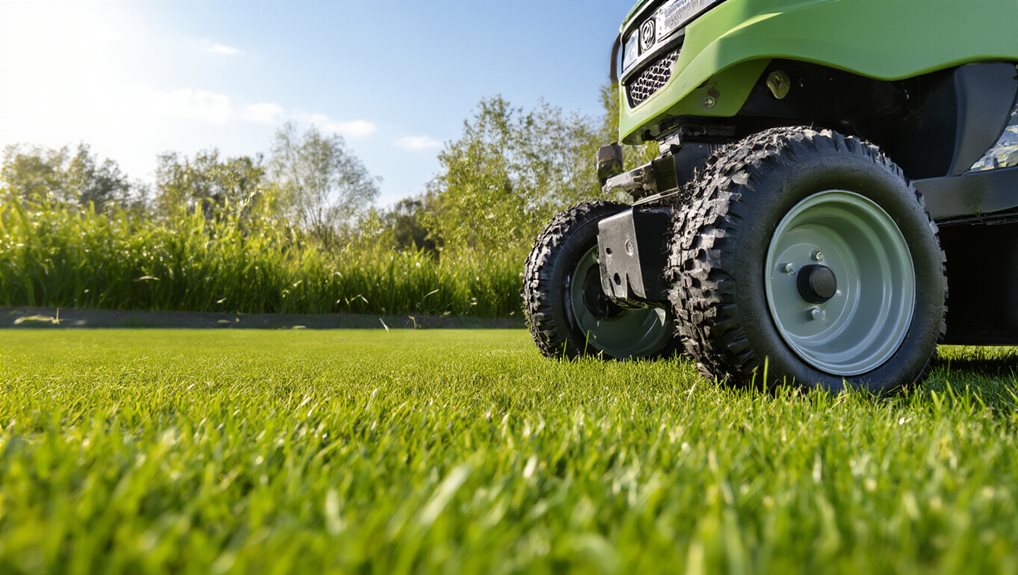
Ever wonder why your mower leans to one side and leaves a ragged strip on the lawn? Check each tire with a gauge, compare the readings to your manual—typically 10 psi rear and 15 psi front—and inflate or deflate until both sides match. A level deck follows equal pressure, eliminating scalping, ridges, and uneven cuts, so you feel confident your lawn looks consistently perfect. Regularly calibrating the tire pressures helps maintain consistent traction and weight distribution across the deck, especially when you’re mowing across slopes or uneven terrain, ensuring a more uniform cut and reducing wear on the blades and tires. tire pressure
Replace Worn Tires to Restore Mower Stability and Reduce Uneven Mower Cuts
How do worn tires affect your mower’s cutting performance? They destabilize the deck, causing it to tilt and produce uneven blade height, wobble, and patchy grass lengths. Replace them by jacking the mower, removing lug nuts, swapping the worn tire for an OEM‑equivalent pneumatic model with proper tread and reinforced sidewalls, then torque nuts. Restored stability eliminates leaning, delivering uniform cuts and a healthier lawn.
Remove Grass Buildup to Prevent Patchy Uneven Mower Cuts
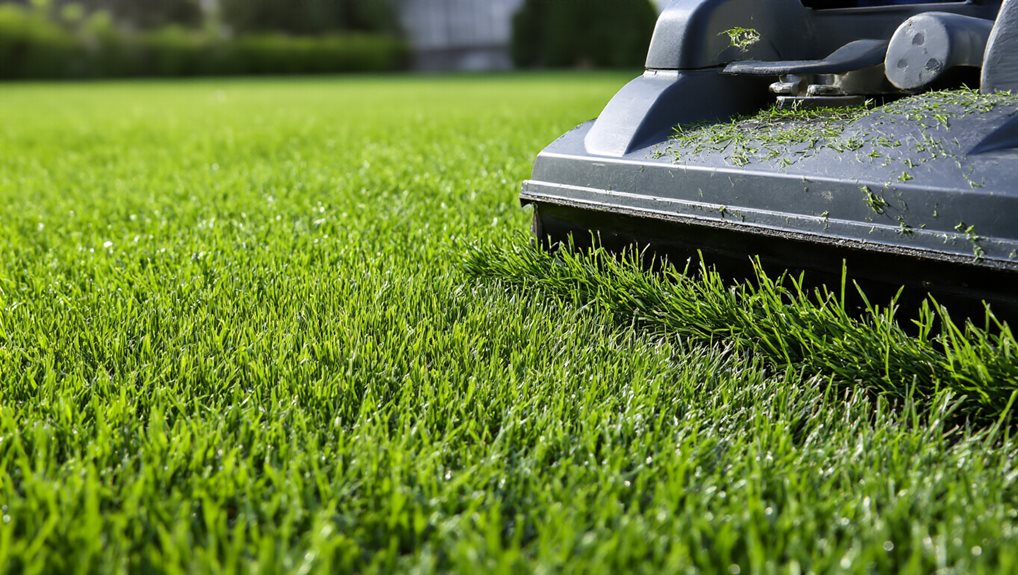
You should keep the deck clean by removing clippings after every pass, because buildup quickly blocks airflow and creates uneven cuts.
Inspect the air‑flow pathways regularly, clearing any debris that could disrupt the blade’s lift and ejection.
Maintaining a spotless deck not only prevents patchy grass but also preserves the mower’s overall performance.
Regular Deck Under Clean
A regular deck under‑clean is essential because grass buildup directly causes uneven cuts; when clippings accumulate, they prevent the blades from slicing cleanly, leading to shredded, patchy sections and reduced airflow that hampers consistent performance.
You should wipe the deck after each use, power‑wash with a wide‑angle nozzle weekly, and scrape stubborn clumps with a plastic brush or putty knife, keeping airflow strong and cuts uniform.
Remove Clippings Promptly
Why does the mower start leaving patchy, uneven strips after just a few passes? You’ll notice that wet or thick clippings cling to the deck, forming clumps that block airflow and prevent blades from contacting grass evenly.
Inspect Airflow Pathways
Ever notice how a mower that once cut smoothly suddenly leaves thin, uneven strips? Inspect your airflow pathways each time you finish mowing; remove grass buildup under the deck, clear clogged catcher vents, and tap the air filter to dislodge debris. A clean deck restores the blade‑generated whirlwind, prevents patchy cuts, reduces engine strain, and keeps your mower performing reliably for the whole crew.
Bent Blades, Spindle Damage, and Mowing Technique Mistakes That Cause Uneven Mower Cuts
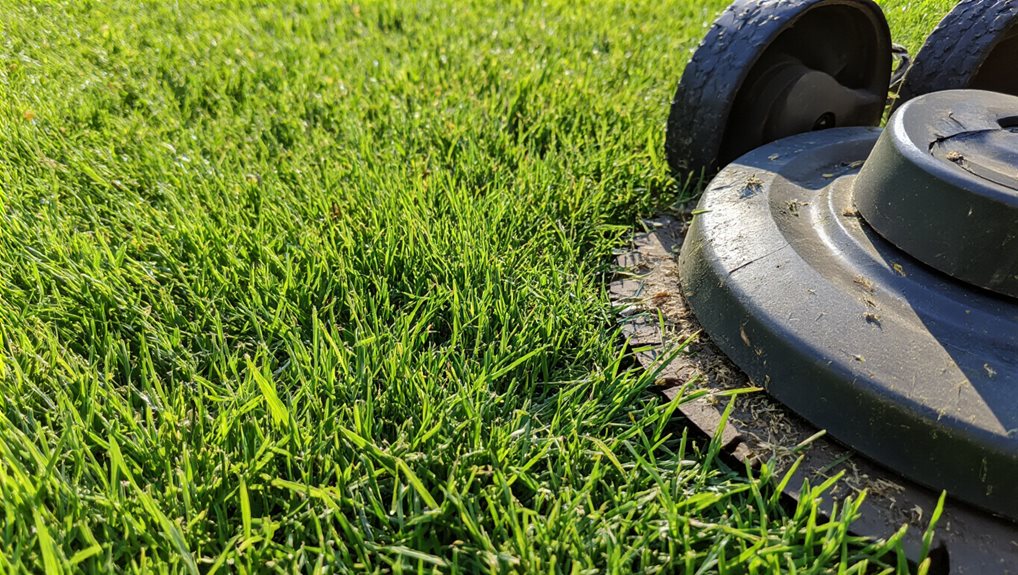
How often do you notice sharp ridges or uneven strips after mowing, only to uncover the cause isn’t the grass but the mower itself? Bent blades from rocks or stumps create step cuts; check tip height differences over ¼ inch. Spindle impacts twist rotation, causing deck bounce and scalping. Mis-aligned decks, uneven tire pressure, and mowing too fast or low amplify streaks, so inspect, level, and adjust for consistent cuts.
Final Note
By keeping blades sharp, aligning the deck, maintaining proper tire pressure, replacing worn tires, and clearing grass buildup, you’ll eliminate the most common causes of uneven cuts. Regularly inspect for bent blades or spindle damage, and adjust your mowing technique to avoid low‑speed, overlapping passes. These straightforward maintenance steps ensure a consistently even lawn, reduce wear on the mower, and give you a professional‑grade finish without unnecessary effort.

Nathan McPhail is a garden and home DIY expert who writes practical, easy-to-follow advice for homeowners and gardeners. Through Yardique, he shares hands-on tips covering gardening, lawn care, landscaping, home improvement, repairs, tools, and outdoor living. His focus is on helping readers solve everyday household and yard problems with straightforward guidance, useful techniques, and practical solutions.