Your mower’s vibration usually comes from an unbalanced or damaged blade, a bent or cracked crankshaft, loose bolts or mounts, or a warped deck or spindle; an unbalanced blade after sharpening will wobble, showing white grass strips or uneven cuts, while a bent crankshaft causes the center bolt to wobble when you pull the starter rope. Tightening engine mounts and blade bolts, checking for cracked decks, and inspecting bearings can often stop the shaking, and if you keep going you’ll discover the exact steps to fix each issue.
TLDR
- An unbalanced or bent blade creates uneven weight distribution, causing excessive vibration and wobbling.
- A cracked or bent crankshaft leads to center‑bolt wobble during rotation, transmitting vibration to the deck.
- Loose engine mounts, blade bolts, or other fasteners reduce damping and amplify shaking.
- A warped or cracked deck, bent spindle, or worn bearings shift weight and generate rhythmic tremors.
- Dull blades, debris buildup, or damaged spark plugs can increase engine strain and contribute to vibration.
Diagnose Unbalanced Blade After Sharpening
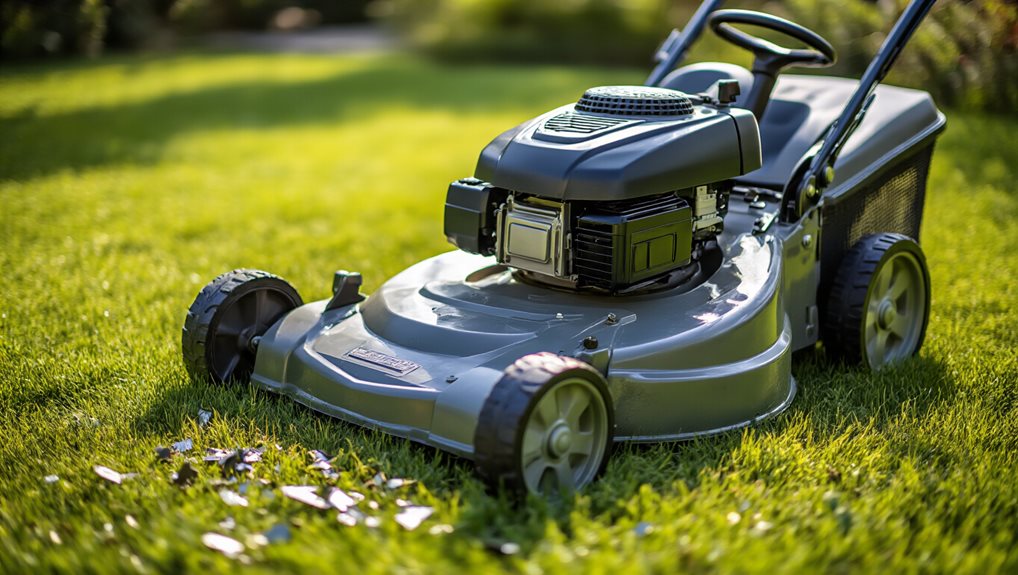
Why does your mower suddenly shake after you’ve sharpened the blade? You’ll notice excessive vibration, a wobbling deck, or white grass strips because the blade is unbalanced. Hang it on a nail or use a bearing balancer; if one side hangs lower, grind the heavier side, clean debris, and re‑test. Replace cracked blades, keep edges 90°, and verify balance before mowing. Dull blades can also cause uneven cutting and increased vibration.
How to Spot a Bent or Cracked Crankshaft
You’ll want to start with a visual inspection of the crankshaft, looking for any obvious cracks or bends, and then run a rotational play test by slowly pulling the starter rope to see if the center bolt wobbles side‑to‑side.
If the bolt moves while you rotate the shaft, that wobble usually signals a bent or cracked crankshaft.
Combine these checks with a quick glance at the blade’s motion to confirm whether the vibration stems from the crankshaft or another component.
Crankshaft Visual Inspection
How can you quickly tell if the crankshaft is bent or cracked before disassembling the mower? Inspect the blade for dents or marks indicating impact, then rotate the engine manually (spark plug removed) and watch the center bolt; any side‑to‑side wobble reveals a bent shaft. Measure blade‑deck clearance at several points—consistent 3/8‑inch gaps mean alignment, while varying gaps signal bending.
Rotational Play Test
A rotational play test lets you determine whether the crankshaft is bent or cracked without tearing the mower apart, and it’s quick once the blade’s been removed and the spark plug wire is disconnected for safety.
Grip the adapter, turn the shaft slowly both ways, and feel for side‑to‑side play beyond 0.010 inches; a dial indicator can confirm deviations of 0.005‑0.015 inches, indicating a bend, while irregular wobble or grinding suggests a crack.
Tighten Loose Bolts and Mounts to Reduce Vibration
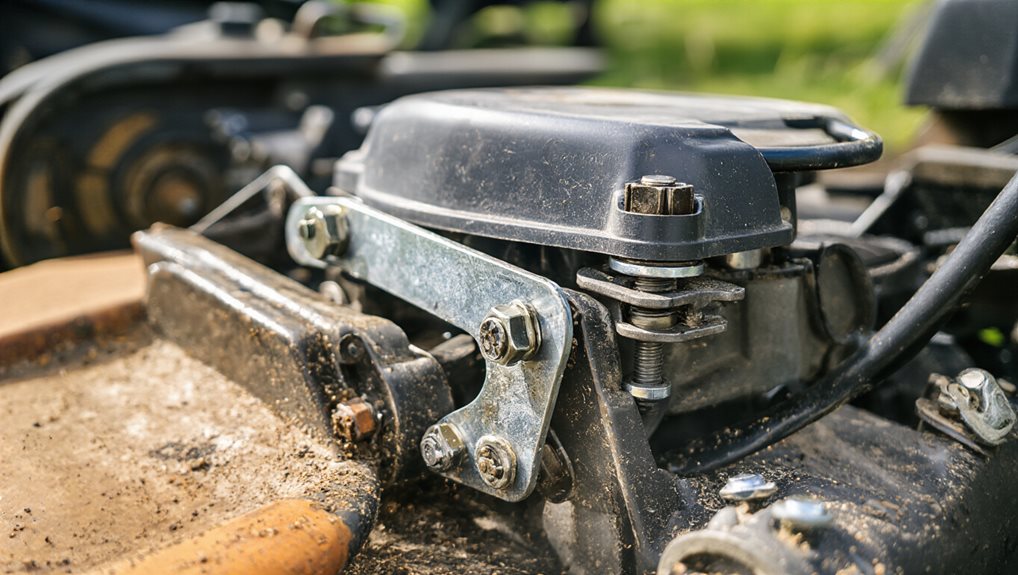
You should start by tightening the engine mounts, because any looseness there directly amplifies the mower’s vibration.
Next, secure the blade bolt and inspect the handlebars and surrounding nuts for any play that could cause wobble during operation.
Finally, give each fastener a proper torque check after the first few mowings to maintain preload and prevent the creep effect that gradually loosens bolts.
Tighten Engine Mounts
Why does your mower shake so violently? Tightening engine mounts restores the rubber or spring isolation that damps engine tremors, so you’ll feel less shaking and hear less noise. Inspect each bolt, apply the manufacturer’s torque, and tighten evenly to keep the engine aligned with the frame. A secure mount limits structural vibration, prolongs bearing life, and keeps your mower running smoothly.
Secure Blade Bolt
When the engine mounts are properly tightened, the next common source of vibration is a loose blade bolt. You’ll disconnect the spark plug, secure the mower, and use a socket wrench or impact driver with a wood block to keep the blade from spinning while you mark its orientation, remove the bolt, and inspect.
Tighten the bolt to the manufacturer’s torque with a wrench, reinstall the blade in its marked position, and verify balance, ensuring the blade stays centered and the mower runs smoothly.
Inspect Handlebars and Nuts
Often, the source of a mower’s excessive shake lies not in the blade but in the handlebars and their mounting hardware. You should check for wobble while the engine idles, tighten any loose nuts or bolts with the correct torque, and verify that mounts aren’t cracked or bent.
Regularly aligning handlebars to the deck and documenting torque values will keep vibrations low and the mower feeling stable.
Deck and Spindle Issues That Increase Lawn Mower Vibration
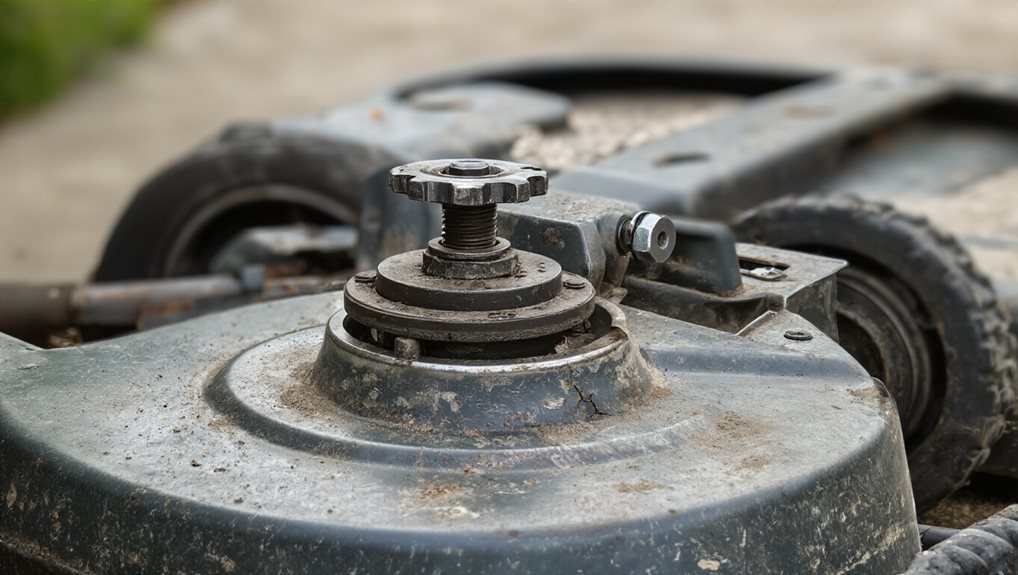
Ever notice how a mower’s deck and spindle can turn a smooth cut into a rattling mess? Cracked or warped decks unbalance the unit, while clogs and debris add weight shifts that amplify shaking. Bent spindles mimic blade damage, causing severe vibration even with new blades, and worn bearings generate rhythmic tremors. Loose nuts, mis‑mounted adapters, or wedged pulleys further destabilize the system, so inspect and tighten every component to restore harmony.
Regular checks for proper blade balance and ensuring the deck is free of cracks help prevent recurrent vibration and protect mower components blade balance.
Engine Factors That Trigger Lawn Mower Vibration
Why does your mower shake even after you’ve checked the deck? Unbalanced or bent blades, a cracked crankshaft, loose engine nuts, worn spark plugs, and a sheared flywheel key each create uneven forces, making the engine tremble. Inspect blades for dents, verify crankshaft alignment after impacts, tighten mounts to proper torque, replace faulty plugs, and ensure the flywheel key isn’t damaged to restore smooth operation.
Step‑by‑Step Troubleshooting Checklist for Mower Vibration
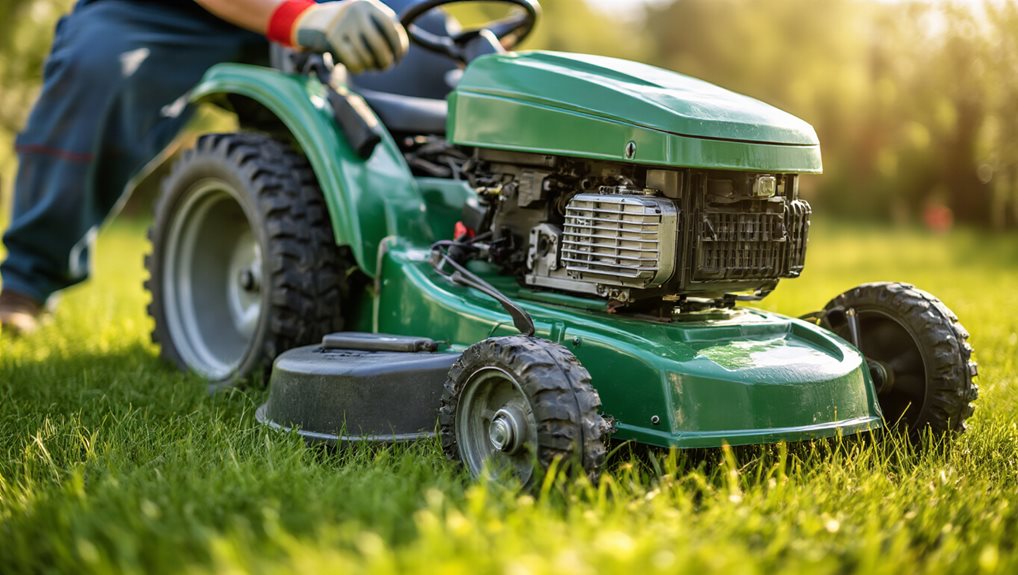
How can you pinpoint the exact cause of a mower’s vibration before disassembling the whole machine? First, inspect the blade for dents or bends, test its balance, and trim or replace if needed. Next, tighten all engine mounts, handlebars, nuts, and bolts. Then, clean the deck, checking for cracks or warping. Finally, examine wheel alignment and transmission bearings for wear. Add a layer of vibration control by checking for consistent mounting surfaces and ensuring a stable base to reduce resonant vibrations through the frame layered construction and the path of least resistance for sound and vibration.
Should You DIY or Call a Pro for Vibration Repairs?
After checking the blade, mounts, and deck for obvious issues, you’ll need to decide whether to tackle the remaining vibration problems yourself or call a professional. If you’re comfortable balancing blades, tightening bolts, and cleaning the deck, DIY can save money, but remember that bent crankshafts, cracked fuel lines, or warranty constraints demand expert attention. A qualified technician will spot hidden wear, perform comprehensive tune‑ups, and protect your mower’s lifespan, while also keeping you safe from sharp blades and hot engine parts. Choose the path that matches your skill level, warranty status, and the severity of the vibration.
Final Tips to Keep Your Lawn Mower Running Smoothly
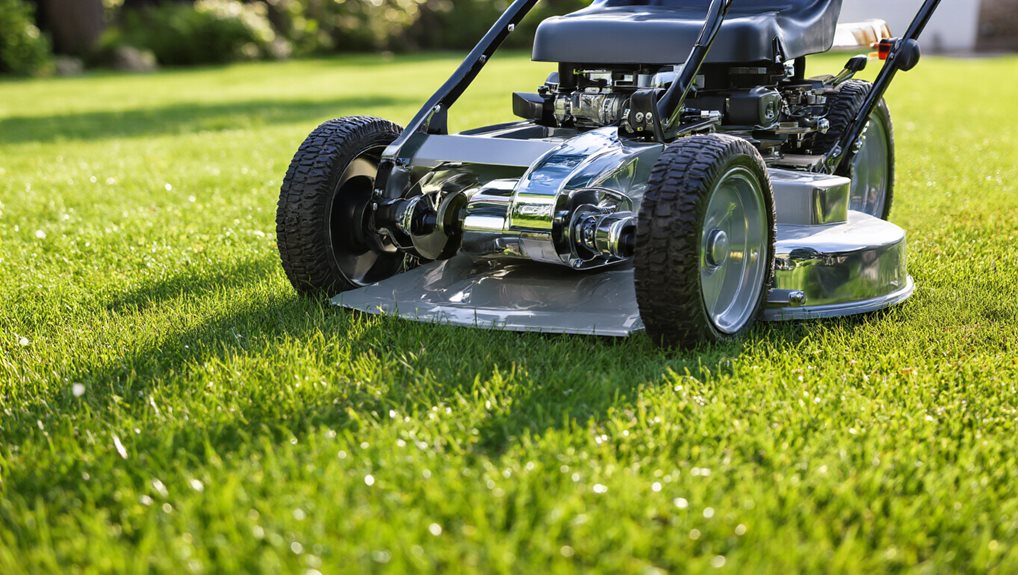
Ever wondered why a well‑maintained mower still shakes? Keep blades sharp, balanced, and torqued to spec; clean the deck after each cut, removing clippings and debris; tighten every bolt, nut, and handle fastener with a torque wrench; align wheels, check the deck for cracks, and ensure the crankshaft spins without wobble. Schedule regular servicing, use proper oil and fuel, and store the mower dry to preserve smooth operation. Regular maintenance reduces vibration and prevents unnecessary wear on engine components, much like how proper space and habitat planning keeps poultry and livestock healthy and productive in their environments 1.
Final Note
By regularly checking blade balance, inspecting the crankshaft for bends or cracks, tightening all bolts and mounts, and addressing deck or spindle wear, you’ll prevent most vibration problems. Keep the engine tuned and follow the step‑by‑step checklist to pinpoint issues early. If repairs exceed your comfort level, don’t hesitate to call a professional. Consistent maintenance will extend your mower’s life and guarantee a smooth, efficient cut every time.

Nathan McPhail is a garden and home DIY expert who writes practical, easy-to-follow advice for homeowners and gardeners. Through Yardique, he shares hands-on tips covering gardening, lawn care, landscaping, home improvement, repairs, tools, and outdoor living. His focus is on helping readers solve everyday household and yard problems with straightforward guidance, useful techniques, and practical solutions.