You prune vegetable plants to direct energy toward larger, healthier yields and improve airflow, reducing disease risk. Use sharp, clean bypass pruners for smooth cuts, sanitizing tools with alcohol between plants—especially when removing diseased material. Prune at the right time: tomatoes at flowering, peppers early to enhance bushiness, cucumbers and squash to manage growth. Cut just above buds at a 45° angle, remove the 4 D’s (dead, diseased, damaged, dragging), and thin crowded plantings to support strong growth. There’s more to mastering each crop’s needs.
TLDR
- Prune at the right time: trim tomatoes at flowering, peppers early for bushiness, and cucumbers in summer or dormancy as needed.
- Use sharp, clean bypass pruners to make smooth 45° cuts just above buds or stems to prevent disease and promote healing.
- Remove dead, diseased, or damaged growth immediately, cutting six inches into healthy tissue to stop infection spread.
- Improve airflow by pruning lower leaves, suckers, and crowded branches, especially in tomatoes, cucumbers, and squash.
- Sterilize tools between plants—or between cuts on diseased material—using alcohol or bleach to prevent pathogen transmission.
Start With Why: the Purpose of Pruning Vegetables
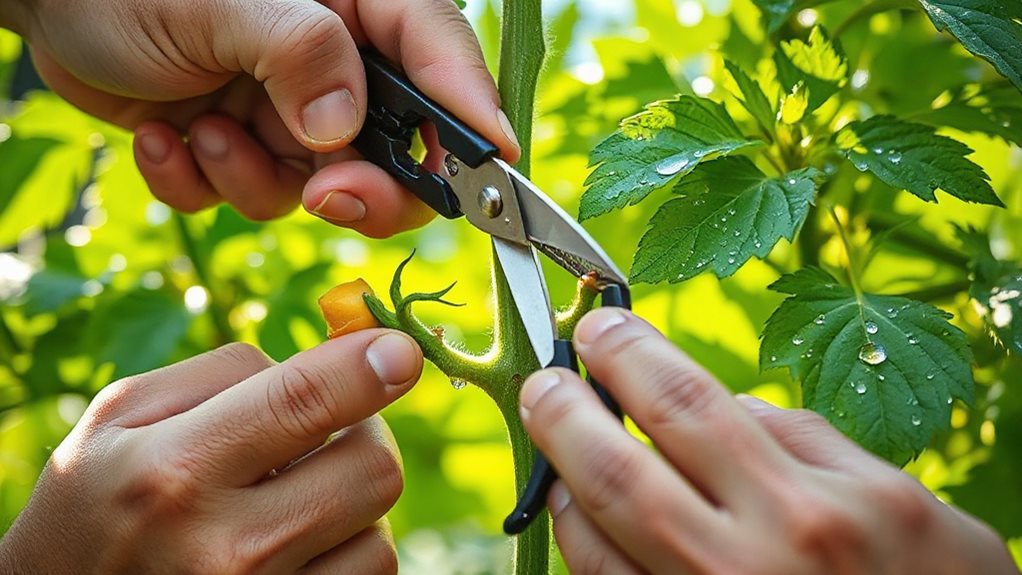
While it might seem counterintuitive to cut away parts of a healthy plant, pruning vegetables serves essential purposes that go far beyond simple trimming. You strengthen structure, direct energy to fruits, and improve airflow, reducing disease. Redirecting energy helps the plant focus its resources on producing larger, healthier yields instead of maintaining excessive foliage. Cooler weather often benefits many vegetables, so timing your pruning to match cool-season growth can improve results.
Choose the Right Pruning Tools for Clean Cuts
You need sharp, clean tools to make precise cuts that help your vegetable plants heal quickly and stay healthy.
Using bypass pruners for live stems gives you a smooth, scissor-like cut, while sterilizing your blades between cuts keeps diseases from spreading.
With the right gear—like lightweight pruners or loppers with comfort grips—you’ll reduce hand strain and get the job done efficiently.
Choose blades made from SK-5 Japanese steel or similarly durable high-carbon materials to keep edges sharp and resist rust.
Sharp Tools Matter
Always start with the right tool in hand, because sharp, well-matched equipment makes all the difference when pruning vegetable plants.
You need clean cuts to prevent damage and disease, so keep blades sharp and choose bypass pruners for live stems. Dull tools crush rather than cut, stressing plants.
Regularly maintain your tools—they’ll last longer and perform better, keeping your vegetable garden healthy and thriving.
Clean Cuts Prevent Disease
Most of the time, a clean cut is your best defense against disease when pruning vegetable plants, and choosing the right tool makes all the difference.
Use bypass pruners for live stems—they slice cleanly like scissors, helping plants heal fast.
Avoid anvil pruners on green growth, since they crush tissue and invite infection.
Sharp, well-matched tools mean healthier, happier plants in your garden.
Sterilize For Safety
Keeping your pruning tools sterile isn’t just good practice—it’s essential for stopping the spread of disease between plants.
Use 70–100% isopropyl alcohol to wipe, spray, or dip tools—it works fast and leaves no residue.
For fire blight on apple trees, opt for a 10% bleach solution, rinsing thoroughly after.
Hydrogen peroxide and household cleaners like Lysol are solid alternatives—just dilute properly and avoid corrosion.
Sanitize Tools to Stop Disease Spread
You should always clean your tools before sanitizing, since dirt and sap can block disinfectants from killing harmful microbes.
Wipe off debris, then use a 10% bleach solution or 70% isopropyl alcohol to sterilize blades—just remember bleach needs a 10-minute soak while alcohol works fast but is flammable.
To stay safe and effective, disinfect between plants, especially when disease is a concern, and let one tool soak while you use another.
Store primers in a cool, dry place to maintain their shelf life and effectiveness.
Clean Tools Prevent Infection
Regularly sanitizing your pruning tools isn’t just good habit—it’s a crucial step in stopping the spread of diseases between vegetable plants.
Clean blades with soapy water first, then disinfect using bleach, alcohol, or hydrogen peroxide.
Always rinse and dry tools thoroughly, then apply oil to prevent rust.
These steps protect your plants and guarantee your tools stay in top condition, keeping your garden healthy and strong all season.
Sterilize Between Cuts Always
Always sterilize your pruning tools between cuts when working around diseased plants—this simple step drastically reduces the risk of spreading pathogens like bacteria, fungi, or viruses to healthy tissue.
Use 70–100% isopropyl alcohol for quick, no-rinse disinfection, or try diluted hydrogen peroxide as a non-flammable alternative.
Clean tools after every few cuts on healthy plants, and always between different shrubs or trees.
Know When to Prune by Vegetable Type
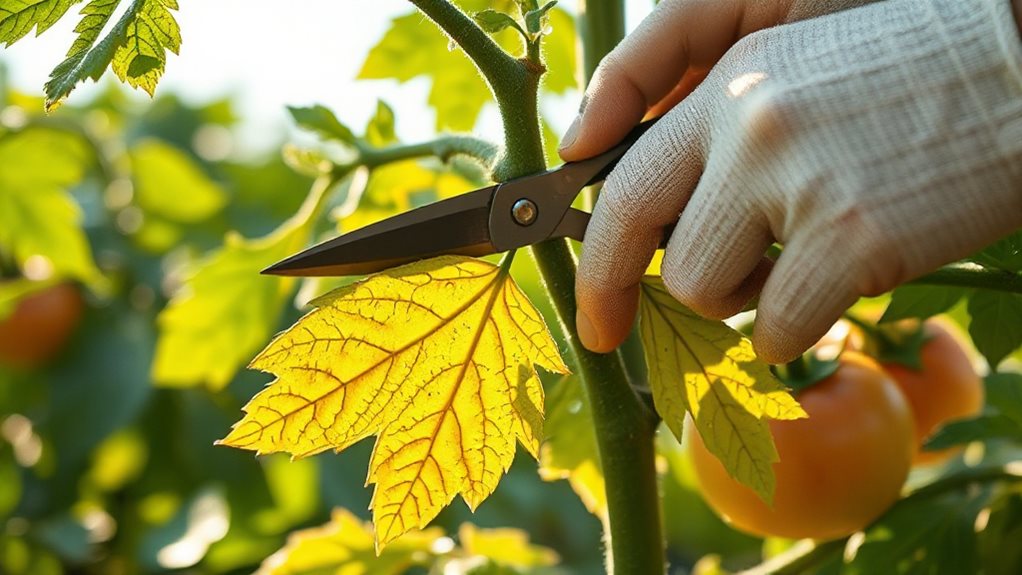
When it comes to maximizing yield and plant health, timing your pruning efforts according to each vegetable’s growth pattern makes all the difference.
Prune tomatoes when flowers form, peppers early to enhance bushiness, and cucumbers in dormancy or summer as needed.
Pinch squash leaders early, top eggplants for branching, and always follow the one-third rule to keep your plants strong and productive all season.
Harvest chives when they reach 7 to 10 inches in height and cut leaves just above the soil line to encourage fresh growth and prevent overcrowding, leaving 2-3 inches for regrowth and ensuring you never remove more than one-third of the plant at a time harvest timing.
Spot What to Remove: The 4 D’s Rule
While your vegetable plants grow, keeping a sharp eye on what needs to come off can make the difference between a struggling crop and a thriving one.
Look for the 4 D’s: dead, diseased, damaged, and dragging branches. Remove dead wood anytime, cut diseased parts six inches into healthy tissue, trim damaged limbs cleanly, and clear ground-touching growth to prevent disease. Let some healthy green peppers ripen on the vine to improve flavor and nutrients red peppers.
Make 45° Cuts for Faster Plant Healing
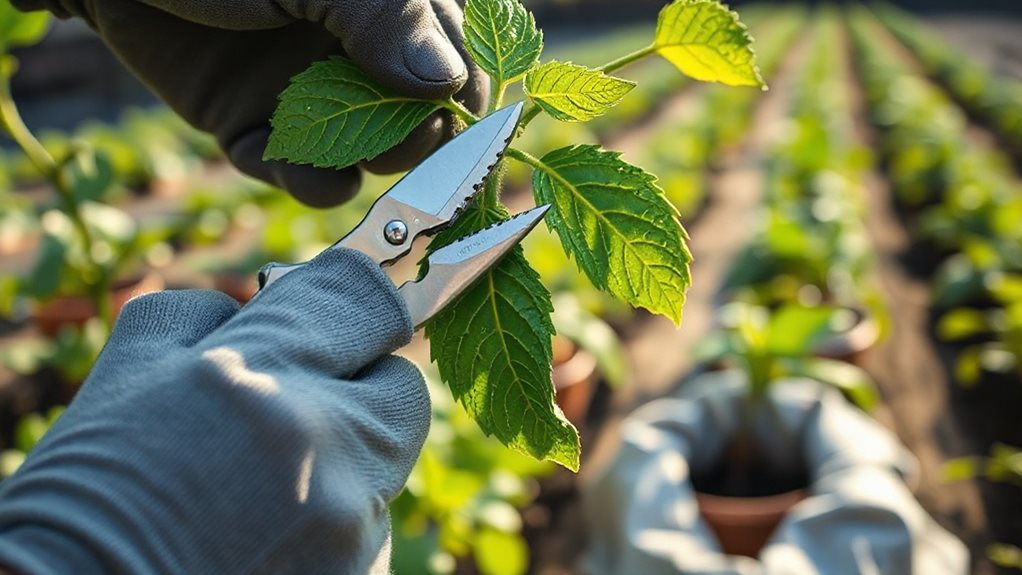
Make your pruning cuts at a 45° angle just above a bud to help the plant heal faster and build strong new tissue.
This angled cut keeps water from pooling on the wound, which reduces the risk of rot and disease.
Optimal Angle For Healing
Slice through stems at a 45-degree angle to give your vegetable plants the best chance at quick, clean healing. You’ll shed water efficiently, reduce disease risks, and seal wounds faster.
This precise cut protects the branch collar, minimizes pest entry, and supports strong regrowth. Aim just above a bud or lateral stem, ensuring smooth, angled cuts that promote resilience and keep your garden thriving.
Promote Healthy Tissue Regrowth
A clean 45-degree cut does more than just seal quickly—it actively encourages your vegetable plants to regenerate healthy tissue with precision and strength.
Prevent Water Accumulation
With the right angle, you’re already one step ahead in keeping your vegetable plants healthy and disease-free. Make 45° cuts just above a bud or lateral branch to shed water away from the wound.
This slant prevents pooling, reduces fungal risks, and speeds healing by improving drainage and airflow, so your plants recover faster and stay strong.
Prune Thick Branches With the Three-Cut Method
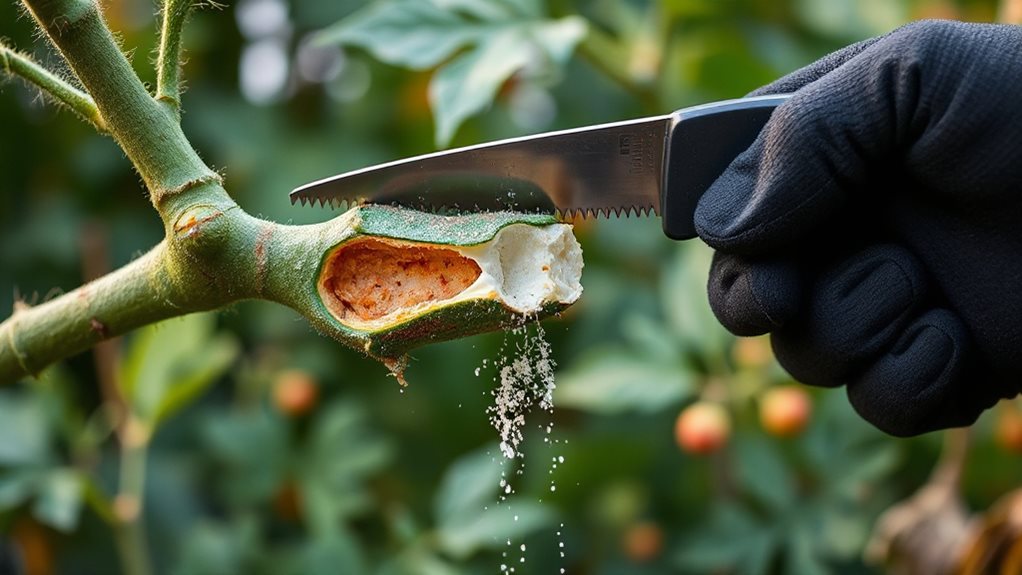
When tackling thick vegetable plant branches, you’ll want to step up your pruning game by using the three-cut method—it’s the smart way to remove heavy limbs without damaging the plant’s trunk or leaving ragged wounds.
Make an undercut first to prevent bark tear, then a top cut beyond it to remove the branch weight.
Finally, trim the stub just outside the branch bark collar to encourage clean healing and protect your plant’s long-term health.
Maximize Tomatoes With Strategic Pruning
You’ve perfected the three-cut method for thick branches, and now it’s time to apply that precision to your tomato plants—where smart pruning directly influences both quality and quantity of your harvest.
Prune indeterminate types to enhance airflow and reduce disease, using clean tools and pinching small suckers.
Time pruning every 10–14 days starting in early summer, and skip pruning determinate varieties to maximize yield.
Train Cucumbers and Squash for Airflow
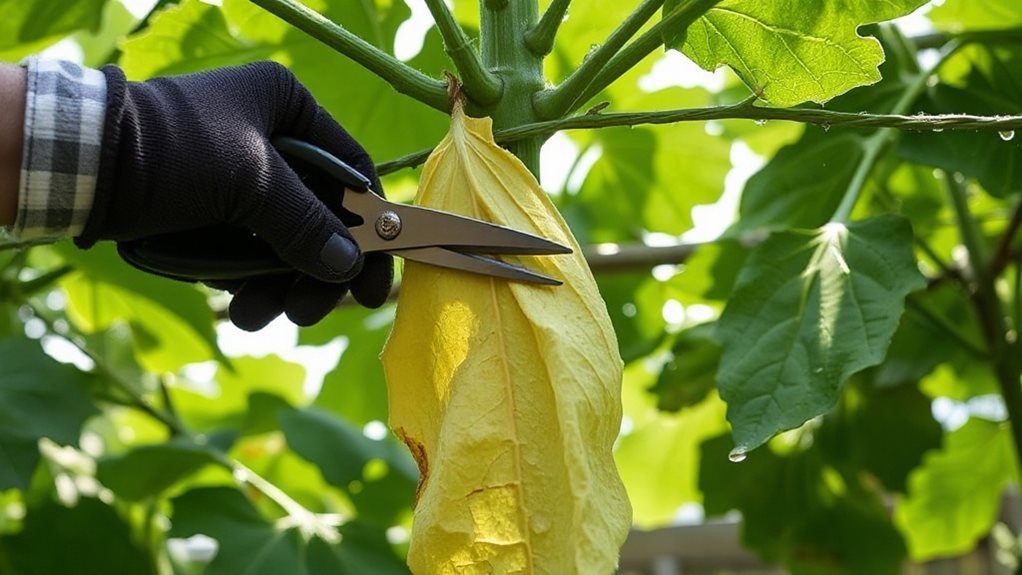
Elevating your cucumbers and squash off the ground isn’t just about saving space—it’s a smart move to enhance plant health and fruit quality.
Use sturdy trellises with slip knots or Velcro ties that expand as stems grow.
Prune lower leaves and suckers to increase airflow, reduce disease, and direct energy upward.
Training vines vertically improves light exposure, keeps fruit clean, and supports heavier yields—all while nurturing a healthier, more productive garden you can be proud of.
Prune Peppers for Health and Airflow
Though often overlooked, pruning pepper plants is a simple yet powerful practice that enhances both plant health and fruit production.
Start when your plant is 6–8 inches tall, removing suckers and low leaves to improve airflow. This reduces disease, strengthens stems, and directs energy to fruit.
Top the main stem for compact growth, and trim crowded branches to enhance sun exposure and harvest ease.
Thin Dense Plants Without Losing Yield
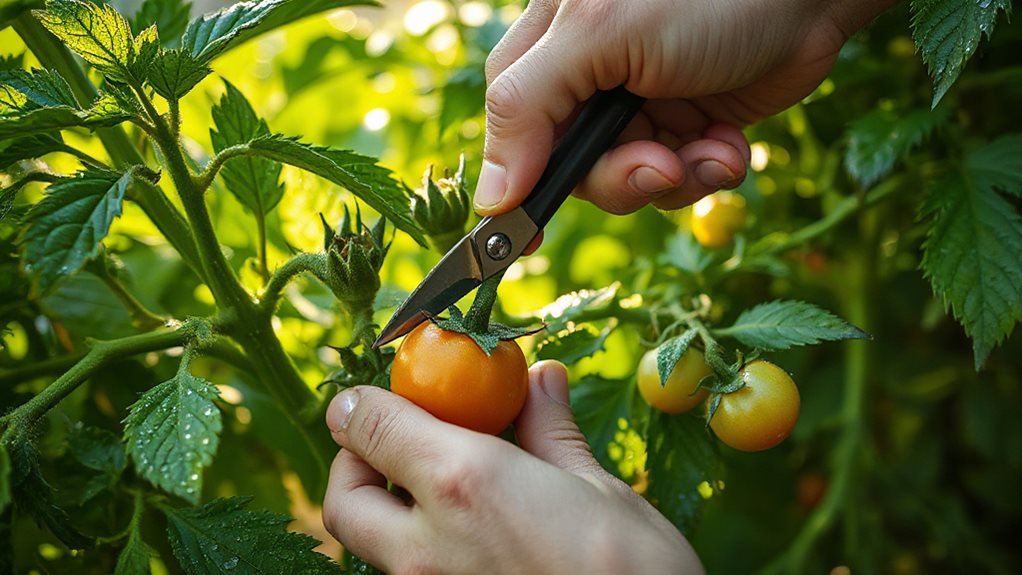
Thinning dense seedlings early and strategically keeps your vegetable garden productive without sacrificing harvest size.
Clip or snip sensitive plants like carrots and cucumbers at soil level to avoid disturbing neighbors.
Thin in stages—first to 1–2 inches, then to final spacing—so stronger plants thrive.
Reuse thinned onions or enjoy baby greens.
Water gently afterward, and thin in the evening to reduce stress.
Prune in Late Summer for Garden Cleanup
Pruning in late summer isn’t just about tidying up—it’s a strategic move to revitalize your vegetable garden and extend productivity.
Cut back one-third of vigorous plants like okra or cherry tomatoes to spur new growth, and remove diseased or damaged branches to protect plant health.
Trim wet foliage only when dry to prevent disease spread, and improve air circulation by eliminating lower or overlapping leaves, ensuring your garden stays strong and clean going into fall.
Final Note
You’ve got this—pruning keeps your vegetable plants healthy and productive. By using clean, sharp tools and following the 4 D’s, you remove only what’s necessary. Timing matters: prune cucumbers and peppers for airflow, thin crowded growth, and tidy up in late summer. With proper technique, you’ll reduce disease, improve yields, and support strong plant structure. Stay consistent, and your garden will thank you.

Nathan McPhail is a garden and home DIY expert who writes practical, easy-to-follow advice for homeowners and gardeners. Through Yardique, he shares hands-on tips covering gardening, lawn care, landscaping, home improvement, repairs, tools, and outdoor living. His focus is on helping readers solve everyday household and yard problems with straightforward guidance, useful techniques, and practical solutions.