First, eliminate every food and water source: keep garbage in airtight bins, store pet food inside after meals, clear bird‑feeder trays promptly, secure compost, and drain standing water. Then install tight‑mesh fencing that extends underground, seal gaps around structures, and remove brush piles or overgrown shrubs that give shelter. Plant aromatic herbs like lavender, yarrow, and spicebush, and use homemade sprays of cayenne, hot sauce, or vinegar to create scent barriers. Rotate ammonia‑soaked rag balls and motion‑activated lights or sprinklers to prevent habituation, and reapply deterrents after rain or weekly. By maintaining these layers and tracking activity, you’ll see a marked decline, and the next steps will show how to fine‑tune your yard’s defenses.
TLDR
- Eliminate food and water sources by securing garbage, removing pet food after meals, and draining standing water.
- Install tight‑mesh (¼‑inch) hardware cloth fencing with underground L‑shaped footers, sealing all gaps to block squeezing, digging, and climbing.
- Plant aromatic, deterrent herbs and flowers (lavender, yarrow, spicebush) near vulnerable areas and use homemade cayenne or hot‑pepper sprays.
- Deploy motion‑activated sprinklers or lights and rotate ammonia‑soaked rag balls or vinegar sprays to prevent habituation.
- Regularly inspect and maintain barriers, refill deterrent sprays, and log raccoon activity to adjust strategies promptly.
Remove Food & Water Sources First
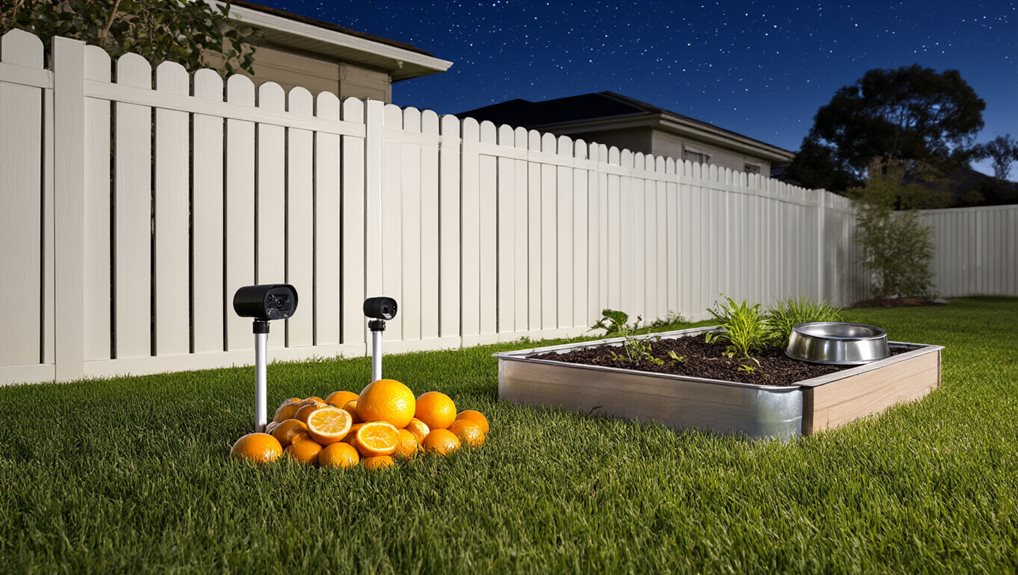
A solid first step is to eliminate any food and water that could lure raccoons into your yard, because these mammals are opportunistic feeders that will travel considerable distances for easy meals and hydration.
Seal garbage in tight‑fitting containers, bring pet food inside after meals, empty bird‑feeder trays promptly, and secure compost bins; also remove standing water by draining pet bowls and fixing low‑lying basins. Raccoons are highly adaptable and can thrive in a wide range of habitats, so removing these attractants is especially important in urban and suburban areas. The practice of keeping areas clean to minimize attractants is supported by general wildlife guidance that emphasizes reducing access to resources as a core preventative step attractant management.
Install Physical Raccoon Barriers & Landscape Adjustments
You’ll want to install tight mesh fencing—preferably galvanized hardware cloth or chain‑link—so raccoons can’t squeeze through gaps, and make sure the fence extends underground with an L‑shaped footer to block digging.
At the same time, clear away brush piles, hollow logs, and overgrown shrubs that give them hiding spots, and seal any gaps around sheds, decks, or porches with hardware fabric. By combining a solid physical barrier with a tidy, debris‑free landscape, you create an environment that’s far less inviting to raccoons.
Tight Mesh Fencing
How can you keep raccoons out of your garden without sacrificing visibility? Use ¼‑inch hardware cloth on the lower two feet, secure it with galvanized staples every 4‑6 inches, and overlap rolls to eliminate gaps.
Add 18‑inch netting, brace posts with angle brackets, and reinforce corners to prevent climbing. This tight mesh preserves sightlines while blocking digging and squeezing.
Clear Debris and Overgrowth
While the tight‑mesh fence keeps raccoons out of the garden’s perimeter, the next step is to eliminate the hiding places and food sources that draw them in. Trim overgrown bushes, remove brush piles, and clear fallen fruit, so you deny shelter and nutrition; install screened barriers under decks, extend them underground, and schedule regular yard inspections to keep the space tidy and secure.
Plant Raccoon‑Deterrent Herbs & Flowers
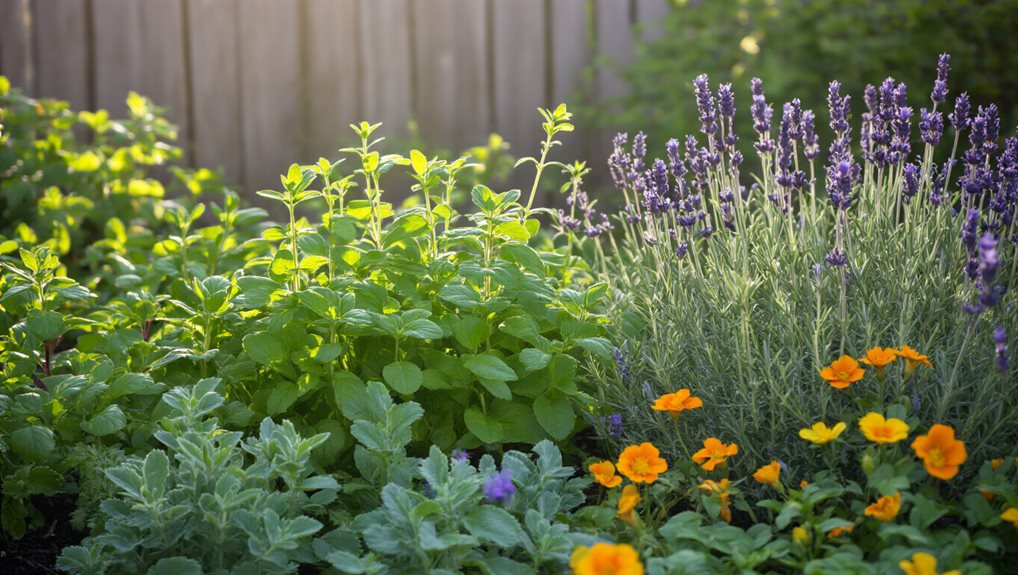
If you plant a mix of aromatic herbs and hardy flowers around the most vulnerable spots in your yard—such as near ponds, kitchen gardens, or fruit‑dropping trees—you create a natural, scent‑based barrier that discourages raccoons from for.
Lavender’s strong perfume, yarrow’s pungent feathery foliage, spicebush’s aromatic leaves, cayenne’s spicy aroma, and soap‑companion plants together form a long‑lasting, low‑maintenance deterrent that blends into your garden’s ecosystem while keeping raccoons at bay. soil health and prevention reinforce this approach by supporting plant vigor and resilience against pests and stresses that might attract wildlife.
Mix Raccoon‑Deterrent Homemade Sprays
Ever wondered why a simple spray can keep raccoons away from your garden? Mix hot sauce or cayenne with water, add a few drops of dish soap, and spray edges, trash cans, and protected beds; the pungent scent assaults their noses.
Boil water with cayenne, jalapeño, and onion, steep, strain, and spray for a strong odor. Reapply after rain.
In addition, consider pungent scents as a deterrent by rotating ingredients to maintain effectiveness and reduce desensitization over time.
Apply Ammonia & Vinegar Raccoon Deterrents
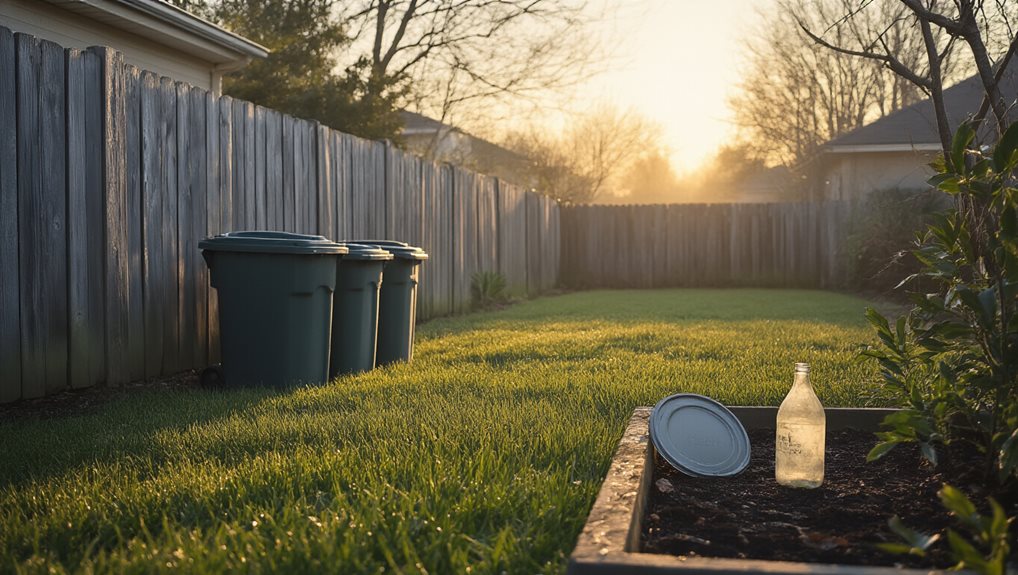
You can create ammonia‑soaked rag balls and place them near entry points, letting the strong odor form a temporary barrier that deters raccoons from exploring your yard.
Adding a vinegar spray around the perimeter works as a complementary scent, masking food odors while providing an additional irritation cue for curious animals.
Rotate the locations of both the rag balls and the spray every few days to prevent habituation and maintain effectiveness.
Set up clear boundaries for yard use and schedule regular breaks in exposure to reduce stress on both you and your space. boundary communication
Monia‑Soaked Rag Balls
What makes ammonia‑soaked rag balls a popular natural deterrent is the pungent, sharp odor that can overwhelm a raccoon’s sensitive nasal passages, prompting the animal to retreat within minutes of exposure. You place cotton rags soaked in household ammonia near entry points, refresh them every three days, and keep them away from children and pets, knowing the scent fades quickly and offers only brief, modest deterrence.
Vinegar Spray Perimeter Defense
How can a simple spray keep raccoons at bay? Mix equal parts water and white vinegar, or apple cider vinegar, in a bottle and spray the perimeter, entry points, trash cans, and decks; the strong scent overwhelms their sensitive noses.
For added deterrence, dilute one part ammonia with three parts water and target attic vents and chicken coops, reapplying every few days to maintain efficacy.
Use Motion‑Activated Sprinklers & Lights
A motion‑activated sprinkler or light can turn your yard into an effective, humane barrier against raccoons, because the sudden burst of water or flash of illumination startles the animals and interrupts their for. Consistent moisture levels and proper watering checks in seedling care, alongside using these deterrents, help protect plants and belongings without harm. soil moisture considerations and regular checks can inform when to adjust the barrier setup for maximum effectiveness. Position the unit toward entry points, set the PIR sensor to detect 30‑40 feet, and adjust spray distance to cover gardens or trash zones. The brief water blast or flashing light conditions raccoons to avoid the area, protecting plants and belongings without harm.
Combine & Rotate Multiple Deterrent Methods

You’ll get the best results when you layer deterrents—using scent sprays, physical barriers, and habitat tweaks together—so raccoons encounter multiple obstacles at once.
Rotate the specific repellents each season, swapping garlic spray for peppermint oil or cayenne for predator urine, to keep the animals from getting accustomed to any single method.
This combined, rotating approach creates a versatile defense that adapts to changing conditions and maintains long‑term effectiveness.
Layered Deterrent Strategies
When you combine several deterrents and rotate them regularly, you create an environment that keeps raccoons guessing and prevents them from adapting to any single method. Layer predator urine sprays with ammonia rags, add cayenne‑garlic‑vinegar scents near trash, and pair motion‑activated lights with sprinklers.
Integrate fencing with overhangs, mesh, and low‑voltage electric strips, while maintaining clean, debris‑free landscaping. Rotate scents, motion devices, and barriers weekly to sustain unpredictability and long‑term efficacy.
Seasonal Rotation Plan
Layered deterrents work best when they’re not static, so after establishing a rotating mix of scents, barriers, and motion devices, you should align those tactics with the seasons to exploit raccoon behavior patterns.
In spring, plant lavender, install sprinklers, and apply hot‑pepper granules; summer, add tree baffles, prune limbs, and reapply liquid repellents; fall, secure trash cans, dust cayenne around perimeters, and manage compost; winter, seal entry points, install motion‑activated lighting, and maintain wire mesh, ensuring continuous protection and community confidence.
Maintain & Re‑apply Deterrents Regularly
Because raccoons quickly become desensitized to a single application, you must re‑apply deterrents on a regular schedule to keep their scent or sensory impact effective.
Inspect seasonally, spray fresh ammonia or vinegar after rain, shake liquid repellents before each use, and refresh granular barriers when they wash away.
Keep a checklist, combine scent with bin washing, and repeat every few weeks to maintain community harmony.
Troubleshoot Common Raccoon‑Deterrent Failures
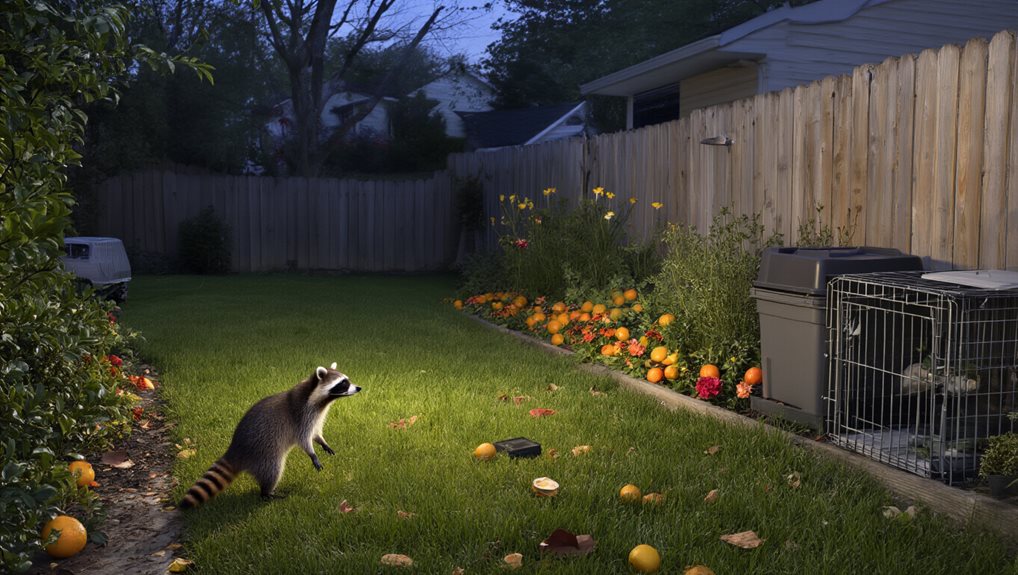
Why do your deterrents keep failing despite diligent effort? You may be sealing obvious holes while ignoring roofline entries, chimneys, or overhanging limbs that raccoons exploit, and simple barriers quickly become familiar, reducing efficacy.
Chemical scents like mothballs or blood meal rarely work long‑term, and scare tactics lose impact as animals learn they pose no threat. Check every access point and use sturdy, multi‑layered solutions.
Evaluate Deterrent Effectiveness Over Time
Usually, you’ll notice that a deterrent’s impact fades within weeks as raccoons habituate, so measuring effectiveness over time is essential. Track repellency levels by recording weekly raccoon activity, noting whether anthraquinone concentrations stay above 20,000 ppm for sustained ≥80% deterrence, and compare against capsaicin or essential‑oil devices that typically lose efficacy after a few days. Log changes in damage to crops, trash, and exclusion fences, and adjust concentrations or physical barriers when habituation signs appear, ensuring your yard remains a shared, protected space.
Create a Long‑Term Raccoon‑Proof Yard Plan

How can you turn your yard into a lasting barrier against raccoons while still keeping it functional and attractive?
Secure trash with lockable lids, keep pet food indoors at night, and seal compost. Install a 4‑foot fence buried six inches, add a floppy top, and use chicken‑wire raised beds. Trim shrubs, seal gaps, and deploy motion‑activated lights and sprinklers for continuous deterrence.
Final Note
By combining source removal, sturdy barriers, deterrent plantings, and regular application of homemade sprays or ammonia‑vinegar solutions, you’ll keep raccoons out without harming them. Consistently monitoring results and adjusting tactics ensures each method remains effective, while a long‑term plan prevents future incursions. Stay vigilant, follow the outlined steps, and your yard will stay raccoon‑free and functional.

Nathan McPhail is a garden and home DIY expert who writes practical, easy-to-follow advice for homeowners and gardeners. Through Yardique, he shares hands-on tips covering gardening, lawn care, landscaping, home improvement, repairs, tools, and outdoor living. His focus is on helping readers solve everyday household and yard problems with straightforward guidance, useful techniques, and practical solutions.