Choose a durable, moisture‑retaining liner—rubber or HDPE works best—then clear the site, remove grass and debris, and compact the soil. Lay overlapping landscape fabric or cardboard as a weed‑blocking base, securing it with staples or weights. Cut the liner a few inches larger than the bed, place the fuzzy side down, keep drainage holes open, and fasten it with staples, knock‑down elbows, or thumb tacks. Fill the bed with a mix of topsoil, compost, and organic matter, water gently, add mulch, and monitor moisture; the next sections will show how to optimize pest control and drainage.
TLDR
- Choose a durable, moisture‑retaining liner (e.g., rubber) and cut it a few inches larger than the bed dimensions.
- Lay the liner with the fuzzy side down, shiny side up, and ensure any drainage holes stay unobstructed.
- Secure the liner to the frame using staples, knock‑down elbows, or thumb tacks, trimming excess material cleanly.
- Add a weed‑blocking base (overlapping cardboard or landscape fabric) beneath the liner, then fill with a sterile mix of topsoil, compost, and organic matter.
- Water gently, let the soil settle, apply mulch, and regularly monitor moisture and liner integrity.
Select the Best Garden‑Bed Liner for Your Project
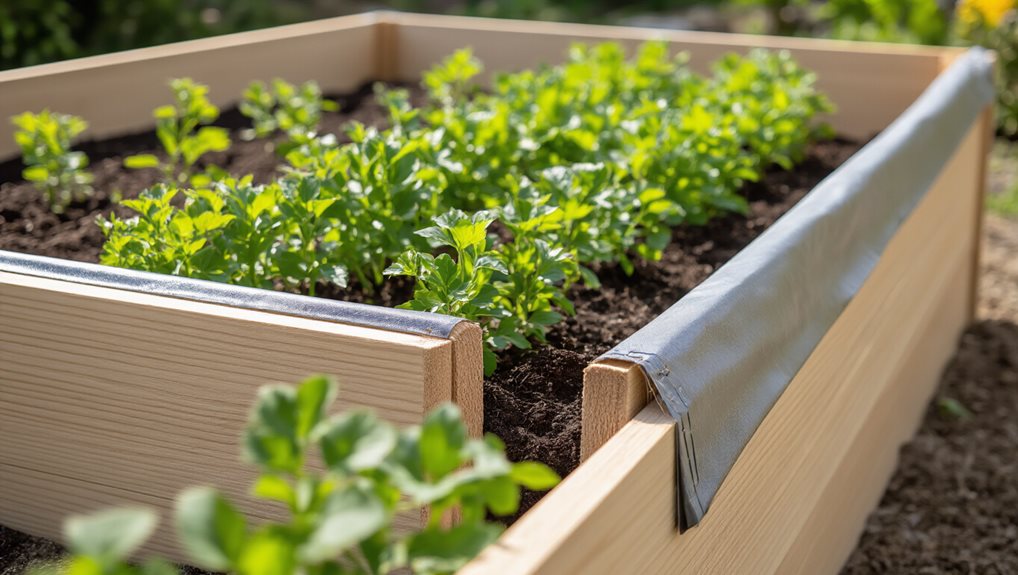
Which liner will best suit your raised‑garden bed? You’ll likely choose rubber for durability, as it shields metal frames from rust, retains moisture, and regulates temperature, extending bed life.
Moisture retention adds to plant health and water savings. Drying times can be influenced by environmental conditions, so monitor temperature and humidity. Landscape fabric offers breathable weed control and works on concrete, while metal mesh blocks rodents yet drains well.
Plastic is cheap but traps water and may leach micro‑plastics, and cardboard decomposes fast, suiting only shallow, temporary beds. Moisture retention adds to plant health and water savings.
Clear the Site and Lay a Weed‑Blocking Base for Your Garden Bed
After selecting a liner, the next step is to clear the site and establish a weed‑blocking base before you assemble the raised bed. Remove all grass, weeds, and debris, then compact and flatten the soil to create a stable foundation; lay overlapping landscape fabric—or cardboard for a budget option—secure it with staples or weights, and finally fill the bed with weed‑free compost and sterile topsoil.
Install a Waterproof HDPE or Breathable Fabric Garden‑Bed Liner
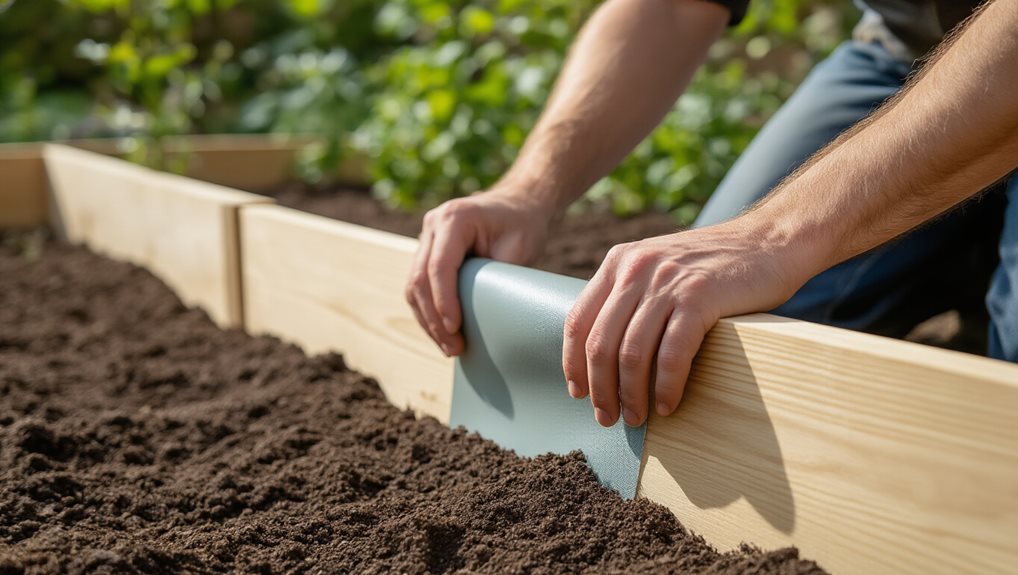
Where do you start after preparing the site?
Measure the bed precisely, cut a waterproof HDPE or breathable fabric liner a few extra inches, and lay it fuzzy‑side down, shiny side up, flush with the borders. Secure it with staples, knock‑downel, or thumb tacks, ensuring drainage holes remain open. Trim excess, then attach the top capping layer, preserving structure and extending wood life.
Add Cardboard or Hardware Cloth to Block Pests and Keep Drainage
To deter pests while permitting water to pass through your elevated garden bed, layer overlapping cardboard sheets across the base, ensuring six-inch overlaps to block light yet allow moisture to drain.
Then drape permeable landscape fabric over it, fastening with staples every six inches.
Finally, staple galvanized hardware cloth to the underside, extending edges beyond the frame, which blocks burrowing rodents while preserving airflow and root oxygenation.
Fill the Garden Bed With Topsoil, Mulch, and Plant Your Crops
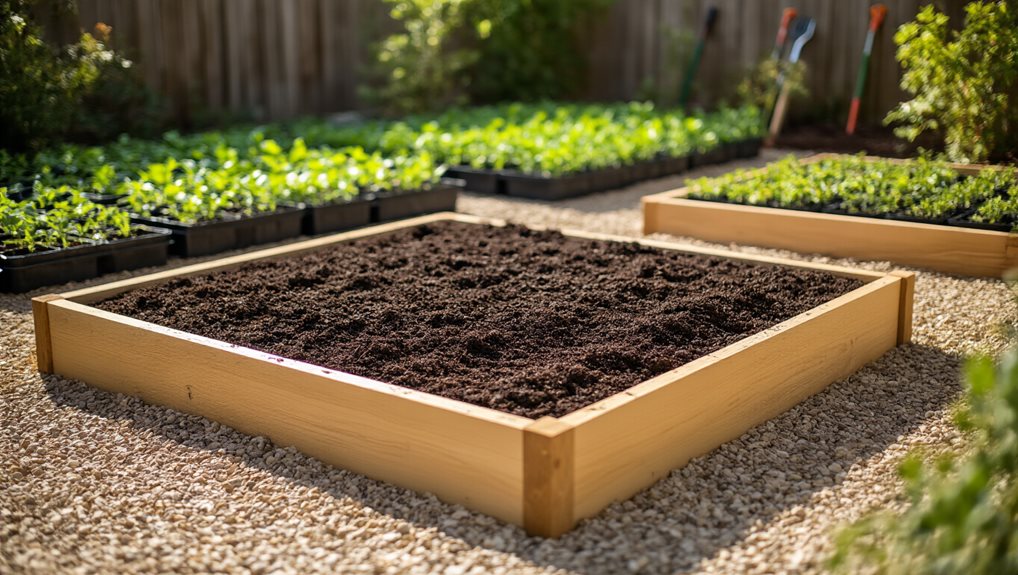
Why bother with a haphazard fill when a well‑balanced soil mix can enhance yields and simplify maintenance? Blend 50 % dark, fresh topsoil with 30 % compost and 20 % organic matter, add perlite or gypsum for aeration, then fill to a few inches below the rim. Water gently, let settle, spread a mulch layer, and plant your crops, feeling part of a thriving garden community. Mixing guidance from oil knowledge highlights how choosing the right materials and avoiding inappropriate blends helps protect system performance, much like selecting proper soil components supports healthy plant growth mixed oil caution.
Maintain the Bed: Monitor Moisture, Replace Liners, and Refresh Mulch
A well‑maintained raised bed stays productive when you regularly check moisture, replace damaged liners, and refresh the mulch and topsoil. Monitor soil daily, ensuring it stays lightly moist but not soggy, using drip irrigation during hot months; inspect fabric or mesh liners for tears, rinse them, and swap out non‑porous plastics. Add a fresh compost layer each spring, top off settled soil, and keep drainage clear for thriving plants. Be mindful of drainage and soil structure to prevent water damage that could affect surrounding features. unpermitted
Final Note
By following these steps—you’ve selected a suitable liner, prepared a weed‑blocking base, installed a waterproof or breathable membrane, added pest‑deterring layers, and filled the bed with quality soil and mulch—you’ll create a durable, well‑drained raised garden that supports healthy plant growth. Regularly monitor moisture, replace the liner when it degrades, and refresh mulch to maintain optimal conditions, ensuring your garden remains productive and low‑maintenance throughout the season.

Nathan McPhail is a garden and home DIY expert who writes practical, easy-to-follow advice for homeowners and gardeners. Through Yardique, he shares hands-on tips covering gardening, lawn care, landscaping, home improvement, repairs, tools, and outdoor living. His focus is on helping readers solve everyday household and yard problems with straightforward guidance, useful techniques, and practical solutions.