Gather free or cheap material like pallets, lumber, bricks, or straw bales, then lay overlapping cardboard sheets across the bed and weigh them down with rocks or boards. Fill the bottom with hardwood logs spaced 25‑50 mm apart, backfill gaps with smaller branches and add a nitrogen‑rich layer of fresh grass, manure, or shredded leaves, followed by a thin sod strip. Use repurposed soil or compost for the middle layer, mixing in 2‑4 inches of aged compost at a 1:2 ratio, and top with a 6‑8 inch blend of topsoil and compost, adding worm castings and water lightly; the next sections will show how to keep nutrients low and troubleshoot common problems.
TLDR
- Use free or cheap fill materials like native soil, leaf mold, composted leaves, and shredded straw gathered from your yard or local farms.
- Build a base layer of logs or pallets with gaps, then fill voids with branches and a nitrogen‑rich layer of grass clippings or manure.
- Lay overlapping cardboard sheets as a biodegradable liner, weigh them down, and soak before adding soil to suppress weeds and add organic matter.
- Mix a 1:1 or 1:2 ratio of topsoil to well‑aged compost (or vermicompost) and spread 6–8 inches, incorporating free leaf litter and worm castings for nutrients.
- Mulch the surface with straw, wood chips, or shredded leaves to retain moisture, reduce watering, and gradually enrich the soil as it decomposes.
Gather Free or Cheap Materials First
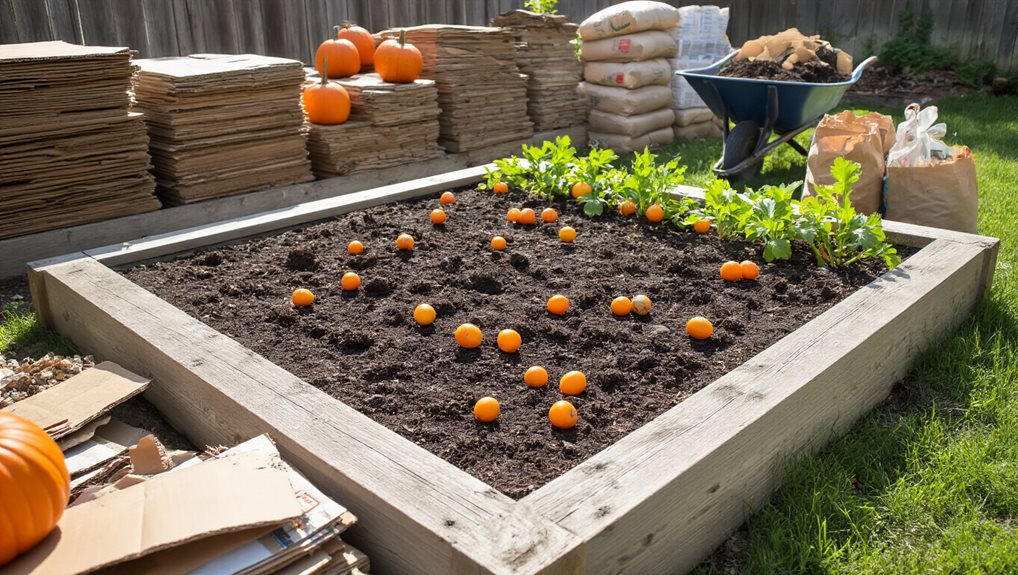
How can you start a raised garden bed without breaking the bank?
First, scout heat‑treated pallets, discarded lumber, bricks, or straw bales from farms, nurseries, or construction sites, ensuring they’re food‑safe and sturdy.
Layer leaf mould, compost, and well‑rotted manure within a frame built from these reclaimed materials, securing edges with planks, wire, or bricks to keep wind from scattering the organic fill.
This approach builds a fertile, elevated bed while fostering community resource sharing. Use perimeter protection to create a sturdy, permanent edge that also deters slugs and snails.
Lay Cardboard Liner for a Cheap Raised Bed (Optional)
Why not start your cheap raised bed with a simple cardboard liner? Lay overlapping sheets across the whole area, then weigh them down with boards or rocks, and soak the cardboard thoroughly before adding mulch or soil. The cardboard blocks light, smothers weeds, and decomposes into organic matter, improving soil structure and moisture retention, while attracting earthworms that enhance aeration and drainage. Single-layer cardboard can break down faster in moist conditions, which may speed up the transition to a richer soil mix. installation considerations
Build Cheap Raised Bed Bottom Layer With Logs & Kitchen Waste
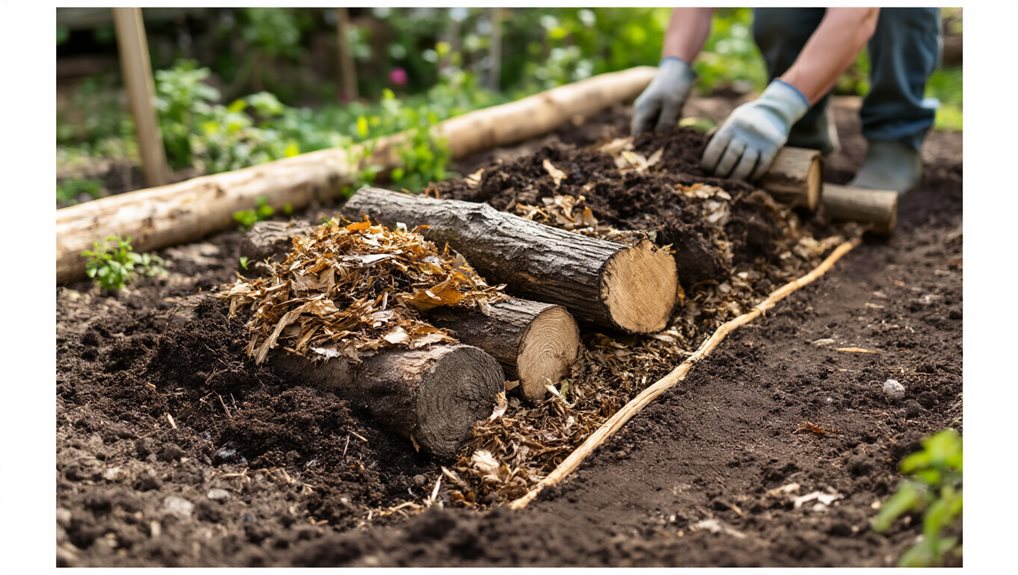
After laying the cardboard liner, you can reinforce the bed’s foundation by arranging logs and kitchen waste as the bottom layer. Place the largest hardwood or spruce logs first, leaving 25‑50 mm gaps, then fill voids with smaller branches and backfill soil.
Add a nitrogen‑rich layer of fresh grass, manure, or shredded leaves atop the wood, followed by a thin sod or hay strip to enhance early nutrients and moisture retention. Indigenous plant guidance
Choose Cheap Raised Bed Middle Layer: Reuse Soil or Compost
Where can you source the bulk of your middle‑layer fill without breaking the bank? Reuse native soil from nearby pathways or subsoil, loosen it with a garden fork, then blend in 2‑4 inches of well‑aged compost or vermicompost at a 1:2 ratio, adding peat moss or leaf litter for structure. This mix balances nutrients, drainage, and cost while promoting a shared garden community.
Regenerate and reuse soil from nearby pathways or subsoil, ensuring it is free of contaminants and debris so you can responsibly build up the middle layer. Soil sourcing is an important step in staying within budget while maintaining soil health for future planting.
Add a 6‑8‑Inch Topsoil‑Compost Blend
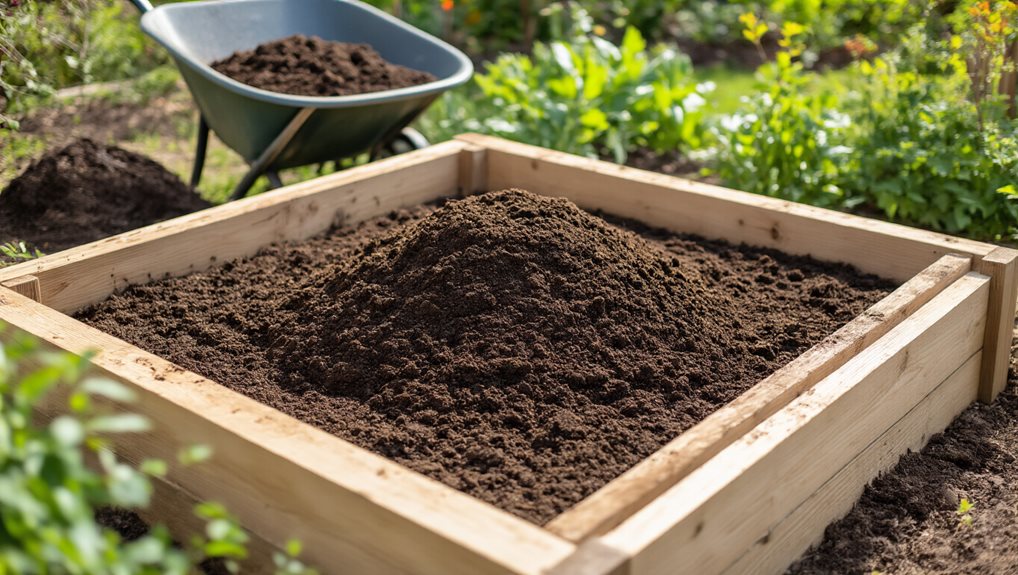
You’ll want a 1:1 or 1:3 topsoil‑to‑compost ratio, which gives a nutrient‑rich top layer while keeping drainage balanced, and you can achieve this mix with inexpensive bulk purchases or even homemade compost.
By spreading a 6‑8‑inch layer of the blend over the existing soil, you add nitrogen, phosphorus, and potassium that reduce the need for synthetic fertilizers and improve plant growth.
Sourcing the components from local suppliers, using leftover topsoil, or combining a small amount of sharp sand and sawdust can keep costs low without sacrificing the quality of the bed.
Ideal Soil‑Compost Ratio
How much topsoil should you mix with compost to create a thriving raised‑bed foundation? Aim for a 50/50 blend, which balances structure and nutrients, then layer 6‑8 inches of this mix on top of any coarse base you’ve used.
If you have pre‑mixed bagged soil, you can reduce compost to 20‑30 % and still maintain fertility, ensuring your garden community feels grounded and productive.
Nutrient‑Rich Top Layer
When you add the nutrient‑rich top layer, aim for a 6‑8‑inch blend of screened topsoil and high‑quality compost, because this combination supplies both the mineral structure and the organic matter that roots need to thrive.
Mix the two in a wheelbarrow, add a handful of worm castings, water lightly, and spread evenly, ensuring the blend stays loose, well‑drained, and inviting for plants to establish a shared, thriving community.
Cost‑Effective Sourcing Tips
Usually, the most affordable way to achieve a 6‑8‑inch topsoil‑compost blend is to combine free or low‑cost sources with strategic bulk purchases. You can repurpose yard soil, use municipal compost, and buy a 50/50 mix from a landscape supplier, which runs about $73 per bed versus $190 for potting mix. Adding free plant pullings, leaf litter, and occasional bagged compost keeps costs low while cultivating a shared gardening community.
Add Soil Incrementally Each Year to Keep Costs Low
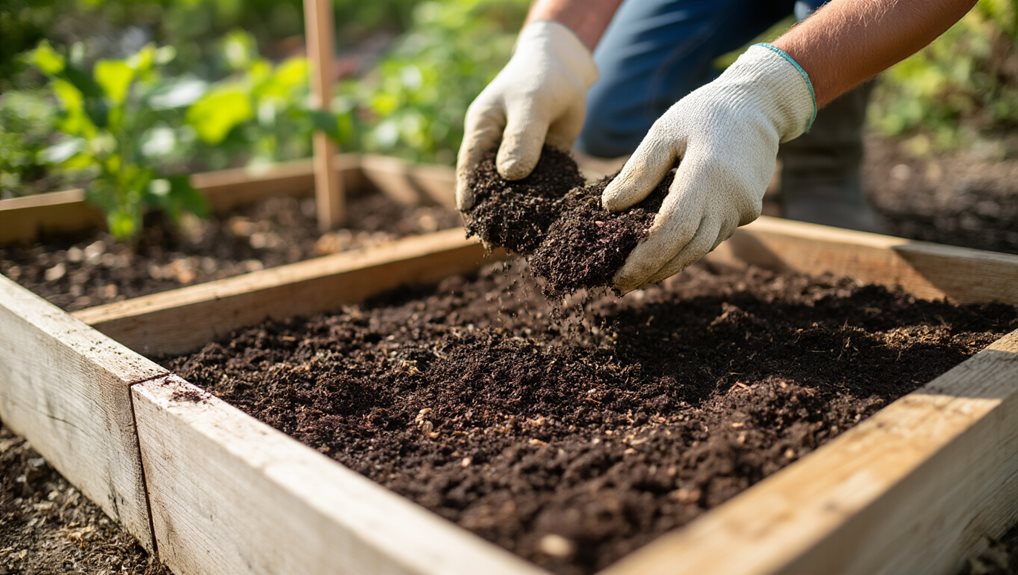
A practical way to keep your garden‑bed expenses down is to add soil incrementally each year rather than filling the entire depth at once. Start with coarse wood at the bottom, then fine chips and a compost‑leaf mix, and finish with a 30‑cm top layer of compost and potting soil. Each spring, replenish the top 12‑18 inches with a compost‑soil blend, compacting and soaking each layer to reduce settling and maintain fertility while spreading costs over time. Deep planting and healthy soil improvements can further bolster tomato performance in raised beds soil health and help support organic fertility systems that combine composted materials and cover crops for long‑term health.
Find Free Nutrients for Your Cheap Raised Bed
You can turn everyday kitchen scraps—like vegetable peels, coffee grounds, and eggshells—into a steady source of organic nutrients by composting them in a simple bin or pile, then mixing the finished material into your raised bed.
Local community compost drop‑offs also let you collect high‑quality, nutrient‑rich compost for free, giving you a ready‑made amendment without the cost of bagged soil.
Free Kitchen Scraps
Why waste perfectly good kitchen scraps when they can become a cheap, nutrient‑rich boost for your raised bed? Chop banana peels, eggshells, coffee grounds, and vegetable ends into small pieces, then mix them into the topsoil or bury them directly. Soak peels for liquid potassium, sprinkle crushed shells for calcium, and let grounds improve texture and attract earthworms, creating a thriving, collaborative garden community.
Community Compost Drop‑offs
If you tap into local community compost drop‑offs, you’ll source nutrient‑rich soil amendment for your raised bed without spending a dime. Use databases like Better Earth or Green Paper Products to locate sites, then drop off food scraps, yard waste, or certified compostables at places such as CompostNow locations, university drop‑offs, or municipal transfer stations; the material is processed into free, high‑quality compost that enriches your garden and connects you with neighbors sharing sustainable goals.
Test Soil pH and Adjust With Cheap Home Hacks
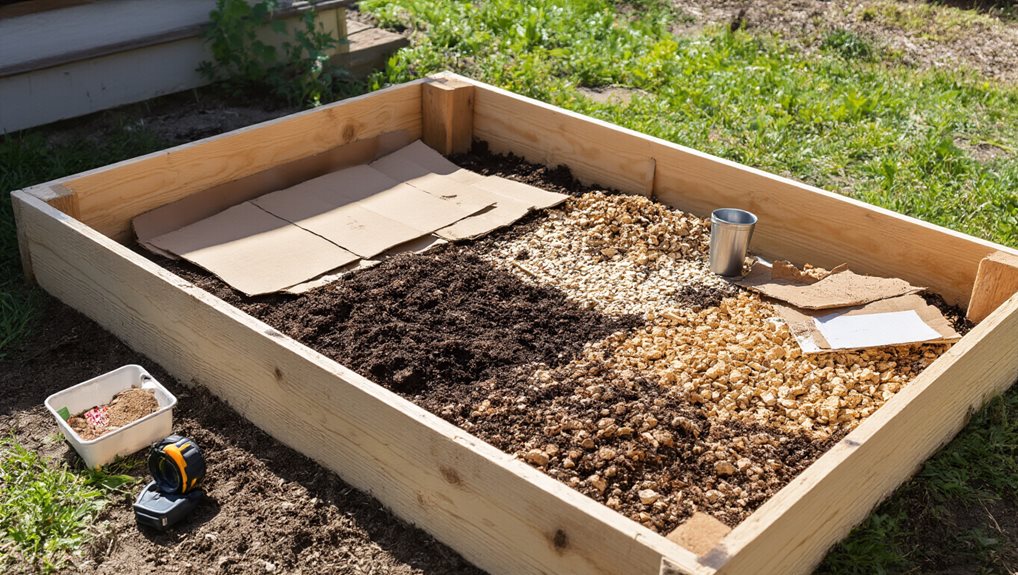
Ever wondered how a simple kitchen trick can reveal whether your raised‑bed soil is too acidic or alkaline?
Use a cup of soil, split it, add half‑cup vinegar to one; fizz means alkaline.
In the other, add water then baking soda; fizz shows acidity.
If neither fizzes, pH is neutral.
Adjust with cheap lime for acid, sulfur for alkali, or compost to balance.
Troubleshoot Common Issues in Cheap Raised Beds
After testing soil pH with the kitchen‑vinegar and baking‑soda trick, the next step is to address the problems that keep a cheap raised bed from thriving.
Check drainage by adding a rubble base, coarse organic matter, or French drains, and ensure large, evenly spaced holes with breathable liners.
Loosen subsoil, slope the bed, and aerate regularly; enrich with compost and mulch to prevent compaction and improve moisture balance.
Final Note
By reusing cardboard, logs, kitchen waste, and free compost, you can build a durable raised garden bed without breaking the bank. Layering materials strategically—cardboard for weed suppression, logs for drainage, and a balanced topsoil‑compost mix—ensures healthy plant growth while keeping costs low. Regularly adding modest soil increments each year maintains fertility, and testing pH with simple home methods lets you fine‑tune conditions. With these practical steps, your inexpensive raised bed will thrive season after season.

Nathan McPhail is a garden and home DIY expert who writes practical, easy-to-follow advice for homeowners and gardeners. Through Yardique, he shares hands-on tips covering gardening, lawn care, landscaping, home improvement, repairs, tools, and outdoor living. His focus is on helping readers solve everyday household and yard problems with straightforward guidance, useful techniques, and practical solutions.