You can stop yard flooding after heavy rain by first correcting the grading so water slopes at least 1 inch per foot away from the house, then installing a French drain with a 1–2 % gradient, perforated pipe, and clean gravel to carry runoff to a safe outlet. Add catch basins at low spots, connect them with sloped PVC, and consider a rain garden or permeable pavers to absorb excess water. If you keep going, you’ll uncover more detailed steps.
TLDR
- Re‑grade the yard to a 1–2% slope away from the house, using stakes and a line level to ensure consistent runoff direction.
- Install a French drain with a perforated pipe, clean gravel, and a proper gradient to capture and divert excess water.
- Add permeable surfaces such as crushed stone or permeable pavers to increase infiltration and reduce surface runoff.
- Fill low spots and depressions, then reinforce new contours with geotextile fabric or compacted gravel to prevent erosion.
- Direct downspout water to a rain garden or catch basin placed at least ten feet from the foundation, using mulch and soil amendments to maintain permeability.
What’s Causing Your Yard to Flood?
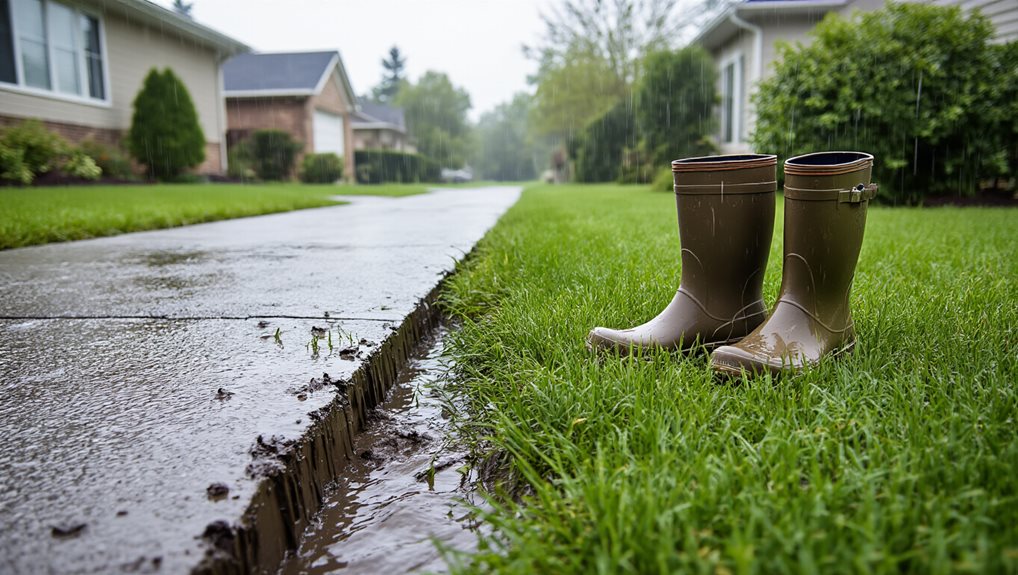
Why does your yard flood after a storm? You’re likely dealing with clay or compacted soil that resists infiltration, low‑lying spots created by improper grading, and a lack of vegetation that would otherwise absorb water. Heavy rain overwhelms these conditions, while hard surfaces and runoff from neighbors push additional water toward your foundation, forming persistent puddles and muddy patches. Poor drainage can also be caused by inadequate grading that directs water toward the home instead of away from it. Windbreaks can help reduce erosion and runoff in some setups by slowing down surface flow and increasing soil stability, especially when integrated with proper grading and vegetation strategies.
Install a French Drain for Effective Yard Drainage
You’ll need to grade the trench at a consistent 1‑2% gradient so gravity can pull water toward your outlet, and you should choose a perforated pipe with a sturdy, corrosion‑resistant wall to withstand soil pressure.
Pair that pipe with a surrounding layer of clean, washed gravel that filters debris while allowing rapid flow, and make sure the gravel is deep enough to support the pipe and maintain the slope.
Additionally, incorporate a grid‑based planning mindset to organize where the French drain interfaces with surrounding landscaping and to facilitate future maintenance and inspection. Grid layout
Design Proper Slope
Ever wondered how a properly sloped French drain can keep your yard dry after a heavy downpour? You’ll need a trench that drops at least 1‑2% (one foot per 50‑100 feet) toward a low‑point, avoiding hillsides and floodplains.
Use a level, check elevation frequently, and ensure the pipe sits on a river‑rock base so water flows consistently away from foundations and garden beds.
Select Gravel Pipe Type
What type of gravel should you choose for a French drain that will reliably keep your yard dry after a heavy storm? Choose angular crushed stone ¾‑inch to 1½‑inch; its sharp edges interlock, resist shifting, and balance flow with debris filtration. This size prevents clogging, supports a 4‑inch perforated pipe, and sustains long‑term stability, keeping your drainage system dependable and your yard dry.
Regrade Your Yard to Improve Drainage Flow
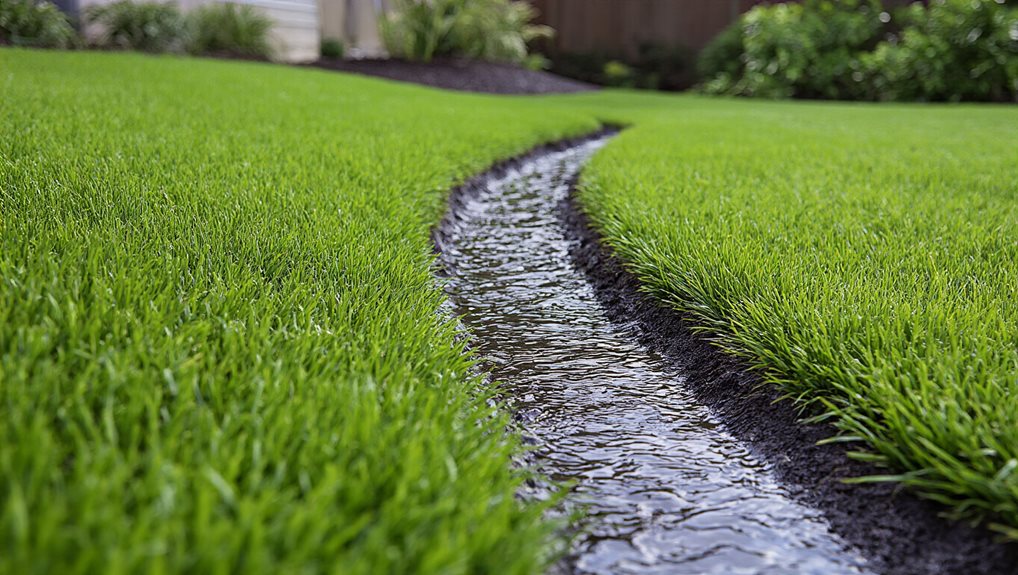
You should start by confirming a proper slope—about one inch per foot—so water runs away from the house, then pinpoint any low spots that could collect runoff and adjust them accordingly.
Additionally, install a simple drainage option such as a French Drain to redirect collected water away from the foundation drainage option. After reshaping, reinforce the new contours with erosion‑resistant materials like compacted gravel or geotextile fabric to keep the soil stable during heavy rains.
This approach not only directs water efficiently but also protects foundations, hardscape, and plant health from lingering moisture.
Determine Proper Slope
How much does a gentle incline really matter when you’re regrading a yard to stop flooding? Aim for at least a 1 % slope—one inch drop per eight feet—and preferably 2 % for hardscape drains, using stakes, string, and a line level to measure rise over run.
Calculate the drop, compare it to existing ground, and adjust excavation depth to keep water moving uniformly away from foundations.
Identify Low Spots
Where do the puddles linger after a storm, and why do they seem to collect in the same spots every time?
You’ll spot low‑lying dips by walking the yard, watching water pool near downspouts, garden beds, or flat ground, and testing drainage with a foot‑deep hole; water that lingers over an hour signals compacted soil.
Use string levels and stakes to map slopes, then plan to fill depressions and create a gentle 2 % grade, ensuring runoff moves away from foundations and pathways.
Use Erosion‑Resistant Materials
Once you’ve mapped the low‑lying spots, the next step is to reinforce those areas with erosion‑resistant materials while you regrade the yard to improve drainage flow. Use permeable pavers for patios, crushed stone for French drains, and geotextile fabric behind retaining walls; these choices lock soil, guide water away from foundations, and create a stable, inviting landscape that feels secure and shared.
Set Up Catch Basins for Immediate Puddle Capture
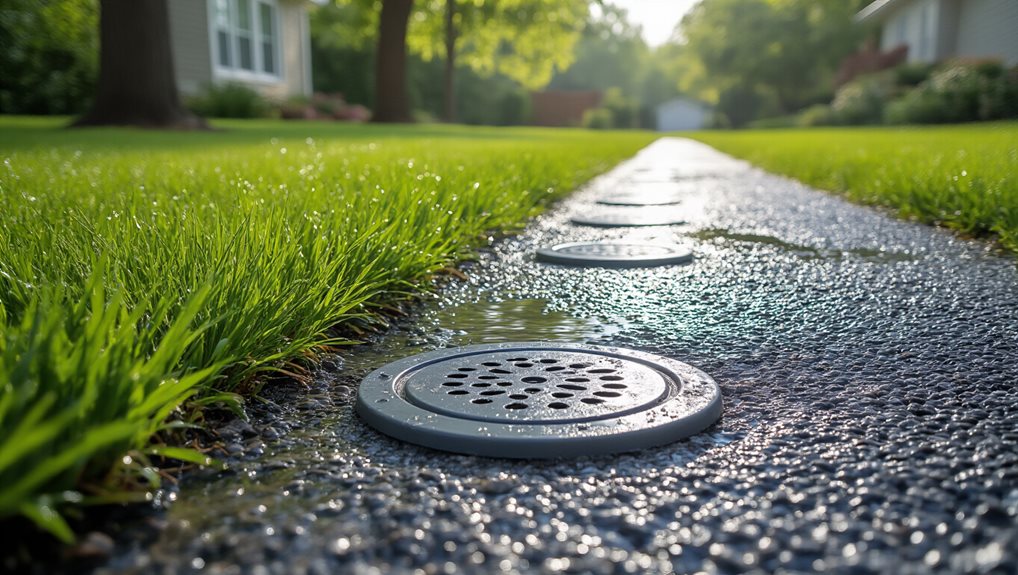
Why wait for a puddle to spread when you can intercept it at its source? Identify the yard’s lowest points, dig a hole six to twelve inches deeper than the basin, line it with crushed stone and geotextile, then set a 6×6 or larger basin on the gravel bed. Connect a sloped 4‑inch PVC pipe, secure with tape, and backfill firmly, ensuring the system directs water away while remaining rooted in your community’s shared drainage solution.
Newly, ensure a clean, dry catch basin area by removing debris and testing the drainage path during a light rain to confirm water flows into the basin without pooling nearby drainage path testing.
Build a Rain Garden to Boost Yard Drainage
How can you rework a soggy yard into a natural drainage system that also beautifies your scenery? Build a rain garden by digging a shallow, kidney‑shaped depression at least ten feet from your foundation, testing soil permeability, and layering sand, compost, and native deep‑root plants. Connect downspouts or swales to channel runoff, then mulch and water regularly; the garden will filter nutrients, sediments, and metals, slowly infiltrating water within an hour and reducing flooding while creating a welcoming, pollinator‑friendly space. soil permeability
Add Dry Wells and Swales for Space‑Saving Yard Drainage
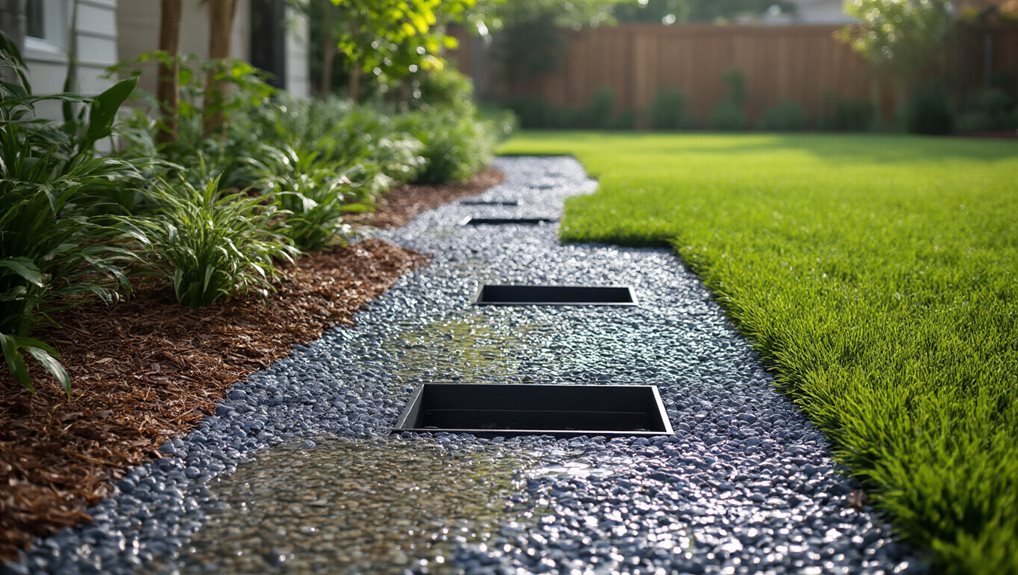
Ever wondered how to keep a yard dry without sacrificing usable space? Install a dry well beneath a low‑lying spot, filling it with gravel or a plastic basin so runoff from gutters and driveways percolates into the soil, recharging groundwater and preventing pooling.
Pair it with a shallow swale that channels water across the terrain, filters sediments, and irrigates nearby plants, while maintaining an attractive, functional yard.
Use Permeable Pavers, Gutter Extensions, and Mulch for Surface Drainage
Can you keep your yard dry while still having a functional, attractive surface? Install permeable pavers that infiltrate 100 in/hr, reducing runoff 70‑80 %, and pair them with gutter extensions that channel roof water 5‑10 ft away into mulched beds.
Use 2‑4 in organic mulch to absorb rain, suppress compaction, and enhance infiltration, while regular vacuum maintenance preserves paver performance.
Final Note
By diagnosing the source of excess water and applying the right drainage solutions—whether a French drain, regraded terrain, catch basins, rain garden, dry well, swale, or permeable paving—you’ll restore your yard’s functionality and protect your property. Combine these methods thoughtfully, maintain them regularly, and you’ll prevent future flooding while preserving landscape aesthetics. This systematic approach ensures long‑term resilience against heavy rain without unnecessary complexity.

Nathan McPhail is a garden and home DIY expert who writes practical, easy-to-follow advice for homeowners and gardeners. Through Yardique, he shares hands-on tips covering gardening, lawn care, landscaping, home improvement, repairs, tools, and outdoor living. His focus is on helping readers solve everyday household and yard problems with straightforward guidance, useful techniques, and practical solutions.