Install a deep‑set steel‑post fence at least 1.8 m high, bury ¼‑inch galvanized hardware cloth three feet deep, and add a 2.5‑3 mm high‑tensile top wire spaced one metre apart for digging resistance. Attach low‑voltage electric strands 100 mm off the ground, a second strand 6‑8 inches higher, and a hot top wire, powered by solar or battery energizers, and keep vegetation trimmed. Mount 4‑6 inch spikes with dense spacing on the fence top, fit tree‑trunk baffles at nearby trees, and eliminate food sources by sealing bins and removing fallen fruit. Use garlic, capsicum, or fox‑urine repellents and install motion‑activated sprinklers with night lights for layered deterrence, and you’ll find further details ahead.
TLDR
- Install a deep, dig‑resistant fence with 1.8 m height, ½‑inch mesh, and 5‑cm‑deep galvanized hardware cloth at the base.
- Add low‑voltage electric strands (bottom wire 10 cm above ground, second wire 15–20 cm high) powered by solar or battery energizers.
- Mount 4–6 cm high spikes with 2 mm tip radius along the fence top and around tree trunks to deter climbing.
- Eliminate food sources: secure bins, bring pet food indoors, promptly collect fallen fruit and seed, and use possum‑specific scent deterrents.
- Deploy motion‑activated sprinklers and night lights to create an additional, non‑lethal deterrent layer around garden paths and beds.
Build a Sturdy, Dig‑Resistant Possum Garden Fence
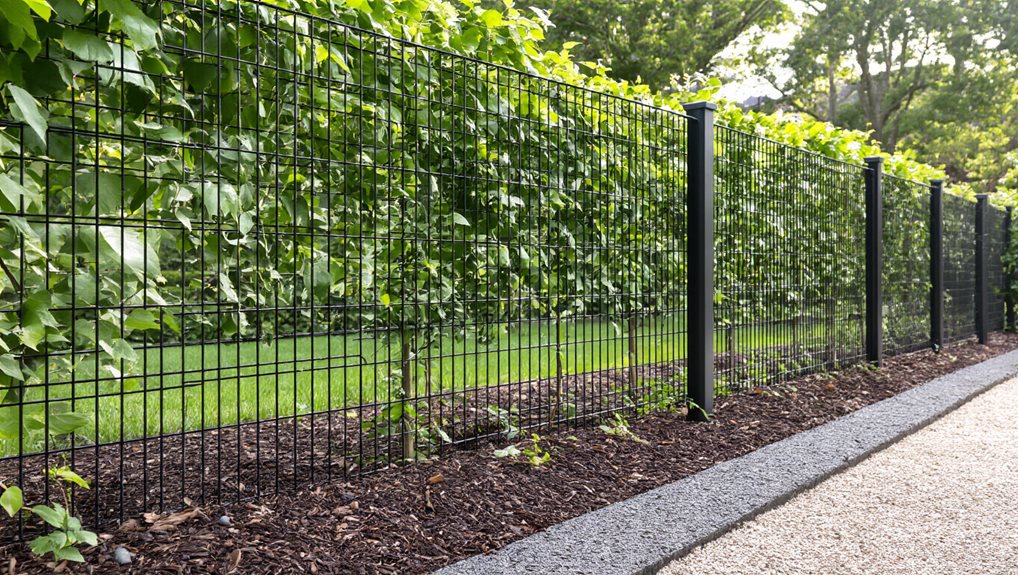
How can you construct a fence that actually stops possums from burrowing under and leaping over your garden perimeter?
Choose steel posts set five hundred millimetres deep, attach 2.5‑3 mm high‑tensile wire spaced one metre apart for a floppy top, and bury ¼‑inch galvanized hardware cloth three feet deep. Ensure the base uses ½‑inch mesh, and keep the fence height at least 1.8 m to deter jumping, creating a sturdy, dig‑resistant barrier that blends with your community garden. Use vermin mesh at the bottom to prevent smaller animals like rabbits from slipping through. In addition, consider incorporating natural fertilizer practices like composting to enhance soil health and resilience around the fence line, which can help plants recover quickly if minor disturbance occurs. Compost and Soil Health
Install Low‑Voltage Electric Barriers for Possum‑Proof Gardens
Ever wonder why a low‑voltage electric barrier can keep possums out of your garden without harming them? Install a double‑strand fence, positioning the lowest wire 100 mm above ground and a second strand 6‑8 inches high, then add a hot top wire to deter climbing. Use solar or battery energizers, secure posts, ground the wire, trim vegetation, and check connections regularly to maintain consistent deterrence. The same principles of controlling movement and exposure that reduce nighttime floor squeaks—by limiting gaps and stabilizing components—underscore effective, sustained animal deterrence maintenance.
Install Spikes, Rollers, and Tree‑Trunk Baffles on Your Fence
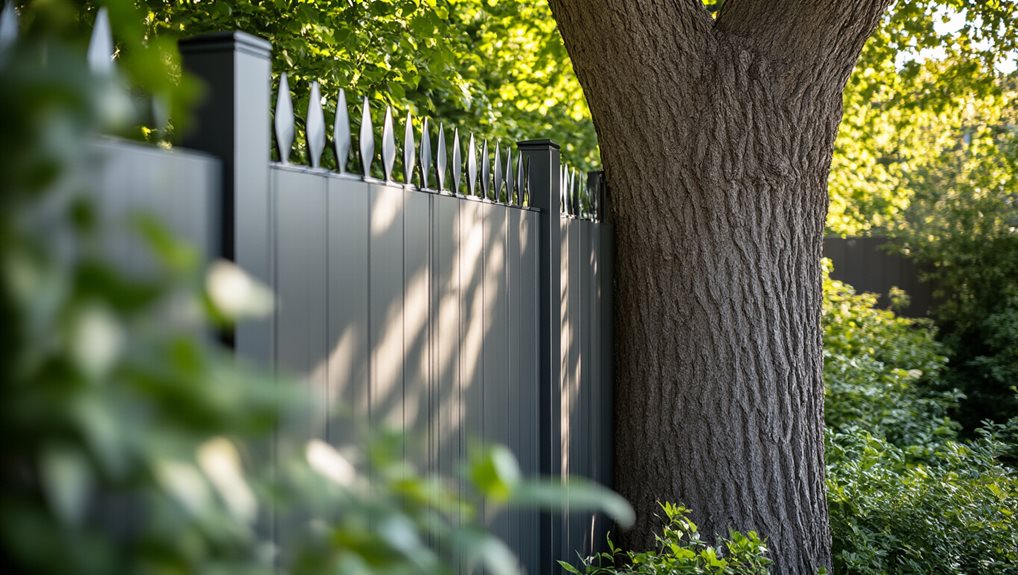
You’ll want to mount sturdy spikes along the fence tops, ensuring they’re at least four to six inches high so possums can’t slip past, and you can attach them with screws or adhesive for a permanent barrier.
Adding a tree‑trunk baffle at the base of any nearby trees forces the animals to stay on the ground, preventing them from climbing over the fence and entering your garden.
Together, these measures create an uncomfortable, yet humane, obstacle that redirects possums to alternative routes while keeping your plants safe.
Spikes on Fence Tops
Wondering why possums keep slipping over your fence despite your best efforts? Install 6‑inch UV‑stabilised polycarbonate spikes along the top edge and sides, ensuring dense spacing and a 2 mm tip radius for humane deterrence.
Secure gaps under 1 cm with cable ties, observe night‑time routes, and combine with attractant removal. This creates an unmistakable barrier that protects fruit trees, roses, and tomatoes while preserving garden harmony.
Tree‑Trunk Baffle Installation
How can you stop possums from scaling your trees while keeping the fence functional? Install a tree‑trunk baffle using aluminum or Mylar sheets, cut to a 5‑foot height, leaving a 1‑inch gap for growth; attach with rivets, eyehooks, or duct tape, and secure with wire hangers. The angled, slippery surface and netting deter climbing, ensuring your garden stays protected and your community feels safe.
Eliminate Food Sources to Reduce Possum Garden Attractants
Where do possums find the most enticing meals in a garden? You’ll see them rummaging through uncovered compost, pet food left outdoors, and overflowing garbage cans, plus fallen overripe fruit, carrots, and birdseed that litter the beds. By sealing bins, storing pet meals indoors, picking up fruit promptly, and keeping feeders protected, you cut the easy protein and calorie sources that draw possums into your space.
Use Possum‑Specific Smell Repellents and Aromatic Herbs

Ever since you can spray garlic extract, Tabasco‑strength capsicum, or fox‑urine‑soaked cotton balls around beds, you can also use diluted muriatic acid for mineral deposit cleanup in garden paths, but only with extreme caution and not around edible plants. Proper dilution
Turn on Motion-Activated Sprinklers and Night Lights
Place the motion‑activated sprinkler where its infrared sensor can cover the garden edge, using the distance‑limiter wheel to keep the spray range within 30‑35 feet and positioning the metal spike so the water reaches the ground before possums enter the protected zone.
Position night lights a few feet away from the sprinkler, angled toward pathways or plant beds, so the illumination deters nocturnal activity without blinding the sensor.
Adjust sensitivity and test the spray direction in daytime mode to fine‑tune both devices for optimal coverage and humane deterrence.
Activated Sprinkler Placement
How do you position a motion‑activated sprinkler so it deters possums without wasting water? Stake the metal spike into the soil near vegetable rows, aim the infrared sensor to cover entry points, and set the sensitivity dial to the medium setting for small critters. Adjust the distance limiter wheel so the three‑second spray reaches the approach path, using two cups per trigger, and test until possums retreat before reaching the garden.
Night‑Light Positioning Strategies
After setting up the motion‑activated sprinkler, the next step is to position night‑lights that work in tandem with the water bursts, creating a layered deterrent that keeps possums from the garden after dark.
Mount flashing white or blue lights above vegetable beds, angle them away from windows, and elevate them for 360‑degree coverage up to eight meters; adjust sensitivity and timing so each detection triggers a brief, startling flash, ensuring possums perceive the area as unsafe and avoid it.
Seal Gaps and Add Unstable Perimeter Barriers for Full Deterrence
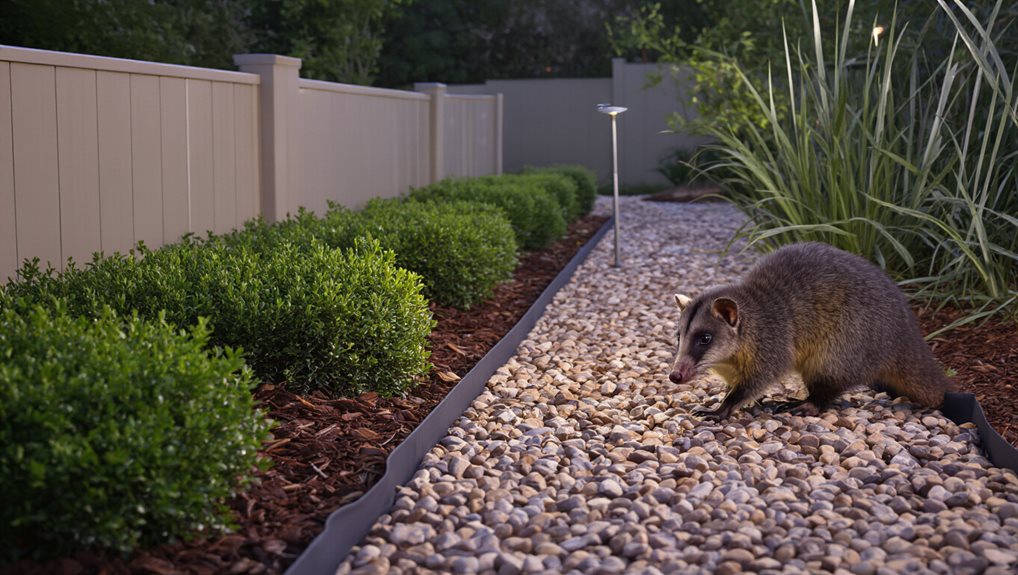
Often the most effective way to keep possums out of your garden starts with sealing every gap in your home’s envelope and adding unstable perimeter barriers that deter climbing and digging. Use metal or Perspex to block roof tiles, eaves, and holes; install one‑way flaps that let possums exit but not reenter.
Bury ¼‑inch hardware cloth around foundations, and fit 60 cm tree collars and floppy chicken‑wire fences to create unstable, deterrent edges.
Combine these with motion‑activated lights for full deterrence.
Final Note
By combining a sturdy, dig‑resistant fence with low‑voltage electric barriers, spike or roller extensions, and tree‑trunk baffles, you create a physical deterrent that prevents possums from entering your garden. Removing food sources, applying scent‑based repellents, and installing motion‑activated sprinklers or night lights further discourages them, while sealing gaps and adding unstable perimeter barriers ensures no easy access points remain. Together, these measures provide comprehensive, low‑maintenance protection that keeps possums out without compromising your garden’s health.

Nathan McPhail is a garden and home DIY expert who writes practical, easy-to-follow advice for homeowners and gardeners. Through Yardique, he shares hands-on tips covering gardening, lawn care, landscaping, home improvement, repairs, tools, and outdoor living. His focus is on helping readers solve everyday household and yard problems with straightforward guidance, useful techniques, and practical solutions.