First locate the source—check for low spots caused by improper grading, clogged gutters, or compacted clay soil that blocks infiltration. Then install an instant drainage fix: dig a laser‑graded French‑drain trench, lay a perforated pipe with a 1‑inch‑per‑10‑feet slope, fill with gravel, and backfill with fabric‑lined soil to channel water away from the foundation. Aerate the surrounding soil, add compost or pea gravel to improve porosity, and consider a rain‑garden or dry well for excess runoff. Follow these steps, and you’ll see immediate improvement while a longer‑term grading and maintenance plan keeps the yard dry.
TLDR
- Check and correct yard grading; ensure a minimum 2% slope away from the foundation to direct runoff.
- Install an instant French drain: trench, landscape fabric, gravel, and a perforated pipe sloping 1 in/10 ft toward a dry well or storm outlet.
- Aerate compacted soil and amend with compost or pea gravel to increase permeability and reduce surface pooling.
- Repair irrigation leaks, broken sprinkler heads, and faulty downspouts that dump water near low spots.
- Add low‑cost drainage features such as a rain garden or gravel‑filled area to capture and infiltrate excess water.
Identify the Source of Standing Water in Your Yard
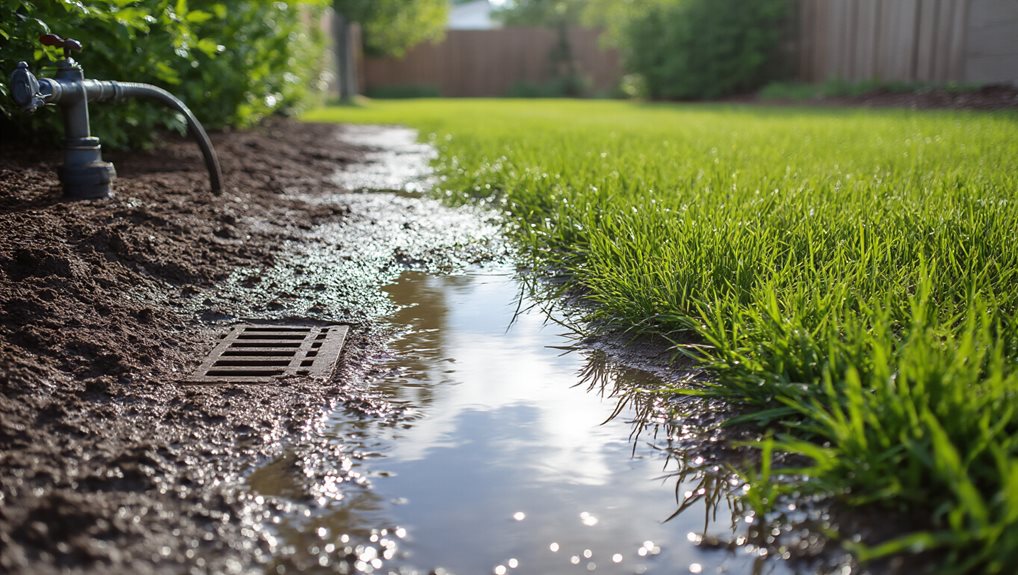
Where does the water come from? You’ll notice that improper grading sends rain into low spots, while clogged gutters spill excess near the foundation.
Compact, clay‑like soil blocks infiltration, and hardpan subsoil creates a dense layer that forces runoff to pool.
Check for irrigation leaks, broken sprinkler heads, or faulty downspouts, and verify that your yard’s slope meets the recommended 2% drop to guide water away.
Low spots can also be caused by soil compaction, which prevents water from soaking into the ground.
Instant Yard Drainage Solutions to Stop Water Today
A quick fix for standing water starts with installing an instant drainage system that moves excess moisture away before it pools. You can drop in a laser‑graded French drain trench, fill it with gravel, and lay a perforated pipe that channels water toward a field or dry well; proper planning includes confirming trench slope and backfill to ensure effective drainage. drainage system knowledge
DIY Yard Drainage Solutions That Boost Soil Permeability
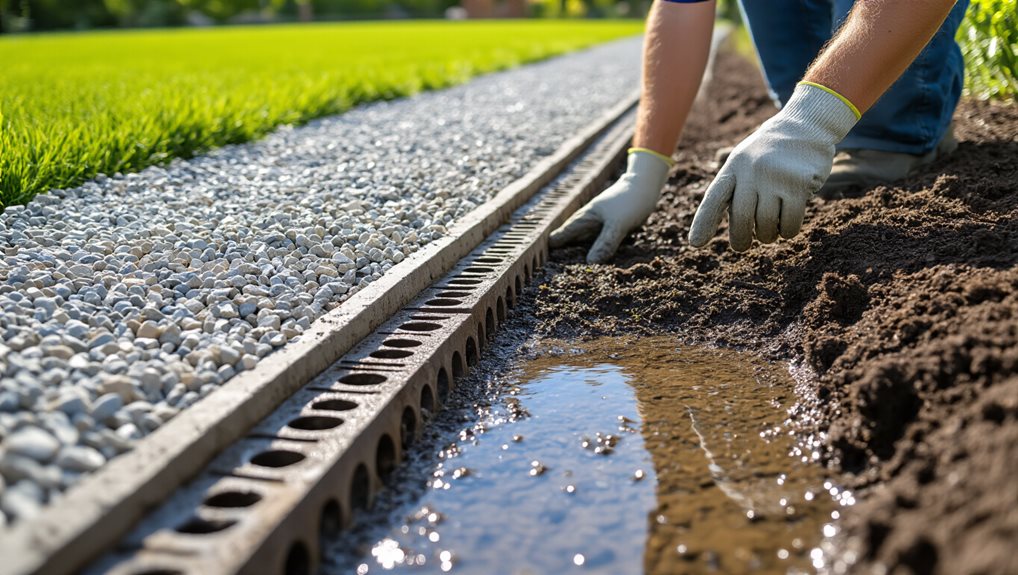
Ever wondered how you can turn a soggy yard into a well‑draining landscape without expensive excavation? Start by aerating compacted soil with a spade or core aerator, then mix in compost or pea gravel to create pores, dig a shallow French drain lined with landscape fabric and perforated pipe, and finish with a rain‑garden bed of moisture‑tolerant plants, ensuring each step improves porosity and connectivity for lasting drainage. Layering and strategic placement for maximum effect can further reduce surface runoff and promote slower water infiltration, especially near problem areas like low spots or slopes. porosity enhancement
Low‑Cost Yard Drainage Features for Lasting Relief
How can you achieve lasting drainage without breaking the bank? Install a French drain, lining the trench with landscaping fabric, sloping the pipe one inch per ten feet, then covering it with gravel and topsoil; costs run $2,800‑$6,500. Add a dry well or catch basin for runoff capture, each under $30 per foot. Plant a rain garden or replace hardscape with gravel to enhance infiltration, spending $3‑$4 per square foot.
Long‑Term Yard Drainage Grading and Maintenance Plan
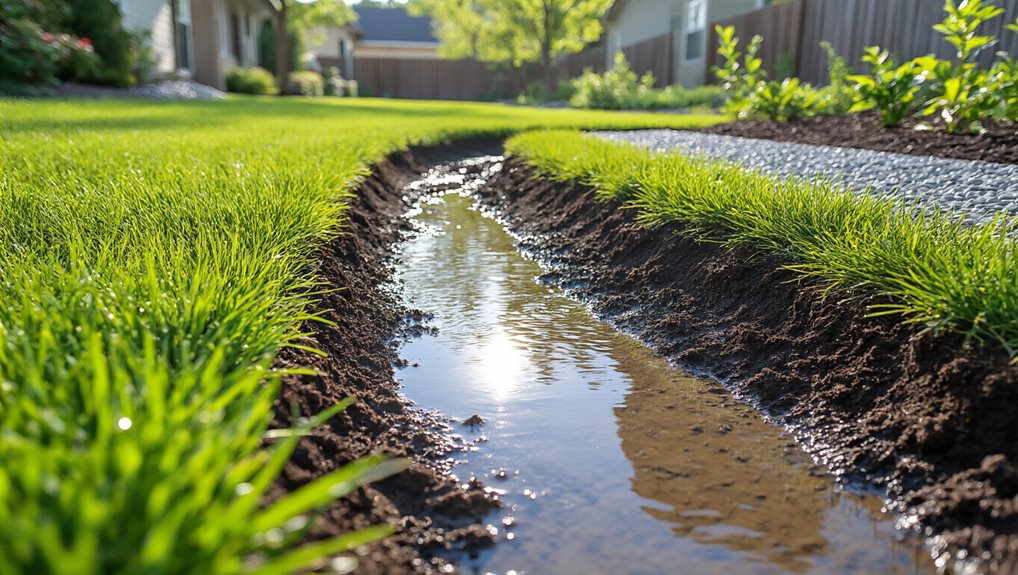
After installing low-cost drainage features, the next step is to guarantee the yard’s slope stays effective for years to come. Use a string line and level to verify a 5% slope away from the foundation, correcting any negative grades that pull water inward. Mark high and low spots, add organic amendments to clay, and schedule yearly inspections, clearing debris, reseeding, and adjusting swales to maintain consistent drainage. Regularly reassess the flow path and surface types to ensure the-ongoing effectiveness of your plan Flow Path Analysis and adjust as needed.
Final Note
By pinpointing the water’s source, applying quick‑fix drainage methods, enhancing soil permeability, and installing low‑cost features, you can stop standing water immediately while setting up lasting solutions. Maintaining proper grading and periodic upkeep will prevent future pooling, protect your landscape, and safeguard your home’s foundation. Follow these steps consistently, and your yard will stay dry, functional, and resilient.

Nathan McPhail is a garden and home DIY expert who writes practical, easy-to-follow advice for homeowners and gardeners. Through Yardique, he shares hands-on tips covering gardening, lawn care, landscaping, home improvement, repairs, tools, and outdoor living. His focus is on helping readers solve everyday household and yard problems with straightforward guidance, useful techniques, and practical solutions.