
You’re likely smelling burning oil or fuel because the mower’s engine is either over‑filled with oil, tipped the wrong way, or suffering from a clogged air filter, rich fuel mixture, or worn internal parts. Overfilled oil can flood the crankcase and enter the combustion chamber, producing blue‑white smoke and an acrid odor, while a tipped mower lets oil spill onto hot components. A dirty air filter or carburetor misadjustment forces a rich mixture, creating black smoke and a burnt smell. Check oil level, inspect the filter, and ensure proper fuel mix; if you keep going, you’ll discover more detailed diagnostics and prevention steps.
TLDR
- White or blue smoke indicates burning oil, often from overfilled oil or oil entering the combustion chamber.
- Black smoke or a strong burnt smell points to a rich fuel mixture, typically caused by a dirty or clogged air filter.
- Overfilled oil can flood the crankcase, forcing oil past piston rings and creating thick white‑blue smoke and acrid odor.
- A misadjusted or dirty carburetor can cause excessive fuel, leading to a burnt smell and thick smoke.
- Regularly check oil level, clean or replace air and fuel filters, and ensure proper ventilation to prevent burning odors.
Recognize a Burning Smell on Your Mower

How can you tell if the odor coming from your mower is truly a burning smell rather than a harmless exhaust scent?
You notice it when white or blue smoke drifts from the exhaust, indicating oil burning, while black smoke points to a rich fuel mixture; check for oil spills on a hot engine, worn piston rings, or a clogged air filter, and remember proper tilting keeps oil from flooding the carburetor. Overfilled oil can also cause white smoke.
Quick Diagnostic Checklist for a Burning Smell
First, check the oil level and make sure it’s neither overfilled nor underfilled, because an incorrect amount or old oil can create a noticeable burning odor.
Next, examine the air filter; a dirty or clogged filter will force the engine to run rich, producing black smoke and a burnt smell.
Finally, inspect the carburetor adjustment, as a mis‑set or dirty carburetor can cause excess fuel to enter the combustion chamber, leading to white or thick smoke that signals a burning issue.
The deck fastener guidelines show that using appropriate fasteners and coatings (such as hot-dip galvanized or stainless steel lag screws and through bolts) is essential for structural integrity, which parallels ensuring the mower’s components are securely fastened and maintained to prevent abnormal odors from mechanical stress. hot-dip galvanized
Oil Level Check
A quick oil‑level check can often pinpoint the source of a burning smell before it turns into a costly repair.
Locate the yellow dipstick, run the engine briefly, shut it off, let it cool five minutes, then wipe and reinsert the stick fully.
Pull it out and read the level; it should sit at the full mark, not above or below, matching the manual’s capacity.
If oil is low, add the recommended grade; if overfilled, drain the excess.
This simple step prevents smoke, overheating, and costly damage.
Air Filter Condition
Even after confirming the oil level is correct, a burning smell often points to the air filter’s condition, because a clogged filter forces the engine to work harder and can overheat quickly.
Remove the cover, inspect for dark dust or oil saturation, vacuum gently—avoid compressed air—and replace if torn or soaked.
Regular checks, especially after dusty mowing, keep airflow optimal and prevent overheating.
Carburetor Adjustment
Why does a burning odor often signal a carburetor issue? You’ll notice hard starts, stalling, or a rough run because the fuel isn’t reaching the engine evenly, and the choke may die when released.
Check fuel flow, clean jets with carb cleaner, blow out debris, and adjust the idle and high‑speed needles to the manufacturer’s turns. Verify vacuum leaks, replace clogged filters, and test after each tweak.
How Overfilled Oil Causes a Burning Smell
If you pour too much oil into the mower, the excess floods the crankcase and forces oil through the breather or past worn seals into the combustion chamber. This overflow creates blue‑white smoke and an acrid burning odor that you’ll notice near the exhaust, especially when the engine first starts. Adequate oil management also helps protect engine components from wear and overheating. drip irrigation and proper spacing between plants are part of good maintenance practices that reduce overall stress on equipment and associated issues.
Excess Oil Level
How does an overfilled oil tank turn your mower’s exhaust into a source of burnt odor?
When oil exceeds the dipstick mark, excess fluid leaks into the combustion chamber, creating hydraulic pressure that forces oil past piston rings; it then burns with fuel, producing blue‑white smoke and a acrid smell.
Check the level before each use, drain any surplus immediately, and follow the manufacturer’s fill guidelines to prevent damage.
Crankcase Vent Overflow
When excess oil fills the crankcase, the space left for blow‑by gases shrinks, causing pressure to build faster than the breather valve can release it.
The heightened pressure forces oil through seals, misting the breather and air‑filter vent, where it meets combustion gases and burns, producing a sharp odor.
Clean the breather, drain excess oil, and check filter housing to restore proper ventilation.
Why Wrong‑Way Tipping Triggers a Burning Smell
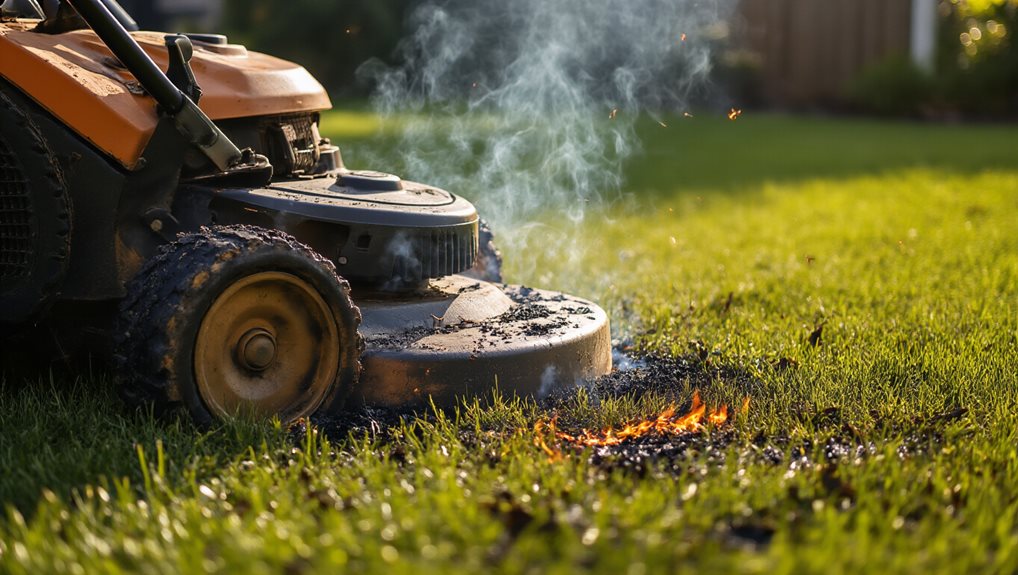
Why does a lawn mower emit a burning odor after you tip it the wrong way?
When you tilt the mower, gravity pulls oil from the crankcase into the cylinder, and the displaced oil ignites during combustion, producing gray‑white smoke and a distinct burning smell.
If the oil is not fully burned off after re‑leveling, you may notice lingering smoke and odor until the oil residue in the combustion chamber is cleared. Overfilled crankcase can cause oil to exit through the exhaust and burn, so it’s important to verify the proper oil level with a dipstick and remove any excess oil before running the engine again.
Air‑Filter Issues That Produce a Burning Smell
Ever wondered why a clogged air filter can turn your mower’s exhaust into a source of burning odor? When the filter darkens with dust or debris, airflow stalls, the engine runs rich, and excess fuel burns, producing black smoke and a hot, acrid scent.
Check the filter regularly, replace it if it’s packed, and keep combustion clean to avoid overheating and internal damage.
Fuel‑System Problems and the Burning Smell
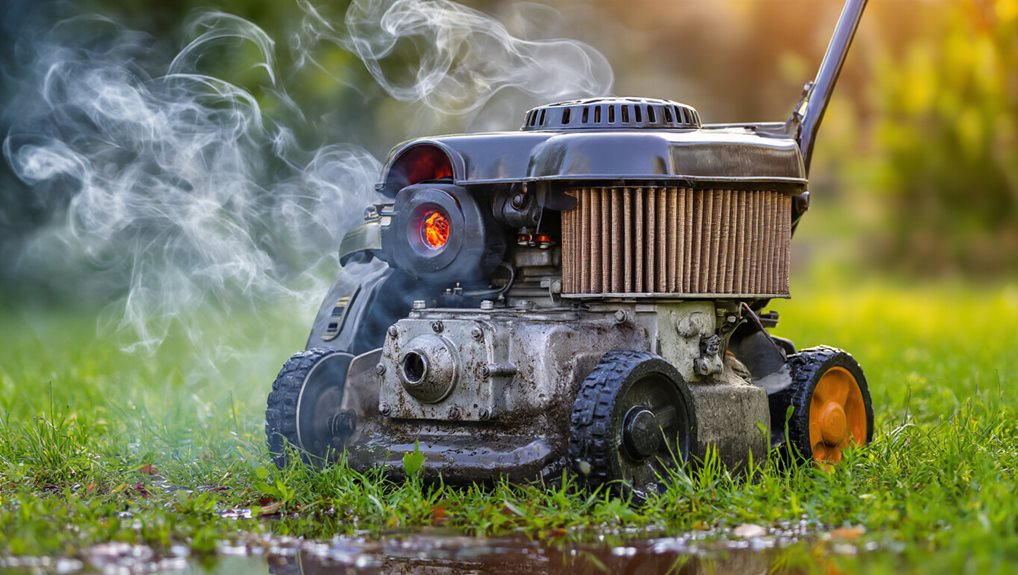
A clogged air filter can choke the engine, but the burning odor often originates deeper in the fuel system, where carburetor issues, fuel‑air mixture imbalances, and fuel contamination create excess combustion.
You’ll notice white or black smoke when a clogged or leaking carburetor lets fuel pool on hot parts, while an over‑rich mixture or gasoline‑diluted oil produces a persistent, acrid smell that signals you to clean the carburetor, replace needle valves, and inspect the fuel pump for leaks.
Engine Wear or Blown Head Gasket: Burning Smell Explained
What’s happening when your mower’s exhaust smells like burning oil? You may be dealing with worn piston rings or valves that let oil seep into the combustion chamber, creating blue smoke, or a blown head gasket that mixes oil and fuel, producing persistent smoke and power loss.
Check your dipstick for an acrid oil odor, inspect spark plugs for fouling, and consider professional repair to replace rings, valves, or the gasket. Additionally, ensure your mower’s air filter is clean and that you’re using the correct oil type and level for your model to prevent oil flooding the combustion chamber. oil burning
Prevent Future Burning Smell: Maintenance Checklist
Typically, a well‑maintained mower won’t surprise you with a burning odor, but neglecting routine checks can quickly turn a simple cut into a smelly problem. Check oil each use, change it per the manual, and replace the filter; clean or replace the air filter each spring; clear cooling fins and debris before hot days; use fresh fuel, swap the fuel filter annually, and keep the deck, blades, belts, and tyre pressure in good shape. This checklist prevents future burns and keeps you mowing confidently.
Final Note
By staying alert to the burning odor, checking oil levels, confirming proper tipping, inspecting the air filter, and addressing fuel‑system or engine issues promptly, you’ll keep your mower running smoothly and avoid costly damage. Regular maintenance—cleaning the filter, changing oil, and monitoring wear—prevents most odor‑related problems, ensuring reliable performance season after season.

Nathan McPhail is a garden and home DIY expert who writes practical, easy-to-follow advice for homeowners and gardeners. Through Yardique, he shares hands-on tips covering gardening, lawn care, landscaping, home improvement, repairs, tools, and outdoor living. His focus is on helping readers solve everyday household and yard problems with straightforward guidance, useful techniques, and practical solutions.