
Pick heavy, wind‑resistant materials like teak, steel, concrete, or HDPE lumber for your patio pieces, then anchor each leg with bungee cords or sand‑filled bases tied to a sturdy point. Add permanent windbreaks—lattice panels on evenly spaced posts, a pergola with concrete‑set columns, or dense evergreen shrubs planted 5–10 feet away—to deflect gusts. Use non‑slip pads, sandbags, or rocks under lightweight chairs, and position items against walls, corners, or natural barriers. Regularly inspect hardware, tighten bolts, and store cushions in breathable, weighted covers during off‑season; the next sections will show you how to fine‑tune these strategies.
TLDR
- Choose heavy, dense materials (e.g., teak, steel, concrete, recycled HDPE) for frames to lower wind lift and improve stability.
- Install permanent windbreaks such as lattice panels, pergola posts, or dense evergreen shrubs 5–10 ft from the furniture.
- Anchor each piece with bungee cords, weather‑proof fasteners, or sandbags tied to sturdy ground points.
- Use weighted bases, sand‑filled umbrella bases, and non‑slip pads to keep legs from tipping.
- Position furniture against walls or natural windbreaks, group heavier items upwind, and regularly inspect and tighten hardware.
Choose Wind‑Proof Materials for Outdoor Furniture
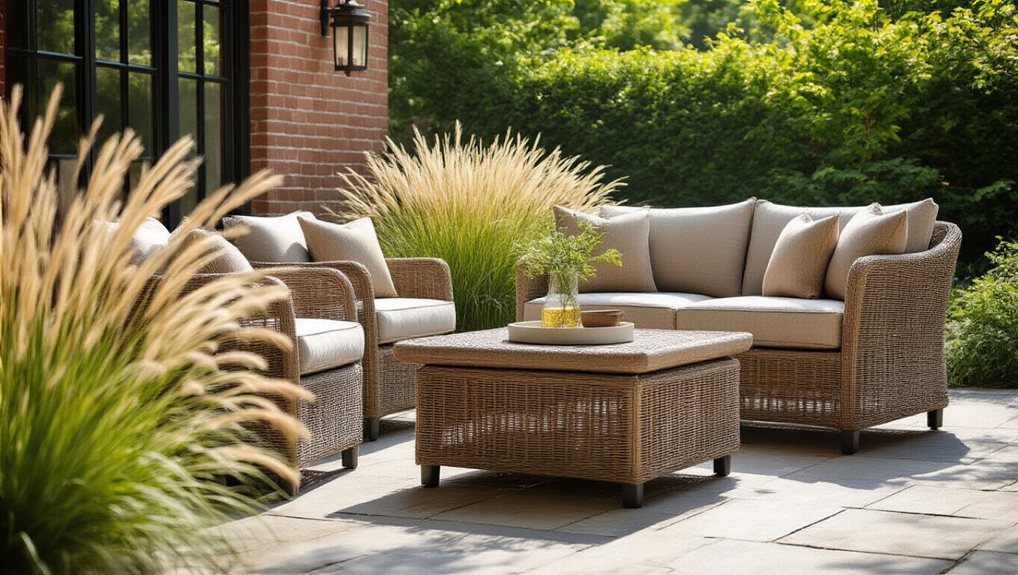
Why does material choice matter when wind threatens your patio setup? You’ll feel secure choosing heavy, dense options like teak, steel, concrete, or mahogany, which stay grounded thanks to their weight and natural oils. Recycled HDPE and HDPE lumber add durability and moisture resistance while staying lightweight enough for easy cleaning. Strong winds can tip outdoor furniture and cause debris damage. A carefully selected frame or support system helps resist tipping and distributes wind loads more effectively wind resistance benefits.
Install Permanent Windbreaks: Lattice, Pergolas, and Shrubs
Choosing sturdy, wind-proof materials gets your patio furniture anchored, but the next step is to create a permanent barrier that redirects or slows the gusts before they reach the pieces. Install evenly spaced wooden or metal posts, attach lattice panels with screws or wire, and anchor the bottom to keep wind passage minimal yet breathable. Build a pergola with concrete-set posts, cross-beams, and optional fabric panels, positioning it upwind. Plant dense evergreen shrubs in staggered rows five to ten feet away, allowing them to mature into a natural windbreak that reduces speed by up to seventy percent wind barriers and improves overall outdoor comfort.
Anchor Wind‑Proof Furniture With Bungee Cords and Adhesives
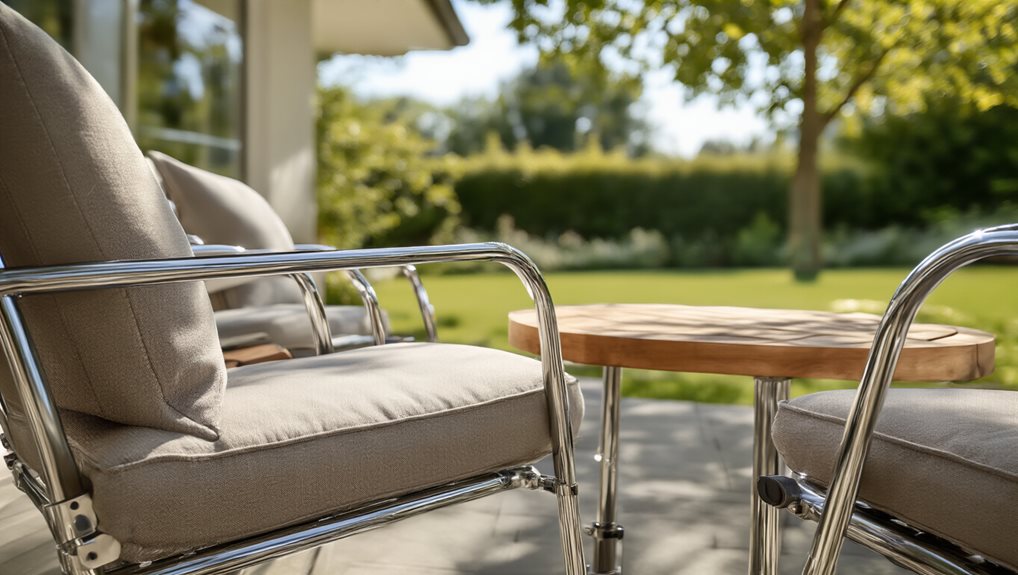
You can increase bungee‑cord tension by wrapping the cords multiple times around each leg and then fastening them to a sturdy anchor point such as a railing or fence post, using shorter cords or extra wraps for tighter grip. Additionally, choose weatherproof, UV‑stable fasteners to prevent degradation over time and maintain a secure fit in windy conditions. Dusk-to-Dawn
Bungee Cord Tension Techniques
How can you keep patio furniture from snapping loose when gusts hit?
Choose two or three strong bungee cords, stretch them evenly across each seat, and cinch with the built‑in buckles, anchoring to a permanent post or ground stake at a slight angle.
Wrap cords around the entire stack circumference, bundle chairs tightly before anchoring, and use towels under corners to protect surfaces while maintaining sufficient tension.
Adhesive Application Best Practices
Bungee cords keep the seats tight, but the anchors that hold those cords must stay firmly in place when wind gusts strike, and that’s where proper adhesive application comes in.
Drill correctly sized holes, clear them with 90 psi air, brush, then flush. Choose acrylic for cold, epoxy for heat, match conditions, dispense uniformly, insert clean anchors slowly, let cure undisturbed, and verify stability before tightening straps.
Secure Furniture With Weights, Sandbags, and Rocks
Which method will keep your patio set from turning into a wind‑blown mess? You can anchor each leg with sandbags, kitty‑litter bags, or sleek weights that blend with décor, placing them evenly for balance; fill umbrella bases with sand or water, add extra rocks or pavers under lightweight chairs, and use non‑slip pads to prevent sliding, ensuring sturdy, community‑ready stability. Ground cover plants with purple flowers offer additional aesthetic options for surrounding areas, helping to stabilize soil and reduce erosion around your patio ground cover benefits benefiting from rapid growth and low maintenance to keep the area tidy and less prone to wind disturbance.
Cover Outdoor Furniture With Adjustable Drawcord‑Hemming
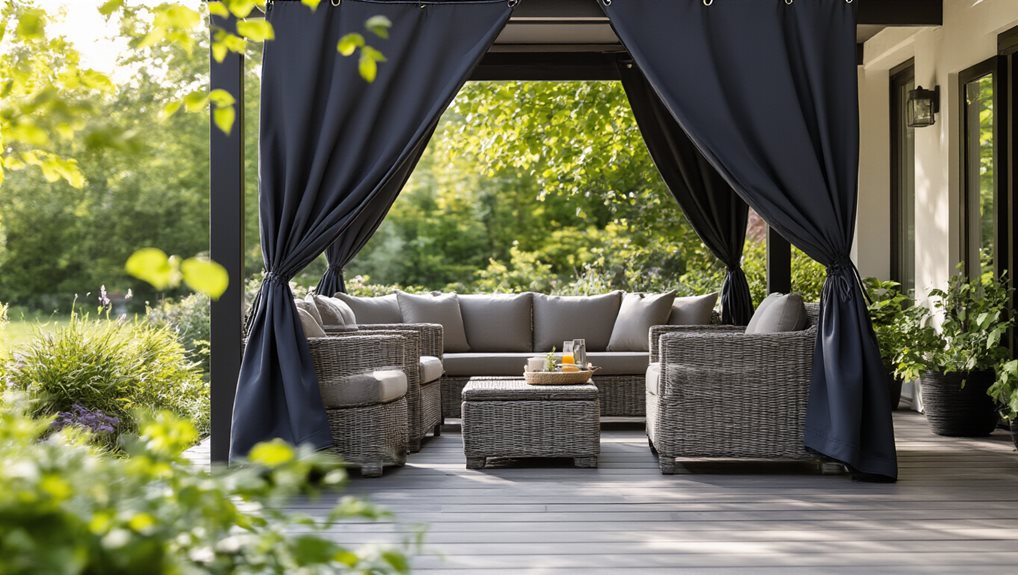
You’ll notice that the adjustable drawcord‑hem lets you fine‑tune the fit, so the cover hugs every curve of the furniture and stays sealed against gusts.
The cords are made from weather‑resistant polyester and PVC, which repels moisture, blocks UV rays, and endures temperature swings without cracking.
When a storm passes, you can release the tension with a simple click‑lock, then re‑tighten it in seconds, keeping the setup both secure and easy to manage.
Secure Fit Adjustments
How can you keep patio furniture from turning into wind‑blown debris? Use adjustable drawcord‑hemming to achieve a secure fit, tightening cords until the cover hugs every edge of tables and chairs, eliminating gaps that let gusts lift the fabric.
The system adapts to irregular shapes, lets you cinch incrementally, and works with straps or anchors, ensuring reliable protection during storms.
Weather‑Resistant Cord Materials
When selecting cords for adjustable drawcord‑hemming, prioritize materials that resist moisture, UV radiation, and temperature extremes, because these properties keep the cover snug and durable throughout any season.
Choose synthetic braid ropes or polypropylene rope for zero water absorption, rapid drying, and UV‑stabilization, while UV‑resistant zip ties reinforce joints.
These recyclable, low‑maintenance options maintain strength, prevent fading, and promote a cohesive, reliable outdoor space.
Easy Tension Release Mechanism
Choosing the right tension‑release system is the next step after picking moisture‑ and UV‑resistant cords, because the mechanism determines how easily you can adjust the fabric’s tightness without dismantling the whole cover. You’ll mount horizontal brackets, thread the drawcord through the hem, and engage the spring‑loaded bar; a toggle or knob lets you loosen or tighten quickly, keeping the cover taut, preventing wind lift, and ensuring the whole community feels secure.
Position Outdoor Furniture Against Walls, Corners, and Natural Windbreaks
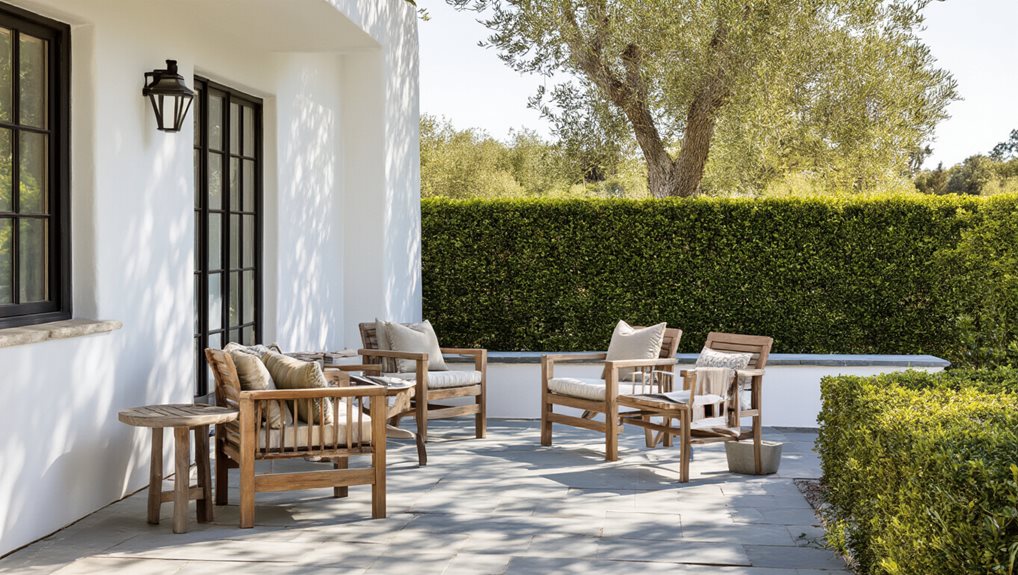
Ever wonder why a simple wall or corner can turn a breezy patio into a stable oasis? Position your table or lounge near a solid wall, corner, or hedge; the structure blocks the wind, letting heavier pieces act as buffers for lighter ones.
Group chairs together, place sturdy metal or teak items upwind, and use dense shrubs or a privacy fence as natural windbreaks, reducing the need for extra ties.
Maintain and Store Wind‑Proof Outdoor Furniture Seasonally
Because wind can quickly turn a relaxed patio into a hazardous zone, you should regularly check and store your outdoor furniture to keep it secure and in good condition. Inspect bolts and rust, tighten hardware, and apply protective coatings before winter; use breathable, weighted covers for cushions, stack lightweight chairs, and move heavy pieces indoors or anchor them with sandbags, tie-downs, or ground anchors during hurricane-prone seasons. Regularly test and maintain hardware with a moisture-controlled routine to prevent corrosion and ensure longevity. Protective coatings
Final Note
By selecting wind‑proof materials, installing permanent windbreaks, anchoring pieces with bungee cords or adhesives, adding weights, sandbags, or rocks, and covering furniture with adjustable drawcord‑hemming, you’ll keep your patio set stable even in gusty conditions. Positioning items against walls, corners, or natural barriers further reduces exposure, while seasonal maintenance and proper storage preserve durability. Follow these practical steps to protect your outdoor investment and enjoy a secure, functional space year‑round.

Nathan McPhail is a garden and home DIY expert who writes practical, easy-to-follow advice for homeowners and gardeners. Through Yardique, he shares hands-on tips covering gardening, lawn care, landscaping, home improvement, repairs, tools, and outdoor living. His focus is on helping readers solve everyday household and yard problems with straightforward guidance, useful techniques, and practical solutions.