When you mow thick grass the blade deck meets much higher resistance, forcing the engine to work harder, which drops RPM and can choke the motor if airflow, fuel, or oil aren’t optimal. A clogged air filter or vacuum leak starves the carburetor of proper mixture, while a restricted fuel filter or pump limits flow, both causing power loss. Low oil or worn compression rings increase friction, further reducing performance. Check the air filter, fuel system, and oil level, and you’ll discover more detailed fixes.
TLDR
- Tall or dense grass increases cutting resistance, causing the engine RPM to drop and stall under load.
- Clogged air filter or vacuum leaks reduce airflow, leading to a weak mixture and power loss in thick grass.
- Fuel delivery problems—such as a blocked filter, restricted vent, or dirty carburetor—starve the engine when demand spikes.
- Faulty spark plug, ignition coil, or low oil level can cause misfires and insufficient lubrication, reducing power during heavy cuts.
- Worn head gasket or compression loss creates leaks and smoke, diminishing engine performance especially when mowing dense vegetation.
Why Tall Grass Causes Lawn Mower Power Loss

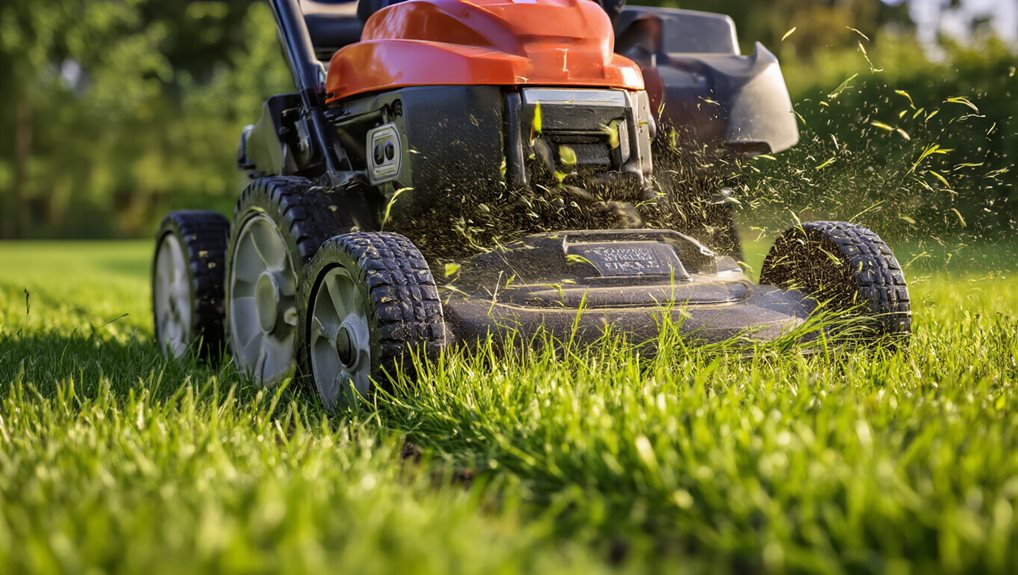
Why does tall grass sap your mower’s power? You feel the engine strain as dense blades increase resistance, causing RPM to drop and torque demand to spike. Low deck settings choke the engine, while infrequent mowing lets growth exceed one inch, amplifying drag and deck load. Raising the cutting height and mowing regularly keep resistance manageable, preventing stalling and preserving power. An improper air‑fuel mixture can also cause the engine to lose power when cutting thick grass.
Air‑Supply Problems That Cut Engine Power
If your mower’s air filter is clogged, the engine can’t draw enough fresh air, so you’ll feel a noticeable drop in power when the grass thickens.
A vacuum leak—whether from a cracked intake hose or a loose gasket—lets unfiltered air bypass the combustion chamber, weakening the suction that helps the blade cut efficiently.
Even a blocked gas‑cap vent can starve the engine of proper airflow, causing it to stumble under load and forcing you to clean or replace the component before you get back to a smooth cut.
Clogged Air Filter
Restricting airflow with a clogged air filter quickly starves a lawn‑mower engine of the oxygen it needs for efficient combustion, so the machine feels sluggish and loses power especially when you’re tackling thick grass. When the filter is saturated with dust and debris, the air‑fuel mixture becomes rich, causing misfires, rough idle, and higher fuel consumption. Removing the filter restores smooth operation, confirming the blockage. Clean or replace the filter regularly to keep the engine breathing and maintain power.
Vacuum Leak Effects
Ever notice your mower stalling just as you hit a patch of thick grass, even though the engine seemed fine a moment earlier? A vacuum leak lets unmetered air into the intake, making the mixture lean and causing rough idle, power loss, and stalling under load. Check hoses, gaskets, and manifold cracks; spray carb cleaner or use smoke to locate leaks, then tighten or replace the faulty parts.
Blocked Gas Cap Vent
Why does your mower suddenly lose power after a few minutes of cutting thick grass?
A blocked gas‑cap vent creates a vacuum in the tank, starving the carburetor despite fuel being present; this mimics low‑fuel symptoms, especially under load.
Check the vent hole for debris, grease, or a missing metal dish, clean or replace the cap, and verify airflow by loosening the cap while the engine runs.
How to Clean a Clogged Air Filter Quickly
A clogged air filter can sap your mower’s power, so tackling it quickly is crucial for maintaining performance. First, disconnect the spark plug wire, then unscrew the side cover to expose the foam or paper filter. When reinstalling, lightly oil the foam and make sure the pre‑filter seats correctly to protect the engine from dust and moisture. outdoor fasteners
Fuel Delivery Issues Leading to Power Loss
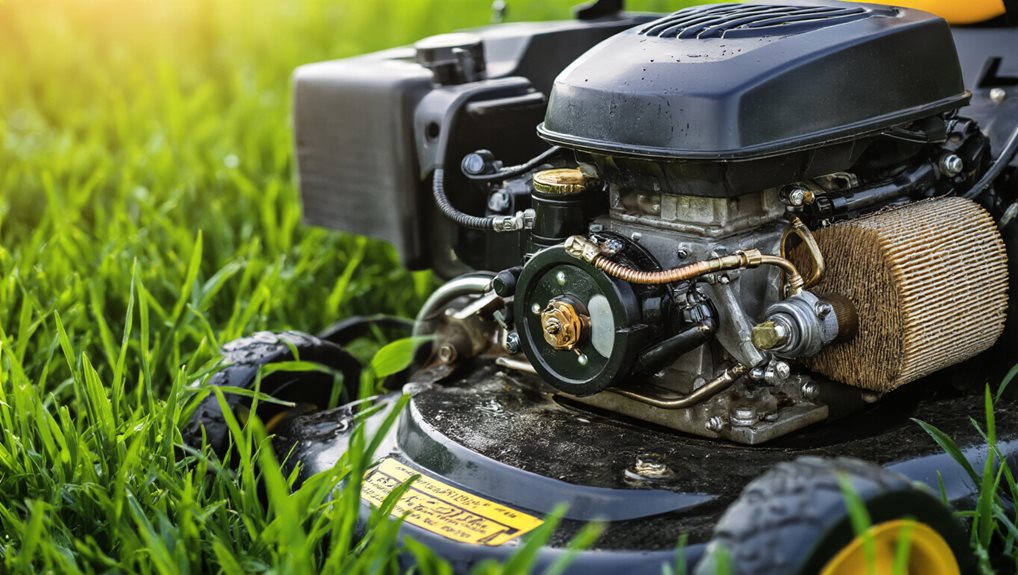
When a mower’s engine struggles to maintain power in thick grass, the culprit is often a fuel‑delivery problem, and pinpointing the exact source can save you time and frustration. A clogged filter or vent creates pressure differentials that starve the engine, while a faulty pump or carburetor restriction limits flow under load. Inspect the filter, clear the vent, verify pump lines, and clean the carburetor to restore consistent fuel delivery.
Step‑by‑Step Guide to Cleaning the Fuel Filter
Fuel-delivery problems often stem from a clogged filter, so cleaning it’s a key step toward restoring power in thick grass. Gather wrenches, pliers, safety eyewear, and cloth; disconnect the spark plug wire, shut the fuel valve, then locate the filter. Release clamps, remove hoses, shake out fuel, submerge in cleaner, brush, rinse, dry, re-install with arrow aligned, secure clamps, reconnect wire, and test the mower. Regular filter maintenance helps prevent reduced airflow and engine strain, especially in challenging mowing conditions. filter maintenance
Spark Plug Faults That Reduce Ignition Strength
Why does your mower stall in thick grass? A wide spark‑plug gap blocks electrons, forcing the coil to overheat and lose strength, while high resistance weakens the spark, and fouled or damaged plugs cut arcing. Test by grounding the plug, pulling the starter, and checking spark intensity; replace or clean plugs if the spark is faint, irregular, or absent.
Diagnosing Bad Ignition Coils Under Load
If you hear misfires or notice black smoke during testing, perform a coil resistance check and confirm the ignition coil is within specification coil resistance.
Oil Level Mistakes That Drain Engine Power
You might notice that low oil creates high friction, making the mower labor harder and stall when the grass thickens. In addition, using the correct oil type and maintaining proper oil changes helps sustain engine power during strenuous cutting. color-coded
Low Oil, High Friction
Ever notice how your mower stalls the moment you hit a patch of thick grass, even though the engine seemed fine moments earlier?
Low oil strips the protective film, forcing metal‑to‑metal contact that spikes friction, heats bearings, and drags pistons and crankshaft.
The extra load robs power instantly, especially under dense grass, causing sudden stalls, smoke, and rapid overheating.
Check the dipstick on a level surface, refill promptly, and use the correct viscosity to keep friction low and power steady.
Excess Oil Causes Foaming
Why does your mower suddenly lose power when the blade churns through thick grass?
Excess oil fills the crankshaft, whipping it into foam that traps air bubbles, reducing lubrication and oil pressure. The foamy mixture disrupts pump flow, causes cavitation, and heats the engine, leading to power loss and wear.
Check the dipstick, keep oil at the recommended level, and replace degraded oil to restore performance.
Fixing Low Oil Pressure in Heavy‑Cut Conditions
When you’re mowing thick grass, low oil pressure often stems from a combination of low oil level, incorrect viscosity, or a clogged filter, each of which can starve the engine of proper lubrication and cause it to stall under load. Regularly check the dipstick, top off with the manufacturer‑recommended grade, replace a dirty filter, and inspect seals for leaks; a clean pump and proper oil keep the mower running smoothly. Regular maintenance also includes ensuring the oil remains within the target range as you mow across various grass densities, which helps prevent pressure drops during heavy cutting. Layered garden design considerations can also influence mowing patterns and maintenance routines by encouraging field-tested spacing and airflow around fixed elements.
Mechanical Issues That Reduce Engine Compression
Low oil pressure can already sap power, but once the engine’s lubrication is sorted, the next common culprit is a loss of compression caused by mechanical wear. Worn piston rings let gases slip past, faulty valves don’t seal, damaged head gaskets leak, carbon buildup blocks proper contact, and worn camshafts or cylinder walls disrupt timing; each reduces PSI, leaving your mower struggling in thick grass.
Quick Checks for Leaking Valves and Gaskets
How can you tell if a valve or head gasket is leaking before the mower quits on you? Look for oil on the driveway, wetness around the valve‑cover mating surface, and smoke or a burning smell from the exhaust. Inspect spark‑plug tube seals and the VCT solenoid for drips; a whooshing noise or oil on head attachment ridges signals a head‑gasket leak. Remove the cover, scrape old gasket, install a new one, torque bolts to 60 in‑lb, then verify dryness and no smoke after a short run.
Preventive Maintenance to Keep Power Consistent
You should check the oil level before each session, because low oil can cause overheating and power loss.
Keeping the air filter clean, or replacing it when it’s clogged, guarantees proper airflow and maintains engine performance.
Together, these simple steps help you avoid the dreaded stall when the grass gets thick.
Check Oil Level
Checking the oil level before each mowing session is a simple yet essential step to keep your mower’s power consistent, especially when you’re tackling thick grass.
Make sure the engine’s cold, place the mower on a level surface, wipe the dipstick clean, reinsert fully, then read the level between the minimum and maximum marks. If it’s low, add the correct oil, avoiding overfill, and run the engine at idle to confirm no leaks.
This routine prevents power loss and extends engine life.
Clean Air Filter
After you’ve verified the oil level, the next step is to inspect the air filter, because a clean filter is just as important for maintaining power when you’re pushing through thick grass. Remove the foam pre‑cleaner, wash it with soapy water, let it dry, then lightly oil it; replace paper filters every 25 hours if dirty, or seasonally, to keep airflow steady, prevent overheating, and ensure consistent performance.
Final Note
By keeping the air filter clean, ensuring proper fuel flow, maintaining adequate oil levels, and checking for mechanical wear, you’ll prevent the power loss that thick grass can cause. Regular inspections and timely repairs keep the engine running efficiently, so you can tackle dense lawns without sacrificing performance. Stay proactive with maintenance, and your mower will deliver consistent power season after season.

Nathan McPhail is a garden and home DIY expert who writes practical, easy-to-follow advice for homeowners and gardeners. Through Yardique, he shares hands-on tips covering gardening, lawn care, landscaping, home improvement, repairs, tools, and outdoor living. His focus is on helping readers solve everyday household and yard problems with straightforward guidance, useful techniques, and practical solutions.