Know your first fall frost date using 10-year climate averages and your USDA Zone to time plantings right. Sow carrots, beets, and greens like kale and lettuce 8–12 weeks before frost, adding a 2-week “fall factor” for slower growth. Prep soil deeply with compost, adjust pH, and mulch to retain moisture. Stagger sowings every 1–2 weeks for steady harvests, and protect crops with row covers when temperatures drop—smart planning now means bigger yields later.
TLDR
- Determine your first fall frost date using 10-year averages and USDA Zone data to time plantings accurately.
- Sow fast-growing crops like lettuce and radishes every 7–14 days for continuous harvests.
- Transplant or sow cool-season crops such as kale, broccoli, and carrots 8–12 weeks before frost.
- Prepare soil by tilling, adding compost, and adjusting pH to support strong fall crop growth.
- Use row covers, mulch, and frost-resistant varieties to protect plants and extend the harvest season.
Know Your First Fall Frost Date
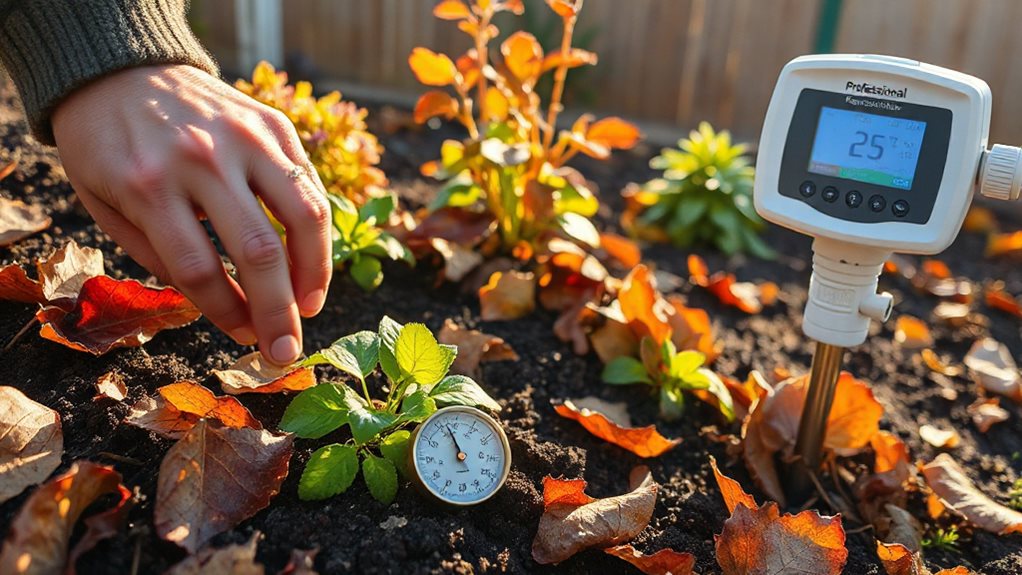
While knowing when the first fall frost typically arrives might seem like a minor detail, it’s actually one of the most critical factors in planning a successful autumn garden.
You’ll use historical averages, like those from USDA Zone data, to estimate this date, giving you a reliable window for planting and harvesting.
Understanding your local frost timeline helps you protect tender plants, time cool-season crops right, and avoid losing yields to unexpected freezes, keeping your garden thriving as temperatures drop.
This estimate is based on a 10-year average of historical weather data, which provides a more stable prediction despite yearly fluctuations.
Cool-season crops prefer cooler temperatures and often perform best when sown according to your soil temperature.
Plant These Vegetables for a Fall Harvest
Now that you’ve pinpointed your first fall frost date, you can confidently choose vegetables that will thrive in the cooling weeks ahead.
Plant arugula and lettuce for quick cuts, kale and collards for lasting harvests, and broccoli, cabbage, or cauliflower from transplants.
Tuck in beets, carrots, and radishes for crisp roots, and sow peas or bush beans under fabric if nights turn chilly.
Keep soil consistently moist to encourage strong root development and better yields, especially for crops like beets and carrots, and consider using mulch to help retain that moisture.
When to Sow Fall Garden Seeds
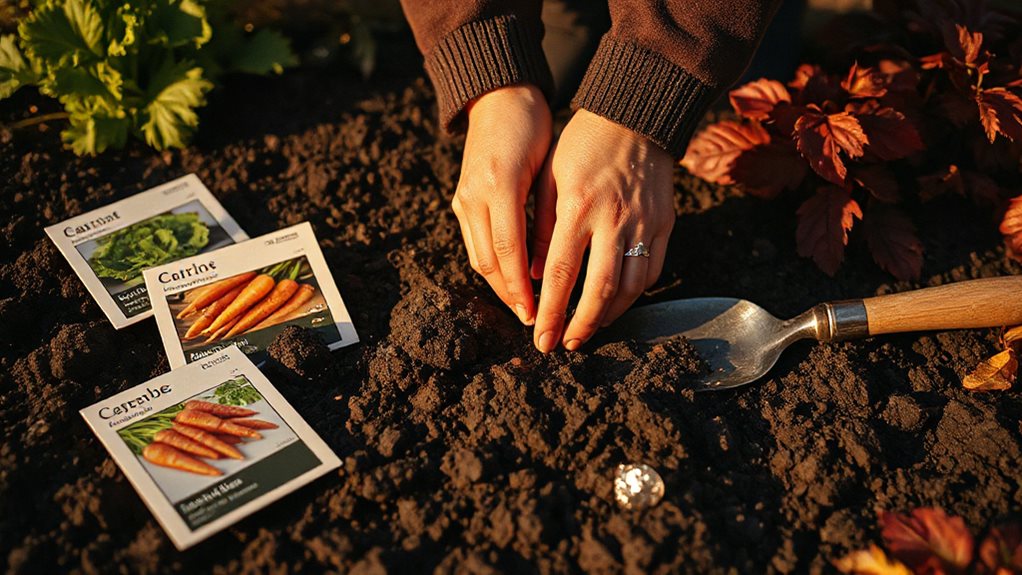
Get your seed packets ready—timing is everything when sowing for a successful fall garden.
Count back 10–12 weeks from your average first frost for root crops like carrots and beets, and 8 weeks for winter greens such as kale and collards.
Remember to add a 2-week “fall factor” for cooler, shorter days, and check frost dates by your zip code to fine-tune planting times.
Consider testing your soil pH and nutrients before planting to match crops with soil needs and optimize fertilizer plans (pH and nutrients).
Prep Soil Now for Stronger Fall Crops
Turn your attention to the foundation of a thriving fall garden—your soil—by tilling it to a depth of 8 to 12 inches to promote strong root development and even nutrient distribution.
Remove debris, mix in compost and aged manure, then water well to settle amendments. Test pH, adjust as needed, and top with mulch to protect and nourish through winter. Allow the soil to rest after amending to let nutrients stabilize and microbial activity rebalance before planting.
Stagger Plantings for Continuous Harvest

You can keep your fall garden productive by staggering plantings every 7 to 14 days, especially with fast-growing crops like lettuce, radishes, and spinach.
By planning succession sowings and swapping out harvested crops for new transplants or seeds, you’ll maintain a steady harvest without overwhelming gluts.
Use a simple calendar to track planting dates, sunlight needs, and crop rotations so your garden keeps producing right through the season.
Consider using raised beds made from galvanized metal for durability and better drainage, which also help extend your growing season with improved drainage.
Staggered Sowing Schedule
While a single planting may seem efficient, staggering your sowings every few weeks guarantees you’ll harvest fresh vegetables steadily instead of all at once.
Sow lettuce, spinach, or radishes every 7–14 days to keep your table stocked.
Time plantings by your fall frost date, and mix early and late varieties for longer yields.
This simple rhythm guarantees garden abundance without waste.
Succession Timing Tips
To keep your garden productive well into the fall, timing your succession plantings with precision makes all the difference.
Sow quick crops like arugula and spinach weekly, while staggering kale and broccoli every two weeks.
Count backward from your first frost date, adding 2–3 weeks for slower autumn growth, and adjust for shorter daylight hours to make certain steady harvests you can rely on.
Harvest Continuity Strategies
Maximize your garden’s productivity by staggering plantings to guarantee a steady flow of harvests throughout the season.
Sow beans, lettuce, or squash every 7–21 days, or pair early, mid, and late varieties.
Intercrop fast radishes with slow carrots, harvest outer lettuce leaves, and replant promptly with cool-season crops like spinach or beets to keep your table full.
Protect Fall Crops From Frost and Cold
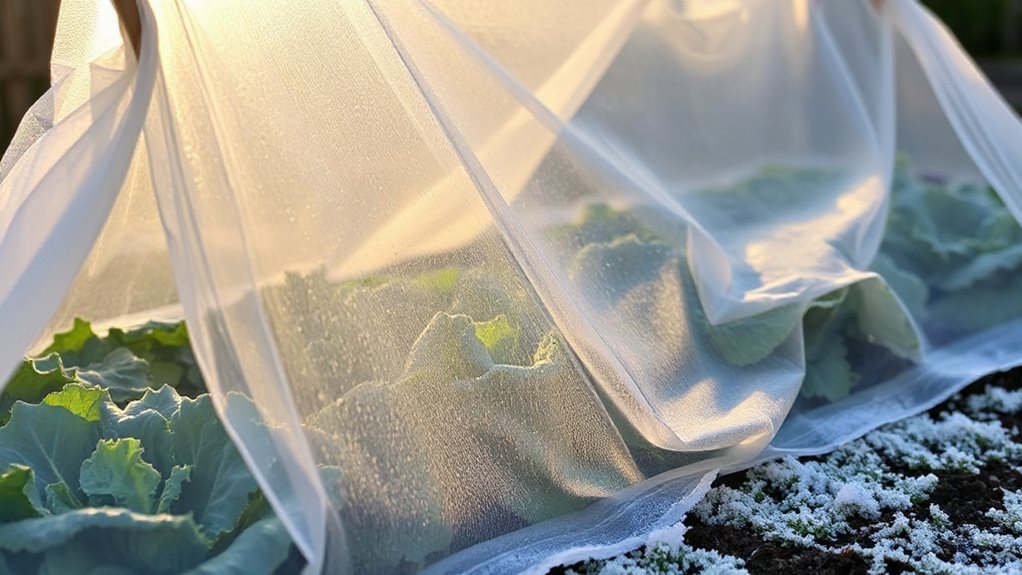
Shielding your fall crops from frost and cold starts with smart planning and the right protective measures.
Choose frost-resistant varieties or plant in warmer microclimates, avoiding low spots where cold air settles.
Use floating row covers—lighter ones for mild protection, heavier for colder nights—secured with hoops and weighted edges.
For added defense, run sprinklers steadily during freezes or monitor thresholds closely, especially for sensitive crops like flax or sunflower.
Final Note
You’ve got the tools to grow a productive fall garden. By knowing your frost date, choosing the right crops, and preparing your soil now, you set the stage for success. Sow seeds at the right time and stagger plantings to keep harvests coming. Use frost protection when needed, and you’ll enjoy fresh, homegrown vegetables longer. Smart planning leads to better yields—so get growing.

Nathan McPhail is a garden and home DIY expert who writes practical, easy-to-follow advice for homeowners and gardeners. Through Yardique, he shares hands-on tips covering gardening, lawn care, landscaping, home improvement, repairs, tools, and outdoor living. His focus is on helping readers solve everyday household and yard problems with straightforward guidance, useful techniques, and practical solutions.