
A raised‑bed depth of 12–18 inches works for most vegetables because it provides enough room for roots while keeping the bed stable, while 6–8 inches is sufficient for leafy greens and herbs that stay near the surface. If you grow deep‑rooted crops like carrots, potatoes, or corn, aim for 18–24 inches, and for ergonomic standing work or very large plants, 24 inches or more is ideal; deeper beds may need reinforcement to prevent bowing. Adjust the height if the native soil beneath is compacted, and you’ll discover more details on tailoring depth to each crop.
TLDR
- Most vegetables thrive in 12‑18 inches of soil; 16‑18 inches is a versatile standard.
- Leafy greens and herbs need only 6‑8 inches, while carrots, beets, onions, and potatoes require at least 12 inches.
- Tomatoes, peppers, and deep‑rooted crops like squash benefit from 18‑20+ inches for optimal root development.
- Shallow beds (6‑8 inches) are ideal for limited spaces, low‑cost builds, and shallow‑rooted crops.
- Deep beds (>12 inches) should be reinforced with fabric, hardware cloth, or posts to prevent bowing and improve drainage.
What Is the Ideal Raised‑Bed Depth?
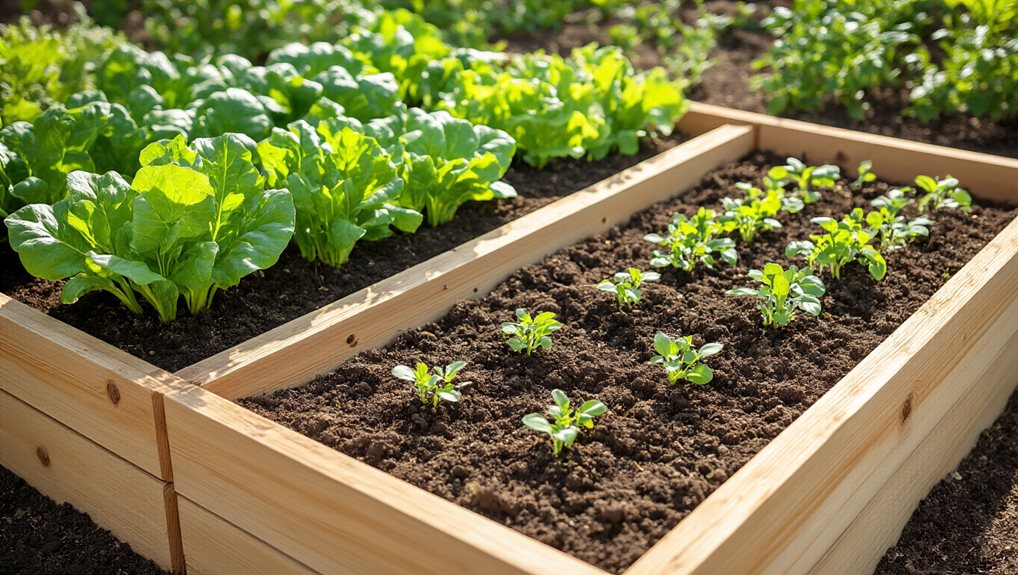
What depth should you choose for a raised‑bed garden? You’ll find that 12‑to‑18 inches satisfies most backyard growers, delivering solid drainage and root room, while 16‑to‑18 inches hits a sweet spot for versatility. If you prioritize ergonomics, aim for 18‑to‑24 inches, which eases tilling and harvesting.
Two‑foot beds, built from two 2×6 boards, provide a popular, stable height that encourages community sharing and confident gardening. Incorporating a customizable depth allows you to tailor the bed to specific plant needs.
How Deep Should Specific Vegetables Be Planted?
How deep you plant each vegetable determines whether its roots can develop fully, which in turn affects yields and plant health. For leafy greens like lettuce, spinach, and herbs, aim for six to eight inches, because most root mass stays in the top six inches.
Carrots, beets, radishes, onions, garlic, and potatoes need twelve inches or more, while tomatoes and peppers thrive at eighteen inches, ensuring sturdy growth and moisture retention.
How Does Underlying Soil Change Usable Depth?
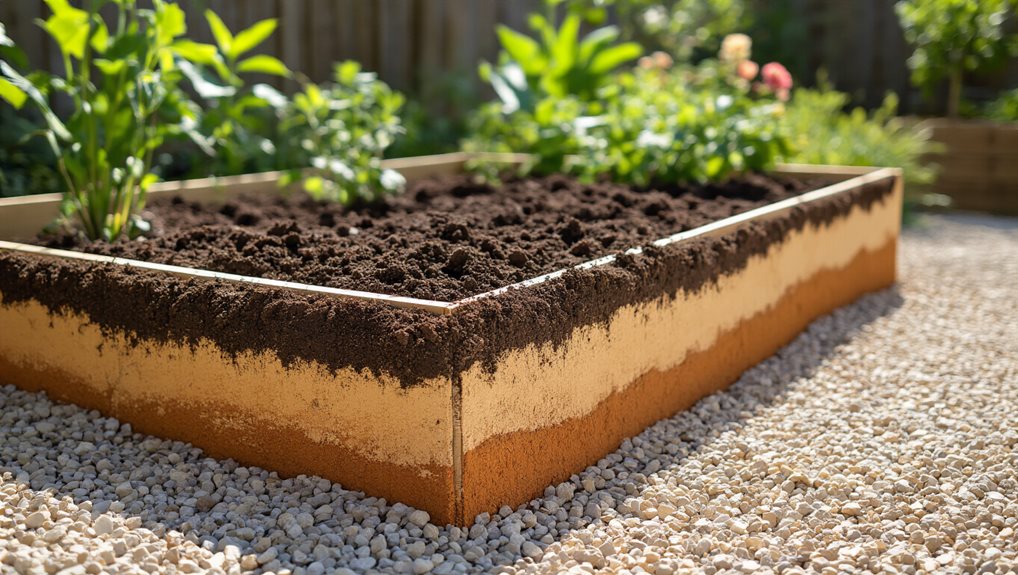
You’ll notice that compacted native soil beneath your bed can choke root growth, so you may need to raise the bed height to give plants the depth they crave. Aerating the lawn before building or expanding beds can also improve infiltration and root access. crisscross pattern improves the effectiveness of aeration by promoting even water movement through the soil profile.
Soil Compaction Effects
Ever notice how the soil beneath a raised bed can suddenly feel “hard” and limit how deep your plants really grow?
Compaction shrinks macropores, cutting air‑filled porosity below the 10 % threshold roots,,
resistance, and, and causing, roots to crowd above dense layers.
Adding organic matter, mulching, and avoiding foot traffic preserve tilth, keep infiltration steady, and protect root development, ensuring your garden stays thriving and connected.
Root Penetration Through Layers
What happens when roots encounter the soil beneath your raised bed? If the subsoil is loose, aerated, and free of rocks, they’ll extend beyond the bed, effectively deepening usable depth for shallow‑ and medium‑rooted crops, while deep‑rooted vegetables like tomatoes or squash can reach their 18‑24‑inch needs. Hard surfaces, however, stop penetration, so only the bed’s height counts.
Adjusting Bed Height Accordingly
How deep your plants can actually grow depends largely on what lies beneath the raised bed, because the underlying soil either adds to or limits the usable root zone.
If the subsoil is poor or compact, you’ll need at least 30 cm height to compensate, while quality topsoil lets you trim the bed to 20 cm, adding its own depth to the root zone and ensuring proper drainage and moisture.
When Is a Shallow Bed Better Than a Deep One?
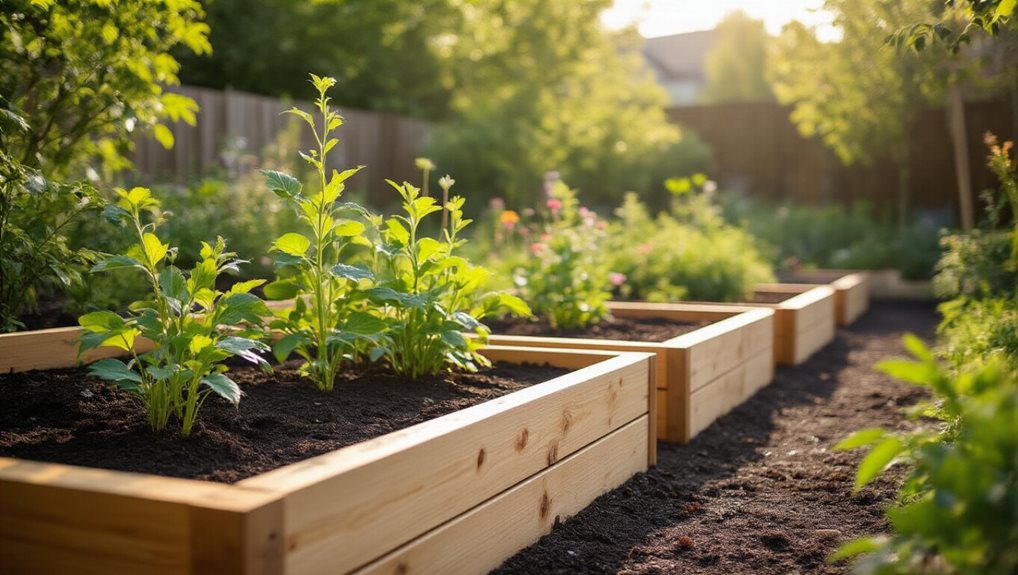
When you’re limited by a small patio or a balcony, a shallow bed lets you maximize planting area without overloading the structure, while the reduced soil volume keeps costs down and drainage efficient. If your soil is heavy, low‑quality, or you have limited access to compost, a shallower depth minimizes the amount of sub‑par material you need to work with, letting you focus on the top layer where most nutrients reside. For crops like lettuce, herbs, and other shallow‑rooted plants, a 6‑8‑inch bed provides enough room for healthy roots, so you can achieve high yields without the extra effort of building a deep, costly bed. Outdoor wiring must be run through conduit for protection and moisture sealing when installed near exterior walls, which mirrors the importance of safeguarding garden structures from the elements. conduit and weatherproofing considerations help ensure longevity of outdoor installations and crops alike.
Limited Space Constraints
Ever faced a tight backyard or balcony where digging deep isn’t an option? A shallow raised bed lets you maximize planting area without sacrificing vertical space, using only six to eight inches of soil for lettuce, herbs, and other shallow‑rooted crops.
You’ll spend less on soil, avoid heavy loads on balconies, and enjoy quicker drainage, making construction and relocation simple while keeping your garden thriving in limited footprints.
Soil Quality Challenges
Why do many gardeners opt for a shallow raised bed when soil quality is a concern? Shallow beds (6‑12 inches) improve drainage, lessen compaction, and keep organic matter active, preventing waterlogging and fungal disease.
They dry faster, so you’ll add mulch and high‑organic compost to retain moisture.
Less fill reduces cost and labor, while still providing a loose, crumbly medium that supports healthy root growth.
Specific Plant Requirements
How do you decide whether a shallow raised bed will meet a plant’s needs? If you grow lettuce, herbs, or spinach, 6‑8 inches of soil is ample, letting you save material and labor while ensuring good drainage.
For carrots, beans, or potatoes, aim for 12‑18 inches to accommodate deeper roots.
Fruiting crops like corn or squash thrive in 18‑20 inches, so choose depth based on each plant’s specific requirement.
How to Reinforce Raised Beds Over 12 Inches?
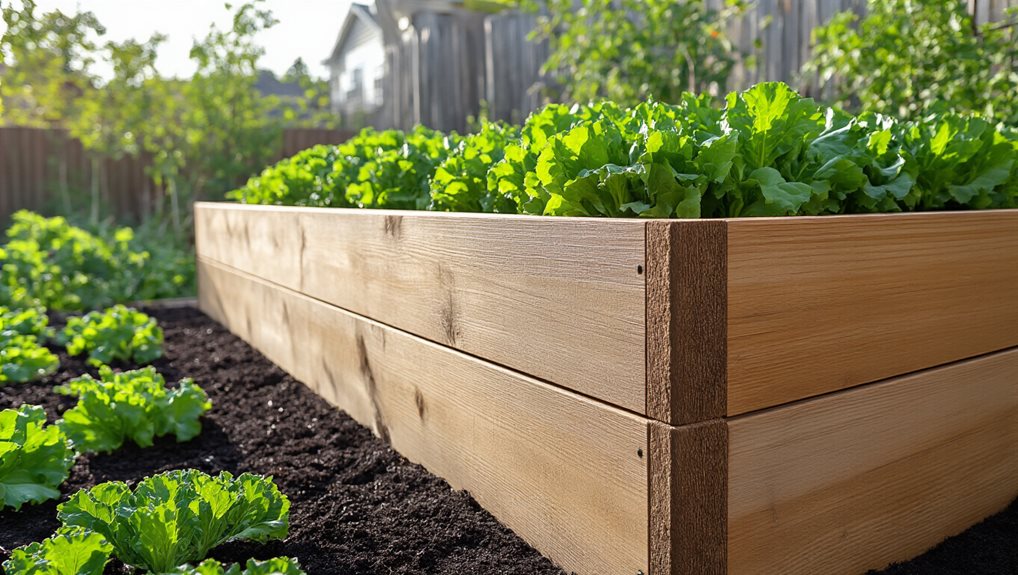
A raised bed deeper than twelve inches can start to bow or collapse under the weight of soil, especially when it’s filled with heavy compost or mulch, so reinforcing the structure is essential for long‑term stability. Proper drainage and soil structure are critical; incorporate coarse sand or vermiculite to prevent compaction and ensure good percolation, and maintain annual amendments with 1–2 inches of compost to sustain fertility and prevent settlement soil structure maintenance. Lay landscape fabric across the bottom, secure hardware cloth to the sides, install 4×4 corner posts with 4‑inch screws, add vertical brackets every two feet, and drive rebar stakes at corners to counter lateral pressure, ensuring a sturdy, shared garden space.
Quick Guide: Choose Bed Height for Your Goals
After reinforcing your raised beds, the next step is selecting a height that matches your planting goals and physical needs.
Choose 6‑8 inches for leafy greens and herbs, 12‑18 inches for tomatoes, squash, and most vegetables, and 24 inches or more for deep‑root crops like winter squash, while also considering accessibility—18‑24 inches eases bending, 24 inches reduces back strain, and 48 inches supports standing work.
Final Note
Choose a depth that matches your crops, soil quality, and garden goals. For most vegetables, 12‑18 inches provides enough room for roots, drainage, and nutrient access, while shallow beds suit shallow‑rooted herbs or limited space. If your underlying soil is poor, add compost or loam to extend usable depth. Reinforce beds over 12 inches with sturdy frames or stakes to prevent collapse. By aligning bed height with plant needs and site conditions, you’ll maximize yields and maintain a healthy, low‑maintenance garden.

Nathan McPhail is a garden and home DIY expert who writes practical, easy-to-follow advice for homeowners and gardeners. Through Yardique, he shares hands-on tips covering gardening, lawn care, landscaping, home improvement, repairs, tools, and outdoor living. His focus is on helping readers solve everyday household and yard problems with straightforward guidance, useful techniques, and practical solutions.