Dig to your footing depth, clear debris, then spray a 40‑mil polymer‑modified asphalt membrane once the surface dries; install vertical drainage panels with dimples against the coated wall and backfill with gravel to channel water away. Grade the soil so it drops at least six inches within ten feet, add a French drain sloping to a sump, and keep gutters clean with downspouts directed from the foundation. Seal interior cracks with hydraulic cement and epoxy, and mount a battery‑backed sump pump with a deep‑cycle marine battery. Follow these steps and you’ll prevent most rainwater intrusion, and the next sections will show you how to fine‑tune each component.
TLDR
- Ensure proper grading so the ground slopes at least six inches away from the foundation within the first ten feet.
- Install a French drain with perforated pipe and gravel backfill to divert water away from the foundation.
- Apply a positive‑side waterproofing membrane and vertical drainage panels to the exterior foundation wall before backfilling.
- Seal interior cracks and joints with hydraulic cement or epoxy to prevent water infiltration.
- Maintain functional gutters and downspouts, directing runoff at least ten feet from the house and using battery‑backed sump pumps for backup.
How to Waterproof Your Foundation: Dig, Coat, Install Drainage Panels
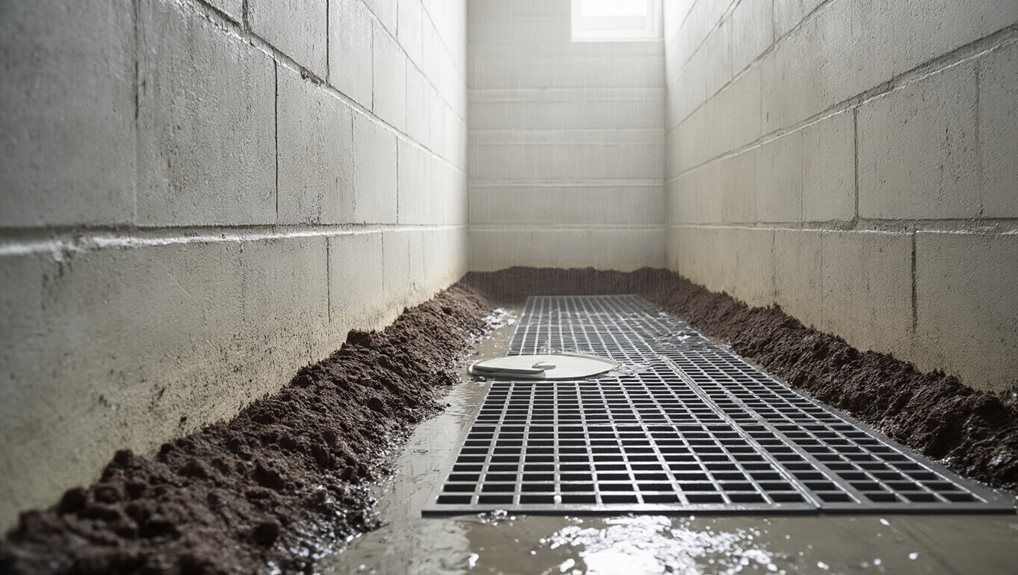
A solid foundation waterproofing plan starts with careful excavation, because you need full access to the footing to apply any protective system. Dig to the full footing depth, keep slopes safe, clear debris, then spray a 40‑mil polymer‑modified asphalt membrane after the surface dries.
Install vertical drainage panels with dimples against the coated wall, secure them, and backfill with gravel to channel water away, ensuring lasting protection for your home. Positive‑side waterproofing applies a protective barrier to the exterior surface of the foundation wall.
Installing a French Drain System for Basement Waterproofing
Installing a French drain is one of the most effective ways to manage water that seeps through your foundation or rises from the surrounding soil, because it relieves hydrostatic pressure and channels moisture away before it can damage walls or floors.
You’ll dig a 6‑inch‑wide trench 18‑24 inches deep, line it with fabric, add 2‑3 inches of gravel, place a perforated pipe sloping toward a sump, cover with more gravel, and seal with fabric, ensuring gravity‑driven flow to the pump.
Grading & Landscaping to Direct Water Away From Your Home
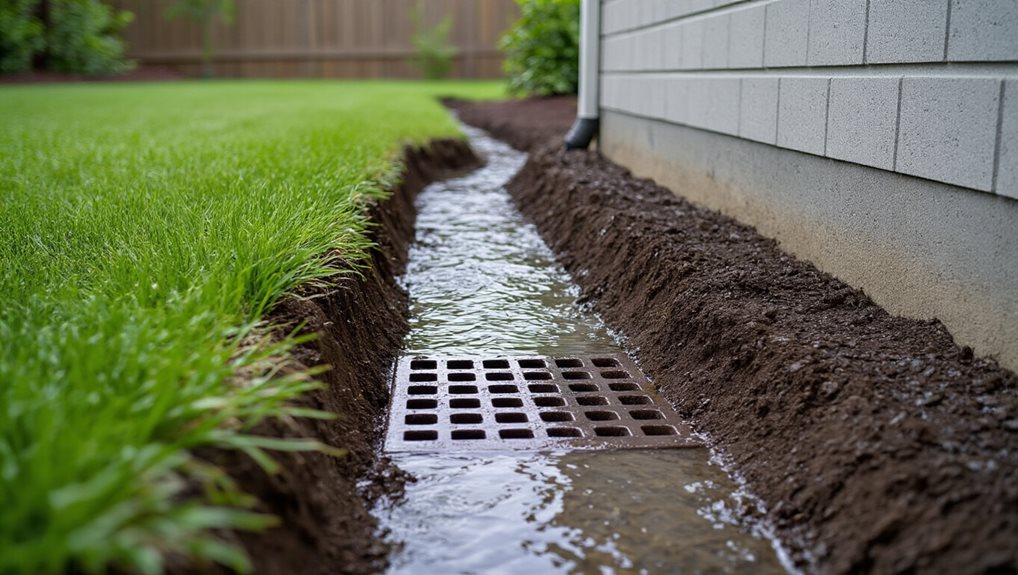
You’ll want the ground to slope at least six inches away from the foundation for the first ten feet, creating a clear drainage path that keeps rainwater from pooling near the house.
Maintaining soil drainage pathways with proper grading, organic mulch, and well‑chosen plants guarantees water moves through the yard rather than seeping into the basement.
Proactively inspecting and sealing potential entry points around the building envelope helps prevent moisture intrusion and related basement dampness, especially after heavy rain. drainage paths
Slope Away From Foundation
How can you guarantee rainwater never pools against your foundation? Ensure a minimum six‑inch drop within ten feet, aiming for a one‑inch‑per‑foot grade for the first six feet.
Compact high‑clay soil against the wall, use laser transit for precise slopes, and add drainage swales or rock beds to keep water moving outward.
Regularly inspect and regrade as needed.
Maintain Soil Drainage Pathways
After establishing a proper slope away from the foundation, the next step is to create reliable soil‑drainage pathways that keep water moving outward instead of pooling.
Use sandy loam or a sand‑topsoil mix, add compost for structure, and fill low spots with gravel‑lined trenches or French drains.
Plant deep‑rooted natives and install shallow swales to guide runoff, ensuring water infiltrates rather than collects near your home.
Integrate Landscape Features Strategically
A well‑designed terrain turns the yard into a passive drainage system, using grading, berms, swales, and strategic vegetation to steer water away from the foundation before it can accumulate.
You’ll slope the soil ½‑1 inch per foot for at least six feet, compact and reseed, then add swales and berms that channel runoff toward drains or municipal lines.
Plant deep‑rooted shrubs away from the house, trim regularly, and keep mulch below siding to prevent wicking, ensuring the ground stays stable and water never pools near your foundation.
Choosing & Installing a Sump Pump With Battery Backup
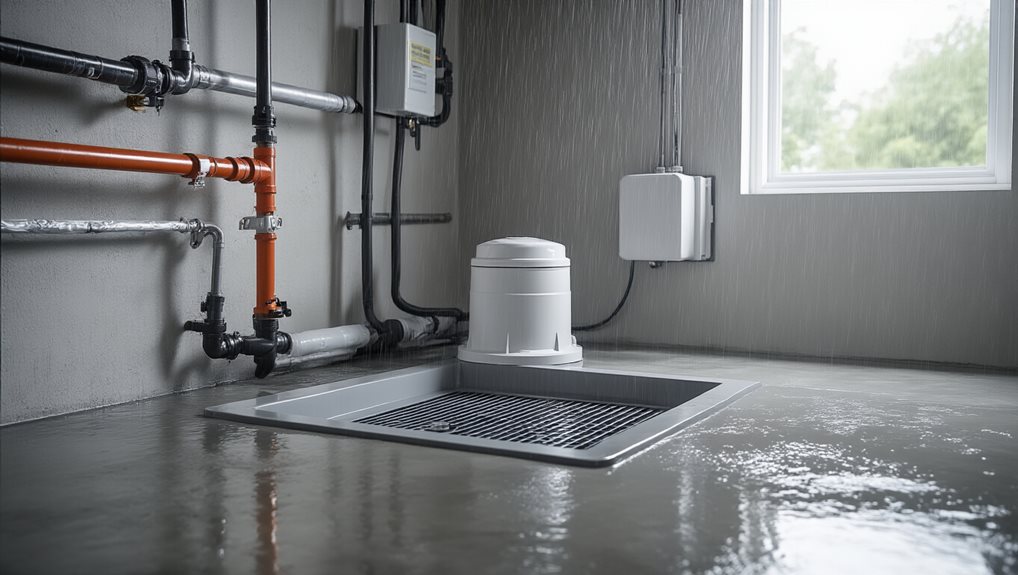
Ever wondered which battery‑backed sump system will keep your basement dry when the grid fails? Choose a deep‑cycle marine battery pack matched to your primary pump’s wattage, install the inverter/charger and backup pump side‑by‑side, raise the battery box, and connect sensors and GFCI‑protected outlets. Test by unplugging, verify LEDs, and you’ll have a reliable, community‑trusted safeguard. A backup plan should also include properly sized wiring and a clear maintenance schedule to ensure peak performance when you need it most. sump system
Sealing Interior Cracks With Hydraulic Cement and Epoxy
Hydraulic cement and epoxy are the two most common DIY solutions for sealing interior cracks, and each offers distinct advantages that can help you stop water intrusion quickly while you plan a permanent repair.
Mix hydraulic cement to a putty consistency, press it into clean, cold joints within three minutes, then let it set; if the crack is connected to a vent or drainage pathway, consider ensuring proper ventilation during curing to avoid pressure buildup vent stack issues.
Gutter Management for Effective Basement Waterproofing
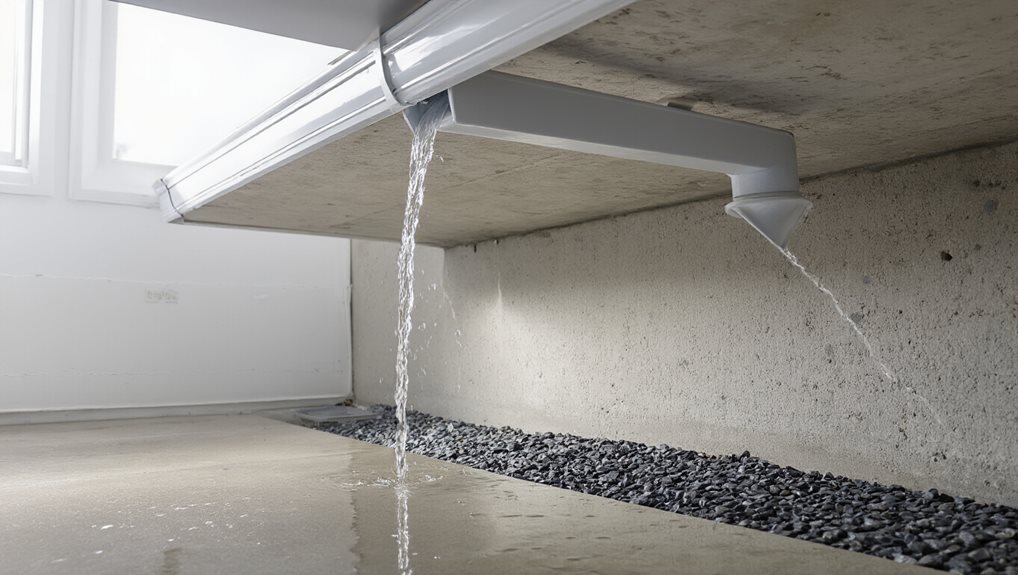
How can you keep rainwater from turning your basement into a soggy mess? Install seamless gutters, clean them twice yearly, and add leaf guards to prevent clogs; position downspouts at least fifteen feet from the foundation, extending them with underground pipes if needed, and verify they direct water away.
Proper gutter maintenance creates a reliable frontline defense, keeping your home dry and your neighbors confident.
Seasonal Inspection Checklist to Keep Your Basement Dry
When the seasons change, your basement’s vulnerability to water intrusion shifts, so a systematic inspection schedule becomes essential for preventing costly damage. Additionally, ensure proper ventilation when working with PVC cement to avoid exposure to fumes and to help the curing process in damp basements ventilation needs during any remedial sealing or pump maintenance.
Final Note
By combining proper exterior drainage, grading, and waterproofing with interior sealing and a reliable sump pump, you’ll prevent water from infiltrating your basement during heavy rain. Regularly inspect gutters, drains, and pump functionality, and address any cracks promptly using hydraulic cement or epoxy. Maintaining these systems guarantees your foundation stays dry, protects your property, and minimizes costly repairs, giving you lasting peace of mind.

Nathan McPhail is a garden and home DIY expert who writes practical, easy-to-follow advice for homeowners and gardeners. Through Yardique, he shares hands-on tips covering gardening, lawn care, landscaping, home improvement, repairs, tools, and outdoor living. His focus is on helping readers solve everyday household and yard problems with straightforward guidance, useful techniques, and practical solutions.