
Your lawn’s bumps usually come from frost‑heave in clay or loam soils, uneven drainage that leaves soggy depressions, compacted areas from heavy traffic, or animal burrows such as moles, gophers, and skunks; tree roots and recent sod installations can also push turf up. To fix them, identify the cause, then top‑dress low spots with a sand‑topsoil mix, aerate compacted zones, improve drainage with a slight slope or French drain, and patch animal holes after removing debris. Follow‑up steps will keep the surface even year‑round.
TLDR
- Frost‑heave in clay or loam soil creates ice lenses that push soil upward in spring, leaving bumps that persist until the next freeze‑thaw cycle.
- Animal burrows (moles, gophers, skunks) produce mounds or pits; identify them by shape and sand‑like soil to target removal.
- Poor drainage or standing water creates depressions that settle unevenly, especially after heavy rain or irrigation.
- Compacted, high‑traffic areas develop ruts and hard patches that resist water infiltration and cause uneven surface.
- Spot‑repair by loosening soil, filling with a sand‑topsoil mix, reseeding, and keeping moist restores a level lawn quickly.
Quick Diagnosis Checklist for a Bumpy Lawn

Ever wonder why your lawn feels like a miniature obstacle course? Check seasonal signs first—frost heaving in spring and hot‑dry summer bumps hint at clay soil thawing unevenly. Inspect drainage; standing water or soggy spots often create depressions. Look for animal burrows, moles, or grub damage, and note thin, patchy grass. Finally, examine tree roots or recent sod installation for structural irregularities. Native woody plants can also help with long-term lawn resilience and soil structure when used around margins and in integrated landscape plans.
How to Pinpoint the Primary Cause of Your Bumpy Lawn?
After reviewing the quick‑diagnosis checklist, the next step is to isolate the root cause of the uneven surface. Walk the lawn, noting dips, soft spots, or raised mounds; test soil with a screwdriver to detect compaction; examine for burrowing animals, grubs, or earthworm castings; assess traffic‑induced ruts and thatch thickness. Mapping these clues lets you pinpoint the primary issue. Proper grading and slope management can also influence surface evenness by directing water away from the home and reducing erosion on slopes. soil-compaction
Frost‑Heaving Bumps on a Bumpy Lawn

Why do you see irregular mounds popping up after a cold snap?
Frost‑heaving occurs when freezing temperatures cause water in fine‑grained, moist soil—especially clay or loam—to migrate upward, form ice lenses, and push the surface soil, roots, and rocks upward. When temperatures rise again, the ground may settle unevenly, leaving bumps and dips that persist until the next freeze‑thaw cycle. Preventive measures can help minimize damage to the lawn and reduce the risk of trip hazards.
Animal‑Burrow Bumps That Make Your Lawn Bumpy
Frost‑heaving may leave your lawn uneven, but animal activity often adds a whole new set of bumps and holes that need a different kind of attention.
Moles push sand‑like mounds and create invisible tunnels; skunks dig shallow, ringed pits for grubs; gophers leave crescent‑shaped dirt cones with off‑center holes; chipmunks make tiny clean holes without piles; groundhogs produce large, soil‑filled entrances near structures.
Recognizing each pattern helps you target the right fix.
Spotting Compaction Dips From Foot Traffic

You’ll notice traffic patterns by watching where you walk most often, then check those spots for soil that feels hard and resists a spade, which signals compaction. In compacted areas, you may also see pooling water after rain or irrigation, since infiltration is slowed. Soil pore space is reduced, and that limits air and water movement, stressing the turf over time.
Spotting Traffic Patterns
How can you tell where foot traffic is silently reshaping your lawn? Look for repeated ruts, thin patches, and water pooling along walkways, mailbox routes, or kids’ play zones; these signs reveal concentrated wear lines. Notice weed clusters that thrive in compacted spots and shallow roots when you pull grass. Mapping these patterns helps you pinpoint high‑traffic zones and plan targeted remediation.
Identifying Soil Compaction
Where does the soil under your lawn become so hard that a simple spade won’t bite? You’ll notice hard, dense patches that resist digging, water pooling after rain, and thin, yellowing grass that refuses to thrive. Roots stay shallow, spreading sideways rather than deep, while the surface feels firm underfoot. These signs reveal compaction from foot traffic, guiding you toward targeted remediation.
Measuring Depression Depth
Ever noticed a low spot in your lawn that seems to collect water after a rainstorm? Use a ruler or tape vertically in the dip’s center, press it to the bottom, then read the distance to the surrounding ground; shallow spots under ½‑1 inch need only rake and topsoil, while deeper than 2 inches require sod removal and fill. Repeat across the yard with a string test for consistency.
Preventing Equipment‑Ruts on Wet Soil
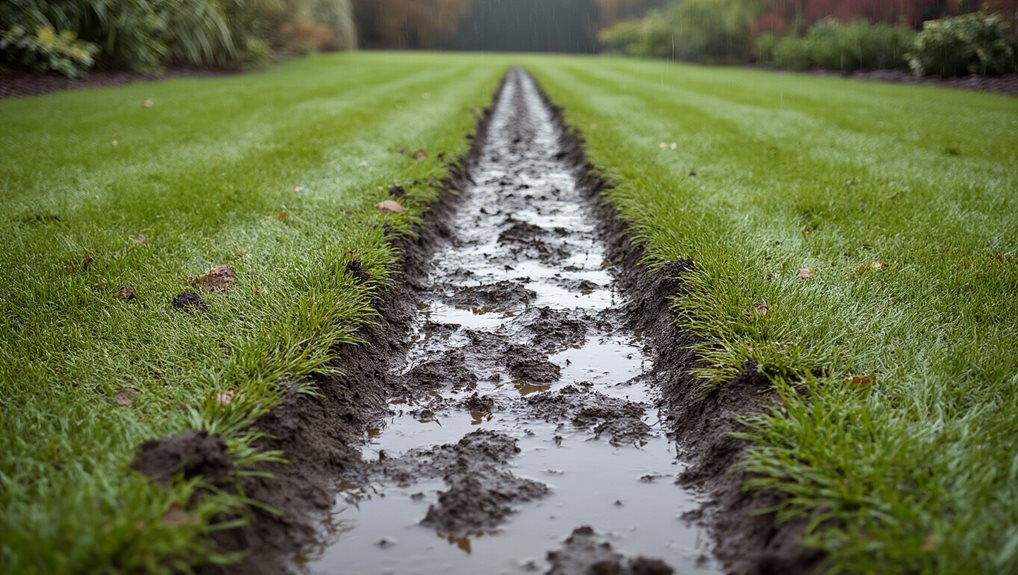
You’ll get the best results by scheduling work for the driest part of the day, reducing the mower’s weight with lighter equipment or fewer passes, and laying down protective ground cover such as HDPE mats to spread the load evenly.
This combination minimizes soil compaction, prevents deep ruts, and keeps the lawn’s surface smooth even when moisture levels are high.
Choose Optimal Times
When the soil’s moisture level spikes, timing your equipment runs becomes critical to avoiding deep ruts that can scar a lawn for seasons. Test moisture with ball, ribbon, or step methods before you start, and schedule work for late morning or early afternoon when sun has begun drying the ground.
Prioritize high‑ground routes, avoid low‑lying patches after rain, and delay non‑essential tasks until the field feels firm, ensuring everyone shares a healthier, smoother lawn.
Lighten Equipment Load
Choosing the right moment to work on a lawn is only half the battle; the next step is to lighten the equipment load so the soil stays intact.
Use a Ventrac 4500 or similar low‑ground‑pressure tractor with floatation tires and an articulating FlexFrame; these spread weight evenly, reduce compaction, and prevent ruts.
Add weight‑distribution mats or plywood under wheels for extra stability on wet grass.
Use Protective Ground Cover
How can you keep wet soil from turning into a mess of ruts when heavy equipment rolls across it? Lay HDPE or composite mats in straight, slightly overlapping lines, interlock edges, and clamp sheets together so the surface stays continuous.
Use rubber or mesh mats for traction, fix them with U‑pins, and guide machinery along these temporary pathways, preventing compaction, protecting grass, and preserving a smooth, shared lawn.
Soil‑Settling & Drainage Issues That Create Bumps

Ever wondered why your lawn develops uneven bumps even after you’ve leveled it?
Soil‑settling and drainage problems often hide beneath the surface, creating hard zones next to spongy spots, water‑logged clumps that dry into bumps, and freeze‑thaw heaving that lifts turf like a bunched carpet.
Compaction from foot traffic or equipment compresses soil unevenly, while poor drainage traps moisture, leading to irregular settling and persistent humps. In some cases, improper grading or landscaping practices can introduce overlooked issues that a professional inspection would flag. Unpermitted
Weed and Grass Species That Add Height to Your Lawn
What makes certain grasses and weeds stand out in height is often a combination of species characteristics and mowing practices. Tall fescue thrives at 3‑4 inches, deepening roots and shading soil, while Kentucky bluegrass prefers 2.5‑3.5 inches for density and moisture retention.
St. Augustine looks best at 2.5‑4 inches, encouraging sturdy photosynthesis and nutrient uptake, helping you feel part of a resilient, unified lawn community.
When Tree Roots Push Up Your Turf

Why do tree roots suddenly lift your lawn? Compacted soil, poor drainage, and shallow watering force roots upward, especially in poplars, maples, and sycamores, while erosion and traffic expose them. These surface roots create bumps, thin grass, and tripping hazards. To prevent further heaving, choose deep‑rooted trees, plant them slightly above grade, water deeply but infrequently, and avoid compacted areas.
Year‑Round Lawn‑Smoothness Maintenance Plan (DIY Fixes & Follow‑Up)
You’ll start by setting a seasonal soil aeration schedule that matches your climate, aerating in spring and fall to break up compaction and improve water infiltration.
When you spot uneven patches, follow a targeted spot‑repair routine: loosen the soil, fill with a mix of sand and topsoil, seed the area, and keep it moist until the grass establishes.
Seasonal Soil Aeration Schedule
When you map out a year‑round lawn‑smoothness plan, scheduling soil aeration around the growth cycles of your grass type is essential for preventing bumps and maintaining healthy turf.
For cool‑season grasses, aerate in early spring or early fall when soil’s moist, targeting 2‑4‑inch tines;
warm‑season lawns benefit from late‑spring or early‑summer aeration, especially in zones 8‑11.
Adjust frequency by soil type and traffic, and follow each pass with overseeding or top‑dressing to keep the surface even.
Targeted Spot‑Repair Routine
How do you keep a repaired patch from turning into a new bump? First, rake away debris, loosen soil to four inches, and level it evenly, then fill any aeration holes with topsoil. Choose a matching seed or plug mix, spread it, lightly cover with straw or peat, water thoroughly, and monitor moisture. Finally, fertilize, check for weeds, and wait to mow until growth stabilizes.
Final Note
By identifying the source—whether frost heave, animal burrows, compaction, drainage problems, invasive weeds, or tree roots—you can choose the right remedy and keep your lawn level. Regular aeration, proper irrigation, targeted reseeding, and timely pest control will prevent future unevenness, while seasonal inspections help catch emerging issues early. Consistently applying these practical steps guarantees a smooth, healthy lawn that stays resilient throughout the year.

Nathan McPhail is a garden and home DIY expert who writes practical, easy-to-follow advice for homeowners and gardeners. Through Yardique, he shares hands-on tips covering gardening, lawn care, landscaping, home improvement, repairs, tools, and outdoor living. His focus is on helping readers solve everyday household and yard problems with straightforward guidance, useful techniques, and practical solutions.