
If your mower puffs white or bluish smoke, it’s usually oil burning because the oil is over‑filled, the wrong grade, or the crankcase is tilted so oil reaches the breather; check the oil level, drain excess, and tilt the mower with the oil cap side down. Black smoke points to a rich fuel mixture—inspect a clogged air filter, a stuck choke, or oversized carburetor jets and clean or adjust them. Severe white smoke, rapid oil consumption, or fouled plugs may indicate a blown head gasket, worn piston rings, or valve damage, which often require professional repair. Proper tilt, regular filter cleaning, and correct fuel‑oil ratios keep smoke at bay, and the next sections will show you how to troubleshoot each symptom in detail.
TLDR
- Dirty air filter or stuck choke creates a rich fuel mix, producing black smoke; clean or replace filter and ensure choke is disengaged.
- Overfilled or wrong‑type oil burns in the exhaust, causing white or bluish smoke; check oil level, drain excess, and use proper oil.
- Worn piston rings or a failed head gasket leak oil into the combustion chamber, yielding blue/white smoke and increased oil consumption; inspect rings, gasket, and replace if needed.
- Carburetor issues such as clogged jets, faulty diaphragm, or stuck needle valve disrupt fuel‑air balance, leading to black or irregular smoke; clean, adjust, or replace the carburetor.
- Improper mower tilt or blocked breather forces oil into the exhaust; keep mower level with oil cap side down and allow fluids to settle before restarting.
Quickly Diagnose Why Your Mower Smokes
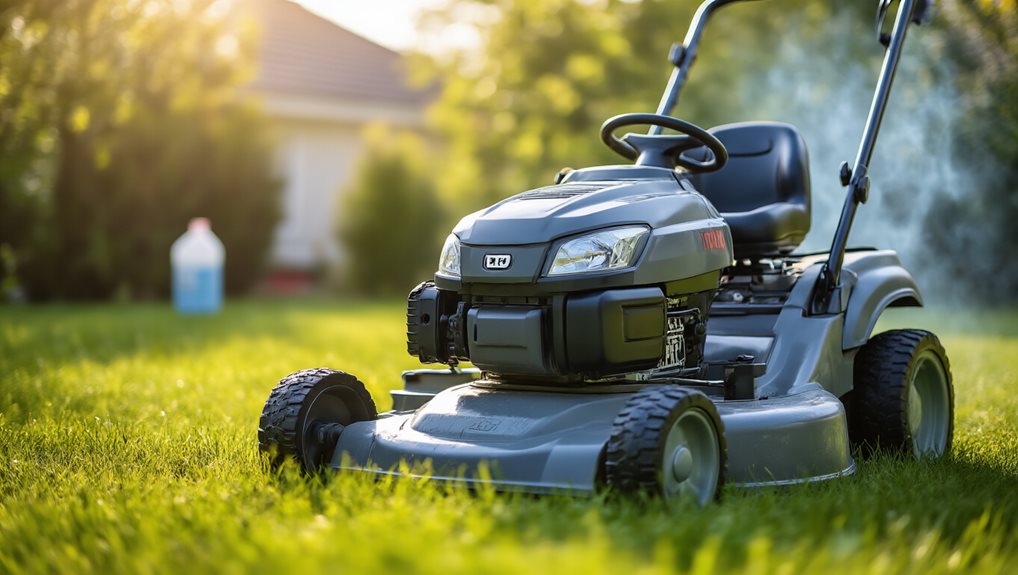
Ever notice a plume of smoke curling from your mower’s exhaust and wonder what’s wrong? Start by checking the air filter—if it’s dirty, airflow’s restricted, creating a rich fuel mix that produces black smoke. Inspect the carburetor for sticky floats or debris, and verify the choke isn’t left engaged. A quick visual and smell test can pinpoint oil versus fuel contamination, guiding your next fix. Overfilled oil can cause white or bluish smoke, indicating that excess oil is burning off in the exhaust.
Identify White or Blue Lawn Mower Smoke (Oil Burn)
If the smoke from your mower is white or blue, it’s almost always an oil‑burn issue, and the cause is typically one of a few mechanical problems that let oil enter the combustion chamber.
Check for overfilled crankcase, wrong oil grade, excessive tilt, blocked breather, or worn rings/gasket; each lets oil leak, burn, and produce the haze, then follow your manual to correct oil level, use proper viscosity, keep the mower flat, clear the breather tube, and replace damaged components. Proper fastener care for deck components, such as using the right bolts and screws, can help prevent related oil leaks or mechanical failures in attached assemblies. oil leaks
Identify Black Lawn Mower Smoke (Rich Fuel)
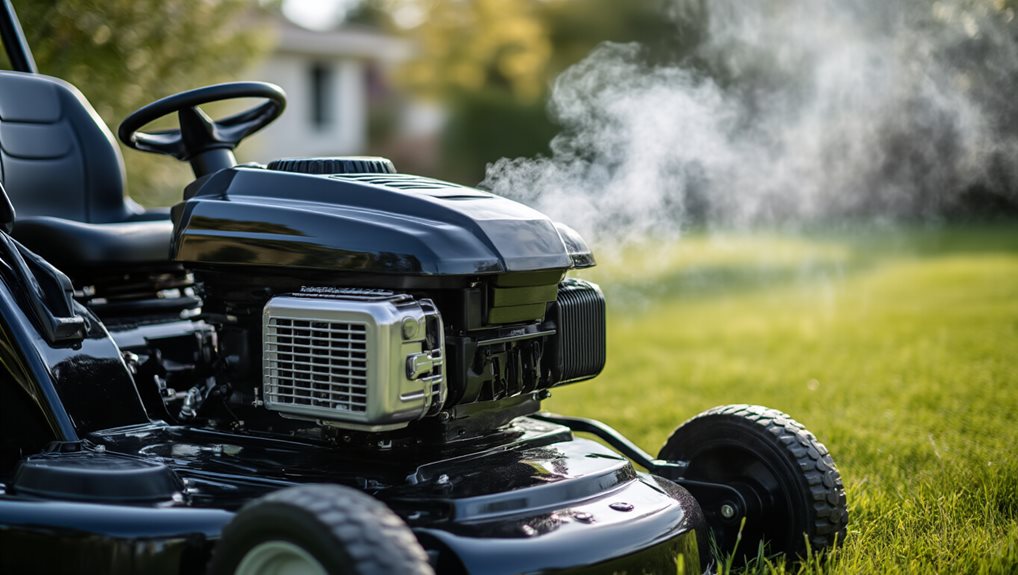
Why does your mower belch dark, sooty plumes?
Black smoke signals a rich fuel condition—excess fuel, insufficient air—often caused by a clogged air filter that blocks airflow, forcing the engine to over‑fuel.
A stuck choke can also keep the mixture overly rich, while oversized carburetor jets or a faulty diaphragm add fuel.
Replace the filter, inspect the choke, and consider carburetor cleaning to restore proper combustion.
Seedless fruits can be a useful analogy when troubleshooting, as it highlights how precise balance (air and fuel) is essential for proper operation.
Check and Drain Over‑Filled or Wrong Oil
When the mower’s smoke isn’t caused by a rich fuel mixture, the most frequent culprit is oil that’s either over‑filled or the wrong type. Check the cap gauge, compare the level to the manufacturer’s mark, and verify the oil grade in the manual. If it’s too high or incorrect, tip the mower, drain the old oil completely, and refill with fresh, proper‑spec oil, wiping any spills promptly.
Prevent Oil Entry by Tilting Mower Correctly

Ever wonder why a simple tilt can make the difference between a clean start and a smoking engine? Tilt your mower back, with the oil cap side down and the carburetor facing upward, so oil pools away from the breather tube and piston rings. Keep the muffler side up, avoid the air‑filter side down, and let the machine sit upright for fifteen minutes after any incorrect tilt to let fluids drain safely. Posture and orientation can influence fluid movement within the engine to prevent leaks and ensure proper drainage and ventilation. drainage ensures fluids do not accumulate near sensitive components during the tilt.
Clean, Adjust, or Replace the Carburetor
You should start by checking the carburetor gasket for cracks or wear, because a faulty seal lets excess fuel into the combustion chamber and creates smoke.
Next, adjust the fuel‑air ratio using the idle screw or mixture knob, ensuring the engine gets the right balance for clean combustion.
If the needle valve is worn or stuck, replace it promptly to restore proper fuel flow and prevent further smoking.
Inspect Carburetor Gasket
Why does a smoking lawn mower often point to a faulty carburetor gasket? You’ll notice cracks, tears, or warped edges when you remove the rubber seal; inspect the O‑ring for deterioration and ensure the holes align with the carburetor ports.
Clean debris with a brush or compressed air, avoid solvent contact, and if any damage appears, replace the gasket, lightly oiling it before re‑installing and tightening bolts securely.
Adjust Fuel‑Air Ratio
How can you tell whether the fuel‑air mixture is the root cause of a smoking mower, and what steps should you take to clean, adjust, or replace the carburetor?
First, spray carburetor cleaner into the fuel bowl, jets, and choke, then blow passages with compressed air to clear deposits.
Next, locate the mixture screw: turn clockwise to richen, counter‑clockwise to lean, following manufacturer specs.
If adjustments don’t stabilize idle or throttle, consider swapping the carburetor.
Replace Worn Needle Valve
Ever wondered why a smoking mower often points to a faulty needle valve, and how a thorough carburetor inspection can confirm it?
Disconnect the spark plug wire, remove the air‑filter housing, and photograph the linkage before unhooking it.
Drain the bowl, inspect for varnish, clean passages with carburetor spray and compressed air, replace O‑rings, reassemble, and test for smooth operation.
Restore Airflow: Clean Air Filter and Fuel System
You’ll keep the engine breathing smoothly by cleaning the air filter regularly, removing dust and oil that choke airflow, and checking the fuel lines for clogs or leaks that can cause uneven combustion.
A quick inspection and flush of the fuel system eliminates stale fuel and debris, ensuring the carburetor receives a steady supply of clean gasoline.
Together, these steps restore proper airflow and fuel delivery, preventing the mower from smoking and extending its lifespan.
Clean Air Filter Regularly
Why does your mower’s performance suffer when the air filter is neglected?
A clogged filter restricts airflow, causing inefficient combustion, overheating, and higher emissions, which can even spark a fire hazard.
Clean foam pre‑cleaners every 25 hours, replace paper filters if dirty, and oil the foam after drying.
Regular maintenance restores airflow, enhances fuel efficiency, and extends engine life.
Inspect and Flush Fuel Lines
When the air filter is clogged, the engine struggles to draw enough mixture, and the resulting rich‑fuel condition often leaves residue in the fuel system that further impedes performance.
Inspect the fuel line, clamp and slide it off, drain into a safe container, spray WD‑40 or carb cleaner through the hoses, clean the screen, replace a clogged filter, then reconnect securely and refill with fresh fuel.
Two‑Stroke Smoke: Fuel‑Oil Mix, Moisture, Gas
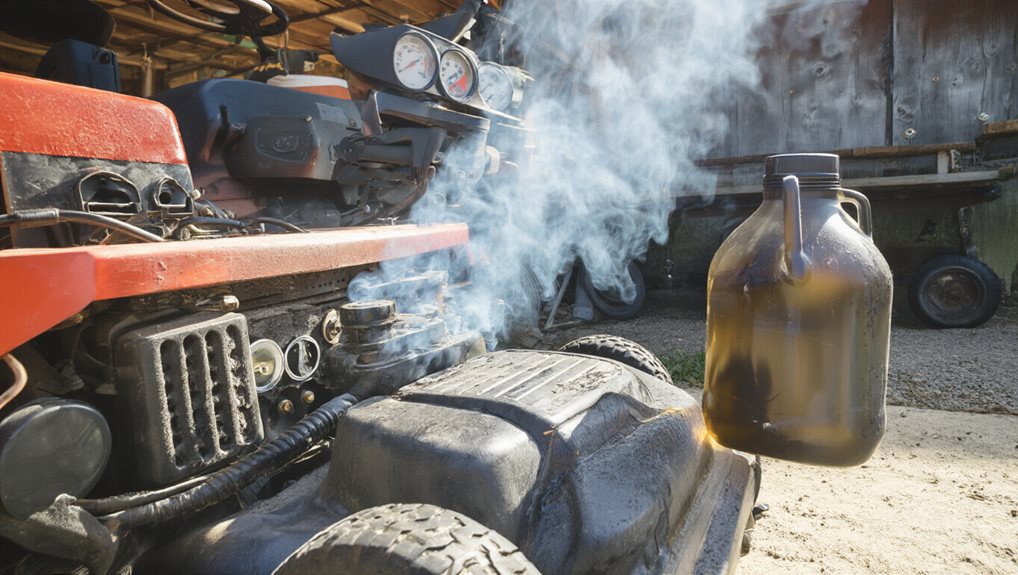
Where does the smoke come from when your two‑stroke mower puffs out white or blue‑white plumes?
Excess oil in the fuel‑oil mix creates a rich blend that fouls plugs, clogs exhaust and produces white smoke; moisture in gasoline leads to incomplete combustion and vapor‑like plumes, while stale or contaminated gas adds extra oil or fuel, worsening the rich condition.
Check mix ratios, dry fuel, and use fresh gasoline to eliminate smoking. Mulching blades can further influence how much material is expelled and processed by the mower, so ensuring blades are sharp and properly maintained helps minimize unusual exhaust effects.
Severe Smoke Signs That Need Professional Repair?
If you see thick grey, white, or bluish smoke that won’t clear after an oil change, it’s likely a head‑gasket failure, worn piston rings, or severe valve damage, any of which lets oil enter the combustion chamber and compromises power. These conditions usually produce persistent smoke, stalling, and a noticeable loss of performance, indicating that internal components are deteriorating beyond simple fixes. Because the repair often requires disassembly, leak‑down testing, or even engine rebuilding, you should call a qualified technician rather than attempting a DIY solution. Winter rye reseed behavior can vary with climate and conditions, so understanding local weather patterns can help you plan for maintenance and avoid unnecessary stress on mechanical systems. self-seeding ryegrass concerns highlight the importance of regular field management to prevent unwanted growth and ensure the success of your cover crop strategy.
Head Gasket Failure
Although a head gasket sounds like a small component, its failure can produce severe smoke that signals a serious problem requiring professional repair. You’ll notice white smoke out of the muffler when you decelerate, oil‑coated spark plugs, and rapid oil consumption; internal leaks may leave no external oil but still cause crankcase pressurization. Check ridges for seepage, pull the plug for fouling, and if smoke appears only on throttle changes, assume the gasket is breached. Professional replacement restores proper combustion, cooling flow, and prevents overheating.
Worn Piston Rings
Even after ruling out a busted head gasket, persistent blue or white smoke often points to worn piston rings, which let oil seep into the combustion chamber and burn alongside fuel. You’ll notice increased oil consumption, fouled plugs, and power loss, especially under load.
Compression checks reveal low readings, and a leak‑down test confirms ring wear. Since replacement demands a full engine teardown, cylinder polishing, it’s best left to a qualified technician.
Severe Valve Damage
Why does your lawn mower suddenly emit thick white smoke and struggle to start on a cold morning? Severe valve damage creates excessive side‑to‑side play, a worn seat, and low compression, so you see thick white smoke that thick on inclines, hear knocking, and feel power loss on slopes.
Inspection reveals irregular valve seating, margins under 1/64 inch, and bent springs, all of which demand professional head‑removal, seat resurfacing, and torque‑controlled reassembly.
Preventive Maintenance Checklist for a Smoke‑Free Mower
Regularly performing a preventive maintenance checklist keeps your mower running smoke‑free and extends its lifespan. Check tire pressure each morning, inspect bolts, hoses, and connections for leaks, verify fuel or battery charge, and empty the grass bag. Clean the deck daily, then weekly examine the drive belt, sharpen blades, grease spindles, and clear clippings.
Monthly, replace air and fuel filters, clean the spark plug, change oil, and service deck pivots. Seasonal and annual tune‑ups add rust checks, tire security, hydraulic inspections, and oil‑filter changes, ensuring every component works together smoothly.
Final Note
By regularly checking oil levels, cleaning the air filter, and ensuring proper fuel‑oil ratios, you’ll keep your mower running cleanly and avoid smoking. Spotting white, blue, or black smoke early lets you address oil burns, rich mixtures, or airflow issues before they cause serious damage. Stick to the preventive maintenance checklist, tilt the mower correctly when servicing, and replace worn parts promptly. Consistent care not only prolongs engine life but also delivers reliable, smoke‑free performance every mowing season.

Nathan McPhail is a garden and home DIY expert who writes practical, easy-to-follow advice for homeowners and gardeners. Through Yardique, he shares hands-on tips covering gardening, lawn care, landscaping, home improvement, repairs, tools, and outdoor living. His focus is on helping readers solve everyday household and yard problems with straightforward guidance, useful techniques, and practical solutions.