
You prevent blossom end rot by ensuring steady calcium movement, not just adding more calcium. Keep soil moisture consistent with deep watering and mulch to reduce stress. Test your soil’s pH and calcium first—aim for 6.0–7.0 and use gypsum if needed. Avoid over-fertilizing, especially with ammonium nitrogen. Protect roots, shade plants in extreme heat, and thin fruit carefully. Choose resistant varieties like Celebrity or Better Boy to get better results with less effort.
TLDR
- Maintain consistent soil moisture with deep, regular watering to support steady calcium transport in plants.
- Apply mulch around plants to conserve moisture, moderate soil temperature, and reduce blossom end rot risk.
- Test soil before planting and adjust pH to 6.0–7.0 to ensure adequate calcium availability for uptake.
- Avoid over-fertilizing with nitrogen, especially ammonium-based forms, to prevent interference with calcium absorption.
- Choose blossom end rot-resistant vegetable varieties and use shade cloth to reduce heat stress on fruits.
Identify the Real Cause of Blossom End Rot
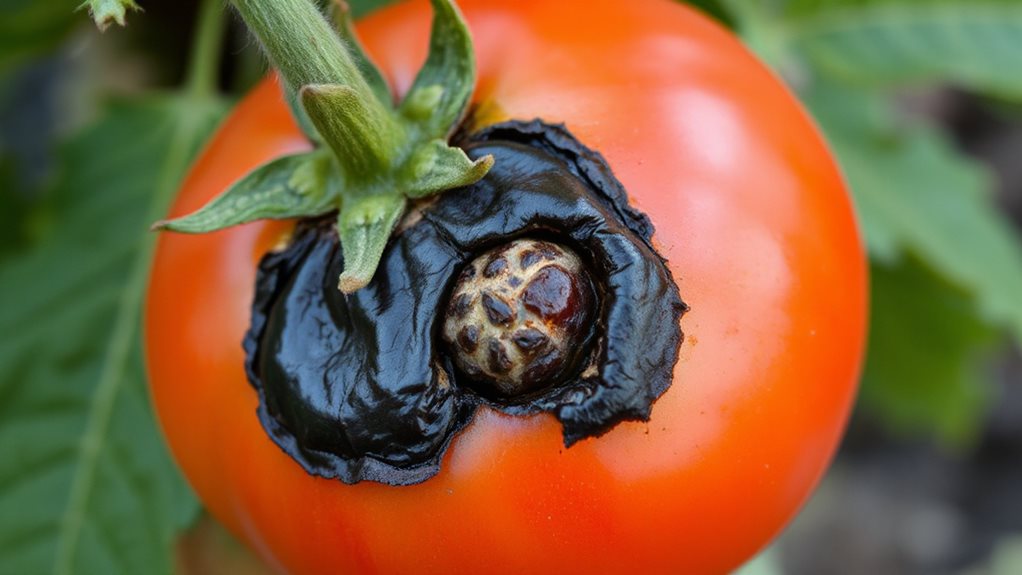
While blossom end rot often looks like a straightforward nutrient deficiency, the real cause lies in how calcium moves—or fails to move—within the plant.
You’re likely seeing the result of uneven uptake, not just low soil calcium. Stress from drought, temperature swings, or over-fertilizing blocks transport.
Even with enough calcium, your plant can’t deliver it to fruit fast enough, causing cell breakdown you can’t ignore. This is because calcium is immobilized once used in older tissues and cannot be translocated to young, growing tissues cannot be translocated.
Maintain consistent moisture—aim for regular watering to avoid drought stress that hinders calcium movement.
Stop Blossom End Rot With Consistent Watering
You can effectively stop blossom end rot by maintaining consistent watering practices that support steady calcium movement within the plant.
Water deeply and regularly, especially in hot weather, using drip irrigation or soaker hoses to reach the root zone. Mulch to retain moisture, avoid wet-dry cycles, and check containers daily—keeping soil evenly moist guarantees your plants thrive and stay healthy. Monitor soil moisture with a soil moisture meter to avoid both overwatering and drought stress.
Water Deeply When Fruits First Appear
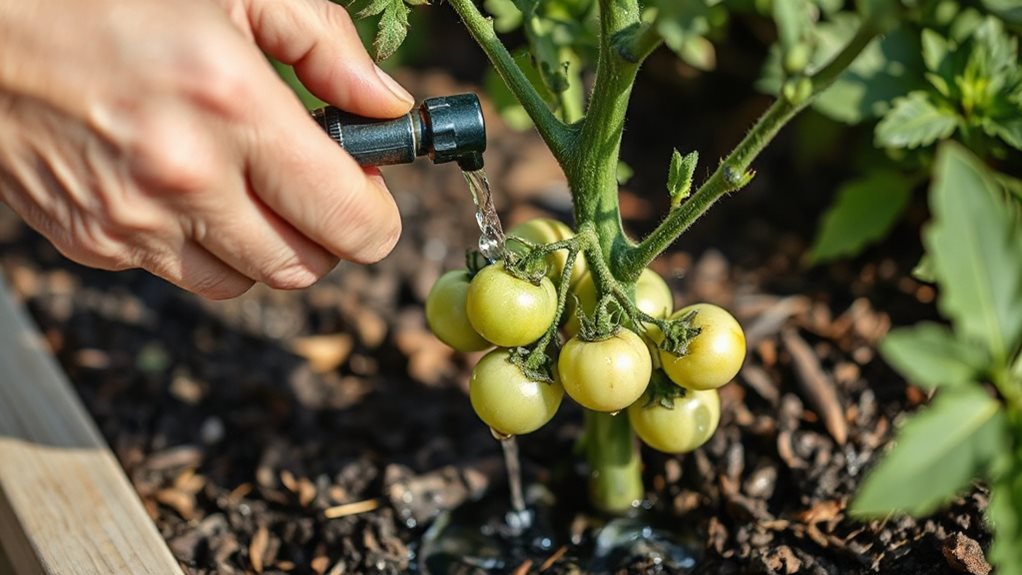
Especially once fruits first appear, deep watering becomes essential to support early calcium transport and meet the plant’s rising demands.
You’ll want to apply 1–2 inches weekly, soaking the root zone thoroughly. This consistent moisture prevents tissue collapse, especially in heat. Deep soaks encourage roots to grow downward, accessing calcium and staying resilient as fruits expand. Warm-season grasses require soil temperatures of 60 to 75°F, which supports deeper root growth and similar benefits in warm conditions.
Prevent Blossom End Rot With Mulch
You can prevent blossom end rot by using mulch to retain consistent soil moisture, which helps calcium move properly to developing fruits.
Mulch also moderates temperature swings and reduces plant stress, creating stable growing conditions throughout the season.
Apply organic or plastic mulch correctly—keeping it away from stems and extending it outward—to maximize benefits without causing harm.
Use mulch especially in raised beds to improve moisture consistency and reduce the risk of blossom end rot.
Mulch Retains Soil Moisture
Consistently using mulch around tomato plants markedly reduces soil moisture fluctuations, a key factor in preventing blossom end rot.
You can use organic mulch like straw or cardboard, or opt for plastic—both conserve moisture. Apply 2–3 inches thick and extend it 2 feet out.
Combine with drip irrigation and weekly watering to maintain even, stable soil moisture levels.
Mulch Moderates Temperature Swings
Beneath a layer of mulch, your tomato plants gain a critical defense against the damaging effects of temperature swings that can undermine fruit development.
You’ll stabilize soil temperature, reduce evaporation, and prevent stress that hampers calcium uptake. Organic mulch buffers roots from extreme heat and cold, ensuring steady growth.
Mulch Reduces Plant Stress
With the soil shielded by a well-applied layer of mulch, your tomato plants face far less stress from fluctuating moisture and temperature—two key triggers of blossom end rot.
You’ll reduce irrigation needs by up to 50% while maintaining consistent soil moisture, preventing drought stress and supporting steady calcium uptake, which together minimize plant stress and strengthen your garden’s resilience throughout the growing season.
Test Soil for Calcium and pH First
You should test your soil before planting to check both calcium levels and pH, since low calcium or improper pH can lead to blossom end rot.
If your soil’s pH is below 6.0, calcium becomes less available to plants, even if it’s present, and acidic conditions can let iron and aluminum interfere with uptake.
A lab test from a service like the UF Soil Lab gives you clear guidance on whether to add lime, gypsum, or specific fertilizers—so you avoid guesswork and protect your crop.
For the most accurate recommendations, consider a lab-verified analysis that reports pH and plant-available nutrients.
Soil Testing Basics
Why do some gardeners see healthy tomato plants produce fruit with dark, sunken bottoms? You can prevent blossom end rot by testing your soil first. Check pH and calcium levels, since imbalances cause this issue.
Use stainless tools to collect samples from 6–8 inches deep, mix them in a plastic bucket, and send a composite sample to a regional lab for accurate, actionable results.
Calcium Levels Matter
A soil test gives you the clear image needed to tackle blossom end rot effectively, especially when it comes to calcium and pH.
You should maintain calcium at or above 400 lb/acre, but avoid adding amendments without testing—excess can block magnesium.
Gypsum increases calcium without altering pH, while consistent moisture and nitrate-based fertilizers support uptake, reducing BER risk in your crops.
Maintain Proper Ph
While maintaining proper pH may seem secondary to nutrient levels, it directly influences calcium availability and uptake—making it a critical first step in preventing blossom end rot.
Test your soil’s pH using strips, probes, or a digital meter, aiming for 6.0–7.0.
If needed, adjust with lime to raise pH or sulfur to lower it, ensuring calcium remains accessible to your plants.
Use Gypsum or Lime: Only If Needed
Before reaching for lime or gypsum, always start with a soil test—it’s the only way to know whether your soil actually needs pH adjustment or a calcium increase.
If your pH is below 6.0, use lime months before planting to raise it safely. If pH is fine but calcium is low, apply gypsum instead—it delivers calcium without altering pH.
Avoid Nitrogen Mistakes That Cause Blossom End Rot
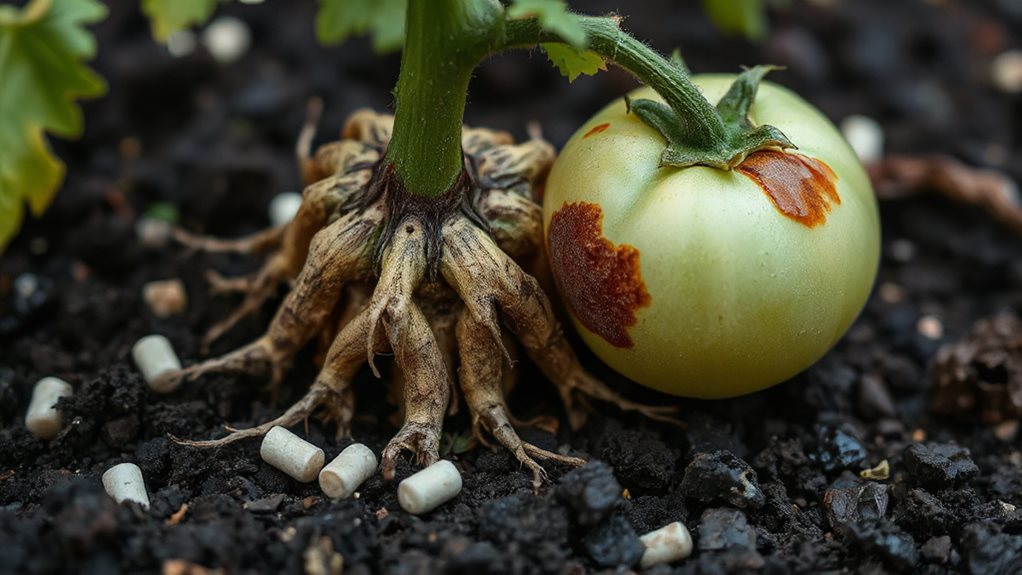
Because ammonium-based nitrogen fertilizers can interfere with calcium uptake, you’ll want to be careful about the type and timing of your nitrogen applications—especially during early fruit development.
Choose nitrate over ammonium forms to avoid competition with calcium, and apply smaller, frequent doses—no more than 20–25 pounds per acre—during fruit set.
This helps direct calcium to fruits, not just leaves, reducing blossom end rot risk.
Pick Vegetable Varieties Resistant to Blossom End Rot
You’ve already taken steps to manage nitrogen carefully, helping your plants use calcium more efficiently and reducing the chances of blossom end rot.
Now, choose tomato varieties bred for resistance, like Better Boy, Celebrity, or Mountain Fresh Plus. Cherry and grape types, plus paste tomatoes such as Roma VF and Virginia Select, also offer strong protection.
These smart picks keep your harvest healthy and reliable.
Avoid Damaging Roots: They Move Calcium
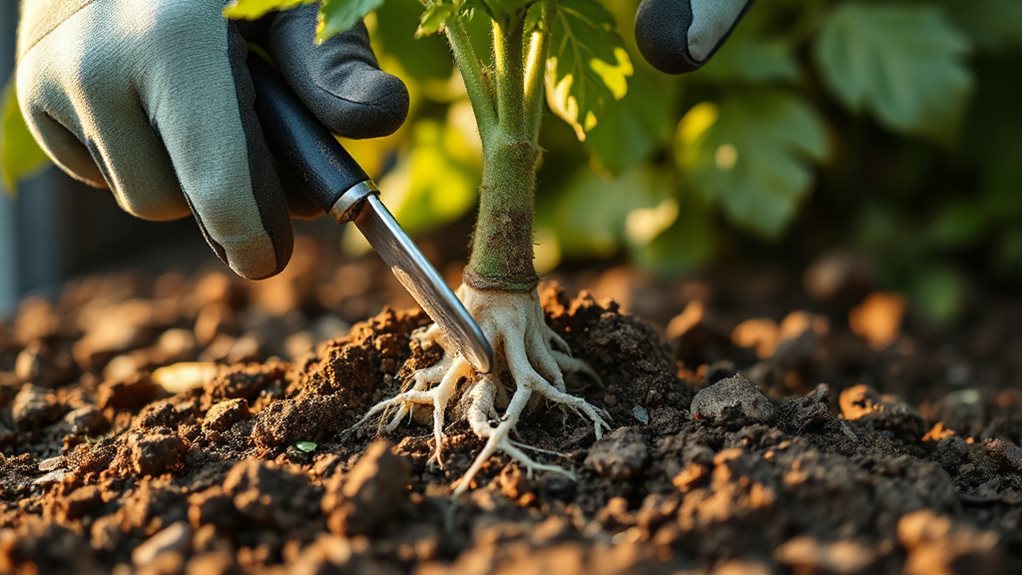
Right beneath the surface, your tomato plant’s roots are hard at work, pulling calcium from the soil and shuttling it to developing fruits—so protecting them is critical.
Avoid tilling or weeding too close, since damaged roots can’t move calcium efficiently. Skip high-nitrogen fertilizers, keep soil moisture steady, and use mulch to shield roots. Healthy roots mean stronger calcium flow and fewer rotted fruits.
Use Shade Cloth to Reduce Blossom End Rot Triggers
Shielding your tomato plants from intense sunlight and heat can go a long way in preventing blossom end rot, especially during peak summer months.
Use 30–50% shade cloth to reduce fruit temperature and plant stress without limiting light too much. Raise it above plants with hoops, guarantee airflow, and secure it well.
This simple step cools the canopy, conserves moisture, and enhances healthy fruit development.
Thin Fruit Clusters to Prevent Blossom End Rot
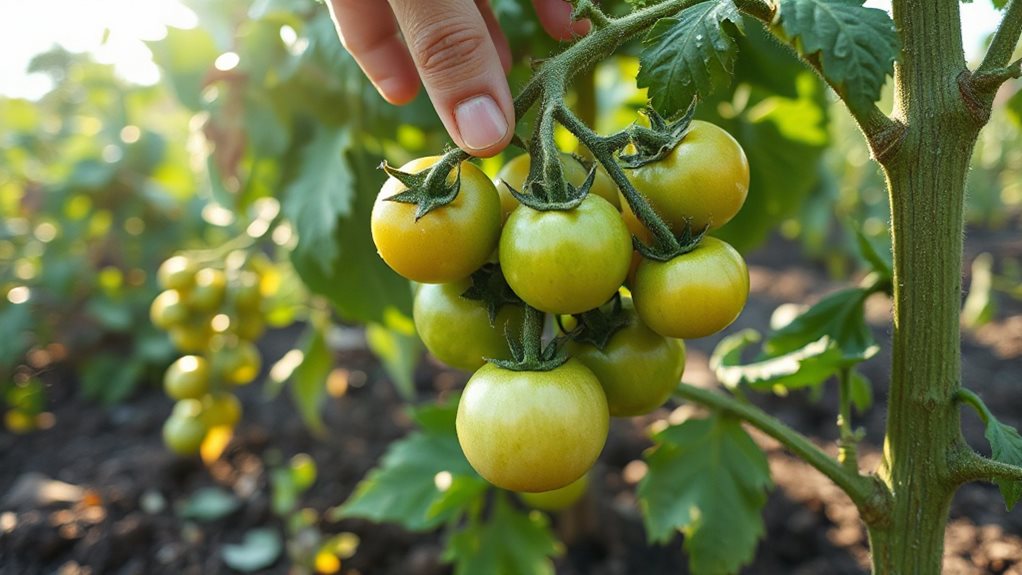
You can reduce blossom end rot by thinning fruit clusters early in the growing season, especially in determinate tomato varieties that set heavy fruit loads all at once.
This practice limits excessive vegetative growth fueled by high nitrogen and helps maintain a balanced leaf-to-fruit ratio, which supports steady calcium distribution to developing fruits.
Thin Fruit Clusters
Often overlooked, thinning fruit clusters can inadvertently increase the risk of blossom end rot despite its common use to enhance fruit size.
You shift calcium toward leaves and away from fruits, especially under high light or heat. Rapid growth after thinning strains calcium transport, so thin lightly, maintain even moisture, use mulch, and avoid excess nitrogen to keep your plants balanced and your harvest healthy.
Limit Vegetative Growth
While lush, vigorous foliage might seem like a sign of a healthy tomato plant, unchecked vegetative growth can actually set the stage for blossom end rot by diverting energy and calcium away from developing fruits.
You can prevent this by limiting nitrogen, choosing nitrate-based fertilizers, and using organic mulch to moderate growth.
Keep roots undisturbed, maintain steady moisture, and aim for balanced nutrition—your plants will repay you with strong, healthy fruit.
Final Note
You can effectively prevent blossom end rot by maintaining consistent soil moisture and ensuring adequate calcium uptake. Water deeply, especially when fruits first form, and use mulch to stabilize moisture levels. Test your soil’s pH and calcium before adding amendments, and choose resistant varieties when possible. Avoid root damage during cultivation, use shade cloth in extreme heat, and thin fruit clusters to reduce stress—these steps together support healthy fruit development.

Nathan McPhail is a garden and home DIY expert who writes practical, easy-to-follow advice for homeowners and gardeners. Through Yardique, he shares hands-on tips covering gardening, lawn care, landscaping, home improvement, repairs, tools, and outdoor living. His focus is on helping readers solve everyday household and yard problems with straightforward guidance, useful techniques, and practical solutions.