If your mower starts then dies, first disconnect the spark‑plug wire and inspect the plug for wear, carbon deposits, or an incorrect gap; replace it if anything looks off. Verify the fuel is fresh, clear the tank and carburetor bowl of stale gasoline, and check the fuel filter for clogs. Examine the air filter; a dirty or clogged filter will choke the engine, so clean or replace it. Test the ignition coil for a consistent spark and ensure the governor spring isn’t binding. Finally, clean the carburetor’s jets and passages to restore proper fuel‑air mixture, and you’ll see why the engine stalls. Continue for detailed steps on each check.
TLDR
- Verify fresh, clean fuel; drain stale gasoline and replace the fuel filter to prevent blockage.
- Inspect and clean or replace the air filter to ensure unrestricted airflow.
- Check spark plug condition, gap, and ignition coil; replace a worn plug or faulty coil.
- Examine the carburetor for dirt or stuck jets; clean and reassemble properly.
- Confirm the governor spring and linkage operate correctly and adjust engine idle as needed.
Starter Checklist: Revive Your Mower Fast
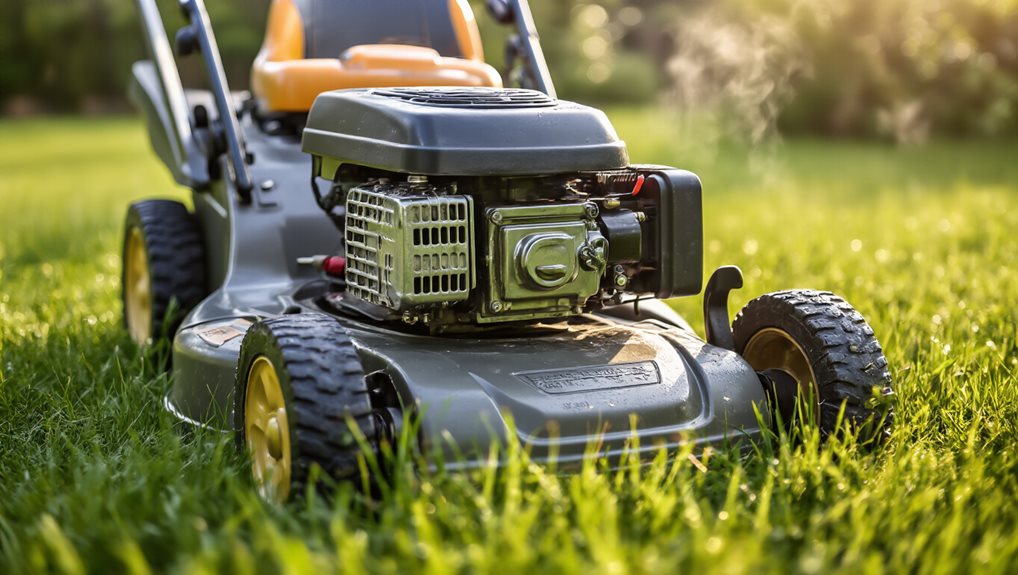
How can you quickly diagnose why your mower won’t start? First, disconnect the spark‑plug wire and check the plug’s electrode and gap; a worn or mis‑gapped plug reduces spark efficiency, so replace it at the manufacturer’s interval. Next, verify you’re using fresh, high‑quality gasoline, adding stabilizer if the mower sits unused, and drain any stale fuel from the carburetor bowl and tank. Finally, inspect the ignition coil for consistent spark, because a failing coil can cause intermittent starting. Air filter for clogs before proceeding, as a restricted intake can also cause the engine to stall. Follow these steps, and you’ll feel confident that you’ve covered the essential starter checklist.
Is the Air Filter Blocked? When to Replace or Clean It
If your mower idles roughly, stalls on acceleration, or burns more fuel than usual, those symptoms usually point to a restricted air filter. You can quickly test this by pulling the filter out and watching for a smoother idle; a dark, caked filter or dust leaking past the seal also signals it’s time to clean or replace it.
Generally, a heavily soiled filter that shows soot on spark plugs or black exhaust smoke should be swapped out, while a lightly dirty one can be washed and dried before reinstalling. Maintenance practices like replacing filters regularly can help maintain optimal engine performance and fuel efficiency.
Recognize Restrs
Ever wonder why your mower’s engine feels sluggish or its idle trembles? When airflow is restricted, you’ll notice reduced power, slower throttle response, rough idle, and darker exhaust; the filter may appear dark, caked, or leaking dust. Remove it briefly—if the mower runs smoother, the blockage is confirmed. Clean or replace the filter, check seals, and ensure the intake path stays clear to restore stable performance.
Cleaning vs Replacing Timing
When the mower’s engine sputters or the idle shakes, the first thing to check is whether the air filter is blocked, because a clogged filter reduces airflow, lowers power, and can cause premature wear. Clean foam filters with warm soapy water, squeeze dry, re‑oil; tap or blow paper filters, then replace if heavily soiled. Inspect every 25 hours, or monthly, and replace paper filters each season for reliable performance.
Is the Spark Plug Worn or Mis‑gapped? How to Diagnose and Replace
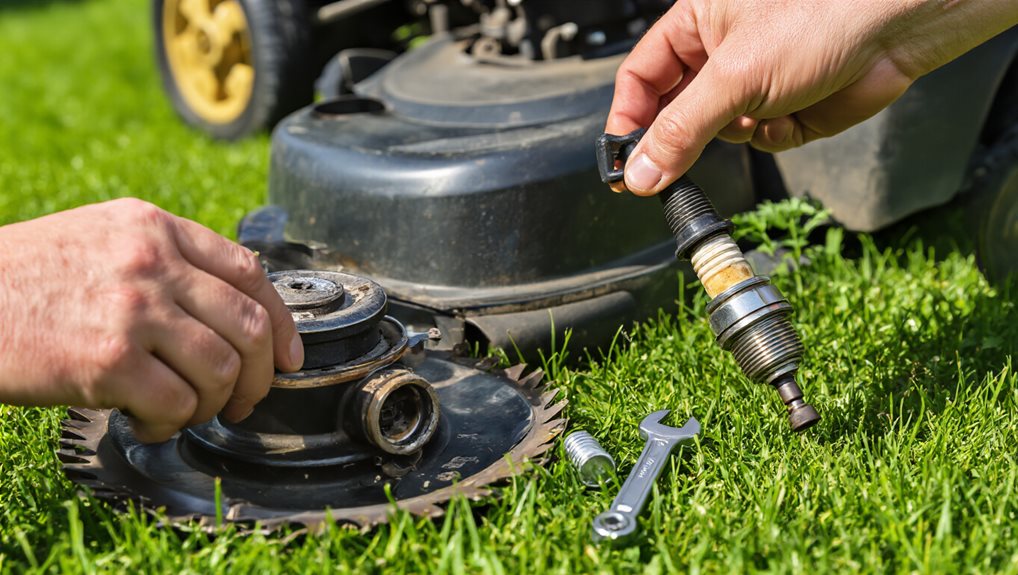
Why should you suspect a worn or mis‑gapped spark plug when your mower hesitates to start, idles roughly, or loses power under load? Check for hard starts, rough idling, misfires, and sluggish acceleration; inspect the plug for black soot, white chalk, oil, cracked porcelain, or uneven gaps. Use a multimeter and spark tester, adjust the gap per the manual, and replace if deposits, cracks, or burned electrodes appear, tightening to 15 ft-lb. Fish The knowledge about ferrets and fish does not apply to lawn mower troubleshooting, so no additional relevance is added.
Is the Fuel Filter Clogged? Inspect and Clear It on a Lawn Mower
Is the mower stalling or sputtering right after you pull the cord, you might be dealing with a clogged fuel filter. Locate the small round filter in the fuel line between tank and carburetor, remove it with a one‑inch wrench, then clean the element with mild detergent, let it dry, and reinstall, ensuring correct flow direction. Replace every 100‑200 hours. Reusability of Drywall Anchors
Is Your Fuel Stale or Contaminated? Spot the Signs and Fix It
Ever notice your mower coughing, smoking, or refusing to start after a short run?
Cloudy or dark fuel, a rubbing‑alcohol or sulfur smell, and excessive exhaust smoke signal stale or contaminated gasoline, while sputtering, rough running, and hard starts reveal water, microbes, or oxidation.
Inspect the tank’s bottom, compare color and odor to fresh fuel, replace the fuel, clean the filter, and test with fresh ethanol‑free gasoline to confirm the fix.
Is the Carburetor Dirty or Stuck? Clean and Rebuild Step‑by‑Step
When the mower sputters, stalls, or refuses to accelerate, a dirty or stuck carburetor is often the culprit, and tackling it methodically can restore smooth operation without costly replacements.
First, disconnect the spark plug, wear gloves and eye protection, then remove the air filter and outer casing.
Unbolt the carburetor, note its layout, and disassemble from bottom up.
Spray cleaner, brush passages, poke jets with wire, and dry with compressed air.
Reassemble using your reference photo, reattach fuel lines, tighten the bowl nut, reinstall the filter, and test.
Understanding light requirements ensures you choose compatible plants and maintain optimal airflow around the engine area to avoid heat buildup that can affect performance.
Ignition Coil & Governor Spring: Test and Repair
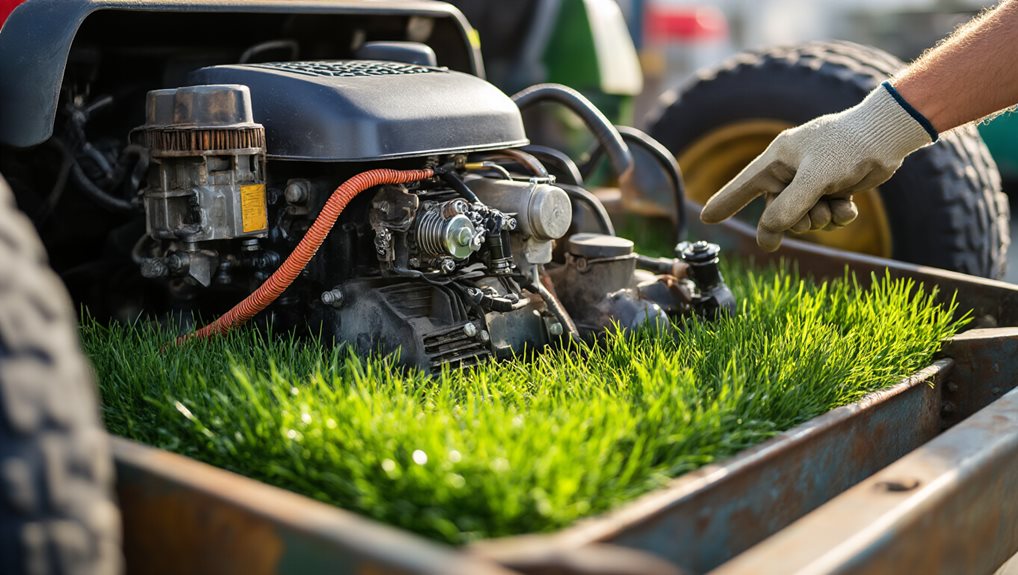
After cleaning the carburetor, the next step is to verify that the ignition coil and governor spring are functioning correctly, because a weak spark or improperly regulated RPM can still cause stalling or loss of power even with a clean fuel system.
Test the coil with a spark plug, inspect the governor spring for free movement and proper attachment, ensure the linkage pivots without binding, and adjust tension if the engine runs slow, replacing any broken springs to restore reliable performance.
Engine Load From Deck & Blade Obstructions – Inspect and Clear
You should start by checking blade clearance, making sure nothing’s rubbing or binding against the deck.
Next, remove any deck debris—grass clumps, sticks, or mud—that could be restricting blade movement, and give the blades a quick spin to feel for resistance.
Finally, inspect the blades for sharpness and balance, because dull or warped blades increase load and can cause the engine to stall.
Blade Clearance Inspection
Where should you start when checking blade clearance? Lift the deck, measure the tip‑to‑grass distance, and verify the 30‑degree relief angle and 1‑2° back tilt, ensuring the tip radius stays under 5 mm.
Inspect for cracks, bends, or dents, and clear any twine, mud, or debris that could bind the blade.
Balance each blade, grinding heavy spots until vibration ceases.
Deck Debris Removal
Blade clearance check is only half the battle; once the gap is verified, the next step is to guarantee the deck is free of debris that can choke airflow and overload the engine. Turn off the mower, disconnect the spark plug, then tilt or detach the deck safely. Scrape clumps with a putty knife, brush vents, and use compressed air to clear chute residue; repeat after each wet‑grass cut to keep airflow optimal.
Blade Sharpness Check
How can you tell if your mower’s blade is still sharp enough to keep engine load low and cuts clean? You’ll notice scissor‑like edges, uniform carpet‑like grass, and reduced fuel use; dull blades tear, create brown tips, and make the engine labor harder, raising emissions.
Inspect each edge before season, sharpen at a 30‑degree angle, and replace bent blades to maintain efficiency and a tidy, community‑worthy lawn.
Final Note
By systematically checking the air filter, spark plug, fuel filter, fuel quality, carburetor, ignition coil, governor spring, and any deck or blade obstructions, you’ll pinpoint why your mower starts then dies. Addressing each component—cleaning, replacing, or adjusting as needed—restores reliable performance and prevents recurring shutdowns. Regular maintenance based on this checklist keeps the engine running smoothly, extending its lifespan and ensuring your lawn stays well‑mowed.

Nathan McPhail is a garden and home DIY expert who writes practical, easy-to-follow advice for homeowners and gardeners. Through Yardique, he shares hands-on tips covering gardening, lawn care, landscaping, home improvement, repairs, tools, and outdoor living. His focus is on helping readers solve everyday household and yard problems with straightforward guidance, useful techniques, and practical solutions.