Grow warm-season vegetables like tomatoes, peppers, eggplant, zucchini, and cucumbers after your soil warms past 50°F and all frost danger has passed. Start heat-lovers such as okra and Malabar spinach from seed once nights stay above 60°F. Use compost-rich, well-drained soil and consider trellising to save space. Harvest squash and cucumbers young for best texture, and pick produce in the cool morning hours. You’ll find timing and variety choices make all the difference in your summer garden’s success.
TLDR
- Tomatoes, peppers, and eggplants thrive in summer heat and should be transplanted after the last frost.
- Summer squash and zucchini grow quickly and taste best when harvested young at 4–6 inches.
- Cucumbers require warm soil and should be planted after mid-May for optimal growth.
- Okra and Malabar spinach excel in hot conditions with temperatures consistently above 80°F.
- Use trellises for vining crops like cucumbers and Malabar spinach to save space and improve yields.
Best Warm Season Vegetables for Central Illinois
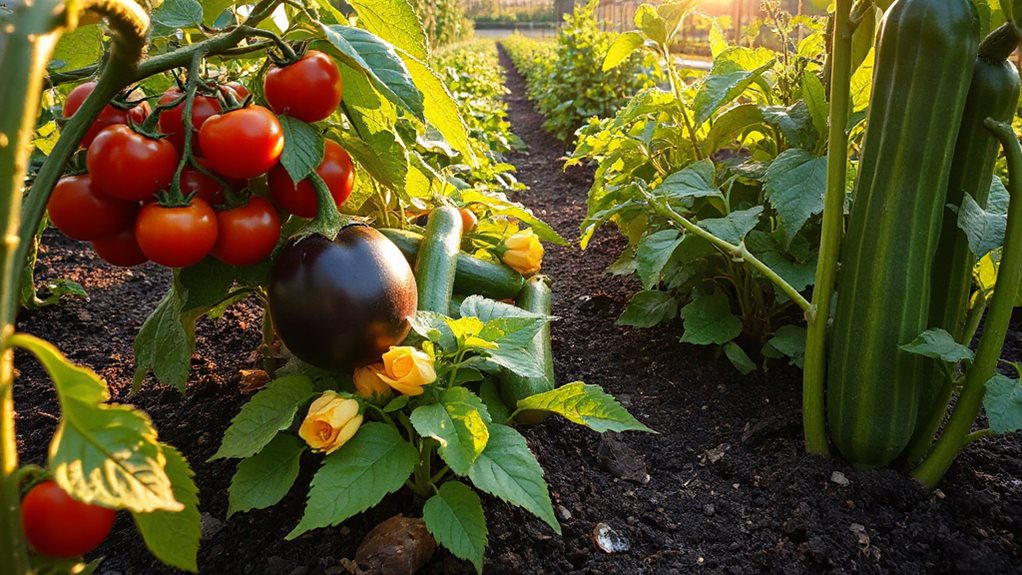
When planning your summer garden in Central Illinois, start by choosing warm-season vegetables that thrive in the region’s long, hot summers and fit within its approximate 150-day growing season.
You’ll enjoy success with tomatoes, peppers, eggplant, summer squash, and cucumbers, all of which love full sun and warm soil. Bougainvillea is an example of a tropical plant from warm climates that also thrives in full sun and heat.
Start tomatoes and eggplant indoors, then transplant after frost danger passes.
Use stakes or trellises to save space and keep fruit clean.
For continuous harvests, choose indeterminate varieties like Big Beef or Brandywine when growing tomatoes.
When to Plant Warm Season Crops in Central Illinois
Though your garden may be ready before the calendar agrees, planting warm-season crops too early in central Illinois risks damage from lingering cold snaps, so timing is key to a successful harvest.
Aim to plant after April 19, the median last frost date, but wait until mid-May for tender crops like tomatoes and cucumbers.
Make certain daytime temps reach the 70s and nights stay above 50°F.
Use frost protection if planting earlier, and monitor weather forecasts closely.
Count back from your average first fall frost based on each crop’s days to maturity to ensure fruiting before cold weather.
Grow Heat-Loving Varieties Like Okra & Malabar Spinach

To truly maximize your summer garden’s potential, consider growing heat-loving crops like okra and Malabar spinach—both thrive in the intense summer heat that often slows down other vegetables.
You’ll want daytime temps above 80°F, with night temps over 60°F, and well-drained, fertile soil rich in organic matter.
Provide consistent moisture, avoid wetting leaves, and use a trellis for vining Malabar spinach to save space and enhance yields.
For best results in small to medium garden spaces, choose varieties with a compact habit or a 17-inch cutting width to balance coverage and maneuverability when maintaining beds.
Warm Your Soil for Stronger Seed Germination
You’ve chosen tough, heat-loving crops like okra and Malabar spinach that thrive in summer’s peak, but even the hardiest varieties start with a critical step: getting the soil ready for strong seed germination.
Warm soil matters—ensure it’s at least 50°F at planting depth. Test pH early, aiming for 6.0–6.5, and amend with dolomitic lime if needed. Work in compost to improve texture and nutrients, tilling 7–8 inches deep.
Let the earth settle, then sow seeds when conditions are steady, giving your garden a solid foundation to grow together. Use a soil thermometer to confirm temperatures and avoid planting until the soil is consistently warm 50°F threshold.
When (and How) to Harvest Summer Vegetables

Harvest your summer vegetables at the peak of freshness to lock in flavor, texture, and nutritional value.
Pick early in the morning after the dew dries, when crispness and moisture are highest.
Harvest zucchini at 4–6 inches, cucumbers before the tip tapers, and summer squash young to avoid toughness.
Frequent, careful picking with pruners enhances yields and keeps plants productive all season.
Keep soil consistently moist for young plants, especially in warm conditions, to support shallow roots and strong growth (consistent moisture).
Final Note
You’ve got the tools to grow a successful summer garden in central Illinois. By planting warm-season crops after the last frost, choosing heat-tolerant varieties like okra and Malabar spinach, and warming your soil for better germination, you set the stage for strong growth. Time your harvests right, and you’ll enjoy fresh, homegrown vegetables all season. With proper planning and care, your garden will thrive even in peak summer heat.

Nathan McPhail is a garden and home DIY expert who writes practical, easy-to-follow advice for homeowners and gardeners. Through Yardique, he shares hands-on tips covering gardening, lawn care, landscaping, home improvement, repairs, tools, and outdoor living. His focus is on helping readers solve everyday household and yard problems with straightforward guidance, useful techniques, and practical solutions.