You can grow up to five times more vegetables in the same space by using vertical trellises like cattle panel arches or A-frames, which support pole beans, cucumbers, and tomatoes while improving air circulation and reducing disease. Train vining crops upward with sturdy T-posts and UV-resistant ties, and save ground space by planting lettuce or radishes beneath. Use DIY options like PVC and closet racks for custom solutions. Try the stake-and-weave method for tomatoes to keep plants supported and harvests within reach—there’s even more to investigate with smart trellising techniques.
TLDR
- Use A-frame trellises made from 2x4s to grow more in less space with excellent vertical support for vining crops.
- Install arched trellises from bent cattle panels to maximize airflow, shade, and upward growth for heavy vines.
- Grow pole beans, cucumbers, and Malabar spinach vertically to boost yields and save ground space.
- Combine trellised crops with under-planting of radishes and lettuce to fully utilize vertical and ground layers.
- Build DIY trellises from wire racks and PVC, securing with zip ties for customizable, space-saving garden structures.
Maximize Space With Vertical Gardening
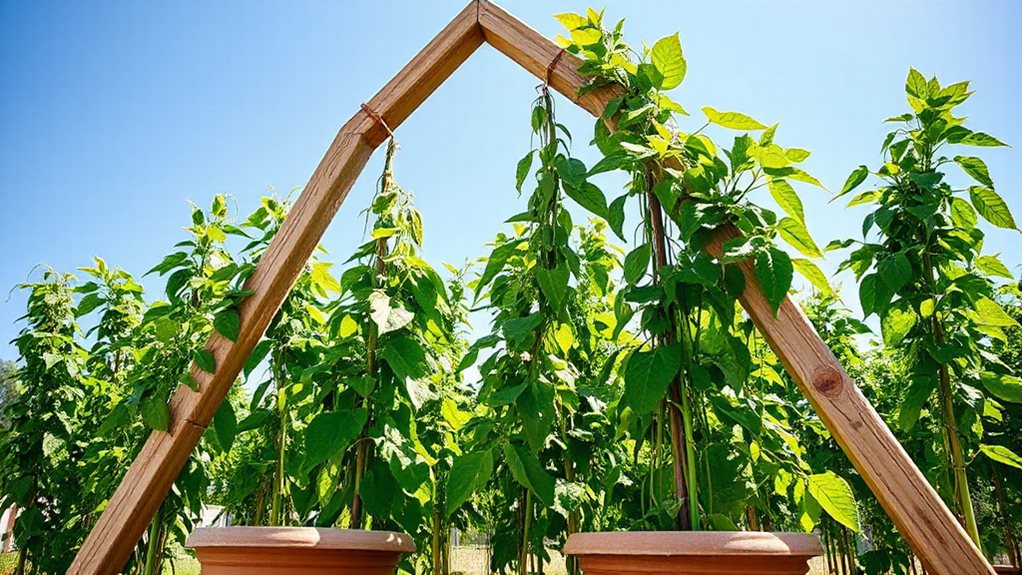
You can dramatically maximize your growing space by embracing vertical gardening, a method that turns unused walls and fences into productive green zones.
By stacking plants upward, you’ll grow up to five times more in the same footprint, using 99% less land.
Vertical systems save ground space, making room for other uses while enhancing yields efficiently and sustainably. Broccoli benefits include doing well in cooler seasons and thriving when given vertical support.
Plants grow within a structural support rather than just climbing, which allows for more controlled and dense planting arrangements structural support.
Best Vegetables to Trellis for Small Spaces
Climbing high with minimal footprint, pole beans stand out as a top choice for trellising in compact gardens, providing heavier yields over a longer season than their bush counterparts.
You’ll enjoy lively varieties like Dragon’s Tongue while saving space. Peas cling easily to supports, cucumbers hang straight on sturdy trellises, and Malabar spinach thrives in heat.
Small melons and squash also vine well with proper netting, maximizing your harvest in limited areas. Poblanos start dark green and turn red as they ripen, and can be harvested when deep green and glossy or later for a spicier flavor.
Build A-Frame and Arch Trellises for Peas and Cucumbers
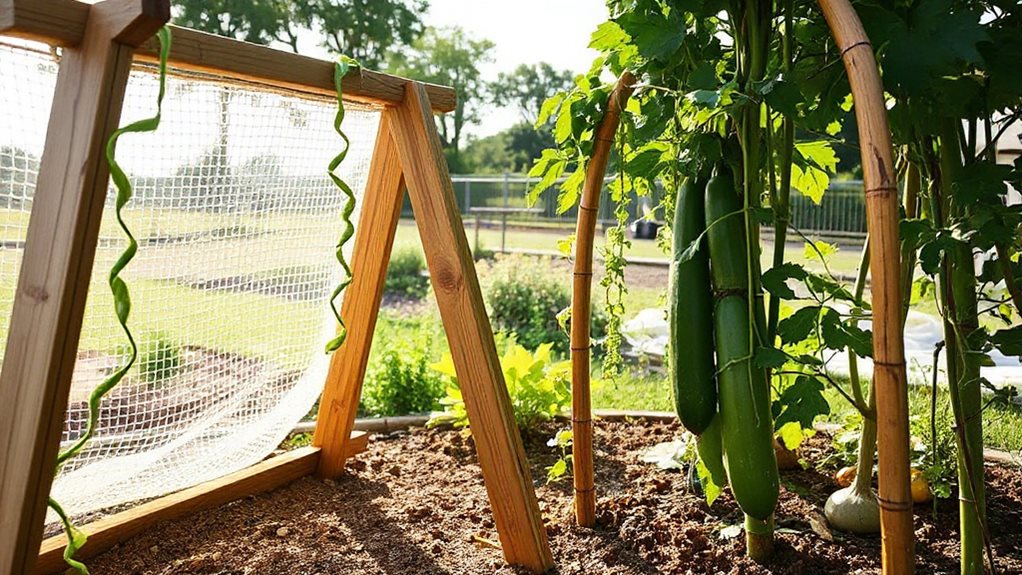
You can build a sturdy A-frame trellis by cutting and assembling pressure-treated 2x4s into a triangular frame, then securing chicken wire with galvanized staples for peas and cucumbers to climb.
Position the legs 3 inches from the top and anchor them firmly in the soil to support heavy vines, especially when using 3/8″ carriage bolts for added stability.
For arch trellises, bend cattle panels into a U-shape over your bed and stake the ends securely, giving cucumbers room to climb halfway before fruiting while providing beneficial afternoon shade.
Keep soil consistently damp during early spring nesting windows to make sites less attractive to ground-nesting bees and protect pollinators by avoiding unnecessary disturbance to ground bee nesting.
A-Frame Design Tips
When constructing A-frame trellises for peas and pole beans, start by selecting durable materials like 2×4 lumber and galvanized deck screws to guarantee stability and longevity in outdoor conditions, then assemble two sturdy legs per side connected with crossbars to form each half of the frame.
Join both halves at the peak, orient the broad side east-west for prime sun exposure, and secure with back supports to prevent collapse under vine weight.
Arch Trellis Benefits
While offering both function and charm, an arch trellis gives your garden a sturdy, curved structure that supports vining crops and converts limited space into a high-yielding growing area.
You’ll maximize vertical space, improve air circulation, and keep plants off the ground, reducing disease and pests.
It enhances sunlight exposure, simplifies harvesting, and adds a romantic touch, all while helping you grow more in less space.
Use Cattle Panels for Tomatoes and Squash
You can easily support heavy vines like tomatoes and squash by bending a 50-inch cattle panel into an arch and securing it to T-posts driven into the ground.
This setup offers sturdy, long-lasting structure while maximizing vertical space, so you can grow more in a compact garden.
With minimal effort, you’ll improve airflow, reduce pests, and make harvesting simpler since the plants are off the ground and within easy reach.
Sturdy Support For Heavy Vines
Anchor your garden for success by choosing cattle panels as a reliable trellis solution for heavy vining crops like tomatoes and squash. You’ll support sturdy growth while improving air circulation and reducing pests.
Secure them firmly, use twine for extra fruit support, and train vines upward to maximize space. Their durability and versatility make them ideal for your thriving, organized garden.
Easy Installation With T-Posts
Setting up a strong, efficient trellis system starts with the right support structure, and pairing cattle panels with T-posts delivers exactly that for heavy vining crops like tomatoes and squash.
Drive four 6-foot T-posts into the ground 5 feet apart, use a level to guarantee they’re even, then secure the 16-foot panel on top with UV-resistant zip ties every 18–24 inches for sturdy, long-lasting support.
Ideal For Vertical Garden Expansion
While maximizing garden productivity in limited spaces, cattle panels offer a highly effective solution for vertical expansion, particularly with tomatoes and squash.
You can bend 8-foot panels into 50-inch arches, elevating them 18 inches above soil to support indeterminate vines.
Make DIY Trellises From Closet Racks and PVC
You can easily build sturdy, customizable trellises by combining wire closet racks with PVC pipes, creating a lightweight yet durable support system for a variety of climbing vegetables.
Slide PVC over rebar anchors, wire racks securely to posts, and connect panels into A-frames using zipties or metal ties.
Ideal for cucumbers, peas, and beans, this adaptable design fits snugly in any garden, offering reliable vertical support while nurturing a shared sense of practical, hands-on growing success.
To keep rodents from nesting in nearby garden clutter, maintain a clean exterior and remove debris regularly to eliminate hiding places.
Grow Lettuce and Radishes Under Trellised Crops
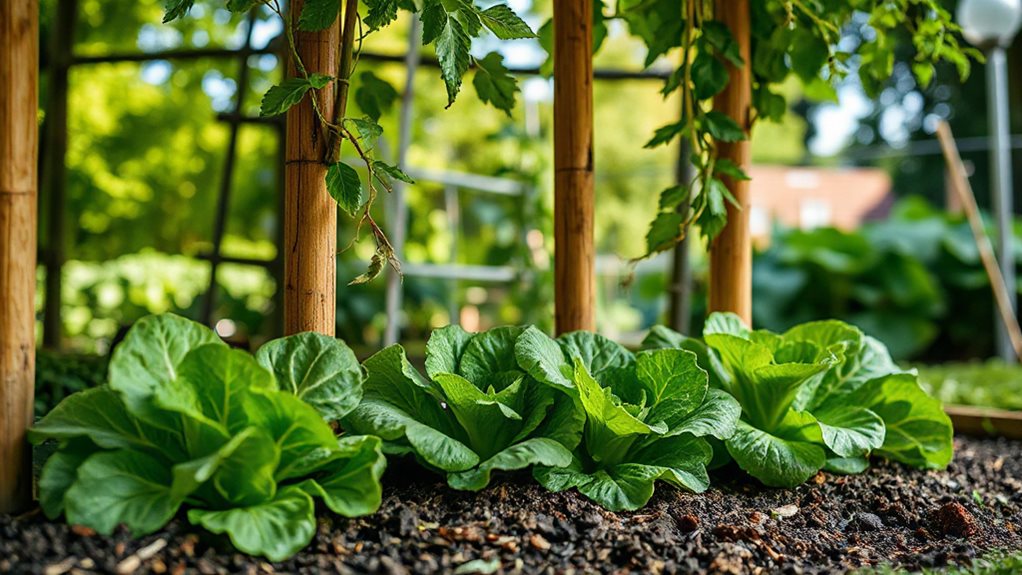
Maximizing your garden’s productivity starts with smart layering—grow quick-maturing radishes and cool-season lettuce beneath trellised crops to make the most of vertical and horizontal space.
You’ll sow radishes 1/2 inch deep, 1–2 inches apart, and lettuce 1/4 inch deep, letting trellised peas or tomatoes provide gentle shade.
This succession strategy enhances yield, prevents bolting, and keeps your soil covered, productive, and thriving all season.
Ensure soil temperature is appropriate for the lettuce and radishes to thrive, since soil temperature can significantly affect germination and early growth.
Support Tomatoes With Stake-And-Weave Method
After harvesting your early radishes and lettuce from beneath climbing crops, turn your attention to supporting the main event—your tomato plants—with the stake-and-weave method.
Drive T-posts 12 inches deep every 2–3 feet, leaving 5–6 feet above ground, and space them 4–6 inches from plant bases. Use heavy twine, starting 8–10 inches up, weaving in a figure-8 pattern to avoid damage. Keep tension taut and add lines every 6–8 inches as plants grow, ensuring strong, organized support all season.
Final Note
You can maximize your garden space by using vertical trellises customized to each crop’s needs. A-frame and arch designs support peas and cucumbers, while cattle panels handle heavy tomatoes and squash. Repurposed closet racks or PVC pipes offer affordable DIY options. Plant low-growing vegetables like lettuce and radishes beneath to enhance yield. The stake-and-weave method keeps tomatoes upright and organized, ensuring efficient use of space and easier harvests.

Nathan McPhail is a garden and home DIY expert who writes practical, easy-to-follow advice for homeowners and gardeners. Through Yardique, he shares hands-on tips covering gardening, lawn care, landscaping, home improvement, repairs, tools, and outdoor living. His focus is on helping readers solve everyday household and yard problems with straightforward guidance, useful techniques, and practical solutions.