Place your chicken run in an open, visible area, at least 50 feet from woods, and clear surrounding brush to eliminate cover. Use ½-inch galvanized hardware cloth for walls and vents, securing it with screws or hog rings. Bury a 12–24 inch apron outward to block diggers, and install a solid roof or tight netting overhead. Reinforce doors with multi-step latches, add motion-activated lights, and consider guard animals—each layer enhances security in proven ways.
TLDR
- Position the chicken run in an open area, at least 50 feet from woods, with trimmed vegetation for clear visibility and reduced predator cover.
- Construct the run with ½-inch heavy-gauge hardware cloth buried 12–24 inches deep and extended outward to block diggers and tunnelers.
- Secure all openings with ¼-inch mesh, reinforced seams, and predator-proof latches to prevent entry by raccoons, rodents, and other persistent animals.
- Cover the run with a solid roof or tightly secured overhead netting to protect against hawks, owls, and climbing predators.
- Install motion-activated lights, sprinklers, and cameras, and use guard animals like donkeys or geese to deter and detect approaching threats.
Choose an Open and Visible Location

Where should you place your chicken run to minimize the risk of predator attacks? Choose an open, visible location with cleared brush and good sightlines.
Keep the run away from woods and dense vegetation, ideally 50+ feet, to limit predator cover.
Trim undergrowth around the perimeter to reduce ambush spots, and maintain clear visibility so you can spot threats early and respond quickly.
You can further enhance security by using natural barriers like fences, hedges, or bushes to deter animals while still maintaining an open view.
Consider installing motion-activated sprinklers or other deterrents to discourage nocturnal and roaming predators from approaching the run.
Use Hardware Cloth for Maximum Durability
Secure your chicken run with hardware cloth to create a durable, impenetrable barrier that stands up to even the most persistent predators.
Use ½-inch heavy-gauge galvanized steel for walls and vents, and extend a ¼-inch mesh apron 18 inches outward to deter diggers.
Fasten securely with screws, washers, or hog rings—never basic staples—and overlap seams tightly to guarantee long-term, reliable protection your flock deserves.
Also inspect and reinforce vulnerable junctions like vents and eaves to prevent entry through small gaps and soft spots, since attic vents and similar openings are commonly exploited by animals.
Bury Protective Barriers Underground
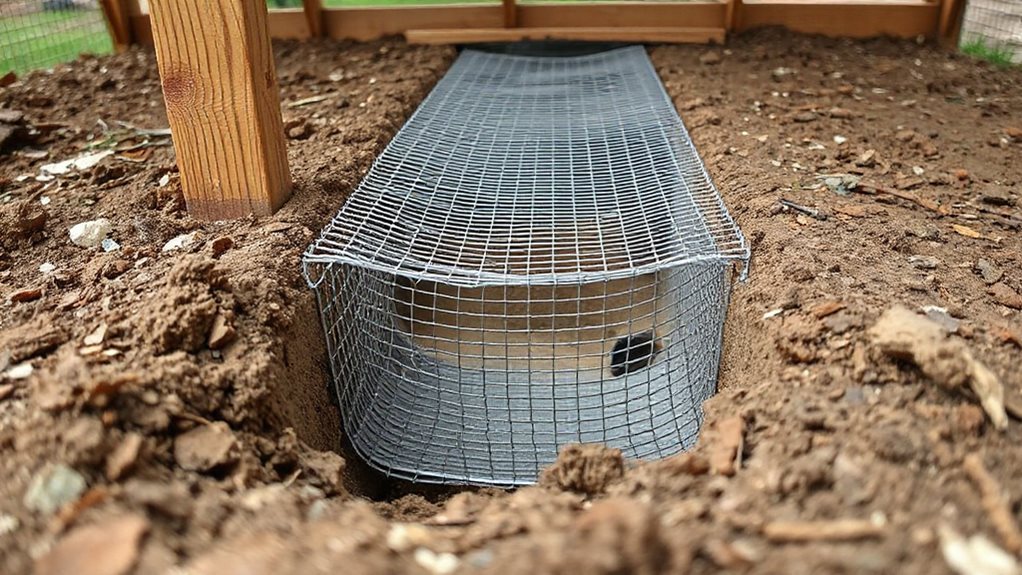
While predators may test the strength of your chicken run’s walls, they often succeed by going underneath them—so don’t overlook what’s buried below.
Bury 12-inch hardware cloth along the perimeter, or go 18–24 inches deep in high-risk areas. Use PVC-coated 16-gauge steel with 2×3-inch mesh, and bend it into an L-shape to block tunneling. Add a 6-inch layer of crushed stone at the bottom for drainage and to help prevent burrowing into loose soil with drainage and soil considerations.
Install Anti-Dig Defenses Around the Perimeter
Stop digging predators in their tracks by installing anti-dig defenses around your chicken run’s perimeter.
Lay a 2-foot-wide apron of 1/2-inch hardware cloth, burying it a few inches deep and extending 18 inches outward. Secure it with ground staples, then cover with mulch or soil.
Combine with vertical barriers or no-dig alternatives like buried stones or PVC-coated fencing for full protection.
Ensure the apron rests on a compacted base of gravel to improve drainage and prevent erosion.
Cover the Run With a Secure Roof System
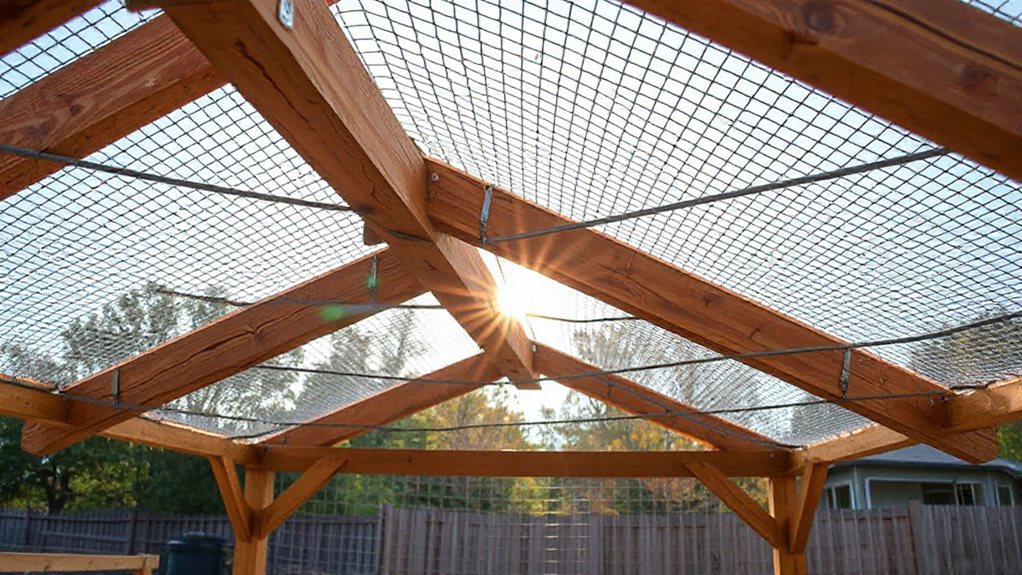
You’ll need to cover your chicken run with a secure roof system to protect against hawks and owls, which can strike quickly and without warning.
A solid roof made of hardware cloth or sturdy roofing material, fastened tightly with no gaps, offers the best defense by blocking aerial access completely.
While anti-hawk netting is lighter and easier to install, it only provides partial protection and should be combined with other barriers to stop climbing predators.
Ensure the roof structure is supported by sturdy posts at least 6 feet tall to deter larger predators and provide stability for the covering; consider burying supports and using concrete for added security with 6 feet tall posts.
Solid Roof Installation
Start by building a sturdy roof frame that matches your chicken run’s dimensions, using 2×4 lumber cut to size and assembled with a 4/12 to 6/12 pitch to guarantee proper water runoff.
Space rafters 16 inches apart, verify squareness with the 3-4-5 method, then sheathe with plywood secured every 6–12 inches.
Install 30 lb. felt underlayment before adding metal roofing with neoprene-washer screws, a 6-inch overhang, and a sealed ridge cap to keep your flock safe and dry.
Overhead Netting Protection
While a solid roof offers excellent protection from the elements, overhead netting adds a critical layer of defense against aerial predators that can strike in seconds.
Use 2.4″ knotted, UV-treated polyethylene netting with 1″ mesh, securing it tightly to frames using zinc clips or cable ties.
Reinforced edges and uniform weave prevent tears, while black monofilament stays nearly invisible yet blocks hawks effectively.
Prevent Aerial Attacks With Netting and Overhead Coverage
Keep aerial predators at bay by securing your chicken run with durable overhead netting or solid coverage, effectively cutting off access from hawks, owls, and other flying threats.
Stretch strong plastic or aviary netting tightly across the top, ensuring no sagging gaps.
Use welded wire or crisscrossed support wires for larger areas, and combine with natural covers like pallets or branches to give your flock safe, shaded retreats they’ll use daily.
Reinforce Doors With Predator-Proof Latches
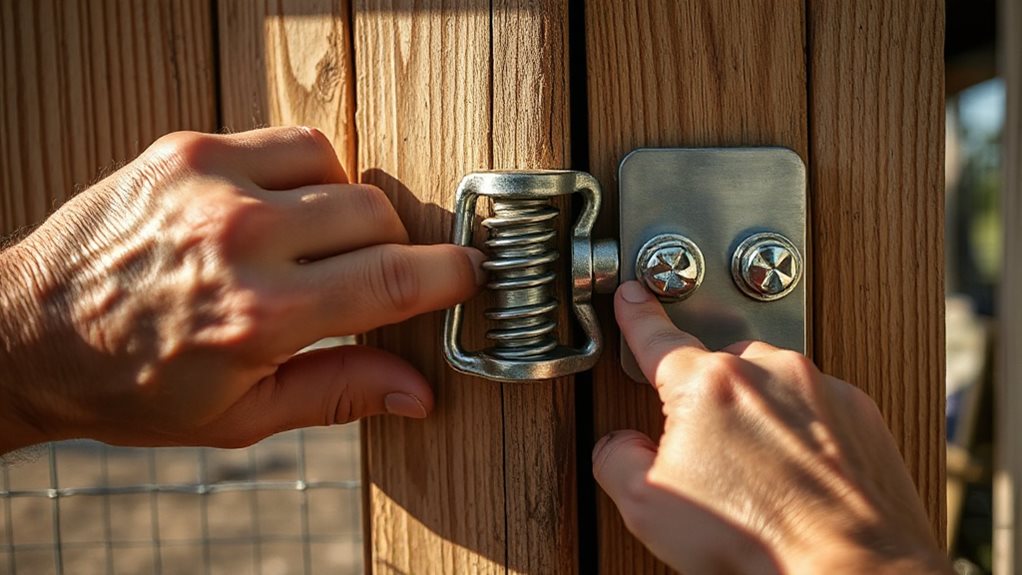
You should install locking latches that require multiple steps to open, since raccoons and other clever predators can easily manipulate simple hooks or spring latches.
Reinforce door frames with sturdy materials and secure all edges with hardware cloth to eliminate gaps larger than 1/4 inch, which prevents claws from gaining purchase.
To stop tampering, use auto-engaging predator-proof mechanisms like the PREDATOR-PROOF self-locking wings or a POLLY-DEFENDER model that locks securely when closed.
Use Locking Latches
Secure every access point with locking latches designed to outsmart clever predators like raccoons and opossums, starting with doors, nest box lids, and any hinged opening in your chicken run.
Use multi-step latches that require turning, sliding, and feeding through a slot—simple hooks or basic handles won’t suffice.
These flat, 1.5” x 2.5” two-piece latches resist tampering yet remain easy for children to operate, blending security with family-friendly practicality.
Reinforce Door Frames
Strengthen your chicken run’s weakest points by reinforcing door frames to withstand persistent predators like raccoons, foxes, and coyotes.
Use double studs and corner braces to resist racking, nail plywood triangles at the top, and install metal brackets for stability.
Add cross braces to prevent sagging, secure hardware cloth with screws and staples, and bury it 18 inches out to deter digging.
Prevent Tampering Attempts
Reinforcing door frames sets a solid foundation, but without tamper-resistant latches, even the sturdiest construction can fall prey to clever intruders like raccoons and opossums.
Use two-step latches, carabiner clips, or padlocks to block access—simple hooks won’t cut it.
Secure every entry point with durable, multi-step mechanisms that resist manipulation, ensuring your flock stays safe where they belong: protected and at home.
Seal All Small Gaps and Entry Points
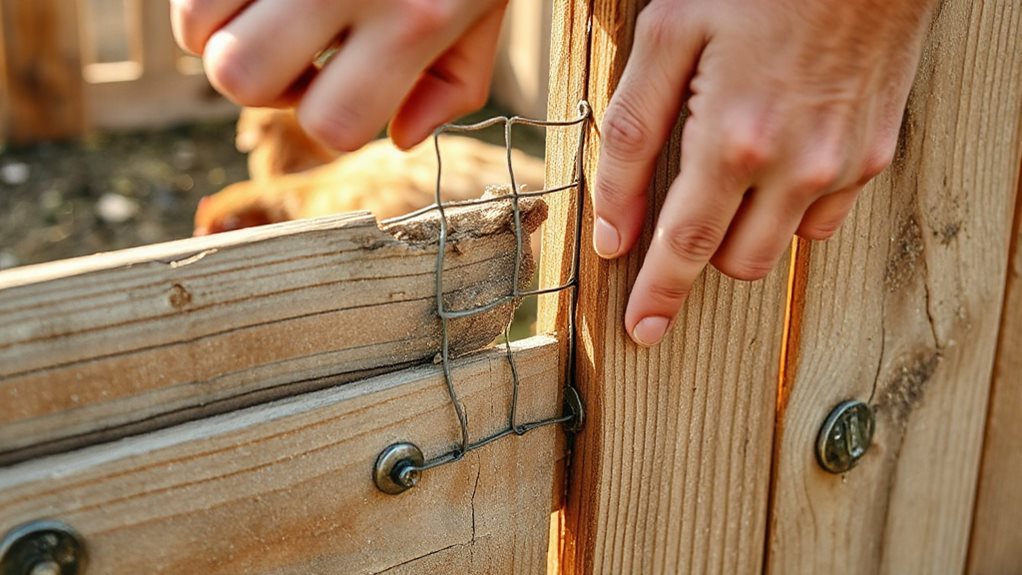
While predators may be opportunistic, they’re also persistent, so you’ll want to take a close look at every corner of your chicken run and coop to identify even the smallest gaps they could exploit.
Seal cracks, secure hardware cloth with tight staples or baling wire, bury mesh barriers, reinforce doors, and make certain all openings are smaller than 1/4 inch to keep your flock safe.
Add Motion-Activated Lighting for Nighttime Security
Often, a sudden burst of light is enough to thwart nocturnal predators before they reach your flock. Install motion-activated lights with 1000–2000 lumens and a 30–40 foot detection range to cover your coop and run.
Place them above entrances and along the perimeter, using weather-resistant, energy-efficient LEDs. Set timers for 1–2 minute durations, and pair with alarms or cameras to stay alert—without disrupting your chickens’ sleep.
Employ Guard Animals and Natural Flock Defenders
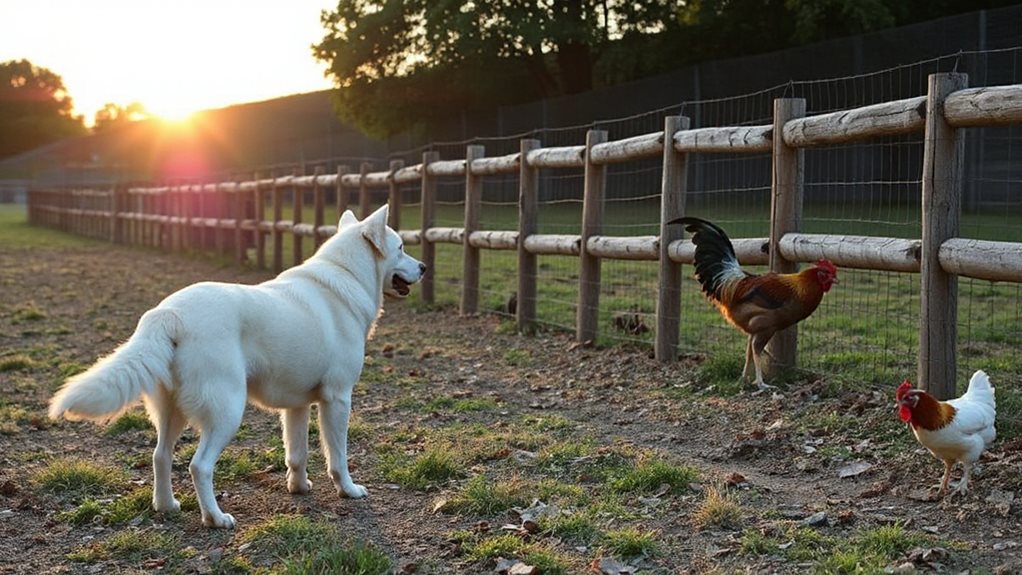
Motion-activated lights can startle nighttime intruders, but adding living protectors takes your chicken run’s defense to the next level.
You can rely on Great Pyrenees or donkeys to deter coyotes, while roosters and guinea fowl alert flocks to hawks. Geese honk at threats, and llamas patrol boldly. Together, these guardians create a layered, natural defense system that strengthens your flock’s safety without overwhelming your routine.
Final Note
You’ve secured the location, installed hardware cloth, and buried barriers to stop diggers—now, finish strong. A covered roof, tight latches, and sealed gaps close off vulnerabilities, while motion lights deter nocturnal threats. Guard animals add a reliable layer of defense. By combining physical barriers with smart tactics, you’re not just reacting—you’re staying ahead. This is how you protect your flock effectively and responsibly.

Nathan McPhail is a garden and home DIY expert who writes practical, easy-to-follow advice for homeowners and gardeners. Through Yardique, he shares hands-on tips covering gardening, lawn care, landscaping, home improvement, repairs, tools, and outdoor living. His focus is on helping readers solve everyday household and yard problems with straightforward guidance, useful techniques, and practical solutions.