Shake the rug outdoors to dislodge loose debris, then vacuum with strong suction to pull fine dust deep into the fibers; check the care label before any water or chemicals, as some materials can’t tolerate excess moisture or bleach. Choose a cleaning solution that matches the rug’s material and stain type—oxiclean for mildew on polypropylene, a vinegar‑water blend for odors, or a gentle detergent for routine grime—testing it on a hidden spot first. Spot‑treat stains by applying the solution with a cloth, blotting upward, and avoiding direct pouring to prevent fibers from embedding deeper. Divide the rug into 2‑by‑2‑foot sections, apply a mild soap‑water mix, scrub gently with a soft brush, squeegee excess suds, then rinse with low‑pressure water and blot away moisture. Dry the rug completely by hanging it in the sun, laying it flat, or using a fan, ensuring full dryness within four days to prevent mold. Follow bleach guidelines if needed, and maintain the rug with weekly vacuuming and prompt spot‑cleaning. Continue for and you’ll uncover more detailed maintenance tips.
TLDR
- Shake and sweep the rug outdoors before vacuuming to remove loose debris and prevent mildew.
- Check the care label and use a material‑appropriate cleaner; avoid bleach or excess moisture on sensitive fibers.
- Spot‑treat stains with a cloth or sponge, blotting upward rather than pouring liquid directly onto the spot.
- Clean in 2‑by‑2‑foot sections, scrub gently, then rinse with low‑pressure water and squeegee excess moisture.
- Dry completely within four days using sun, fans, or airflow; flip and elevate the rug to ensure thorough drying.
Prepare the Rug – Remove Dirt & Check Labels
Why start by shaking the rug outdoors? You’ll dislodge loose debris, then sweep both sides to prevent mildew, and vacuum with strong suction to pull fine dust deep in fibers.
Check the care label before any water or chemicals; some rugs can’t tolerate bleach or excess moisture.
Verify material‑specific instructions, ensuring you follow manufacturer guidance, which safeguards fibers and maintains the rug’s durability and appearance. Regular vacuuming helps keep dust from embedding in the fibers.
Consider moisture-aware cleaning practices tied to water conservation in landscaping, since excessive moisture can lead to mold growth on outdoor fabrics and nearby plant beds. Water-wise care helps protect irrigation zones and reduces runoff.
Choose the Right Cleaning Solution for Your Rug
After shaking and vacuuming the rug to remove loose debris, the next step is selecting a cleaning solution that matches the material and the type of stain you’re tackling. Use an OxiClean mix for mildew on polypropylene, a vinegar‑water blend for odors, gentle detergent for routine grime, or a commercial remover for stubborn grease, always testing a hidden spot first. Humidity control is also important when cleaning, since high indoor moisture can affect drying time and mold risk humidity control and selecting a solution that minimizes moisture buildup helps protect the rug and surrounding area.
Spot‑Treat Stains Without Embedding Fibers
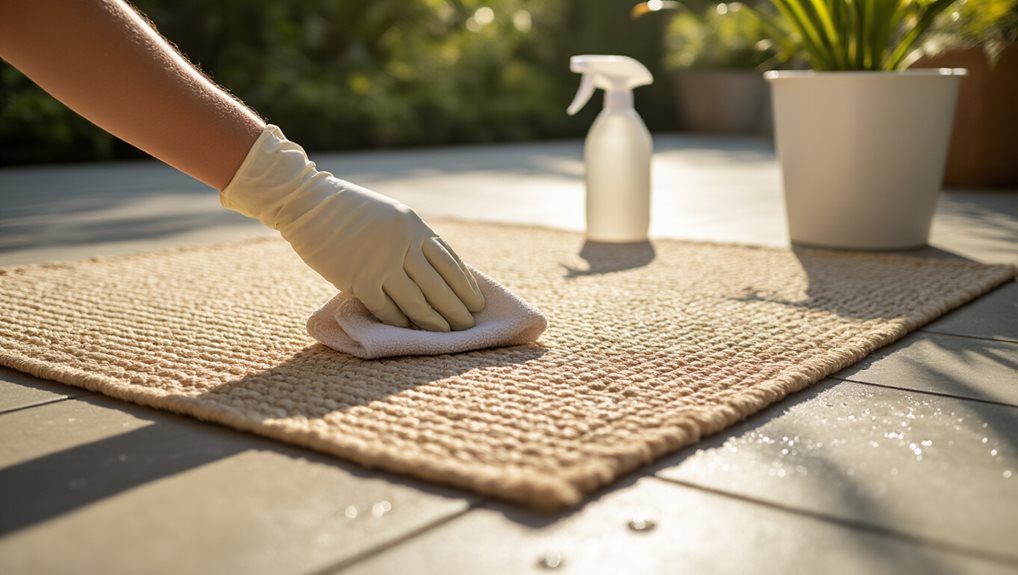
When a stain appears on an outdoor rug, you’ll want to treat it quickly yet carefully so the fibers aren’t forced deeper into the weave; applying a cleaning solution with a cloth or sponge—rather than pouring liquid directly onto the spot—lets you press the stain upward, while light agitation with a soft brush or broom breaks up the residue without embedding the fibers.
Use baking soda and vinegar, a dab of eco‑dish soap, or OxiClean, blotting each with a clean cloth, pressing firmly, then lightly brushing and vacuuming to lift stains without pushing fibers deeper.
Be sure to test any cleaner on a small, inconspicuous area first to avoid any potential color changes or damage to the rug backing or fibers. flexi hose
Apply & Scrub Section‑by‑Section
If you divide the rug into manageable 2‑by‑2‑foot sections, you can control the amount of cleaning solution you apply and prevent excess moisture from soaking the backing.
Pour a mild soap‑water mix onto the first section, let it sit briefly, then use a soft brush in gentle circular motions to lift dirt.
Squeegee excess suds before moving to the next marked area.
Rinse Outdoor Rug Gently – No Damage
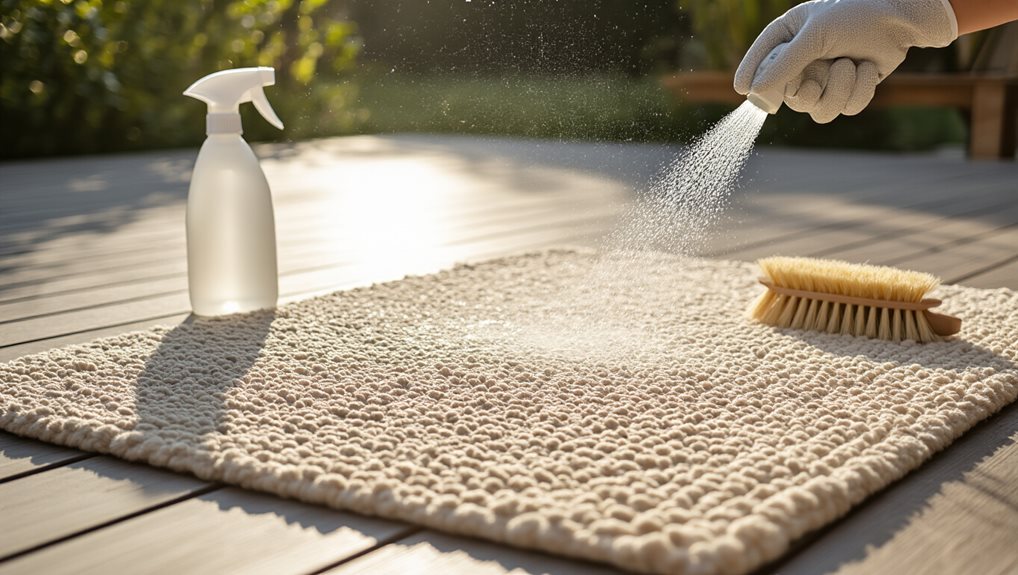
How can you rinse an outdoor rug without compromising its fibers or backing? Use cold or lukewarm water from a low‑pressure hose, spraying evenly from one end to the other while the rug lies flat on a driveway. Keep the flow gentle, avoid hot water, and rinse until the water runs clear.
Shake off excess, then blot with towels to remove remaining moisture.
Dry Outdoor Rug Fully to Prevent Mold
Where can you find the fastest way to dry an outdoor rug so mold never gets a chance to develop? Hang it over a sunny porch railing or lay it flat in direct sunlight, flipping halfway; elevate it on a rack or bricks to let air circulate underneath. Use a fan or high‑velocity blower, open windows, and blot excess water with towels or a wet vacuum, ensuring thorough dryness within four days.
The run and yard setup principles from the chicken care guidance underscore the importance of ample, well-ventilated spaces to prevent moisture buildup and promote airflow, which helps keep outdoor areas dry and healthy. ventilation and airflow
Safety & Maintenance for Outdoor Rugs
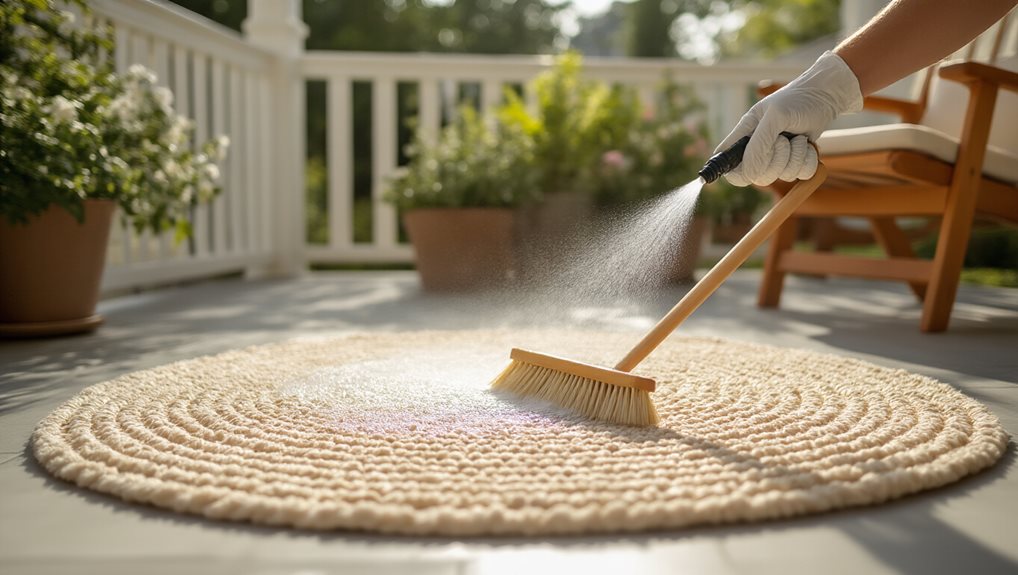
You should follow bleach guidelines strictly, using a diluted solution, testing on an inconspicuous spot, and never mixing it with other cleaners to protect the rug’s fibers.
After washing, let the rug air‑dry completely in a well‑ventilated area or use a low‑heat setting if you’re in a hurry, ensuring no moisture remains that could foster mold.
Finally, stick to a regular maintenance schedule—vacuum weekly, spot‑clean promptly, and store the rug properly during rain or winter—to keep it in top condition.
Regularly check for moisture intrusion around outdoor rug areas and address any leaks or dampness promptly to prevent mold growth and preserve rug longevity prevent mold growth.
Bleach Use Guidelines
Why should you follow strict bleach guidelines when cleaning outdoor rugs? Dilute bleach with water, never use it neat, and wear gloves and goggles to protect yourself, as OSHA and EPA require. Spot‑test on an inconspicuous area, especially on synthetic polypropylene, to avoid fading. Apply via spray bottle, scrub gently with a soft brush, then rinse until water runs clear, ensuring safe, effective stain removal.
Proper Drying Techniques
After rinsing the rug and confirming the bleach has been fully removed, the next step is to dry it correctly to prevent mold, mildew, and UV damage.
Lay it flat in a well‑ventilated, shaded spot or hang it on a rack away from direct sun, use fans or a dehumidifier for airflow, and, if needed, set a low‑heat space heater nearby, monitoring closely to avoid overheating.
Regular Maintenance Schedule
Regularly scheduling maintenance is essential for keeping outdoor rugs in peak condition, because consistent care prevents dirt buildup, uneven wear, and premature fiber degradation.
Vacuum twice weekly in high‑traffic zones, once in low‑traffic, and rotate every six months to balance sun exposure.
Schedule professional cleanings every six to twelve months for busy areas, twelve to twenty‑four months for quieter spots, and adjust for pets or allergies with more frequent deep cleans.
Use rug pads and blot spills promptly.
Final Note
By following these steps you’ll keep your outdoor rug looking fresh and durable, because regular cleaning removes dirt, prevents fiber damage, and inhibits mold growth. Choose a mild solution, spot‑treat carefully, scrub in sections, rinse gently, and dry thoroughly; this routine preserves color, texture, and structural integrity. Consistent maintenance extends the rug’s lifespan, ensuring it remains a reliable, attractive element of your outdoor space.

Nathan McPhail is a garden and home DIY expert who writes practical, easy-to-follow advice for homeowners and gardeners. Through Yardique, he shares hands-on tips covering gardening, lawn care, landscaping, home improvement, repairs, tools, and outdoor living. His focus is on helping readers solve everyday household and yard problems with straightforward guidance, useful techniques, and practical solutions.