Keep your basement’s relative humidity below 50 % by using a calibrated hygrometer, proper ventilation, and a well‑placed dehumidifier, because mold spores need at least 60 % RH to thrive and a dry environment stops growth before it starts; position the dehumidifier centrally with 6–12 inches clearance, rotate it periodically, and pair it with low‑speed fans to eliminate stagnant air zones; spray undiluted white vinegar or a tea‑tree‑oil blend on any visible spots, let it sit, then wipe and dry, and seal foundation cracks, install drains, and maintain the sump pump to keep moisture out, so you’ll be ready for the next step.
TLDR
- Keep basement humidity between 30‑50 % using a hygrometer and a dehumidifier; maintain temperature 60‑65 °F to inhibit mold growth.
- Place the dehumidifier centrally with 6‑12 inches clearance, rotate its position periodically, and keep it running consistently.
- Install low‑speed box or oscillating fans to create cross‑flow, especially in stagnant zones, and run them continuously during rain.
- Apply undiluted white vinegar, tea‑tree‑oil blend, or baking‑soda solution to visible mold, let sit, then wipe and dry the area.
- Ensure foundation drainage, install an impermeable membrane, and perform regular sump‑pump maintenance to prevent water intrusion.
Why Keep Basement Humidity < 50% to Prevents Mold (and How to Measure)
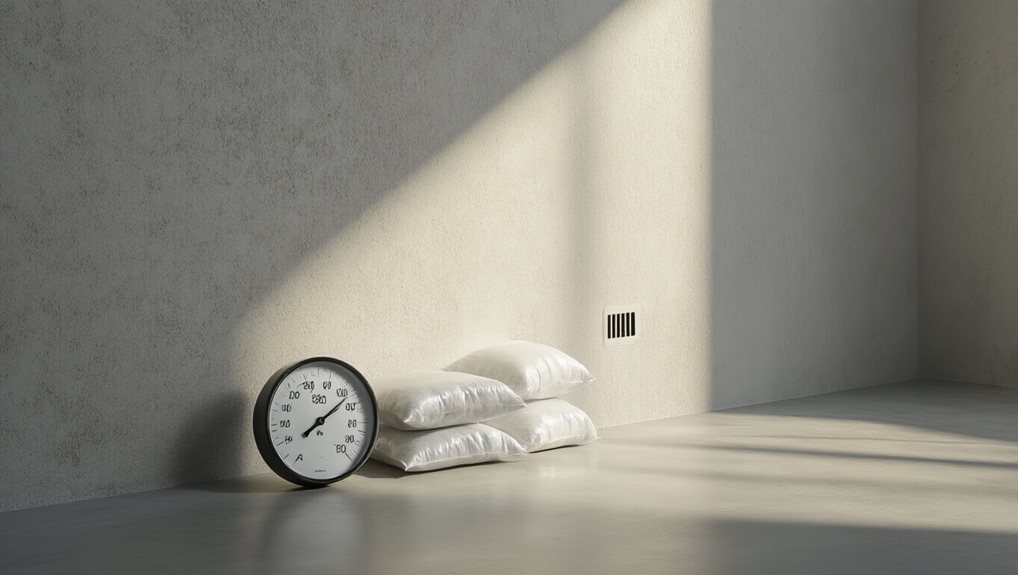
Why keep basement humidity below 50 %? You’ll stop mold before it starts, because spores need 60 % RH to thrive, while 50 % creates an inhospitable environment.
Use a hygrometer to track RH daily, watch for condensation, musty odors, or water stains, and note any seasonal spikes. airflow and ventilation can help reduce humidity levels and prevent dampness.
Smart sensors can automate alerts, ensuring you stay within the 30‑50 % ideal range.
Maintaining temperature in the 60–65°F range further discourages mold growth.
Install and Position a Dehumidifier for Dead‑Air Zones
Keeping basement humidity below 50 % stops mold before it can colonize, so the next step is to place your dehumidifier where it can treat the dead‑air zones that often become moisture traps. Position it centrally, away from boxes or furniture, with 6‑12 inches clearance on all sides, especially near intake and exhaust vents. Add a short-term reminder to rotate the dehumidifier’s placement periodically to maintain even airflow throughout the space grid layout and ensure consistent coverage. Keep it near sump or damp walls, but not pointing exhaust at walls, to guarantee even, uninterrupted airflow.
Identify Stagnant Air and Boost Circulation With Fans
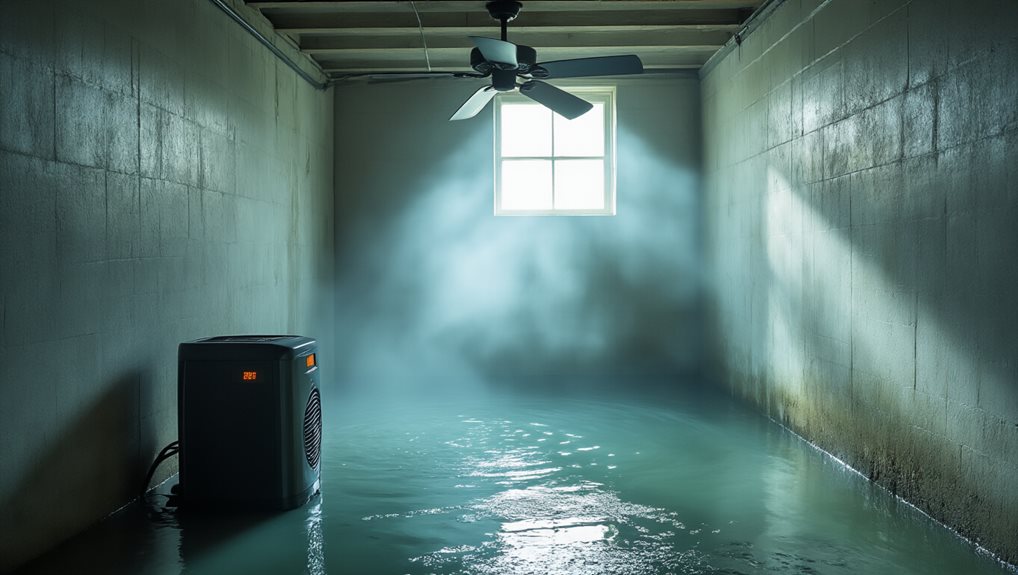
Ever wondered why your basement feels stuffy even when the windows are closed? Stagnant air traps moisture, inviting mold, so place box, oscillating, or exhaust fans to create cross‑flow, placing them opposite each other or at egress points. Run them on low speed continuously, especially during rain, and pair with humidity sensors to keep levels between 40‑60 %, ensuring fresh, drying circulation. Additionally, inspect for any moisture sources around the foundation and seal gaps to prevent dampness from seeping in, which can worsen mold growth air circulation and reduce humidity spikes.
Apply Natural Mold‑Killing Sprays: Vinegar, Tea Tree Oil, Baking Soda
Can you tackle basement mold with ingredients you already have in the kitchen? Undiluted white vinegar, a tea‑tree‑oil blend, and a baking‑soda solution each act as a natural, effective mold‑killing spray when applied correctly. Spray vinegar, let it sit an hour, wipe and dry; mix tea‑tree oil with water, spray, wait, then clean; combine baking soda and water, scrub, rinse, and dry for lasting protection. Using an odor‑neutralizing approach with baking soda can also help absorb moisture and prevent future mold growth mold prevention
Seal Your Basement Foundation: Drains, Membranes & Sump Pump
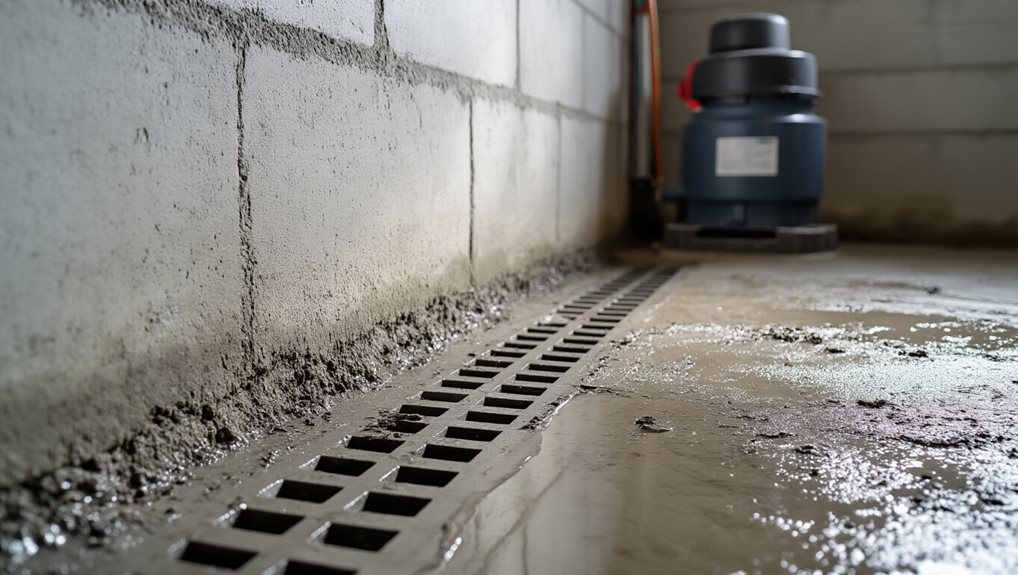
You’ll want to install foundation drains that channel water away from the walls, apply an impermeable membrane to block moisture intrusion, and set up a regular sump‑pump maintenance schedule to keep the system running.
By positioning drains at low points, sealing every gap with a durable barrier, and testing the pump with its battery backup each season, you create a triple defense against water damage.
This coordinated approach not only reduces humidity but also prevents the conditions that let mold thrive.
Foundation Drains Installation
Why bother with a foundation drain? You dig a 6‑inch‑wide, 18‑24‑inch‑deep trench below the footing, sloping 1/8 inch per foot toward a discharge point, then lay 2‑3 inches of clean gravel over landscape fabric, ensuring six‑inch clearance around a 4‑inch perforated pipe. Position the pipe with perforations down, connect sections, cover with more gravel, wrap fabric, backfill, compact lightly, and link to a sump or daylight outlet.
Impermeable Wall Membranes
A solid, impermeable wall membrane is the next essential layer of protection after installing a foundation drain, because it blocks moisture from penetrating the concrete and prevents the hydrostatic pressure that drives mold growth.
Choose a rubber or polyurethane membrane for all‑climate durability, apply rolls with adhesive or use peel‑and‑stick sheets, seal joints with tape, and ensure dimpled HDPE or TPO designs channel water away, extending foundation life and keeping your basement dry.
Sump Pump Maintenance Schedule
When should you schedule sump‑pump upkeep to keep your basement dry? Check monthly for wear, clean hoses, and test the float switch with water; listen for odd noises.
Quarterly, clear the pit, verify electrical continuity, and inspect check valves.
Annually, replace damaged parts, conduct a full system inspection, and follow BS12056 standards.
Seasonal checks—spring, before rainy seasons, and winter—ensure discharge lines stay clear and unfrozen.
Select Mold‑Resistant Materials for Walls and Floors
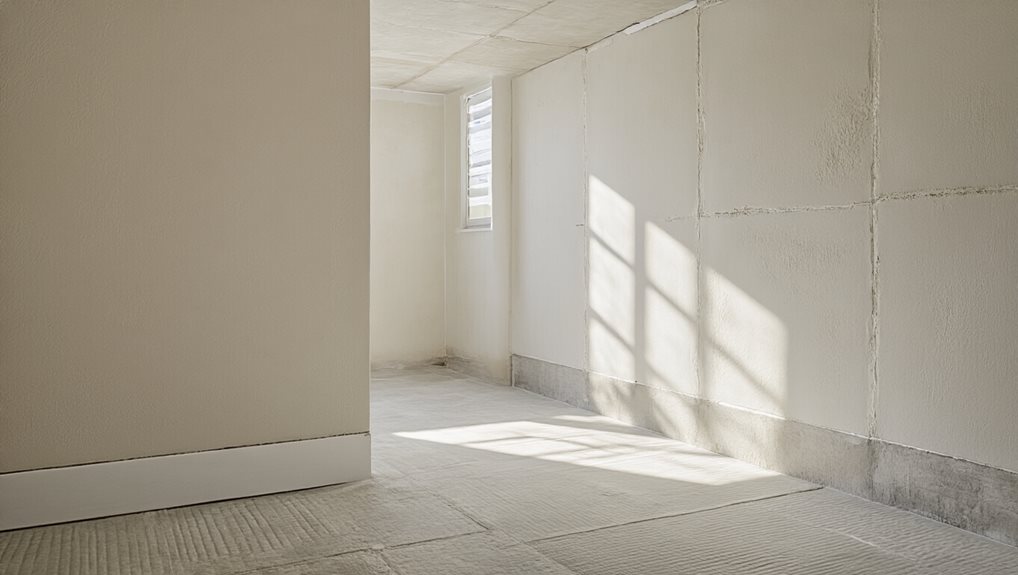
You’ll want to choose inorganic wall materials like cement board or fiberglass‑faced drywall, because they resist moisture and don’t feed mold spores, while also selecting moisture‑resistant flooring such as porcelain tile, vinyl planks, or stone with hydrostatic ports that allow water to escape.
These options create a barrier that prevents dampness from accumulating in walls and floors, reducing the conditions for mold to establish.
Inorganic Wall Materials
Resilience against moisture begins with choosing inorganic wall materials that won’t feed mold spores. PVC panels offer waterproof, anti‑bacterial surfaces and interlocking installation, while cement board, scoring perfect ASTM mold tests, stays dimensionally stable under humidity.
Fiberglass‑faced drywall replaces paper with moisture‑resistive mats and earns GREENGUARD Gold certification.
Mold‑resistant gypsum board, known as green or purple board, adds cost‑effective protection for damp basements, uniting durability and community confidence.
Moisture‑Resistant Flooring Options
Which flooring material will keep moisture at bay while still looking good? Choose ceramic tile for its impermeable surface, level‑subfloor installation, and flood‑proof durability; or opt for luxury vinyl plank with a waterproof core, click‑lock edges, and stylish patterns. Rubber interlocking tiles resist mold, while waterproof laminate mimics wood without seeping. Stone and epoxy, hydrostatic ports, eliminating pressure and enhancing air quality.
Conduct Routine Inspections for Cracks, Stains & Early Mold
How do you spot the first signs of basement mold before it spreads? Walk the perimeter weekly, looking for cracks, discolored patches, or peeling paint, and sniff for musty odors that hint at hidden growth. Use a digital moisture meter or UV light to confirm damp spots, and document any water‑damage indicators so you can address them promptly and keep the community of healthy homes intact. Regular moisture checks help you catch rising humidity before mold takes hold humidity control.
Follow a Seasonal Checklist to Keep Your Basement Mold‑Free
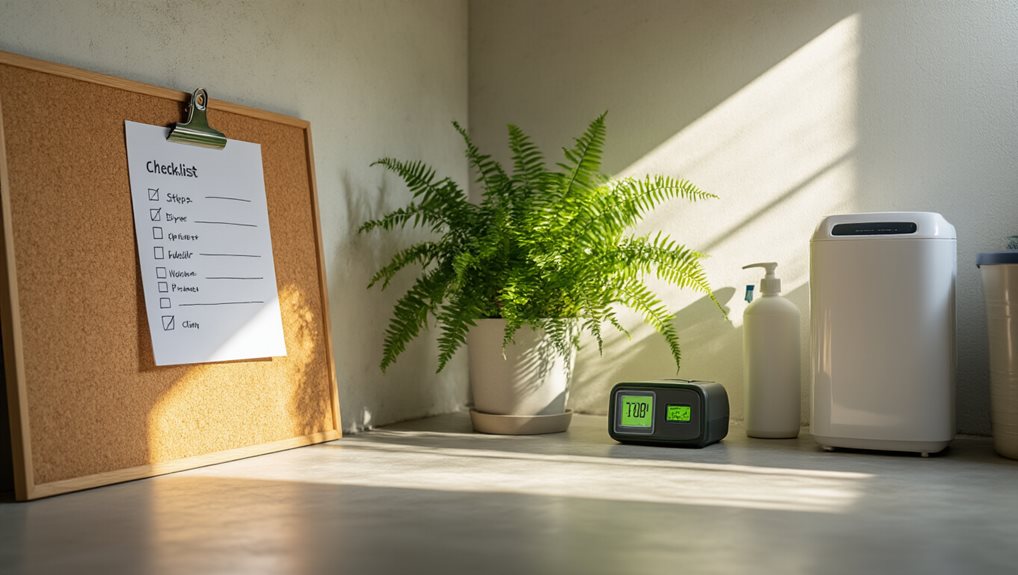
When you follow a seasonal checklist, you’ll catch moisture problems before they turn into mold, keeping your basement healthy year‑round.
In spring, inspect the sump pump, clean gutters, and verify dehumidifier settings; summer requires humidity monitoring, condensation checks, and exhaust fan tests.
Fall focuses on gutter cleaning and resealing cracks, while winter demands ice‑free discharge lines, pipe insulation, and consistent heating.
This routine keeps your space dry, safe, and welcoming.
Final Note
By keeping humidity under 50 %, using a properly placed dehumidifier, and ensuring steady airflow with fans, you’ll curb mold growth before it starts. Natural sprays like vinegar, tea‑tree oil, and baking soda tackle spores without harsh chemicals, while sealing cracks, installing drains, and choosing mold‑resistant finishes protect the foundation. Regular inspections and a seasonal maintenance checklist let you spot problems early, so your basement stays dry, healthy, and mold‑free.

Nathan McPhail is a garden and home DIY expert who writes practical, easy-to-follow advice for homeowners and gardeners. Through Yardique, he shares hands-on tips covering gardening, lawn care, landscaping, home improvement, repairs, tools, and outdoor living. His focus is on helping readers solve everyday household and yard problems with straightforward guidance, useful techniques, and practical solutions.