
First identify your grass type and soil health by checking blade width, texture, and color, then verify with ligule and seedhead traits; adjust mowing to about three inches, never cutting more than a third of the blade, and keep the mower sharp and level. Apply a balanced, water‑smart fertilizer to promote root growth, then aerate and dethatch to relieve compaction and improve moisture penetration. Overseed bare spots with an elite blend, press the seed into the soil, and water daily until establishment, followed by deep watering and a low‑dose herbicide schedule for weed control. Continue for the next steps for fuller details.
TLDR
- Identify grass type by blade width, texture, and growth habit to choose appropriate cultural practices.
- Mow at ~3 inches, never removing more than one‑third of the blade, and keep the mower blade sharp and level.
- Apply a balanced, slow‑release fertilizer aligned with water‑wise guidelines to promote strong root development.
- Aerate and dethatch to relieve compaction, improve drainage, and create a receptive seedbed for overseeding.
- Overseed thin areas with an elite blend, keep soil consistently moist during establishment, then water deeply and raise mowing height.
Diagnose Your Lawn: Assess Grass Type and Soil Health

Where, you start when trying to thicken thin grass? First, identify blade width and texture: fine blades point to fescues or bluegrass, medium to ryegrass or zoysia, coarse to St. Augustine or centipede.
Observe growth habit—clumping versus spreading—and color, dark green shiny suggests ryegrass or bluegrass. Then check soil: sandy acidic favors centipede, well‑drained supports bermudagrass. Test ligules and seedheads for confirmation. Security service may block access if suspicious activity is detected.
Mow Smartly to Thicken Your Lawn
How often you mow can make a huge difference in lawn density, because each cut stimulates root expansion and encourages tillering that fills gaps in thin turf. Mow at about three inches, never removing more than a third of the blade, and keep the mower sharp and level; weekly or even bi‑daily cuts promote denser turf, suppress weeds, and maintain photosynthesis, while alternating direction prevents ruts and supports a thriving, cohesive lawn.
Feed Fast and Slow: Balanced Fertilization for Rapid Growth

A balanced fertilization approach aligns with water-smart lawn care principles by promoting robust root development while using nutrients efficiently. water-wise landscaping
Aerate and Dethatch to Open Soil for Roots
When you aerate and dethatch, you’re fundamentally giving your lawn’s root system a breathing space, allowing water, oxygen, and nutrients to reach the soil more efficiently. Core aeration pulls plugs to loosen compaction, while mechanical or liquid methods create pores that boost infiltration, triple water uptake, and cut runoff.
Dethatching breaks thatch barriers, improves drainage, and invites microbes, fostering deeper roots, stronger turf, and a resilient, united lawn.
Overseed Gaps for Immediate Coverage and Density

First, you’ll want to clear any debris and loosen the top inch of soil so the seed can make solid contact. Then, spread the chosen elite blend directly into each bare patch, pressing it lightly to ensure good seed‑soil contact and consistent depth. This targeted overseeding fills gaps quickly, boosts blade density, and sets the stage for a lush, resilient lawn.
Prepare Soil Surface
If you clear away shrubs, stumps, existing grass, and weeds, you create a clean planting surface that lets new seed make direct contact with the soil, which is essential for rapid germination and uniform coverage.
Then loosen the top four inches, incorporate compost and matching topsoil, level low spots with a rake, firm the surface with a light roller, and let it rest briefly before seeding.
Seed Into Bare Patches
Some bare patches appear after foot traffic, drought, or disease weaken the grass, leaving exposed soil that quickly invites weeds or moss. Remove dead thatch, loosen compacted soil with a fork or aerator, then broadcast seed in two opposite passes for even coverage. Lightly rake, add a thin top‑dressing, water daily, and limit activity until the new grass establishes.
Water Deeply and Boost Soil With Humic Acid & Microbes
Ever wondered why a lawn that receives a deep, infrequent soak looks greener and feels sturdier than one watered daily?
You’ll notice that watering 6‑8 inches down forces roots to grow deeper, while humic acid and beneficial microbes improve soil structure, increase water‑holding capacity, and stimulate nutrient uptake.
Together they create a resilient, dense turf that thrives with just one or two thorough irrigations each week. soil structure
Control Weeds and Thatch for Ongoing Lawn Maintenance
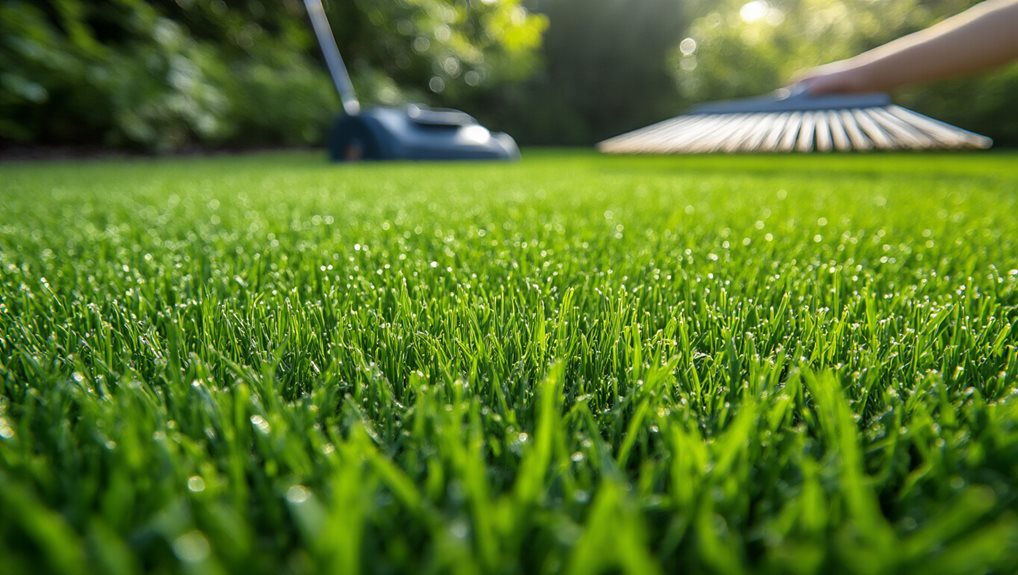
A thick, well‑watered lawn sets the stage for effective weed and thatch management, because dense turf naturally crowds out unwanted plants and limits organic buildup.
Raise your mowing height, water deeply on a schedule, and apply post‑emergence herbicide at half rate after three to four mowings, repeating in a week if needed.
Use precise, liquid formulations in fall for broadleaf weeds, and integrate drones or GPS‑guided tools to target applications, reducing costs while keeping the community’s green space thriving.
Final Note
By diagnosing your lawn, mowing correctly, fertilizing wisely, aerating, overseeding, watering deeply, and managing weeds, you’ll create the conditions for rapid grass thickening. Consistent attention to soil health and proper timing ensures sturdy root development and dense foliage, turning a thin, patchy yard into a lush, resilient lawn. Follow these steps each season, and the results will be both visible and lasting.

Nathan McPhail is a garden and home DIY expert who writes practical, easy-to-follow advice for homeowners and gardeners. Through Yardique, he shares hands-on tips covering gardening, lawn care, landscaping, home improvement, repairs, tools, and outdoor living. His focus is on helping readers solve everyday household and yard problems with straightforward guidance, useful techniques, and practical solutions.