Seal any cracks and gaps, then install a continuous vapor barrier on walls and floors, overlapping seams by six inches and taping them securely. Keep indoor humidity between 30‑50 % using a reliable hygrometer and a properly sized dehumidifier, placing the unit centrally and elevating it for airflow. Ventilate when outdoor air is drier, using exhaust fans or an HRV system with humidity triggers to avoid over‑cooling, and ensure exterior drainage directs water away from the foundation. These steps will stop most condensation, and further details await if you keep going.
TLDR
- Insulate walls with rigid foam or spray‑foam to keep interior surfaces above dew point.
- Seal all cracks, gaps, and vapor‑barrier seams with epoxy, caulk, or butyl tape.
- Improve ventilation and run exhaust fans or an HRV when outdoor humidity is lower than indoor.
- Keep indoor relative humidity between 30‑50 % using a hygrometer and a properly sized dehumidifier.
- Ensure proper exterior drainage (graded soil, gutters, French drain, sump pump) to prevent water infiltration.
What Causes Condensation on Basement Walls?
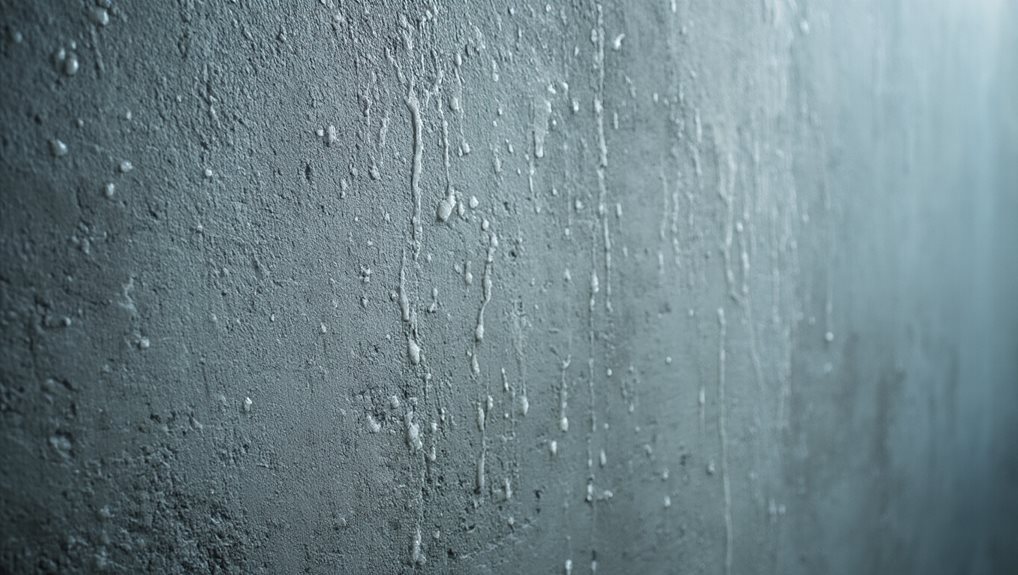
Warm, humid air meets the cool, uninsulated concrete that stays cold year‑round, so water vapor condenses into droplets.
High humidity from outdoor infiltration, laundry, or cooking adds moisture, while poor ventilation traps that damp air against the walls.
Cracks, gaps, and unfinished surfaces let moisture seep in, amplifying the problem and creating visible beading.
Mold growth can develop quickly on damp surfaces, indicating a moisture problem that needs immediate attention.
How to Control Basement Humidity to Prevent Condensation?
You should keep an eye on your basement’s humidity with a reliable hygrometer, because staying within the 30‑50 % range is the first line of defense against condensation.
Position your dehumidifier in the most moisture‑prone area, leaving at least a foot of clearance for airflow, and let its auto‑shutoff and continuous drainage maintain steady conditions.
Finally, schedule ventilation when outdoor air is drier—opening windows for ten to fifteen minutes daily or running a fan—so you replace humid indoor air without over‑cooling the space.
Monitor Indoor Humidity
How can you keep basement walls free of condensation? Track indoor humidity daily with a digital hygrometer placed three to five feet from walls, off the floor, and away from vents or dehumidifiers. Use multiple sensors in corners to spot variations, log readings at consistent times, and compare trends after rain. Smart sensors can alert you when RH exceeds 50 %, prompting timely action.
Optimize Dehumidifier Placement
Tracking indoor humidity gives you the data you need, but keeping that moisture under control hinges on where you put your dehumidifier. Place the unit centrally, at least one foot from walls and obstructions, and elevate it four to six inches for optimal airflow. Keep space around intake and exhaust, avoid heat sources, and set the humidistat to 45‑50 % to maintain balanced, dry conditions throughout your basement.
Adjust Ventilation Timing
When outdoor humidity drops below indoor levels, timing your ventilation to bring in that dry air can dramatically cut basement moisture and keep condensation at bay.
Use timers or humidity sensors to activate exhaust fans only during low‑humidity periods, pair them with HVAC make‑up air, and avoid running them when outside air is damp.
This disciplined schedule maintains humidity under 60%, preventing mold and fostering a comfortable, shared space.
Which Dehumidifier Models Keep Basement Humidity Under 60%?
Which dehumidifier models reliably keep basement humidity below 60 %? You’ll feel confident choosing Midea MAD50PS1WS for large spaces, thanks to its 50‑pint capacity, 31 PPD extraction, and pump‑drain system; the MAD35S1QWT serves medium basements with 6 PPD efficiency.
Frigidaire and Honeywell 50‑pint units excel in quick, quiet dehumidification, while Waykar PD160B offers a budget‑friendly, low‑noise option for modest areas.
How to Ventilate a Damp Basement Without Losing Heat?
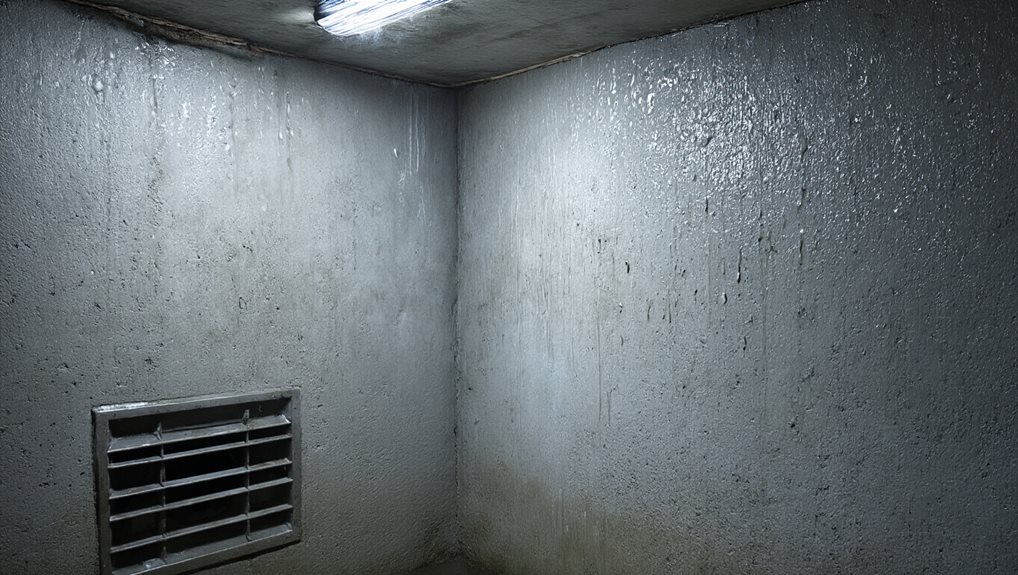
You can keep a basement’s air fresh while preserving heat by installing a heat‑recovery ventilation system that captures warmth from outgoing air and transfers it to the incoming stream, and you can fine‑tune moisture removal by setting your exhaust fan to run only when humidity spikes, preventing unnecessary heat loss during dryer periods.
This approach lets you balance continuous airflow with energy efficiency, especially when you pair a modest‑size HRV with programmable fan controls that respond to real‑time humidity readings.
Heat‑Recovery Ventilation Systems
A heat‑recovery ventilation (HRV) system moves stale indoor air out of a damp basement while pulling fresh outdoor air in, and it captures most of the heat from the exhaust stream to warm the incoming air, so you keep the space dry without sacrificing energy efficiency. It exchanges air continuously, recovers up to 90 % heat, reduces humidity, prevents mold, and cuts heating costs, while operating quietly and integrating seamlessly into sealed homes.
Adjustable Exhaust Fan Timing
What’s the best way to keep a damp basement dry without sacrificing heat? Use programmable timers like the Marktime 42E or Laybus 240 CFM to schedule short bursts of exhaust, pairing them with humidity sensors that trigger only when RH exceeds your set point, say 20 %. Choose fans with temperature controls—ALORAIR’s freeze protection stops operation below 37 °F—so you retain warmth while vents run just long enough to prevent condensation.
Best Exhaust Fans and Vents for Basement Airflow
How can you choose the right exhaust fan and vent to keep basement air moving efficiently? Opt for the Broan‑Nutone 506 (430 CFM) or the 10‑inch HG Power (647 CFM) for powerful circulation, then consider AC Infinity’s remote‑controlled AITN T8 for smart moisture management. Energy‑Star rated options like Tjernlund V2D offer dual fans and automatic humidity moderation, while ceiling‑mount or foundation‑fitted designs ensure seamless installation and quiet, Energy‑Star‑rated performance.
How to Insulate Walls and Pipes to Reduce Basement Condensation
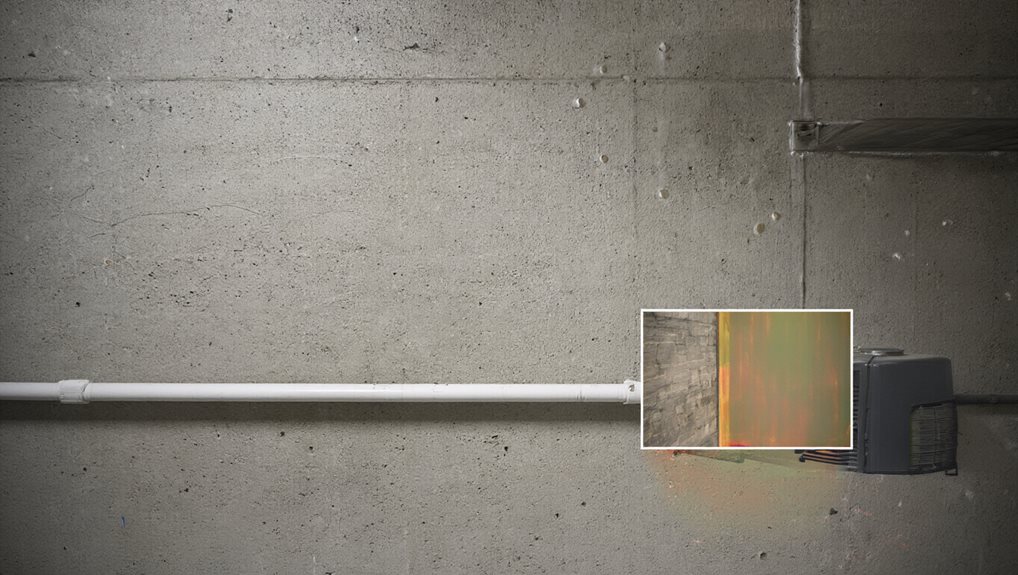
Ever seen how moisture management hinges on keeping a dry, balanced microclimate near the wall by combining rigid foam insulation with proper vapor barriers no-dig principles?
What Sealants and Waterproof Paints Actually Stop Moisture From Getting In?
After insulating walls and pipes, the next step is to seal any remaining pathways where water can infiltrate. Liquid rubber sealants give long‑lasting, VOC‑free protection and adhere well, while silicone‑based options stay flexible and resist UV and temperature shifts. Hydraulic cement stops leaks instantly, and penetrating sealers create deep crystalline barriers. Polyurethane or epoxy sealants add durable, pressure‑resistant layers for a truly moisture‑tight basement.
How to Install a Vapor Barrier on Basement Floors and Walls
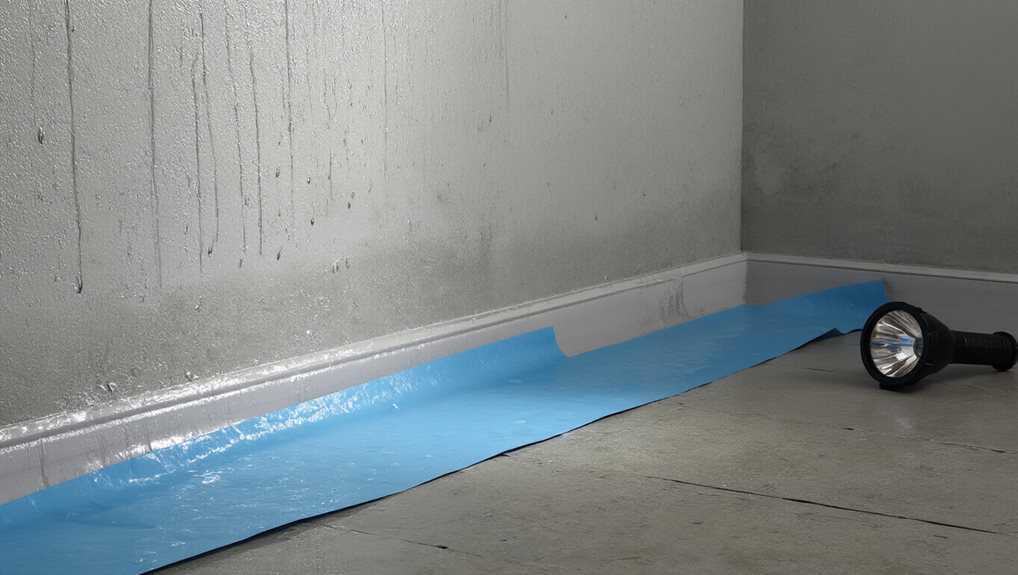
First, pick a suitable vapor‑barrier material—polyethylene sheeting, foil‑faced insulation, or closed‑cell spray foam—based on whether you’re covering floors, walls, or both.
Next, clean and dry the concrete or studs thoroughly, then unroll the sheet, overlapping every seam by at least six inches and sealing it with the recommended tape or sealant.
Finally, make sure all edges, penetrations, and corners are taped or caulked tightly so the barrier stays airtight and moisture can’t slip behind it.
Select Choose Proper Material
Choosing the right material for a basement vapor barrier is essential because each option—polyethylene sheets, polyamide sheeting, rigid foam insulation, closed‑cell spray foam, and fluid‑applied membranes—offers distinct performance characteristics, installation requirements, and durability profiles.
Opt for 10‑mil polyethylene for cost‑effective coverage, polyamide when breathability matters, rigid foam for Class 2 protection, high‑density spray foam for superior R‑value, or fluid‑applied membranes for seamless coverage, always sealing seams to ensure lasting moisture control.
Prepare Surface Thoroughly
How can you guarantee a vapor barrier adheres properly and lasts? First, inspect walls and floors for leaks, cracks, or water damage, then clean away dust and debris, ensuring every surface is completely dry. Seal all penetrations with caulk or foam, fill cracks, and remove obstructions. Measure, cut, and unroll the barrier, leaving excess for overlap, and secure it with tape or staples at 60‑70°F.
Seal and Overlap Edges
After you’ve cleaned and sealed the wall surface, the next step is to make sure every edge of the vapor barrier is tightly sealed and properly overlapped so moisture can’t slip behind it.
Overlap seams at least six inches, tape them with vapor‑barrier or double‑sided butyl tape, and run acoustic sealant or caulk along floor‑to‑wall joints, corners, and penetrations.
Use a staple gun or furring strips to keep the membrane taut, ensuring a continuous, airtight barrier.
How to Manage Exterior Water to Keep Basement Walls Dry
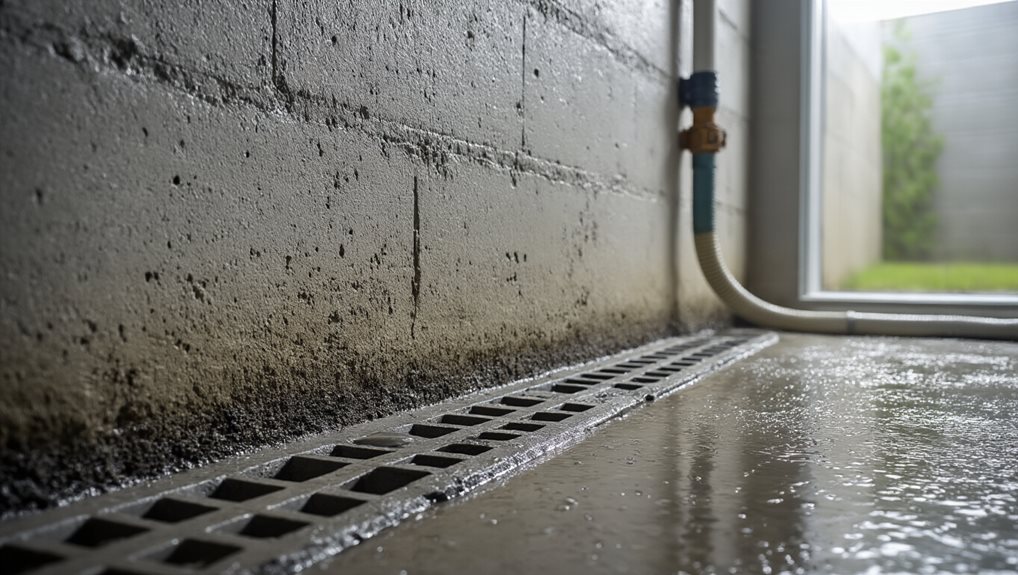
Ever wondered why basement walls stay damp even when it isn’t raining? You’ll keep moisture out by grading soil at least six inches per ten feet away from the foundation, ensuring gutters and downspouts discharge water four to six feet from the base, sealing cracks and joints with epoxy or polyurethane, and, when needed, installing an exterior waterproof membrane or proper foundation drain to direct water outward.
When to Use a Sump Pump or French Drain for Chronic Basement Moisture?
When chronic basement moisture persists despite proper exterior grading and waterproofing, you’ll need to decide whether a French drain, a sump pump, or a combined system is the most effective solution. Choose a French drain if groundwater pressure, soggy yards, or low‑water‑table fluctuations dominate, since it passively redirects water. Opt for a sump pump when storms bring rapid interior flooding, high water tables, or large water volumes, ensuring quick removal and flood protection. A combined system works best in high‑risk zones, balancing passive drainage with active pumping.
Troubleshooting Persistent Basement Condensation After Fixes
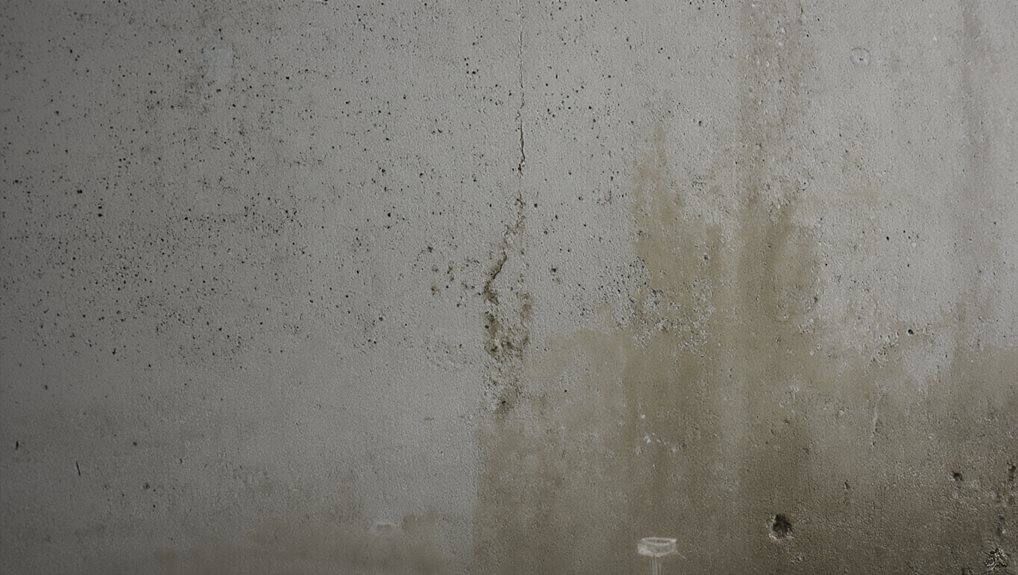
Why does condensation keep appearing even after you’ve sealed cracks, installed a French drain, and added a sump pump? Check insulation on walls and pipes; add rigid foam board or pipe sleeves. Verify ventilation—run exhaust fans, clear dryer vents, and improve air circulation. Control interior moisture from laundry, cooking, and showers. Use a dehumidifier as part of a comprehensive strategy, ensuring all three moisture pathways are addressed. Efficient drainage and proper airflow are essential components of preventing condensation in the long term.
Final Note
By tackling the root causes—excess humidity, inadequate ventilation, and water intrusion—you can keep basement walls free of condensation and protect your home’s structure. Implement dehumidifiers, proper vapor barriers, and effective drainage, then monitor humidity levels to stay below 60 %. Regular maintenance and timely repairs will prevent recurring moisture, ensuring a dry, healthy basement without unnecessary expense or effort.

Nathan McPhail is a garden and home DIY expert who writes practical, easy-to-follow advice for homeowners and gardeners. Through Yardique, he shares hands-on tips covering gardening, lawn care, landscaping, home improvement, repairs, tools, and outdoor living. His focus is on helping readers solve everyday household and yard problems with straightforward guidance, useful techniques, and practical solutions.