Eliminate high‑energy foods that attract chipmunks—remove bird‑feeder seeds, fallen fruit, and pet kibble, and keep lawn mulch thin to reduce hiding spots. Install a ¼‑inch hardware cloth buried six inches deep around beds, then cover it with mulch and add L‑shaped footers to block tunnels, sealing any foundation gaps with welded wire and caulk. Plant pungent, bitter herbs such as marigold, lavender, and allium around perimeters to create a scent barrier that deters digging. Locate active burrows, fill them with tamped potting soil, and reinforce with mesh or stones; monitor weekly and reapply repellents seasonally for lasting protection. Continue exploring for deeper strategies.
TLDR
- Remove or secure high‑energy food sources (seed feeders, fallen fruit, pet food) that attract chipmunks and trigger digging.
- Install 1/4‑inch hardware cloth buried six inches deep around garden beds, covering it with mulch for a hidden physical barrier.
- Plant repellent herbs and flowers—marigolds, alliums, lavender, daffodils, geraniums—along edges to create a scented, bitter barrier.
- Identify active burrows by loosely filling them; after 1‑2 days, fill confirmed holes with tamped potting soil and seal with mesh or stones.
- Conduct weekly inspections, repair any new gaps, and reapply seasonal repellents to maintain long‑term chipmunk deterrence.
Find Chipmunk Food Sources That Trigger Digging
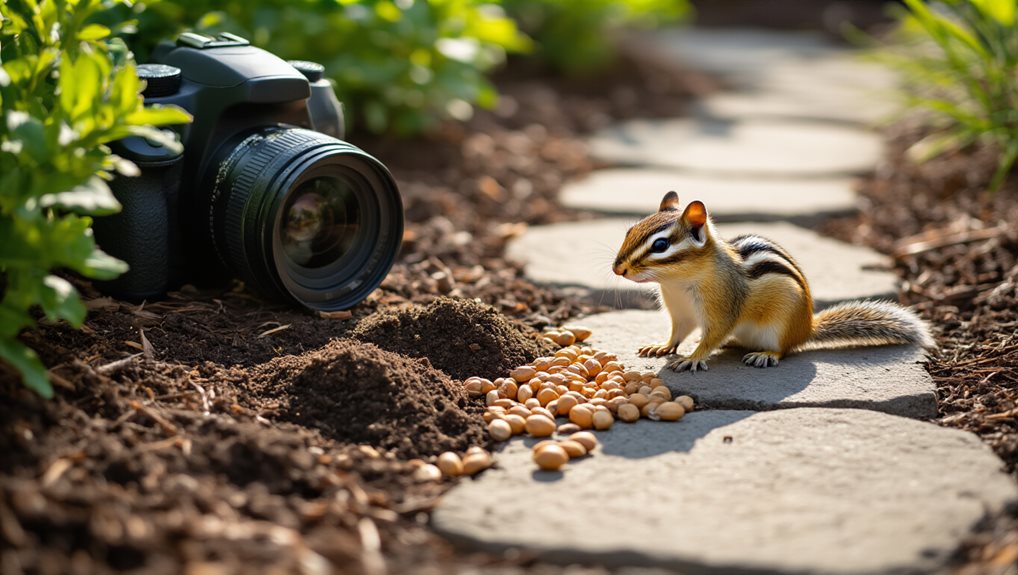
Chipmunk food sources—especially the high‑energy seeds, nuts, and insects they stash—are the primary drivers of yard digging.
You’ll notice that bird feeders, pet food, and fallen fruit provide easy calories, while acorns, sunflower seeds, and earthworms entice them to cache underground.
Recognizing these attractors lets you adjust planting, cover soil, and limit access, helping your garden stay tidy and welcoming.
They are primarily larder hoarders and store seeds that cannot establish seedlings, influencing their digging behavior.
To prevent future digging, consider using protective barriers around vulnerable planting beds and choosing depletable ground covers that discourage digging. larder hoarders
Build Physical Barriers to Stop Chipmunk Digging
How can you keep chipmunks from turning your garden into a tunnel network? Install 1/4‑inch hardware cloth around beds, burying it six inches deep and securing it tightly, then cover with mulch for stability. Add L‑shaped footers one foot deep, extending a horizontal leg at a 90‑degree angle, staple them, and overlay with gravel or stone borders. Seal all foundation gaps with welded wire and caulk.
Plant Chipmunk‑Repellent Herbs and Flowers

After installing sturdy barriers, the next line of defense is to fill the surrounding soil with plants that naturally repel chipmunks. Plant marigolds, alliums, daffodils, lavender, and geraniums around garden edges and chipmunk hotspots; their pungent scents and bitter aromas overwhelm the rodents’ senses, creating a fragrant, colorful barrier that discourages digging while enhancing your yard’s shared beauty. Square Foot Gardening and companion planting principles also support organizing these plantings in a grid to maximize coverage and ease of maintenance.
Seal Existing Burrows and Prevent Re‑infestation
First, identify active holes by loosely filling them with soil, straw, or leaves and checking for debris removal after one to two days; then fill confirmed burrows with potting soil, tamp firmly, and reinforce with mesh or stones. Scatter mint‑scented repellents, clear nearby cover, and trim connecting plants to prevent re‑infestation. To reduce escape routes and protect your yard, seal gaps around foundations, porches, and any entry points where small mammals could gain access Active burrow identification.
Maintain a Chipmunk‑Proof Yard With Ongoing Monitoring
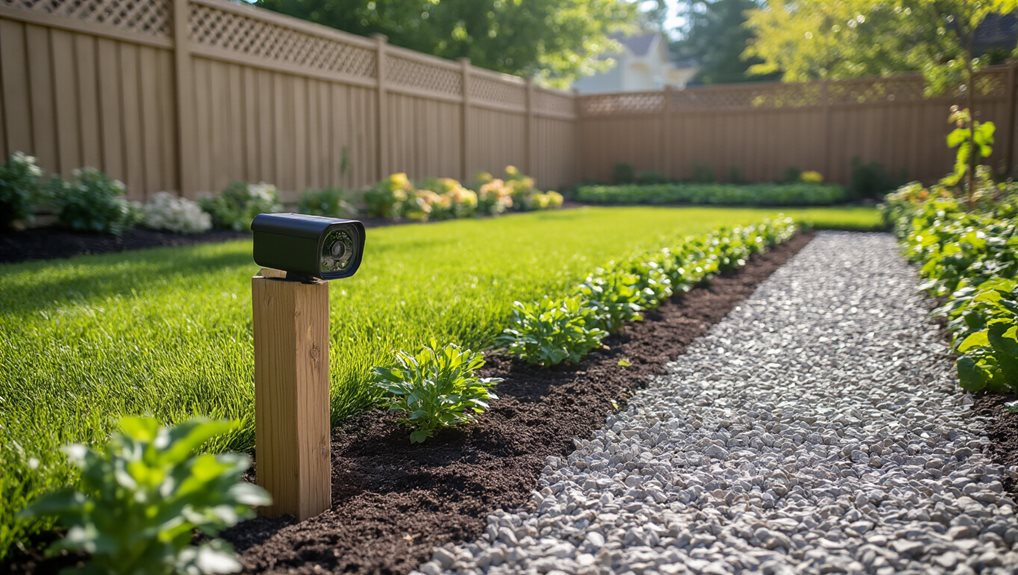
If you keep a regular schedule of yard maintenance and inspections, you’ll catch chipmunk activity before it becomes a problem. Conduct weekly clean-ups, monthly entry‑point checks, and seasonal repellent reapplications, while trimming vegetation and maintaining short grass. Inspect row covers, barriers, and soil edges each week, repairing gaps promptly, and adjust habitat modifications quarterly to sustain a chipmunk‑proof yard. Regular monitoring helps you spot early signs of activity, and ensuring water availability for wildlife can be considered in overall outdoor hygiene and habitat management. Water
Final Note
By identifying food sources, installing barriers, planting deterrent herbs, and sealing existing burrows, you can effectively curb chipmunk digging. Regular monitoring and prompt repairs prevent re‑infestation, while maintaining a tidy, low‑attractant landscape discourages new activity. Consistently applying these strategies ensures a chipmunk‑free yard without resorting to harmful measures, preserving both garden health and wildlife balance.

Nathan McPhail is a garden and home DIY expert who writes practical, easy-to-follow advice for homeowners and gardeners. Through Yardique, he shares hands-on tips covering gardening, lawn care, landscaping, home improvement, repairs, tools, and outdoor living. His focus is on helping readers solve everyday household and yard problems with straightforward guidance, useful techniques, and practical solutions.