
Water your lawn deeply 2‑3 times a week, aiming for about an inch per session using a soak‑and‑cycle method, preferably in the early morning between 4 a.m. and 10 a.m. to limit evaporation and disease risk. When temperatures exceed 95 °F, add a fourth or fifth session and extend each watering by five to ten minutes to keep the root zone moist. Apply a low‑nitrogen, high‑potassium summer blend fertilizer in the morning, then water gently to activate it. Aerate first, overseed with drought‑tolerant seed, and lightly water frequently before tapering to deeper soakages; dethatch, top‑dress with compost, and amend the soil to improve moisture retention. Keep the grass slightly higher than usual, leave clippings, and maintain consistent moisture for long‑term health, and you’ll discover additional strategies ahead.
TLDR
- Water deeply 2‑3 times weekly in the early morning (4‑10 a.m.) using a soak‑and‑cycle method to deliver about 1 inch per session.
- Increase watering frequency and duration by ~50 % when temperatures exceed 95 °F, adding extra early‑morning sessions to prevent stress.
- Apply a low‑nitrogen, high‑potassium summer blend fertilizer in the early morning, then water gently to activate nutrients.
- Aerate the lawn first, then overseed with drought‑tolerant warm‑season seed, keeping the soil moist with light, frequent watering before tapering to deep soakings.
- Monitor soil moisture with cans or footprints, avoid runoff, and adjust per zone to ensure even coverage and prevent shallow roots.
Lawn Recovery: Deep‑Watering Schedule 2‑3 Times a Week
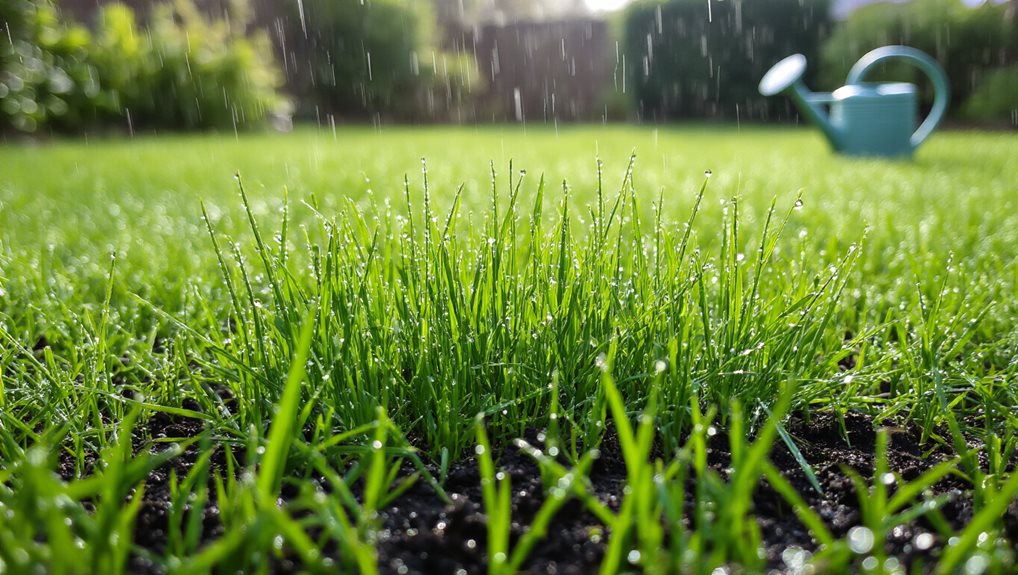
Typically, you’ll water your lawn two to three times a week during the recovery phase, delivering a total of about one inch of water per session using the soak‑and‑cycle method. This schedule ensures deep penetration, encouraging roots to reach six to eight inches, while early‑morning timing reduces evaporation and disease risk. Avoid overwatering to prevent shallow roots and weed infestation. Measure with cans, watch for wilting or footprints, and adjust per zone for consistent, sustainable growth. In addition, spreading the water more evenly across the lawn helps prevent dry patches and promotes uniform recovery grass root depth development.
Lawn Recovery: Boost Watering When Temperatures Exceed 95°F
When the thermometer climbs above 95°F, you should shift your watering routine to the early morning, between 5 a.m. and 9 a.m., to take advantage of cooler air and reduced evaporation.
Increase the number of watering sessions by roughly 50 %—if you were watering three times a week, aim for four to five deep soakings, each lasting five to ten minutes longer than usual.
This adjustment ensures the root zone receives enough moisture to stay hydrated, limiting stress and preventing the grass from turning brittle.
Early Morning Watering
Ever wondered why watering your lawn before the sun climbs high can make the difference between a thriving carpet and a brown patch?
Early‑morning irrigation, between 4 a.m. and 10 a.m., lets cool air and low wind reduce evaporation, allowing moisture to soak deeply before 95°F heat spikes.
Set timers, test soil, and avoid runoff for optimal recovery.
Increase Frequency by 50%
Often, once temperatures climb above 95°F, you’ll need to enhance your watering schedule by roughly 50% to keep the grass from drying out. Increase sessions to every other day, delivering about 1/3 inch per watering, and extend rotor zones to 30‑45 minutes, spray to 10‑15 minutes, drip to 45 minutes. Measure with a tuna can to ensure ½‑¾ inch per session, and adjust for runoff.
Lawn Recovery: Apply a Summer‑Blend Fertilizer for Stress‑Tolerant Roots
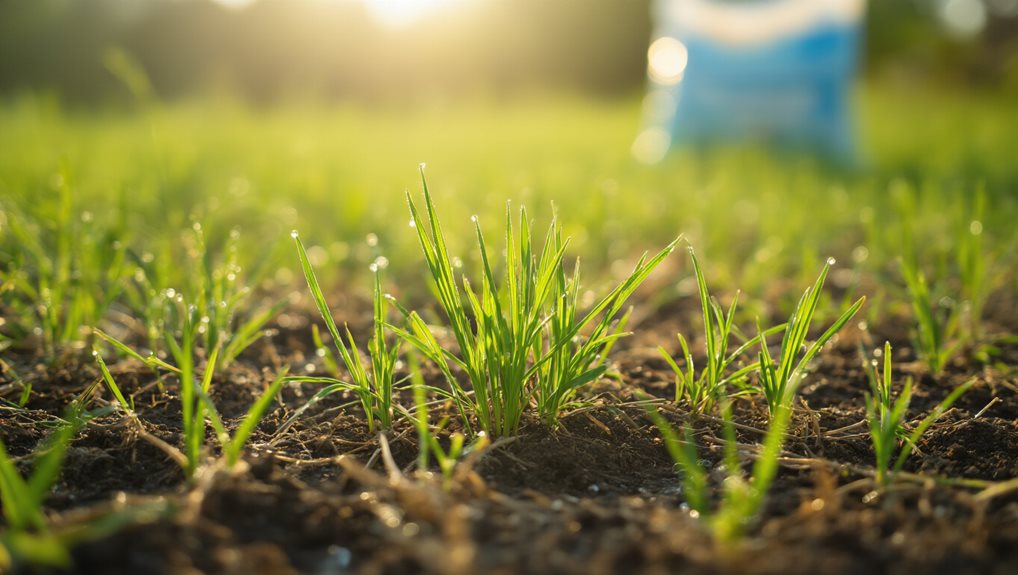
You’ll want to choose a low‑nitrogen, high‑potassium blend so the grass gets the stress‑tolerant roots it needs without risking summer burn. Additionally, consider applying a product that provides long‑lasting perimeter protection for your surrounding landscape to help reduce stress from pests and competition perimeter protection. Apply the fertilizer in the early morning when temperatures are cooler, then water in gently to activate the granules and help the nutrients penetrate the soil. Repeating this every four to six weeks will keep the turf resilient through heat and drought.
Select Low‑Nitrogen Blend
How can you revive a grass that’s survived a long drought without risking further stress? Choose a low‑nitrogen blend that feeds roots and crowns, limiting top growth that could burn.
Opt for organic slow‑release formulas like Milorganite or a 10‑10‑10 mix, applying after deep watering in moderate fall temperatures. This strengthens root systems, supports soil microbes, and prepares the lawn for resilient recovery.
Apply Early‑Morning Watering
After feeding the lawn a low‑nitrogen blend to rebuild root mass, the next step is to water it at the ideal time of day.
Early‑morning watering lets the soil absorb the summer‑blend fertilizer’s potassium, humic acid, and surfactants before heat spikes, reducing evaporation and encouraging deep root growth.
Water thoroughly after broadcast, then let the grass settle for ideal recovery.
Lawn Recovery: Aerate Then Overseed With Drought‑Tolerant Grass
Ever wondered why your lawn stays brown despite a recent rain? Aerate first: a core aerator pulls 2‑3‑inch plugs, loosening compacted topsoil, improving oxygen, water, and nutrient flow, then drop the plugs back.
Mow short, rake debris, and overseed with drought‑tolerant warm‑season seed mixed with fertilizer, spreading in criss‑cross patterns. Water lightly, frequently, then taper for deep roots. When planning, consider how moisture management in environments mirrors how indoor humidity affects materials, aiding better long‑term lawn stability and growth seasonal moisture awareness.
Lawn Recovery: Dethatch, Top‑Dress, and Amend Soil for Moisture Retention
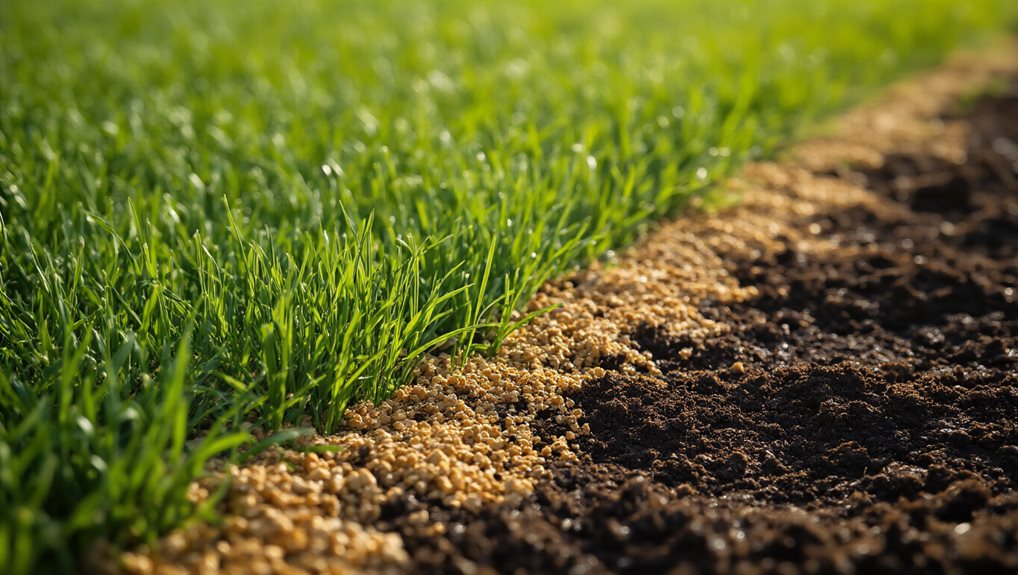
Why should you dethatch before top‑dressing and amending the soil? Removing a thick thatch layer opens pathways for air, water, and nutrients, allowing roots to breathe and absorb moisture, which reduces drought stress. After dethatching, spread a thin top‑dress of compost or slow‑release fertilizer, then amend with organic matter to improve water retention. Water deeply, avoid mowing for a week, and let the soil recover, fostering a resilient, united lawn. Air and water movement supports better root uptake and soil health, aligning with best practice guidelines for soil and lawn management.
Lawn Recovery: Mow High, Leave Clippings, and Keep Soil Moist for Long‑Term Health
A healthy lawn after a drought depends on three simple actions: mowing at a higher height, leaving the clippings on the grass, and keeping the soil consistently moist. Mow at 3‑4 inches for tall fescue or 2.5‑3.5 inches for ryegrass, removing no more than one‑third of blade, then let clippings decompose as natural mulch.
Water lightly, targeting 50 % ET for cool‑season grasses, to maintain steady moisture, encourage deep roots, and foster long‑term vigor.
Incorporate a gentle, evenly distributed watering schedule to prevent rapid soil drying between sessions and support sustained recovery. Underwatering signs
Final Note
By following a consistent deep‑watering schedule, boosting irrigation during extreme heat, and applying a summer‑blend fertilizer, you’ll strengthen root systems and improve drought resilience. Aerating and overseeding with tolerant varieties, then dethatching and top‑dressing with moisture‑retentive soil amendments, further restores lawn health. Keep mowing at a higher setting, leave clippings to recycle nutrients, and maintain steady soil moisture to ensure long‑term vigor and a lush, recoverable lawn.

Nathan McPhail is a garden and home DIY expert who writes practical, easy-to-follow advice for homeowners and gardeners. Through Yardique, he shares hands-on tips covering gardening, lawn care, landscaping, home improvement, repairs, tools, and outdoor living. His focus is on helping readers solve everyday household and yard problems with straightforward guidance, useful techniques, and practical solutions.