
Gather a bucket of warm water, a soft rag or sponge, a garden hose, a soft‑bristle brush, and clean towels; inspect each cushion for stains, damage, and intact nano‑coating before you start. Choose a cleaning solution based on fabric: mild detergent for delicate textiles, a borax‑dish‑soap mix for heavy mildew, or a pressure‑washer‑compatible cleaner for deep grime. Spot‑treat stains with a 1:1 vinegar‑water spray, let it soak 10‑15 minutes, then dab gently; for tougher grime use a soap‑bleach mix (1 Tbsp bleach, 1 tsp dish soap, 1 qt water), let it sit 15 minutes, scrub lightly, and rinse with low‑pressure hose. Press out excess water with towels, flip cushions for even drying, and air‑dry or sun‑dry to prevent mildew; if you keep going, you’ll discover more detailed tips.
TLDR
- Gather supplies (bucket, mild detergent, white vinegar, soft brush, hose, towels) and inspect cushions for stains, damage, and intact nano‑coating.
- Choose a cleaning solution based on fabric: mild detergent for delicate textiles; borax‑dish‑soap for heavy mildew; add appropriate cleaner to pressure washer if used.
- Spot‑treat stains with equal parts white vinegar and water, let soak 10‑15 minutes, dab with a lint‑free cloth, then rinse low‑pressure hose from top down.
- For tougher grime, apply a soap‑bleach mix (1 Tbsp bleach, 1 tsp dish soap, 1 qt water), let sit 15 minutes, scrub gently, rinse, and air‑dry in shade.
- After rinsing, blot excess water, sun‑dry cushions vertically, flip regularly, and sprinkle baking soda for odors; call a professional for severe stains or fabric damage.
Gather Supplies and Prepare the Outdoor Cushion
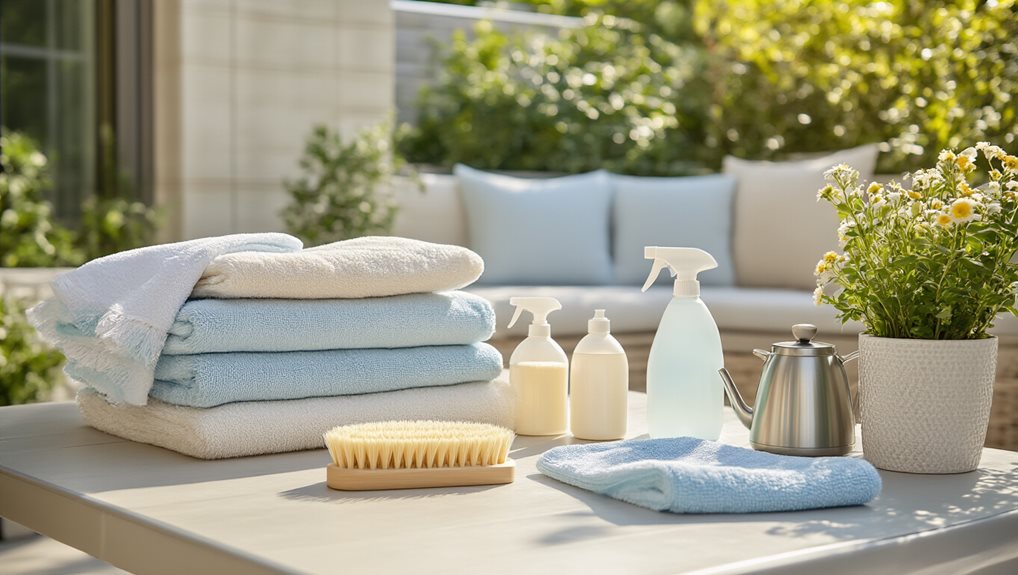
Gathering the right supplies and preparing the cushion before you start cleaning is essential for an efficient, thorough result. You’ll need a bucket of warm water, a soft rag or sponge, a garden hose, a soft‑bristle brush, and clean towels, plus a handheld vacuum with an upholstery tool. Lay a drop cloth, choose a shaded spot, and inspect each cushion for stains or damage before proceeding. Ensure the fabric’s nano‑coating is intact to maintain its UV and stain resistance.
Select the Proper Outdoor Cushion Cleaning Solution
Which cleaning solution you choose depends on the fabric type, stain severity, and your equipment, so evaluating those factors before you start will save time and protect the cushions.
For delicate textiles, a mild‑detergent solution sprayed after brushing works well, while heavy mildew or deep grime benefits from a borax‑dish‑soap mix applied with a hard‑bristle brush.
If you own a pressure washer, add the appropriate cleaner to its reservoir for rapid, thorough rinsing, always testing a hidden spot first to prevent fading.
Spot‑Treat Stains With a Vinegar‑Water Mix
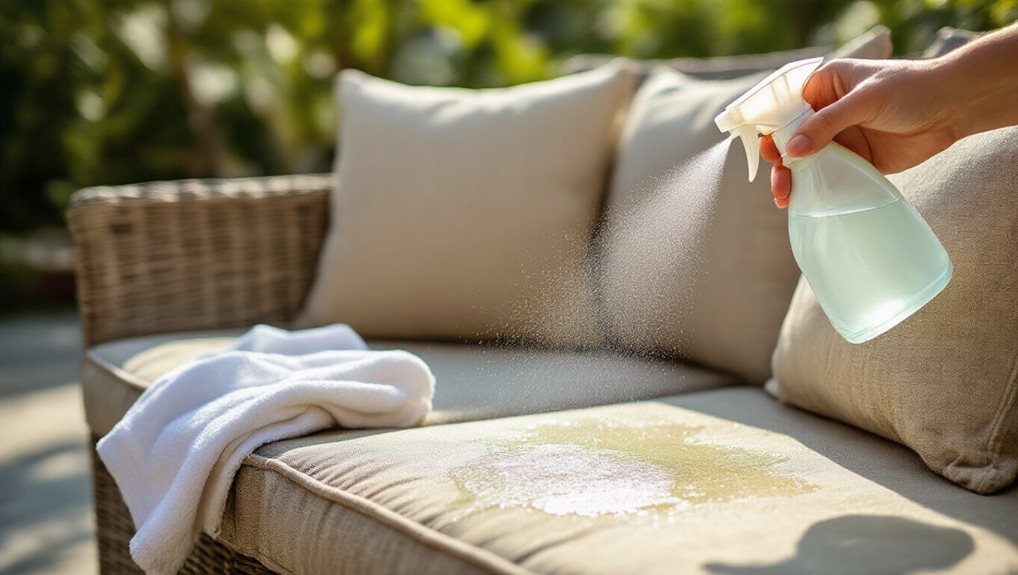
Ever wondered how a simple vinegar‑water mix can lift stubborn stains without damaging outdoor cushions? Mix equal parts white vinegar and water in a spray bottle, then spray the spot, let it soak ten to fifteen minutes, and gently dab with a lint‑free cloth.
For tougher grime, apply a soft‑bristle brush after soaking, rinse thoroughly, and let the cushion air‑dry in the sun.
A note on soil health concepts can help you extend the life of surrounding landscape: practicing soil improvement with organic matter and regular mulching supports better drainage and durability of outdoor fabrics in garden settings organic matter and compost application.
Spot‑Treat Stains With a Soap‑Bleach Mix
If the vinegar‑water method works for light spots, a soap‑bleach mix tackles tougher grime without sacrificing the cushion’s fabric integrity.
Mix one tablespoon bleach, one teaspoon dish soap, and one quart water in a non‑metal spray bottle, then dab the stain, let it sit fifteen minutes, scrub gently with a soft brush, rinse with low‑pressure hose, and air‑dry in shade.
Safely Remove Mold and Mildew From Outdoor Cushions
Where do you start when mold and mildew threaten your outdoor cushions?
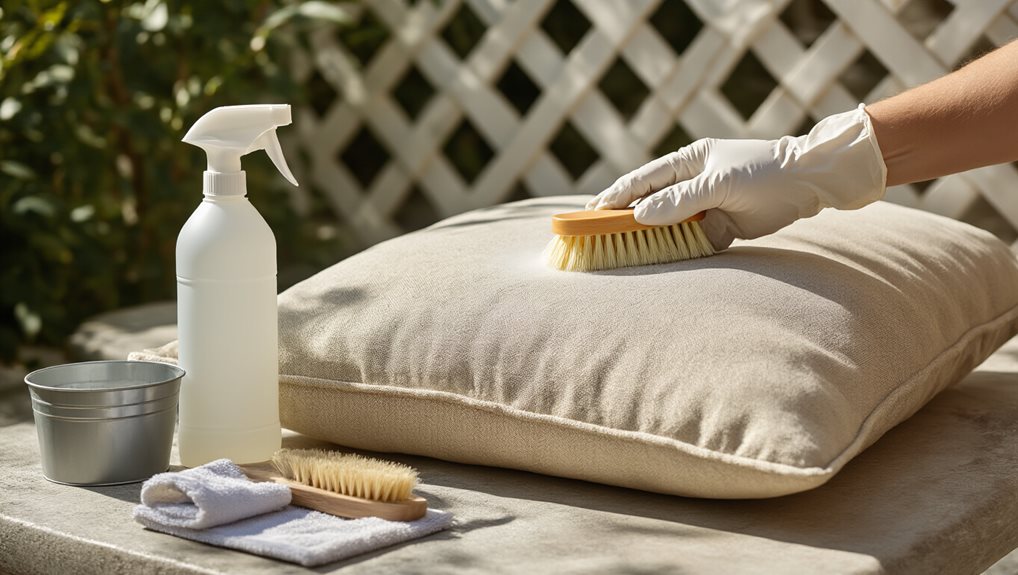
First, brush off loose spores with a soft‑bristle brush in a ventilated area, wearing gloves and checking care tags.
Then spray a vinegar solution (1 cup white vinegar, 1 Tbsp dish soap, 1 gal warm water) onto both sides, let it sit ten minutes, rinse thoroughly, and dry fully in sunlight, flipping midway for even UV exposure.
Gentle Scrubbing Techniques That Protect Fabric
After you’ve eliminated the spores, the next step is to scrub the fabric without harming its fibers. Use a soft‑bristle brush or sponge, applying a mild dish‑soap solution in a circular, center‑to‑outward motion, keeping pressure light to avoid fraying. Vacuum with a brush attachment first to lift loose debris, then repeat gentle passes, allowing the solution to work for ten to fifteen minutes before rinsing. Proper circuit safety and material considerations remind us to choose solutions and methods that respect fabric integrity and environmental conditions, much like ensuring wire ampacity and heat considerations are matched in electrical installations ampacity.
Rinse Without Driving Water Into the Fill
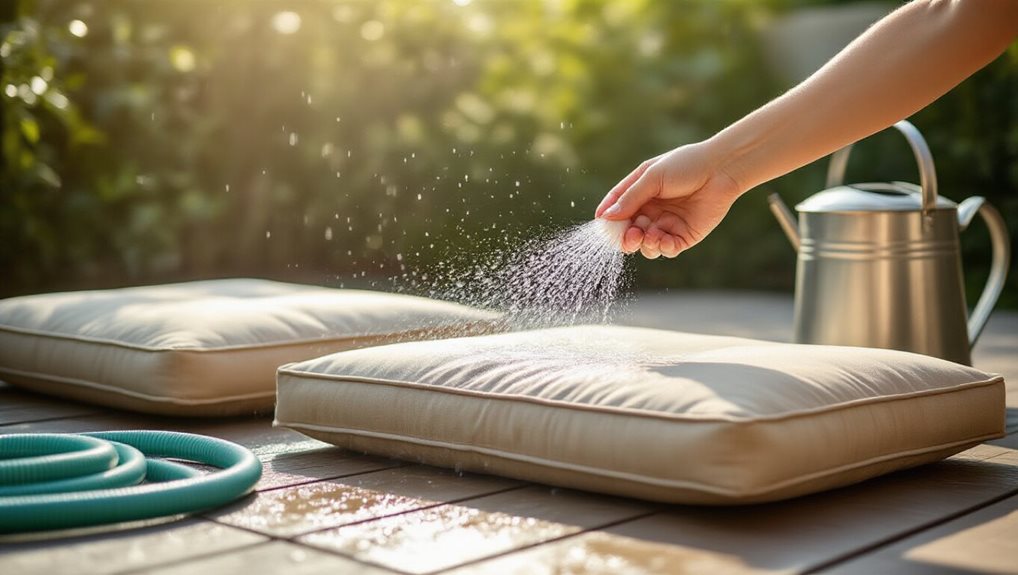
You’ll want to keep the hose pressure low, using a shower‑or‑mist nozzle and holding it a few feet away so the stream gently rinses the surface without forcing water into the seams.
Position the cushion on its side or prop it upright against a wall, allowing gravity to carry the runoff away from the fill while you work from the top down.
Gentle Hose Pressure
Wondering how to rinse outdoor cushions without forcing water into the fill? Use a pressure washer on its lowest setting, attach a 15‑degree tip, and stand about two feet away; this gentle spray saturates the surface while keeping pressure low enough to avoid pushing water into the foam core.
Keep the hose moving, cover tops and sides evenly, and test a hidden spot first to ensure safe, effective rinsing.
Side‑Lay for Drainage
Ever wondered why rinsing cushions on their side works better than a flat wash? Lay each cushion sideways on a sloped surface, prop one end higher, and open the zippers partially; gravity pulls water down the foam channels, preventing pooling inside the fill.
Use a low‑angle stream, tilt gently, and let the runoff flow outward, reducing saturation time and mildew risk. Rotate after thirty minutes for even drying.
How to Remove Excess Water After Rinsing?
You’ll want to press the cushions gently, using your hands or a clean towel, to squeeze out surface moisture without crushing the fabric.
Then tilt each cushion onto its side or lean it against a sunny wall so gravity can pull the remaining water toward the bottom, allowing it to drain naturally.
Repeating the press and side‑drain steps a few times ensures the fill stays dry and ready for the next stage.
For long‑lasting results, consider placing the cushions in a well‑ventilated area or using a fan to speed up drying and prevent moisture buildup that can lead to mildew, especially on cushions treated with weatherproof or protective coatings. long‑term prevention
Press G Pressently
How do you efficiently remove excess water from outdoor cushions after rinsing? Press the cushions firmly with your hands, using clean towels to blot and absorb liquid. Apply even pressure across the surface, stacking fresh towels underneath for extra soakage. Work from the center outward, pressing each section gently yet thoroughly, then lean the cushions vertically against a sunny wall to let gravity and sunlight finish draining.
Use a Side‑Drain Method
Why let water linger on your cushions when a simple side‑drain technique can eliminate excess moisture in seconds? Lay each cushion on its side after rinsing, then prop it vertically to let gravity pull water away, blot the surface with a dry microfiber rag, and repeat until no pooling remains. This positioning speeds evaporation, reduces mildew risk, and keeps your outdoor seating ready for the next gathering.
Air‑Dry or Sun‑Dry: Best Method for Preventing Mildew
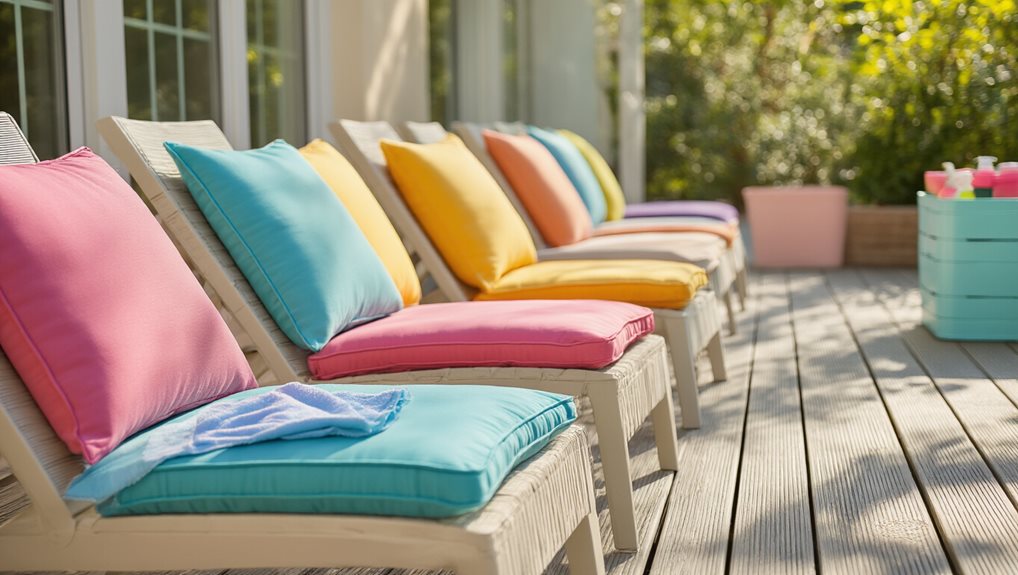
Do you wonder which drying method truly thwarts mildew on outdoor cushions?
Air‑drying lets circulation circulate on all sides, preventing trapped moisture and condensation, while sun‑drying adds UV light that kills spores and speeds drying when you flip cushions halfway.
Combine both: towel off, stand cushions upright, then let airflow or sunlight finish, storing them in breathable bags to keep the community of cushions mildew‑free.
When choosing a method, consider that UV‑resistant sealants and proper surface preparation of surrounding furniture help minimize moisture buildup in exposed outdoor fabrics. UV protection
Sun or Shade: Which Speeds Up Drying?
When deciding whether to place your outdoor cushions in sun or shade, consider how each environment impacts drying speed and mildew prevention. Full sun accelerates evaporation, UV rays kill surface moisture and spores, and Sunbrella’s solution‑dyed acrylic dries swiftly even in humidity; shade traps humidity, slows airflow, and invites mould. Rotate cushions for balanced exposure, use quick-dry foams, and avoid prolonged shade on non‑UV fabrics. Pollinator-friendly
Quick Fixes for Outdoor Cushion Odor and Discoloration
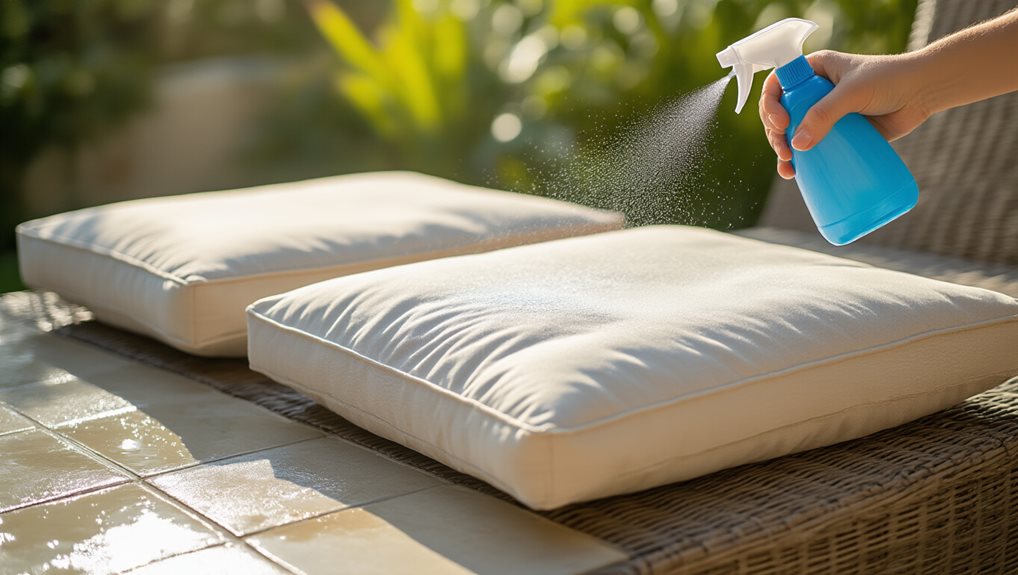
You can breathe fresh air into your cushions by sprinkling baking soda on odor‑prone spots, letting it sit, then vacuuming it away, while a quick sun‑dry after rinsing restores brightness and helps eliminate lingering smells.
If color fades appear, spot‑treat them with a white‑vinegar spray or a natural stain paste, allowing the solution to work before a gentle scrub and thorough rinse.
Finally, ensure the cushions are completely dry in a ventilated shaded area or under the sun, then apply a water‑repellent spray to keep future odors and discoloration at bay.
Breathe Fresh Air
Ever noticed that a lingering musty smell or faded spots can ruin the inviting look of your patio cushions? Sprinkle baking soda on odorous spots, let it sit twenty to sixty minutes, then brush and vacuum; it absorbs moisture, grease, and odors. For mold or mildew, spray a 1:1 white‑vinegar solution, wait twenty minutes, scrub gently, and rinse thoroughly. This quick routine restores fresh air and color.
Sun‑Dry for Brightness
How can sunlight turn a dull, smelly cushion into a fresh, bright one without chemicals? Place rinsed cushions in direct sun, preferably vertical against a sunny wall, and flip them every few hours to ensure even drying and UV exposure.
The UV rays disinfect, eliminate odor‑causing microbes, and naturally brighten fabric, while breezy air accelerates moisture loss, preventing mold and mildew.
Spot‑Treat Color Fades
Why let a faded, musty cushion ruin your patio vibe when a quick spot‑treatment can restore both color and freshness? Apply a mild‑soap‑and‑water mix with a soft brush, then rinse thoroughly; for stubborn discoloration, spray a white‑vinegar solution, let it sit twenty minutes, and rinse again. For odor‑laden areas, spread a baking‑soda paste, let it dry, and brush off, preserving fabric integrity.
When to Call a Professional Cleaner for Deep Restoration?
When severe stains, persistent mildew, or fabric damage exceed what a DIY approach can safely address, it’s time to call a professional cleaner for deep restoration.
Professionals apply fabric‑safe pretreatments, targeted stain‑lifting, and controlled drying to prevent shrinkage, warping, or lingering odors, while also repairing wear, re‑waterproofing, and restoring UV protection.
Their expertise ensures your cushions look refreshed and last longer, keeping your outdoor space inviting.
Final Note
By following these steps—gathering the right supplies, choosing an appropriate cleaning solution, treating stains promptly, eliminating mold safely, and ensuring thorough drying—you’ll keep outdoor cushions looking fresh and extending their lifespan. Regular maintenance prevents odor, discoloration, and mildew, while proper drying methods reduce reinfestation risk. If stains persist or damage is extensive, professional cleaning may be necessary to restore the cushions fully.

Nathan McPhail is a garden and home DIY expert who writes practical, easy-to-follow advice for homeowners and gardeners. Through Yardique, he shares hands-on tips covering gardening, lawn care, landscaping, home improvement, repairs, tools, and outdoor living. His focus is on helping readers solve everyday household and yard problems with straightforward guidance, useful techniques, and practical solutions.