
Install a six‑foot chicken‑wire fence with a one‑foot outward skirt, bury it twelve inches deep, and bend the top back away from the garden; clear brush, woodpiles, and dense vegetation within ten feet of the house, then apply a castor‑oil‑water spray, garlic powder, or peppermint oil around burrow entrances and the fence line. Use noisy deterrents like tin‑plate rattlers and wind chimes to startle groundhogs, and seal gutters and downspouts to keep moisture away. Monitor for breaches and adjust barriers or repellents as needed, and you’ll discover further details on effective trapping and maintenance.
TLDR
- Install a 26‑inch‑tall fence with a 12‑inch buried base and a 1‑foot outward skirt, using 20‑gauge wire and bent‑back top.
- Apply natural repellents (castor oil, garlic, peppermint) around burrow entrances and perimeter, re‑spraying weekly.
- Reduce habitat by clearing brush, woodpiles, and short grass within ten feet of the garden and sealing burrow openings with gravel or wire.
- Use noisy deterrents such as wind chimes and tin‑plate rattlers placed 2‑3 feet high near burrow exits to startle groundhogs.
- Extend downspouts 3‑5 feet away with a proper slope and splash block to keep soil dry, discouraging groundhog activity.
Quick‑Start Checklist: 5 Essential Steps to Groundhog‑Proof Your Garden
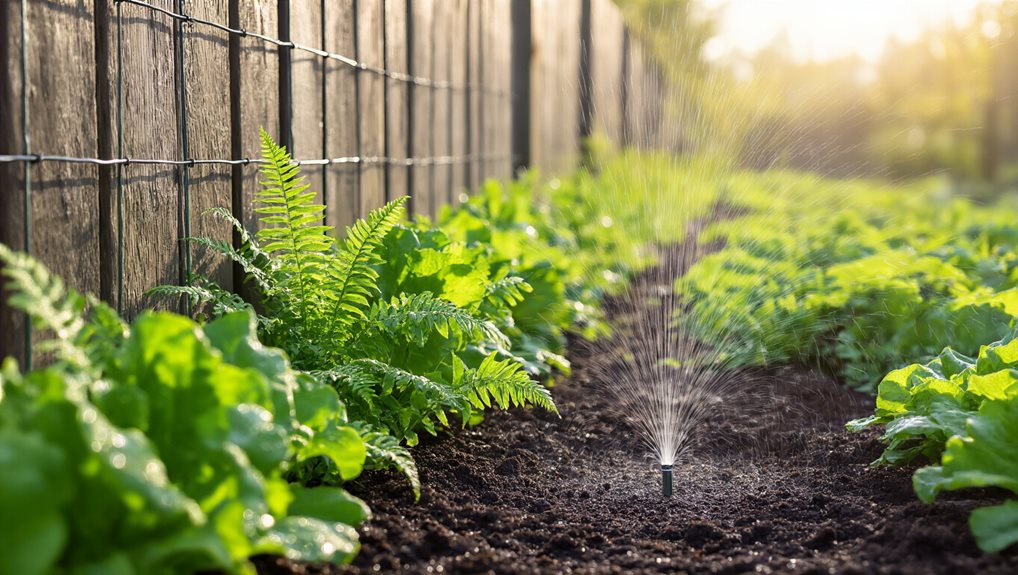
Ever wondered how to protect your garden from groundhogs without spending a fortune or hiring professionals? Start by installing noisy deterrents like wind chimes or rattling tin plates, then spray liquid repellents on foliage and sprinkle granular formulas around beds.
Keep grass short, clear vegetation near burrows, and seal entrances with gravel or buried wire. Finally, use motion‑activated sprinklers and electronic repellents for continuous protection. Groundhogs are shy and may respond to noise. Additionally, install sturdy fencing at least 26 inches tall, buried 10 inches deep to prevent burrowing and protect vulnerable areas such as young dahlias protecting dahlias.
Install a Six‑Foot Chicken‑Wire Fence for Groundhog Control
After using noisy deterrents and liquid repellents, the next step in a solid groundhog‑proof plan is to erect a six‑foot chicken‑wire fence that blocks both climbing and tunneling. Use five‑foot metal posts spaced five feet apart, bury the wire twelve inches deep with a one‑foot outward skirt, and bend the top foot back away from the garden. Choose 20‑gauge wire for durability and a one‑inch mesh to exclude small critters. Proper installation also ensures the fence is visually continuous and anchored to prevent gaps at the ground level, which can invite burrowing. proper installation
Build a Sturdy Three‑Foot Woven‑Wire Barrier With Proper Bury Depth
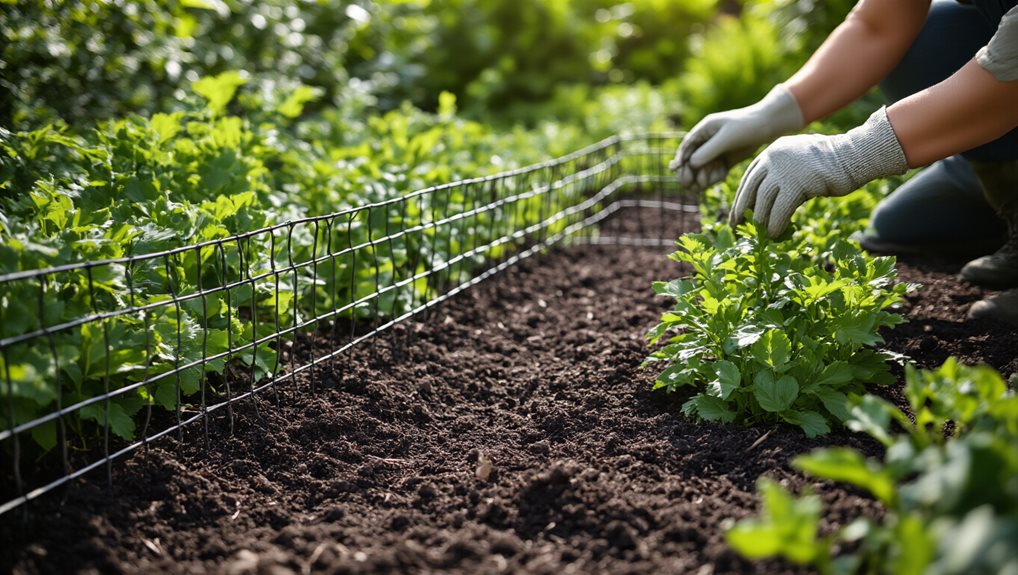
A three‑foot woven‑wire barrier, when buried correctly, stops groundhogs from tunneling beneath the garden edge while still allowing easy access for maintenance tools. Choose 3/4‑inch mesh, secure it with 9‑gauge staples, and bury the bottom six inches, keeping ground‑to-bottom spacing between half an inch and three inches. Space braced steel posts no more than 330 feet apart, ensuring tension remains tight throughout. This creates a solid, community‑shared perimeter that feels both protective and welcoming. Additionally, implement a grid‑based planning approach to organize the barrier layout and maintenance checks, similar to how a Square Foot Garden uses a grid to manage space, crop counts, and upkeep Grid layout for organization.
Clear Brush, Woodpiles, and Dense Vegetation Within Ten Feet of the House
Why should you clear brush, woodpiles, and dense vegetation within ten feet of your house? You eliminate the cover and soft soil that groundhogs use for burrow entrances, reduce food sources like grasses, and prevent multi‑entrance networks that can extend up to sixty feet.
Maintaining this clearance protects foundations, avoids drainage problems, and discourages seasonal breeding activity, keeping your garden safe and your neighborhood feeling secure.
Apply Natural Repellents (Castor Oil, Garlic, Peppermint) Around Burrows

Mix castor oil with water or a mild detergent and spray the solution around each burrow entrance and garden perimeter weekly, reapplying after rain; crush garlic into a paste or sprinkle its powder near openings, and use a peppermint‑oil spray (5‑10 drops per cup of water or vinegar) on borders. Regularly check for new burrow entrances and seal nearby gaps to reduce re-entry opportunities entry points. Combine these scents, reapply frequently, and your garden will feel protected and welcoming.
Sprinkle Predator Urine Near Burrows to Give Groundhogs the Heebie‑Jeebies
Ever wondered why a simple scent can keep groundhogs from re‑entering their tunnels? Sprinkle undiluted fox or bobcat urine granules around each burrow, then reapply after rain or weekly; the strong predator odor triggers a natural fear response, reducing gnawing by up to 98 %. This safe, non‑toxic method fits into community garden practices, reinforcing collective protection without harming plants or pets. White flowers with yellow centers can add a cheerful backdrop to garden borders, enhancing visual appeal while you implement deterrent strategies. Predator deterrence
Cover Cucumbers With a Hoop House to Keep Groundhogs Out
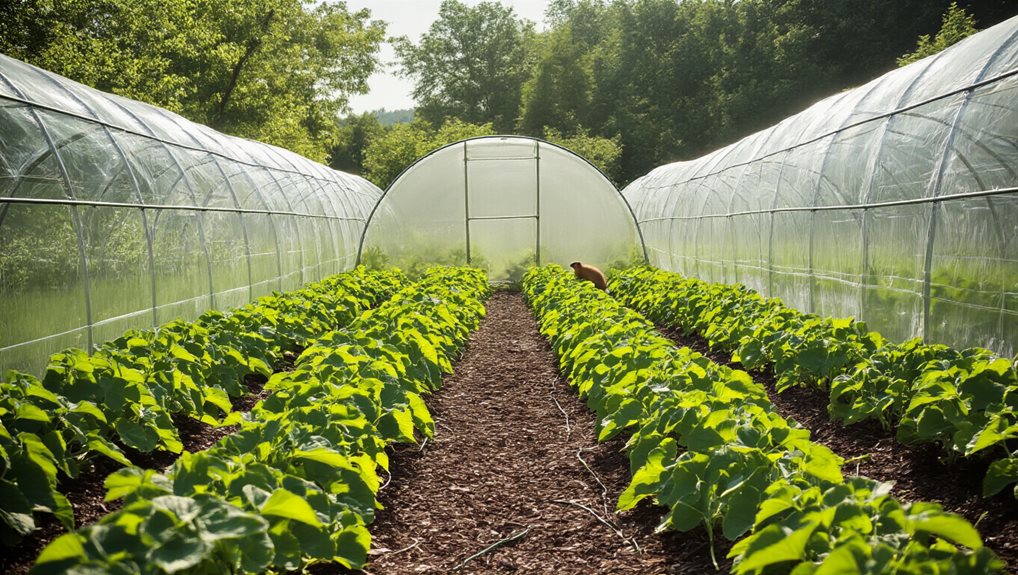
Pick a sturdy PVC hoop house for your cucumber rows, then secure the base with sturdy stakes to stop groundhogs from prying under the cover.
Fit fine mesh over every door, vent, and opening, making sure the material is tight enough to block their snouts while still allowing airflow.
This combination of a solid frame, anchored base, and screened openings gives you a reliable, low‑maintenance barrier that keeps groundhogs out and lets your cucumbers thrive.
Choose Hoop House
A hoop house is essentially a low‑tunnel framework of curved hoops covered with polyethylene, row cover, or insect mesh, and it serves both to warm your cucumber vines and to create a physical barrier that keeps groundhogs out.
Choose a kit with sturdy hoops, insect‑mesh covers, and optional internal fencing; secure the structure with straps or rebar, position taller plants centrally, and install before groundhogs appear to ensure a lasting, shared garden sanctuary.
Secure Base With Stakes
Why worry about groundhogs burrowing under your cucumber hoop house when a well‑anchored base can stop them in their tracks? Drive metal T‑posts or wooden stakes 12‑18 inches deep every 4‑6 feet, attach a 4‑ft PVC‑coated fence outward‑angled at the top, and secure the hoop frame with zip ties. Reinforce mid‑sections with shorter posts and chicken wire, then check seasonally for loosening. This creates a seamless barrier that blends into the garden, keeping groundhogs out while you tend your cucumbers.
Install Mesh Over Openings
After anchoring the base with stakes, the next step is to seal every opening in the hoop house with mesh so groundhogs can’t slip inside. Use sturdy chicken‑wire or hardware cloth over doors, windows, and ventilation gaps, fastening it securely with zip ties or staples.
This barrier lets light and airflow in while keeping pests out, reinforcing the community of crops you nurture.
Set Up Fruit‑Based Traps (Apple, Carrot, Cantaloupe) Safely and Effectively

How can you maximize the lure of fruit‑based traps while keeping the setup safe and efficient? Cut cantaloupe into small pieces, rub juice inside a 32‑42‑inch live trap, and place a larger wedge so the trigger must be activated. Quarter apples, line a trail, and add peanut butter for extra appeal. Use fresh carrots for texture, position traps near burrows, and cover the interior with a tarp to prevent side theft, ensuring a calm, successful capture.
Seal Gutters and Downspouts to Eliminate Moisture That Attracts Groundhogs
You should start by inspecting and cleaning your gutters, removing leaves and debris that cause clogs and overflow.
Once they’re clear, extend the downspouts at least five feet away from garden beds so water drains into a dry area or a proper drainage system.
This simple routine cuts the moisture that grounds groundhogs, preventing them from establishing burrows near your plants.
Inspect and Clean Gutters
Ever wondered why groundhogs keep showing up around your garden? Inspect your gutters each season, clearing leaves, twigs, and debris that create standing water—groundhogs love damp spots.
Check for cracks, weakened fascia, and leaky downspouts, then seal any gaps to prevent moisture accumulation.
A thorough, twice‑yearly cleaning eliminates hidden pools, blocks entry points, and keeps your garden community pest‑free.
Extend Downspouts Away
Why let rainwater pool near your foundation when a simple downspout extension can eliminate the moisture that draws groundhogs to your garden? Install a 3‑5‑foot extension, sloped 18 inches per 8 feet, seal the first few feet of pipe, and add a splash block. This redirects water away, prevents damp spots, and makes your garden less inviting to groundhogs, reinforcing a dry, secure perimeter.
Hang Tin‑Plate Rattlers and Use Wind Chimes to Startle Groundhogs
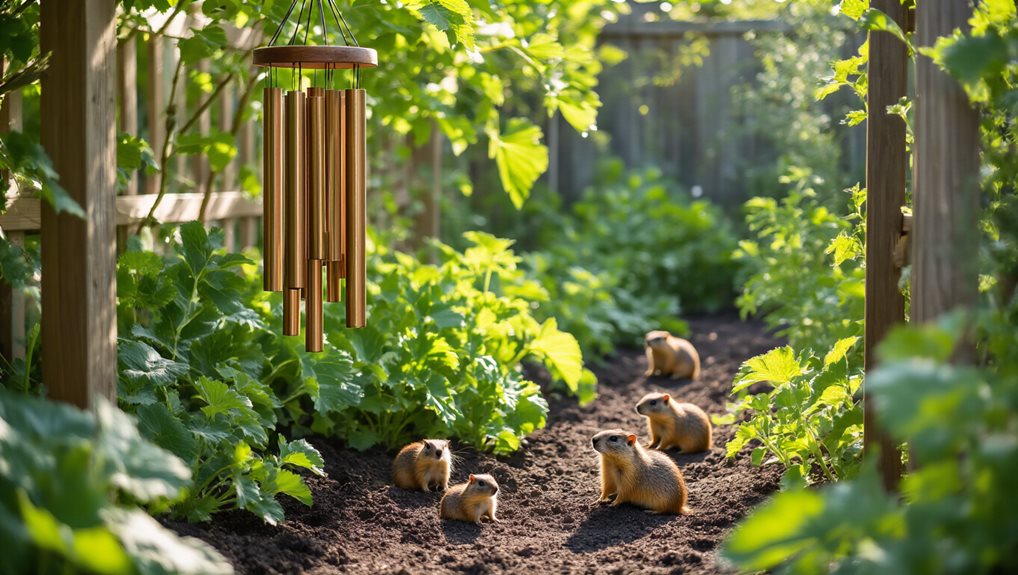
How can you deter groundhogs without chemicals or costly barriers? Hang tin‑plate rattlers 2‑3 feet high on stakes near burrow exits, letting wind create sharp clanging that startles them, while spacing wind chimes every 10‑15 feet around the perimeter to produce unpredictable, high‑pitched chimes.
Vary pitch and rhythm, secure everything against gusts, and you’ll maintain an effective, low‑maintenance deterrent.
Review Your Groundhog‑Proofing Progress and Adjust Strategies as Needed
You should measure the effectiveness of each barrier, repellent, and habitat tweak on a regular schedule, noting any signs of digging, climbing, or plant damage.
When you spot gaps, weakened mesh, or fading scent, you can quickly identify those weak spots and decide whether to reinforce the fence, reapply or rotate the repellent, or adjust the landscaping.
Measure Effectiveness Regularly
When you regularly review your groundhog‑proofing progress, you can spot trends, adjust tactics before damage escalates, and keep your garden thriving.
Track weekly damage, count burrow activity, photograph chewed foliage, and log bite marks to quantify deterrent performance.
Compare pre‑ and post‑implementation data, note fence breaches, and adjust repellents or traps based on observed patterns, ensuring sustained protection.
Identify Weak Spots Quickly
Regularly measuring effectiveness lets you spot patterns, but the next step is pinpointing where your defenses are failing before damage spreads.
Walk the perimeter, checking fence height, mesh size, and buried edges; test burrow plugs with newspaper to see if groundhogs disturb them.
Scan for fresh tracks, chewed plants, and hidden weeds, then map any repeat damage zones to reveal weak spots and guide immediate fixes.
Adjust Tactics Accordingly
A systematic review of your groundhog‑proofing results lets you spot what’s working, what isn’t, and where tweaks are needed before damage spreads. Check fences daily, note digging, observe plant damage, and track sightings; then adjust depth, height, or add electric wire if breaches persist.
Rotate repellents after rain, combine motion sprinklers with chimes, and clear brush weekly, ensuring each change reinforces community safety and garden health.
Final Note
By following the five‑step checklist, installing sturdy fences, clearing nearby debris, applying natural repellents, setting humane fruit traps, sealing moisture sources, and employing auditory deterrents, you’ll create a multi‑layered defense that discourages groundhogs from burrowing and feeding in your garden. Regularly assess the effectiveness of each measure, adjust as needed, and maintain the barriers to guarantee long‑term protection without resorting to harmful chemicals or excessive labor.

Nathan McPhail is a garden and home DIY expert who writes practical, easy-to-follow advice for homeowners and gardeners. Through Yardique, he shares hands-on tips covering gardening, lawn care, landscaping, home improvement, repairs, tools, and outdoor living. His focus is on helping readers solve everyday household and yard problems with straightforward guidance, useful techniques, and practical solutions.