Seal every crack and install high‑R‑value insulation on walls and ceiling, using spray foam, rigid boards, or batts to block heat. Apply weather‑stripping around doors and windows, and caulk gaps around the garage door frame for an airtight seal. Create controlled airflow by leaving a small door gap in the morning, adding a passive vent on the opposite side, and mounting a high‑mounted exhaust fan or ceiling fan to pull hot air out. Light‑colored or reflective paint reduces solar gain, and a portable AC or high‑speed fan can finish the job when temperatures spike. Continue for and you’ll discover even more strategies.
TLDR
- Insulate walls, ceiling, and garage door with high‑R materials; seal all cracks and gaps using caulk, expanding foam, and weather‑stripping.
- Apply durable weather‑stripping to doors and windows, and replace it every 5‑10 years to maintain airtightness.
- Create passive cross‑ventilation by opening a small door gap and aligning a vent or window on the opposite side; use a box fan to boost airflow.
- Install a high‑mounted exhaust fan or ceiling fan to pull hot air out, and ensure roof or gable vents are properly flashed and sealed.
- Use a portable AC or high‑speed fans during peak heat, and monitor temperature with a sensor to adjust ventilation and cooling as needed.
Insulate Your Garage for Better Cooling
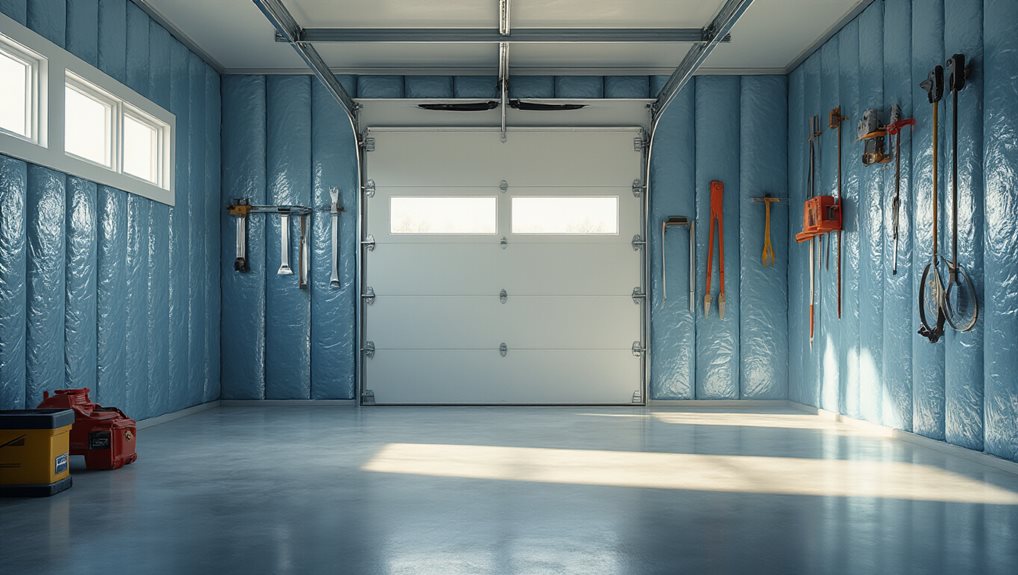
How can you keep your garage cooler without relying on an air‑conditioner? Insulate walls and ceilings with spray foam, fiberglass batts, or rigid boards, choosing higher R‑values for better heat blocking. Add a DIY foam kit or insulated door panel to reduce transfer, and replace weatherstripping to seal gaps. Thorough coverage stabilizes temperature, cuts reliance on active cooling, and enhances overall comfort. Seal air leaks around doors and windows to prevent cool air loss. Contraction and humidity effects Nighttime cooling can cause wood to contract, increasing gaps between boards and making squeaks more audible; stabilizing humidity helps reduce this.
Seal Gaps to Prevent Hot Air From Entering
You’ll want to apply weather‑stripping to all garage doors and windows, using a flexible silicone or rubber seal that compresses against the frame to block hot air.
Next, inspect the perimeter of the garage door and fill any cracks or gaps with caulk or spray foam, making sure the material stays pliable for temperature changes.
Finally, reinforce the seal around the door’s bottom edge with a rubber or EPDM strip, ensuring a tight, airtight barrier that keeps heat out.
Drip irrigation systems demonstrate how targeted watering and proper sealing can dramatically reduce waste and maintain healthy, robust setup conditions, much like ensuring a well-sealed garage preserves temperature and efficiency water efficiency.
Weather‑Stripping Doors and Windows
Ever wonder why your garage feels like a furnace even when the rest of the house stays cool? Install vinyl or tubular rubber weather‑stripping around doors and windows; these self‑adhesive, mold‑resistant strips block hot air, reduce drafts, and cut energy bills 10‑15 %. They also keep dust, pests, and moisture out, protecting tools and improving indoor air quality. Regularly inspect for cracks and replace every 5‑10 years.
Seal Cracks Around Garage Door Frame
Why let hot summer air slip through the tiny cracks around your garage door frame when a simple seal can keep the interior noticeably cooler? Clean the jamb, apply high‑quality silicone caulk with a gun, smoothing it with a putty knife; for larger gaps, use expanding foam first, then cover with sealant. Finish by weather‑stripping and painting to match, ensuring a tight, breathable seal.
Create Airflow With Door Openings & Passive Vents
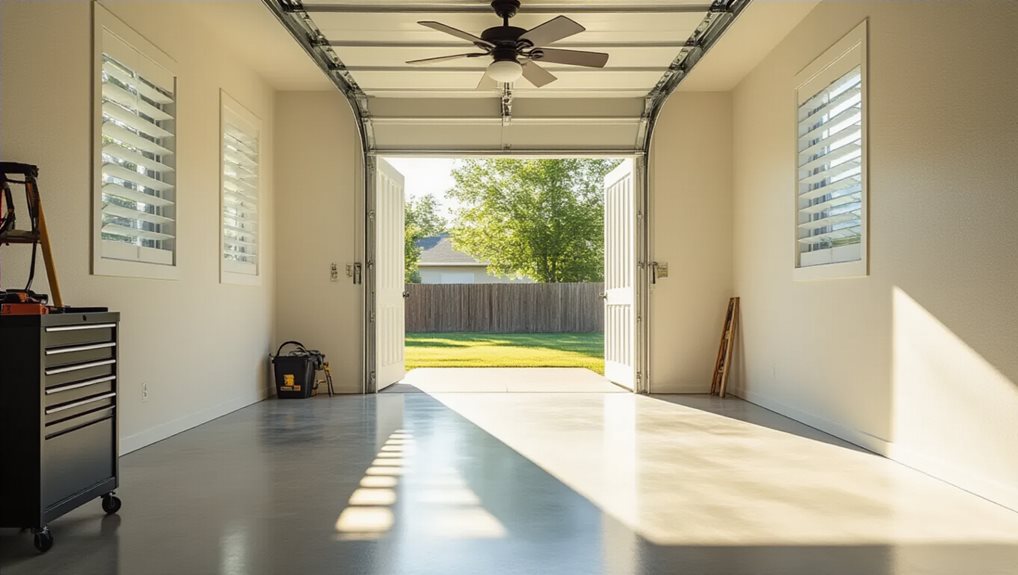
You can leave a small gap in the garage door each morning so cooler air drifts in while the sun’s heat is still low, and then close it before the temperature rises. In addition, you can monitor and seal any gaps around the door frame to prevent repetitive drafts that warm air can escape through during the day inspecting Windows & Planning Strategy.
Morning Door Gap Strategy
How can you maximize cool air intake without overcomplicating your garage’s ventilation? Open the garage door early, cracking it 3‑4 inches to let the morning breeze flow in, and align a window or passive vent on the opposite side for a cross‑breeze. Position a box fan near the gap to pull cooler air, then close the door by early afternoon to trap that chill, sealing any remaining gaps with weatherstripping.
Evening Passive Vent Placement
A well‑planned evening passive‑vent layout can turn a warm garage into a comfortably cool space without extra electricity. Position a high‑mounted wall vent opposite the garage door, install a ridge or turbine vent at the roof peak, and crack the door just enough for a gentle breeze.
Pair the intake on the shady side with an exhaust on the sunny side, add insect mesh, and let natural evening winds flush out heat.
Install Roof, Gable, or Ceiling Exhaust Fans
Where should you place an exhaust fan to maximize airflow and keep your garage cool? Position a wall‑mounted unit high on the exterior wall opposite the door for straight cross‑flow, or install a ceiling‑mount fan between joists using a stud finder, ensuring clear space and easy power access. For roof or gable fans, align the opening with the drainage plane, use flashing, and seal all edges with silicone and J‑channels. Properly select a fan that matches your climate and ventilation needs to improve air circulation and reduce heat buildup grid paper and plan your layout accordingly.
Declutter and Secure Vents for Faster Cooling
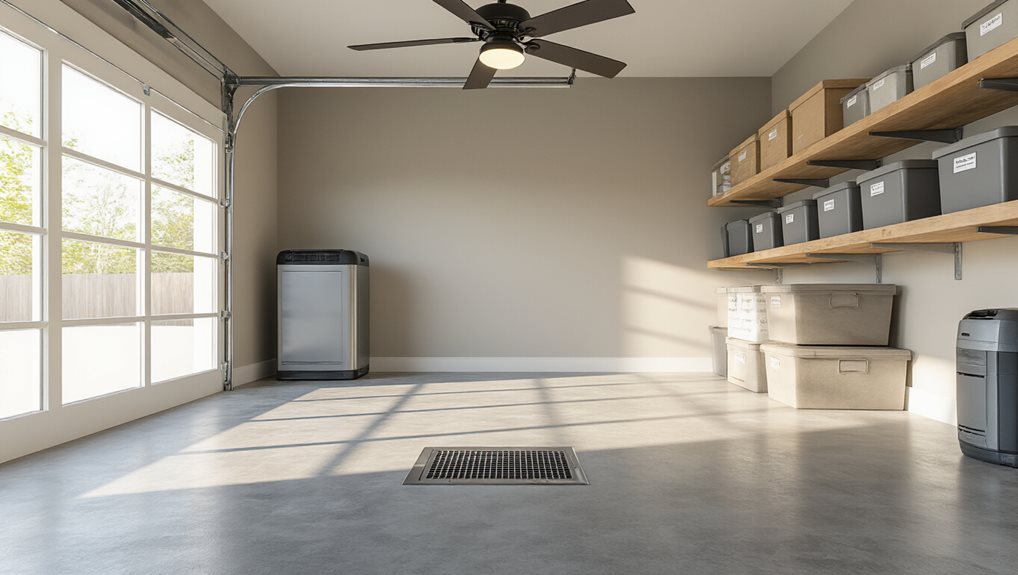
Ever notice how a cluttered garage feels like a sauna when summer hits? Clear the floor and walls of boxes, tools, and junk, then mount shelves to keep items off the ground, maximizing open space for airflow.
Remove anything blocking windows, doors, or vents, and seal vent gaps with caulk. Position fans near clear vents for cross‑ventilation, letting hot air escape while cool air enters. Stripped screw hole repair helps ensure durable mounting points for any additional vents or hardware you install.
Paint Lightly and Apply Reflective Coatings
When you coat garage walls and doors with light‑colored or heat‑reflective paint, the surface bounces most of the sun’s infrared radiation instead of absorbing it, which can lower interior temperatures by several degrees even on the hottest days.
Super Therm® blocks heat through gaps, reflecting 99% infrared, while ThermaCote® spray adds UV protection and weather shielding, extending system life and cutting energy demand, creating a cooler, more comfortable shared space.
Use Portable AC or High‑Speed Fans When Needed
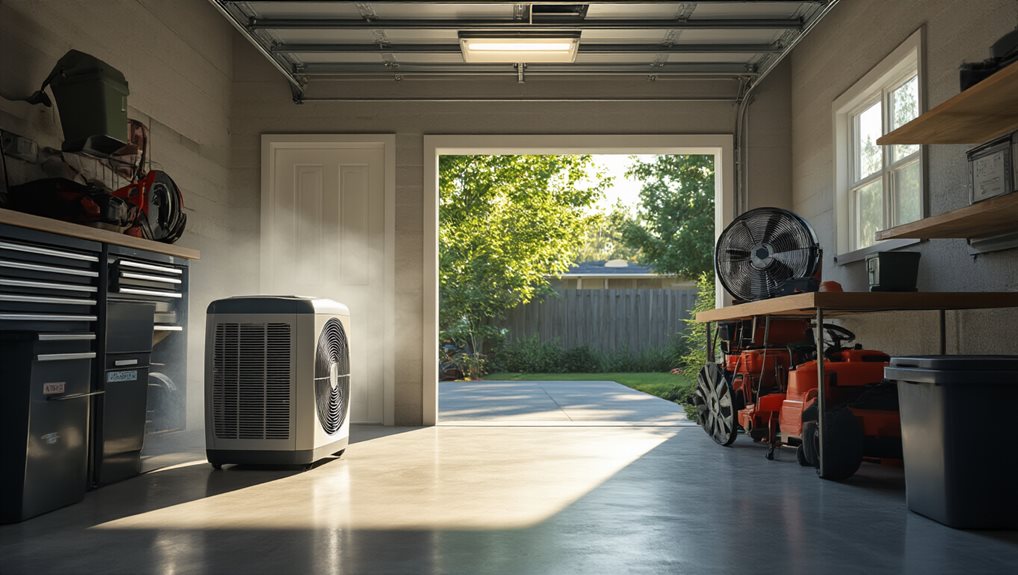
How can you keep a garage comfortable without a permanent HVAC system? If you need a quick, flexible solution, a portable air‑conditioner or a high‑speed fan can be deployed on demand, letting you respond to temperature spikes without costly installation.
Choose a 14,000 BTU portable AC for large spaces, vent it straight, insulate the exhaust hose, and pair it with a high‑speed fan to circulate air, seal gaps, and block sunlight for efficient, affordable cooling.
Monitor Temperature and Perform Seasonal Maintenance
After setting up a portable AC or high‑speed fan, the next step is to keep a close eye on your garage’s climate and perform seasonal upkeep.
Install a reliable sensor like the ThermoPro TP49W, place it away from sunlight, vents, and drafts, and calibrate it regularly.
Log data via your phone app, review trends, clean filters, and inspect insulation to maintain ideal coolness.
Final Note
By insulating, sealing gaps, and ensuring proper airflow, you’ll keep your garage noticeably cooler during summer. Adding exhaust fans or a portable AC unit further reduces heat buildup, while light‑colored paint and reflective coatings deflect solar radiation. Regularly declutter and maintain vents to sustain efficiency, and monitor temperature to catch issues early. Implementing these steps creates a comfortable, energy‑efficient space without unnecessary expense or complexity.

Nathan McPhail is a garden and home DIY expert who writes practical, easy-to-follow advice for homeowners and gardeners. Through Yardique, he shares hands-on tips covering gardening, lawn care, landscaping, home improvement, repairs, tools, and outdoor living. His focus is on helping readers solve everyday household and yard problems with straightforward guidance, useful techniques, and practical solutions.