
Test percolation and pH first, then add 2–4 inches of compost each year and work it into the top 6–8 inches to create pore space; sprinkle gypsum (about half a coffee can per square foot) to flocculate clay particles, and aerate with a core or spike tool in early spring or fall when the soil is moist but not saturated. Install raised beds with a gravel base and mulch 2–4 inches of shredded leaves or pine straw to keep roots above water, and schedule regular inspections and clean‑outs of any French drains or tile systems. Following these steps will give you a solid foundation for faster drainage and healthier plants.
TLDR
- Conduct a percolation test and adjust soil pH; use results to guide amendment choices.
- Incorporate 2–4 inches of well‑decomposed compost annually, working it into the top 6–8 inches.
- Install subsurface tile drainage with gravel, sand, and topsoil layers, using silt sock filtration.
- Perform core aeration once a year in moist spring or fall, then top‑dress with mulch (2–4 inches).
- Build raised beds with a light, aerated mix (1/3 potting soil, 1/3 compost, 1/3 topsoil) and a gravel base for faster drainage.
Why Clay Soil Drainage Matters
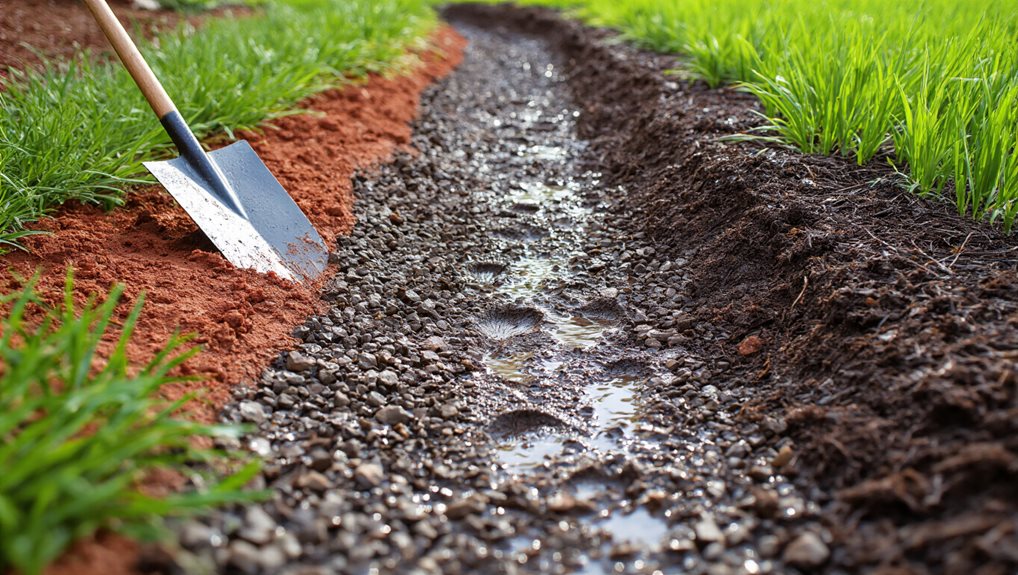
Why does drainage matter in clay soil yards? You’ll notice water fills air spaces, starving roots of oxygen, causing suffocation and stunted growth. Poor drainage limits spring planting, narrows crop choices, and reduces yields. Compacted, waterlogged soil hardens, restricting machinery traffic and increasing erosion. Nutrient leaching and pathogen buildup further threaten plant health, while costly repairs and runoff damage the broader environment. In the eastern Upper Peninsula, subsurface tile drainage has been shown to maintain lower and more stable moisture levels compared to surface drains. The use of proper grading and incorporating organic matter can improve surface drainage and reduce soil compaction, helping to maintain healthier root zones and better long-term soil structure improved drainage planning.
How to Test Soil Drainage and pH
You can start a simple percolation test by digging a 12‑inch‑deep hole, filling it with water, and measuring how fast the level drops over 15 minutes, then multiplying that rate to get an hourly drainage figure.
After the drainage rate, use a pH soil kit—mix a small soil sample with the provided solution, compare the resulting color to the chart, and record the pH value.
Together, these quick steps give you reliable data on both water movement and acidity, helping you decide which amendments your clay yard needs.
Simple Percolation Test
A percolation test gives you a quick, reliable snapshot of how water moves through your clay soil and whether the pH is within a suitable range for planting, and it requires only a few basic tools—a shovel, a measuring stick, a timer, and a water source.
Dig a 12‑inch‑diameter, 12‑inch‑deep hole, saturate it for 24 hours, then refill to a consistent level, record the water drop every 30 minutes for four hours, and calculate inches per minute to assess drainage speed.
pH Soil Kit Use
How can you quickly determine whether your clay yard’s drainage and pH are suitable for planting? Collect 6‑20 samples from 4‑6 inches deep, mix them, and use a pH kit: fill the tube, add capsule powder, drop distilled water, cap, shake 30 seconds, wait up to 30 minutes, then compare color to the chart. Test every 2‑3 years, use neutral water, and interpret results to guide fertilizer choices.
Add Organic Matter for Better Clay Soil Drainage
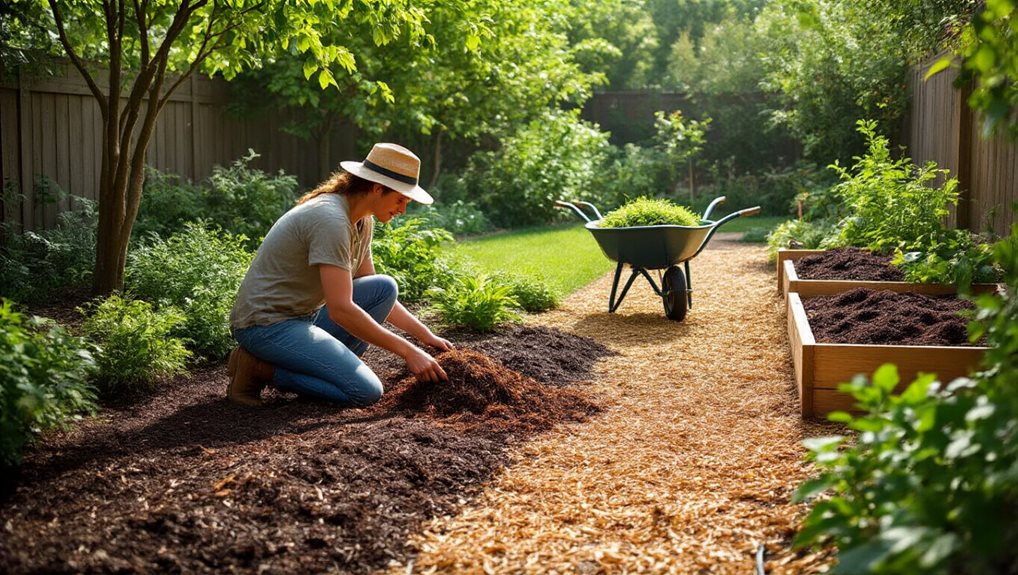
When you add organic matter to clay soil, you’re fundamentally rewiring its structure to let water move more freely, and compost is the most effective amendment for this purpose.
Apply 2‑4 inches of well‑decomposed compost each year, working it into the top 6‑8 inches; aged manure or leaf mold can supplement.
These amendments create aggregates, increase pore space, attract microbes, and steadily improve drainage, fostering a healthier, more united garden community.
Adding organic matter also supports beneficial soil life, which further enhances drainage and soil structure over time microbial activity.
Incorporate Gypsum to Break Up Compact Clay
Organic matter improves clay, but in many western gardens the underlying problem is sodic saturation, which keeps particles dispersed and water sluggish. You can add gypsum, which supplies calcium ions that displace sodium, letting particles flocculate and drainage improve. Apply half a coffee‑can per hole, work it in, then water. Use light yearly top‑dressing, but avoid over‑application, especially in low‑sodium soils. Managing soil structure helps ensure long‑term drainage improvements and supports healthier root growth for perennials.
Perform Physical Aeration and How Often
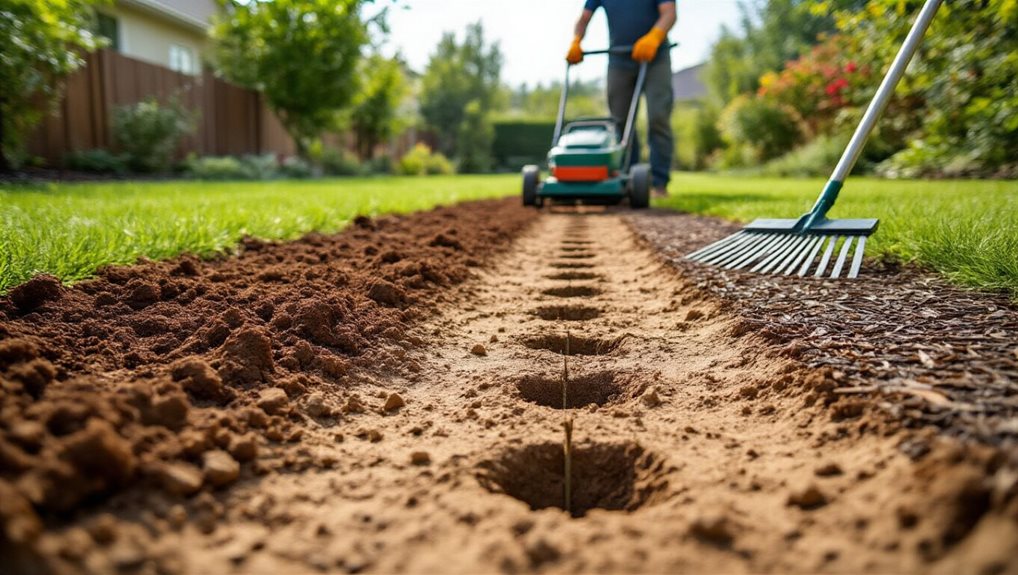
You should schedule core or spike aeration once each year, preferably in the spring or fall when the soil is moist but not saturated, and match the timing to the tool you use—core aerators work best after a light rain, while spike or manual tools can be applied a bit earlier in the season. Proper preparation, including ensuring the surface is not compacted by heavy traffic, helps maintain open channels for water and roots and reduces runoff. seasonal moisture patterns
Seasonal Aeration Frequency
How often should you aerate a clay‑soil yard? Aim for at least once a year, preferably in early fall for cool‑season grasses or late spring for warm‑season types, and consider a second session if traffic is heavy or the soil stays wet.
Adjust to biennial intervals in drier zones, but monitor compaction signs and increase frequency when water pooling persists.
Tool‑Specific Aeration Timing
When should you schedule each type of aeration to get the most out of a clay‑soil lawn?
Core aeration works best in early spring or fall, after a liquid aerator application a week earlier; repeat every 1‑2 years for severe compaction.
Spike aeration, if used, should be limited to mid‑summer, spacing holes 4‑6 inches apart, and avoided on heavy clay.
Mulch and Ground Cover to Boost Clay Soil Drainage
Why settle for soggy, compacted yards when a well‑chosen mulch can convert clay soil drainage? Spread a 2‑ to 4‑inch layer of shredded leaves, pine straw, compost, or pine bark; each adds organic matter, creates air pockets, and feeds earthworms, lightening texture and improving water infiltration. These mulches also insulate, suppress weeds, and protect amendments, fostering a healthier, more connected garden community. Adding a soil‑pH testing step using a simple slurry can help tailor these amendments to your specific clay soil chemistry, ensuring you adjust nutrient availability as texture improves. soil–pH testing
Build Raised Beds for Faster‑Draining Planting Zones
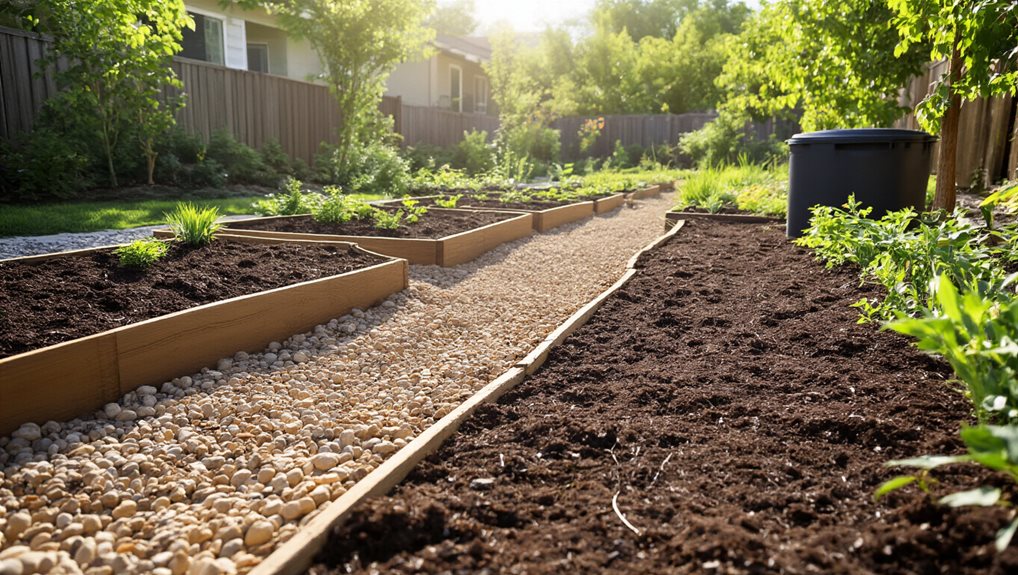
You’ll find that raised beds give you a site advantage by letting gravity pull water through a well‑designed soil mix, bypassing the compacted clay that normally holds moisture.
By filling the beds with a blend of one‑third potting soil, one‑third compost, and the remainder topsoil, you create a lightweight, aerated medium that drains quickly while still providing nutrients.
This combination of elevated placement and a tailored mix lets roots breathe and prevents waterlogging, setting the stage for healthier plants on even the heaviest clay.
Site Advantages
Because clay soils retain water and compact easily, building raised beds creates a higher‑lying planting zone that lets excess moisture drain away quickly, reducing the risk of waterlogged roots and root rot. You’ll enjoy improved drainage, better aeration, and disease resistance, while the elevated soil isolates roots from heavy clay, fostering a thriving garden community where plants grow stronger together.
Soil Mix Design
Clay’s natural density makes it hard for water to move, so the soil mix inside a raised bed must both loosen the heavy particles and retain enough moisture for plant health.
Use a one‑third potting soil, one‑third compost, and the rest topsoil, adding sand or bark fines to break up clay.
Include a thin gravel layer at the bottom, keep depth at least twelve inches, and incorporate organic matter for long‑term structure and belonging.
Install French Drains to Bypass Impermeable Clay Layers
Ever wondered how a French drain can sidestep the impermeable nature of clay and keep your yard dry? Dig an 18‑inch‑deep, 9‑12‑inch‑wide trench with at least a 1% slope, line it with geotextile fabric, then lay a 4‑inch perforated pipe wrapped in a silt sock. Backfill with gravel, sand, and a topsoil layer, compacting each stage, and connect multiple parallel lines to a solid outlet for reliable drainage.
Adjust pH and Nutrients for Healthy Clay Soil Structure
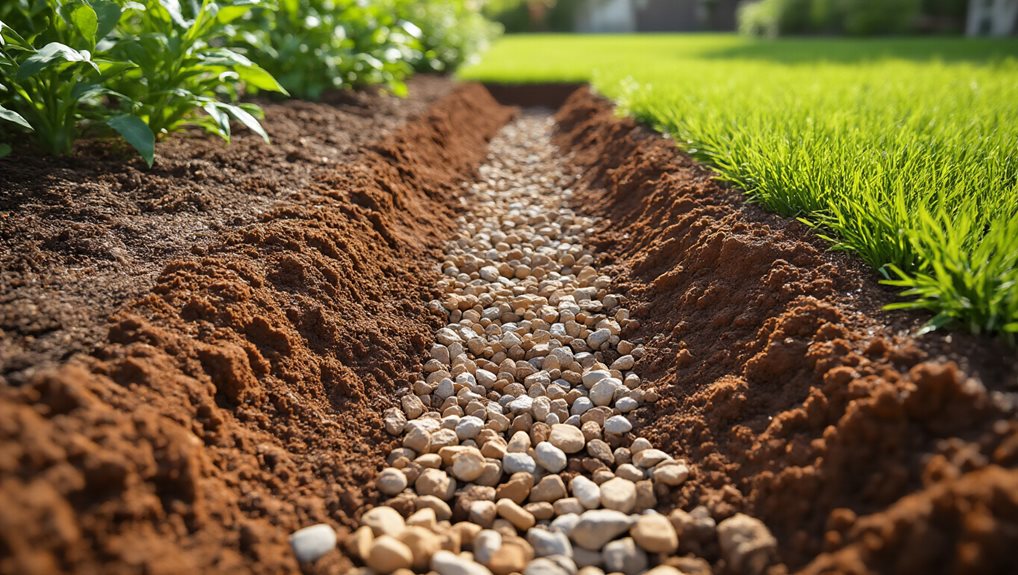
Why should you pay close attention to pH and nutrient levels when working with clay soils? Maintaining a pH between 6.1 and 7.0 maximizes nutrient availability, supports earthworms, and stabilizes structure; you can raise acidic clay with 55 lb lime per 1,000 sq ft or lower alkaline soil using 1–2 lb sulfur per 100 sq ft. Choose dolomitic limestone for magnesium deficiency, apply fine‑ground lime for quicker reaction, and re‑test every other year to keep the community garden thriving.
Schedule Ongoing Maintenance for Consistent Drainage
Regularly scheduling maintenance keeps drainage reliable in clay‑soil yards, because water flow can be easily disrupted by compaction, blockages, or seasonal wear. Plan annual or semi‑annual inspections, clean gutters and drain covers before rainstorms, aerate and top‑dress in mid‑summer, and record every activity in a digital log. Use reminders, check high‑traffic zones for compaction, and adjust watering to keep the system consistently effective.
Troubleshoot Common Clay‑Soil Drainage Issues
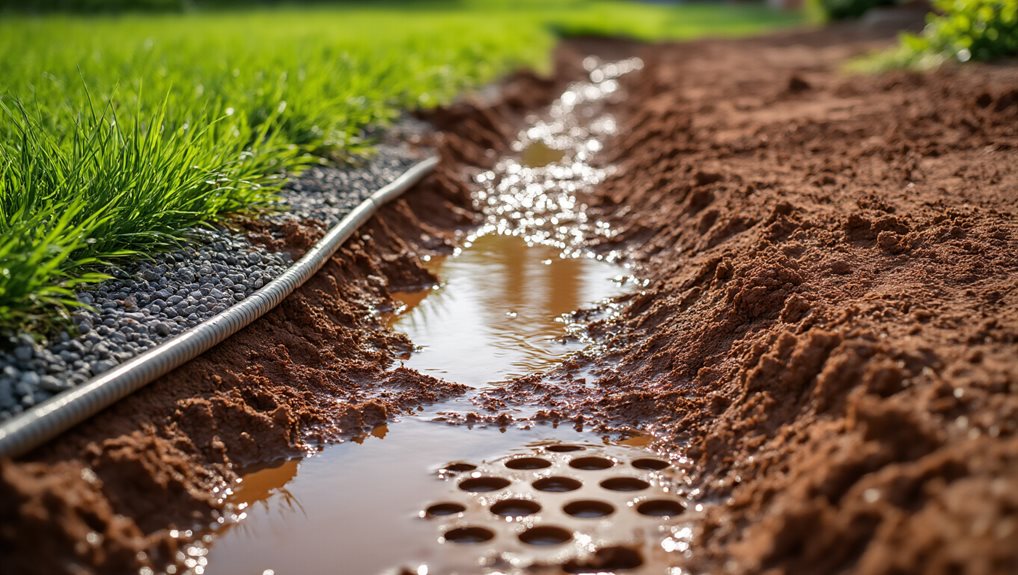
How can you pinpoint why water lingers on a clay‑soil yard after a rainstorm? Test drainage by timing how fast water disappears; less than an inch per hour signals compaction. Look for hardpan layers that stop water, and notice if soil feels rock‑hard when dry. Check for sodium‑rich clay that may need gypsum, and verify organic matter is boosting pore space for better aeration.
Final Note
By testing drainage, adding organic matter, incorporating gypsum, aerating regularly, and installing French drains, you’ll morph compact clay into a well‑draining, productive yard. Adjusting pH and nutrients supports a stable soil structure, while ongoing maintenance prevents future water‑logging. With these practical steps, you can confidently manage clay’s challenges, ensuring healthy plant growth and a resilient terrain.

Nathan McPhail is a garden and home DIY expert who writes practical, easy-to-follow advice for homeowners and gardeners. Through Yardique, he shares hands-on tips covering gardening, lawn care, landscaping, home improvement, repairs, tools, and outdoor living. His focus is on helping readers solve everyday household and yard problems with straightforward guidance, useful techniques, and practical solutions.