Start by creating passive stack ventilation: place low‑level supply vents and high‑level exhaust stacks so warm air rises and exits while cooler air enters, which works best with high ceilings or a noticeable temperature difference. Install properly sized louvers, cut clean openings, secure frames with masonry screws, and seal with caulk and mortar, keeping vents 8–10 feet from gas appliances. Add a variable‑speed exhaust fan calibrated to about one CFM per square foot, using smart controls to maintain slight negative pressure without over‑ventilating. Apply active soil depressurization with a radon fan and sealed slab to pull moisture‑laden soil gas outward, and seal all gaps, cracks, and duct connections with hydraulic cement or industry‑grade sealants. Adjust vent settings seasonally—briefly open vents in winter when outdoor air is above 0 °C, and close or limit them in summer to control humidity. Monitoring pressure and moisture levels will keep performance optimal, and the next steps will show how to fine‑tune the system.
TLDR
- Install low‑level supply vents and high‑level exhaust stacks to harness natural stack effect and promote continuous air exchange.
- Use a variable‑speed exhaust fan sized at ~1 CFM per square foot, set to maintain slight negative pressure without over‑ventilating.
- Seal all cracks, gaps, and duct connections with hydraulic cement or high‑grade sealants to prevent unwanted leakage and improve airflow efficiency.
- Incorporate active soil depressurization with a radon fan and sealed suction point to draw moisture‑laden soil gas away from the basement.
- Adjust vent operation seasonally: open briefly in winter when outdoor temperature is above 0 °C, and close or use night‑only ventilation in summer to control humidity.
Start With Passive Basement Ventilation Before Adding Fans

Ever wonder why a basement can feel stuffy even when the house is well‑sealed? You can tap natural buoyancy by installing low‑level supply vents and high‑level exhaust stacks, letting warm air rise and exit while cooler air flows in. This passive stack ventilation works best with high ceilings or temperature differences, and combining supply and exhaust points boosts airflow before you consider fans. Proper ventilation is also essential to keep indoor air quality compliant with minimum air exchange standards.
Install Vents and Louvers for Effective Airflow
When you install vents and louvers, start by planning and marking their locations with a manufacturer’s template, using a spirit level, measuring tape, and pencil to ensure the holes are perfectly aligned both horizontally and vertically; scanning the wall with a detector first helps you avoid hidden wiring, plumbing, or pipes, and keeping the vents 8‑10 feet away from gas appliances meets safety codes while a 16‑inch opening accommodates standard foundation vents in concrete or masonry.
Cut clean openings with a hole saw or jigsaw, fit frames, secure with masonry screws, then seal edges with weather‑proof caulk and mortar to ensure tight, lasting airflow.
Apply Active Soil Depressurization to Control Moisture
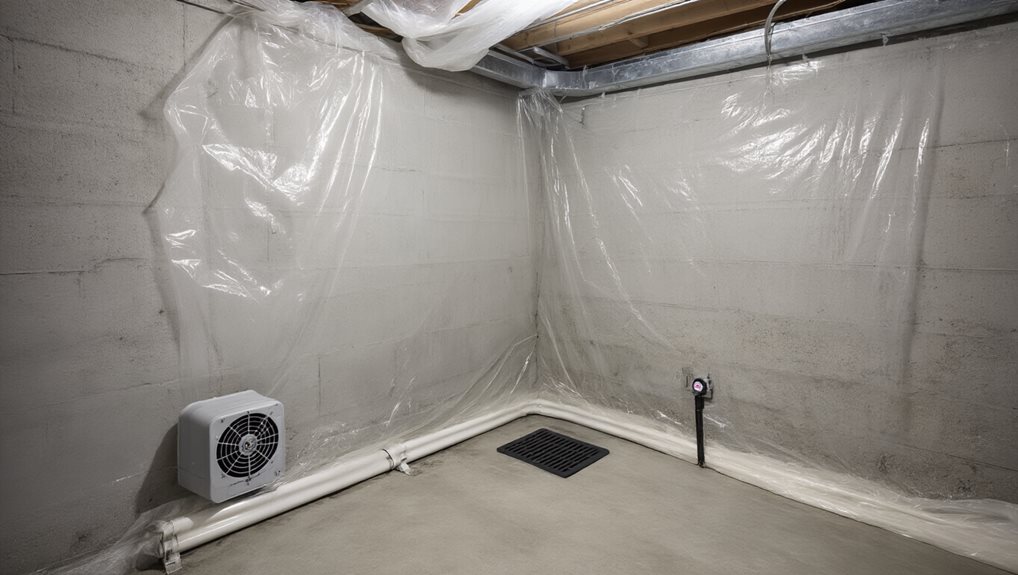
How does active soil depressurization actually keep your basement dry? You create negative pressure under the foundation, pulling radon, soil gas, and moisture outward through PVC pipes and a radon fan that exhausts above the roofline, which reverses gas flow, reduces wall and air humidity, and lowers dehumidifier costs; a single suction point, sealed slab, and pressure sensor let you monitor performance, fostering a drier, healthier home environment. Additionally, the system creates negative pressure under the slab, which helps prevent moisture influx from the soil by drawing air away from the interior.
Select the Right Variable‑Speed Exhaust Fan for Efficient Basement Ventilation
Choosing the right variable‑speed exhaust fan starts with understanding how its adjustable airflow matches your basement’s size, humidity patterns, and occupancy.
Aim for roughly one CFM per square foot, then select a fan that can modulate speed to maintain negative pressure without over‑ventilating.
Prioritize models with smart controls, quiet duct mufflers, and wall or ceiling mounting options near moisture sources, ensuring efficient, balanced ventilation.
Consider configuring the fan with proper conduit protection and weatherproofing to prevent moisture ingress and ensure long‑term reliability conduit protection.
Seal Gaps and Ducts to Stop Interzonal Leaks
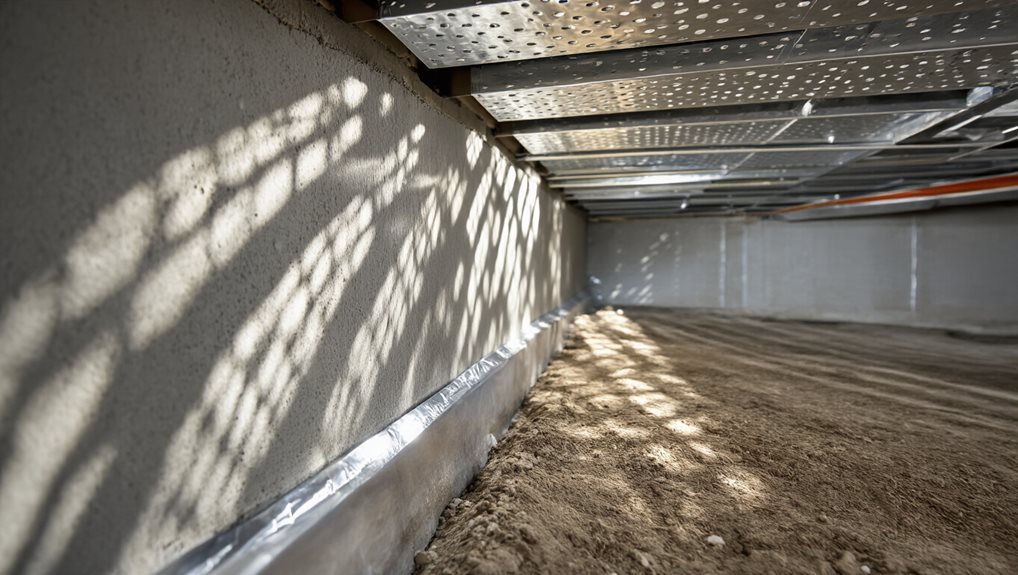
After installing a variable‑speed exhaust fan, the next step is to seal any gaps and duct connections that let air bypass the system, because unchecked interzonal leaks can undermine ventilation efficiency and increase humidity. Proper placement considerations can also help prevent moisture buildup and odor migration, especially when thinking about septic tank distance and building setbacks that influence indoor air quality. Use hydraulic cement for concrete cracks, industry‑grade sealants for wall and floor gaps, and caulk door undercuts. Secure transfer grilles, seal interior panels, and avoid DIY paints that flake, ensuring a tight envelope that promotes consistent airflow and lower moisture.
Adjust Ventilation Settings for Winter vs. Summer
Why does your basement need different ventilation settings in winter versus summer? In winter, open vents for short bursts when outdoor air is below 0 °C to pull in dry air, lowering moisture and preventing pipe freeze, but avoid prolonged exposure below –10 °C.
In summer, keep vents closed or use night‑only ventilation when outdoor temperatures dip, preventing humid air from raising mold risk and preserving upstairs cooling efficiency.
Monitor Basement Ventilation and Moisture to Keep Performance On Track
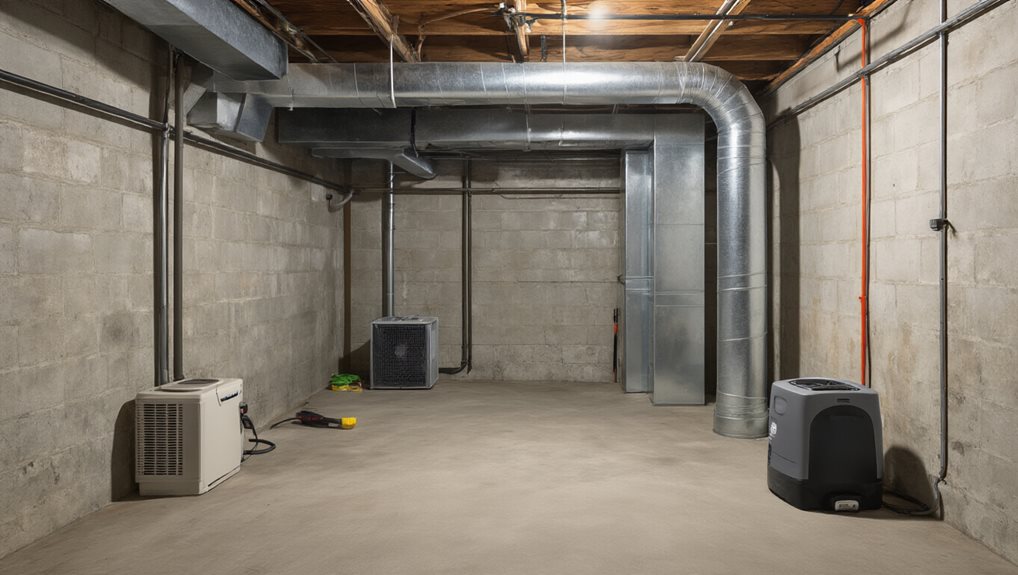
How can you guarantee your basement’s ventilation system stays effective year‑round? Install digital hygrometers at eye level, set alerts for 30‑60% humidity, and calibrate regularly; add infrared meters to pinpoint hidden moisture on walls, corners, and plumbing.
Conduct visual checks for stains, condensation, and musty odors, and integrate smart monitors that auto‑adjust fans, track air quality, and log data for maintenance planning. Regular blade maintenance is also important to ensure efficient airflow in the system and prevent clogs from damp debris Mulching Blades that could mislead maintenance practices.
Final Note
By combining passive ventilation, well‑placed vents, and a properly sized variable‑speed exhaust fan, you’ll keep your basement air fresh and moisture under control. Seal any gaps to prevent interzonal leaks, and adjust fan settings seasonally so winter heating isn’t compromised while summer humidity is reduced. Regularly monitor airflow and moisture levels to verify that the system performs as intended, making minor tweaks when needed to maintain a healthy, energy‑efficient environment.

Nathan McPhail is a garden and home DIY expert who writes practical, easy-to-follow advice for homeowners and gardeners. Through Yardique, he shares hands-on tips covering gardening, lawn care, landscaping, home improvement, repairs, tools, and outdoor living. His focus is on helping readers solve everyday household and yard problems with straightforward guidance, useful techniques, and practical solutions.