Enhance your tomato yields naturally by building healthy soil with composted cotton-gin trash to fuel microbial activity and release nutrients slowly. Plant deep, burying stems to grow stronger roots, and amend holes with well-drained soil. Use cover crop mulch and drip irrigation to conserve water and target nutrients efficiently. Prune suckers and top plants late season to focus energy on fruit. These practices work together to increase resilience, improve quality, and unleash higher yields—there’s more to gain by fine-tuning each step.
TLDR
- Boost soil health with composted cotton-gin trash to enhance microbial activity and nutrient availability for stronger tomato growth.
- Deep plant tomatoes by burying stems up to the first true leaves to promote robust root systems and improve drought tolerance.
- Apply thick mulch from high-residue cover crops like rye and vetch to suppress weeds and conserve soil moisture.
- Use drip irrigation under mulch to deliver water and nutrients efficiently, reducing waste and supporting consistent fruit development.
- Prune suckers and top indeterminate plants late season to direct energy toward larger, more uniform fruit.
Build Healthy Soil With Organic Amendments Like Cotton-Gin Trash
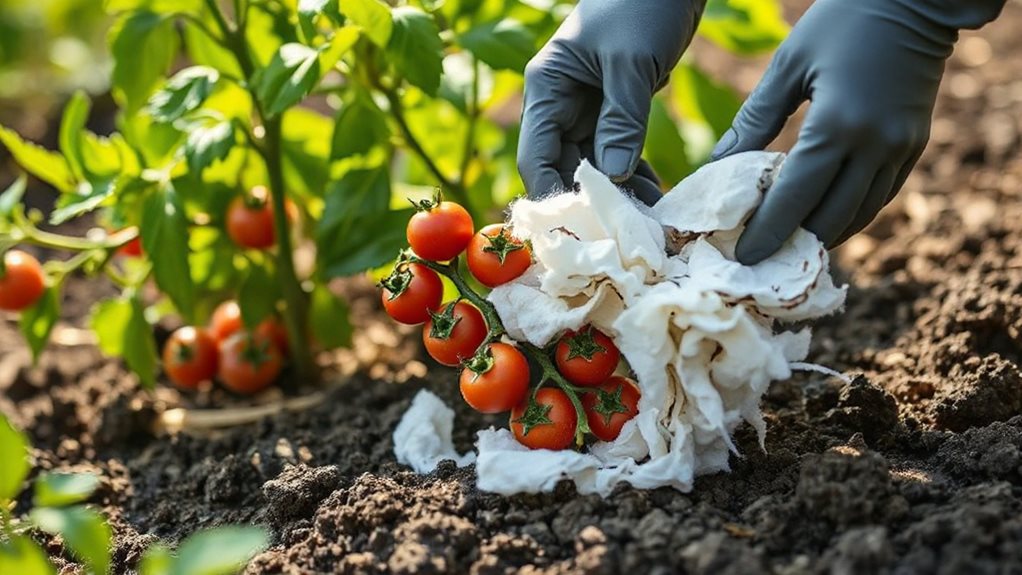
Building thriving tomato plants starts with nurturing the soil, and incorporating composted cotton-gin trash is one of the most effective organic strategies you can use.
You’ll enhance microbial activity, enhance nutrient availability, and improve soil structure.
Composted cotton-gin trash increases moisture retention, suppresses diseases like southern blight, and gradually releases nitrogen, phosphorus, and potassium—supporting healthy, high-yielding tomato plants naturally. Primer types such as water-based primers dry quickly and can guide timing for when amended beds are stable enough for transplanting. This approach aligns with organic fertility systems that combine composted materials and cover crops to support long-term soil health and plant nutrition.
Plant Deep & Amend Holes for Stronger, Resilient Tomato Plants
While your soil prep lays the foundation, how you plant your tomato seedlings can make a lasting difference in their strength and productivity.
Bury stems up to the first true leaves to spur adventitious roots, enhancing nutrient uptake and drought tolerance.
Deep planting stabilizes plants, moderates root temperatures, and increases yields.
Amend holes with well-drained, slightly acidic soil, then water deeply and infrequently to build resilient, high-performing tomatoes.
Proper soil also supplies essential nutrients like nitrogen, phosphorus, and potassium that support vigorous growth.
Mulch With Cover Crops to Save Water and Block Weeds
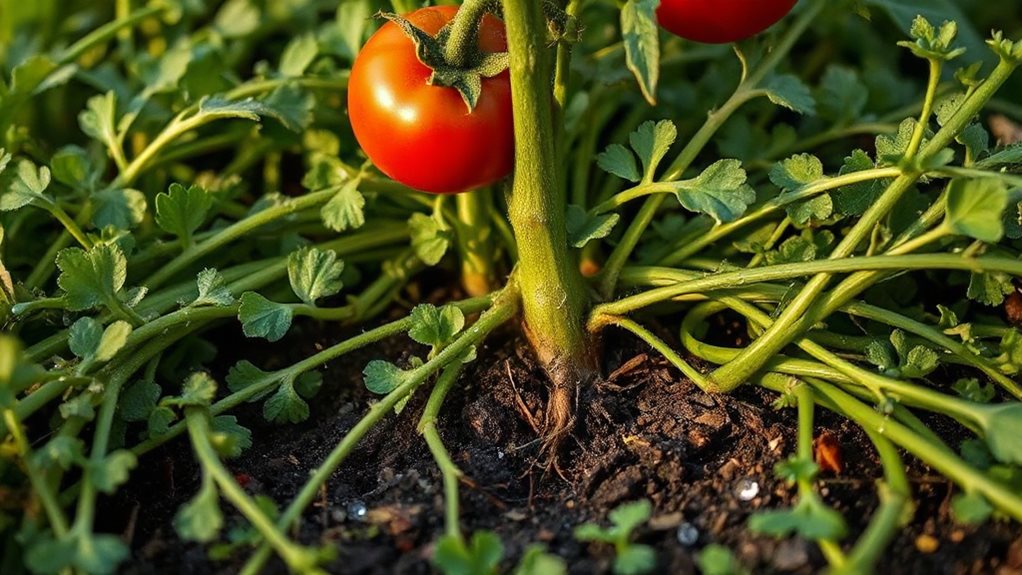
Laying down a thick layer of cover crop mulch around your tomato plants does more than just tidy up the bed—it actively conserves soil moisture, blocks weeds, and builds long-term fertility.
You’ll save water by reducing evaporation and improve infiltration, while residue from crops like rye or vetch suppresses weeds naturally. Choosing high-residue, nitrogen-fixing covers enhances soil health and increases tomato yields without synthetic inputs. Using high-residue cover crops can also improve soil structure and water retention over time.
Combine Drip Irrigation and Mulch for Smarter Nutrient Use
You can open the full potential of your tomato plants by pairing drip irrigation with mulch, creating a powerful system that enhances yield while using water and nutrients more efficiently.
This combination increases water productivity, reduces waste, and improves fruit quality. Using mulch with precise irrigation at 50% ETc delivers superior yields, conserves resources, and guarantees your plants thrive with less, making your garden both productive and sustainable. New plantings can be especially sensitive to moisture, so keep the top 2 inches of soil consistently moist during establishment.
Prune and Top Tomatoes for Larger, Uniform Fruit
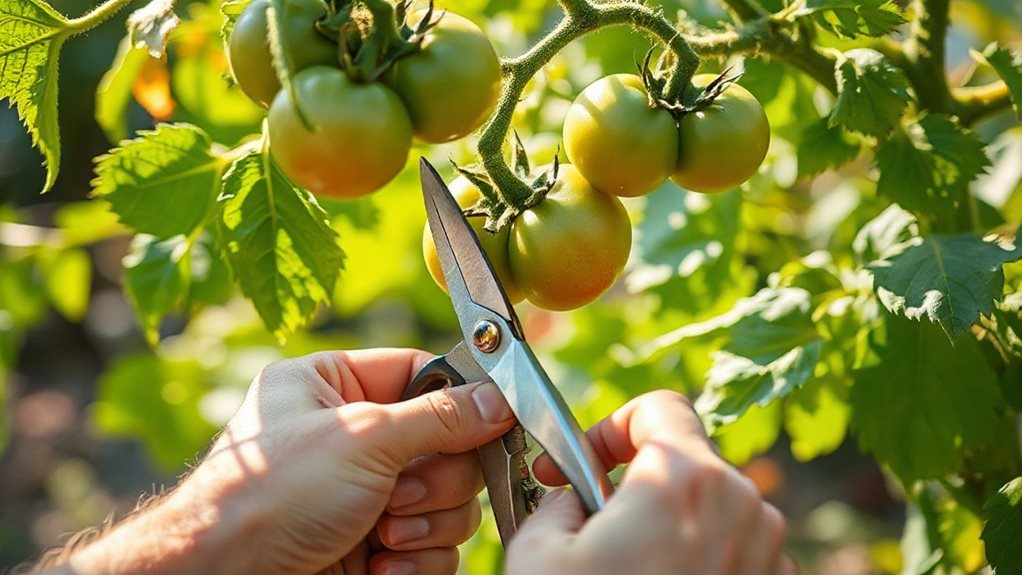
When done correctly, pruning and topping your tomato plants can markedly enhance both fruit size and consistency across the harvest. You’ll improve airflow, reduce disease, and direct energy to developing fruit by removing suckers and trimming lower leaves.
Pinch small suckers by hand, use clean shears for larger cuts, and top indeterminate types late season to amplify ripening—just don’t over-prune. Cooler weather often produces sweeter, firmer vegetables and can influence tomato flavor as well.
Final Note
You increase tomato yield naturally by focusing on soil health, smart watering, and proper plant care. Amend soil with organic materials like cotton-gin trash, plant deeply, and use cover crop mulch to conserve moisture. Combine drip irrigation with mulch to deliver nutrients efficiently. Prune and top plants to direct energy into larger, more uniform fruit. These proven, sustainable practices enhance resilience and productivity without chemicals, giving you a stronger harvest season after season.

Nathan McPhail is a garden and home DIY expert who writes practical, easy-to-follow advice for homeowners and gardeners. Through Yardique, he shares hands-on tips covering gardening, lawn care, landscaping, home improvement, repairs, tools, and outdoor living. His focus is on helping readers solve everyday household and yard problems with straightforward guidance, useful techniques, and practical solutions.