You’ll save water and cut maintenance by choosing native plants adapted to your climate and soil. Drought-tolerant species like switchgrass or yucca reduce irrigation needs by up to 75%, while deep roots prevent erosion and improve soil health. Replace turf with native groundcovers or no-mow mixes to eliminate frequent mowing and lower costs. These plants thrive with minimal care, support pollinators, and sustain local biodiversity—offering a resilient, attractive yard that works with nature, not against it. There’s more to explore about designing your low-maintenance yardscape.
TLDR
- Native plants require less water and care once established, adapting naturally to local climate and soil conditions.
- Drought-tolerant natives like switchgrass and yucca reduce irrigation needs by up to 75% compared to traditional lawns.
- Deep-rooted native species improve soil structure, prevent erosion, and enhance water retention without synthetic inputs.
- No-mow native groundcovers and fine fescue mixes cut maintenance, needing mowing only a few times per year.
- Native plantings support biodiversity while lowering long-term costs for watering, mowing, and chemical treatments.
Save Time and Money With Native Plants
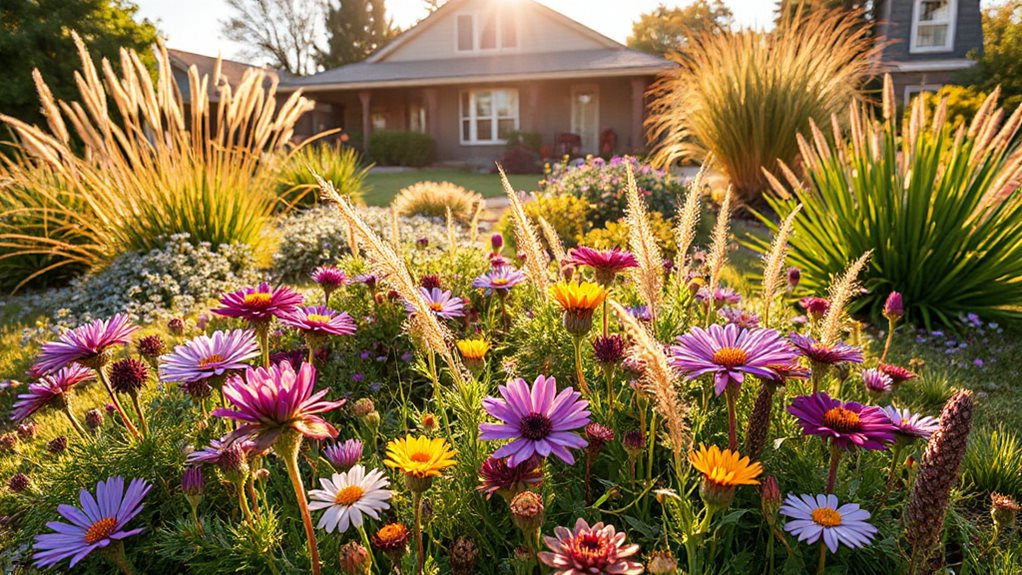
Switching to native plants can dramatically cut the time and money you spend on yard care.
You’ll save up to 75% on maintenance, avoid costly chemicals, and reduce mowing and equipment needs.
With deep roots and natural resilience, these plants thrive on little care, cutting long-term labor and installation costs while supporting a healthier, more sustainable yard you can feel proud of.
Native plants require less supplemental irrigation once established due to their adaptation to local precipitation patterns.
They also help prevent soil erosion and improve water management by enhancing drainage around your property.
Cut Water Bills With Drought-Tolerant Natives
Save hundreds on your water bill by embracing drought-tolerant native plants that thrive with little irrigation. You’ll cut outdoor water use by up to 75% and reduce lawn dependence, which demands more resources.
Native grasses like switchgrass and plants such as agave or yucca survive on rainfall once established. With deep roots and smart adaptations, they conserve water, lower maintenance, and help your yard flourish sustainably. They also support local ecosystems by providing habitat and food for native wildlife.
Use Drip Irrigation for Maximum Efficiency
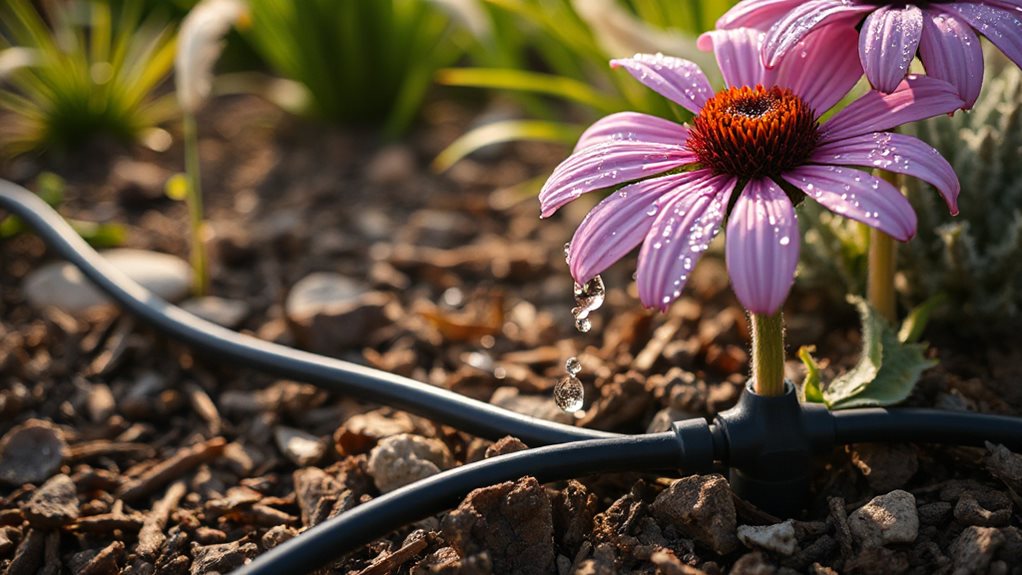
Maximize your yard’s water efficiency by supplying moisture exactly where it’s needed—right at the roots of your native plants. Drip irrigation delivers 90%+ efficiency by eliminating runoff, evaporation, and overspray.
With proper scheduling, you’ll save up to 80% in water, reduce bills by 30–50%, and support healthier grounds—all while using low-pressure systems that integrate seamlessly with drought-tolerant plantings. Lab-verified soil testing with MySoil PRO can help tailor irrigation and fertilization for best results.
Eliminate Mowing With Native Groundcovers
You can eliminate mowing by choosing low-mow groundcover options like Pennsylvania sedge or dwarf tickseed, which form dense, attractive mats with minimal upkeep.
These durable native alternatives thrive in sun or shade, from dry sandy soil to moist woodlands, and once established, need water only during extended droughts.
Consider pairing them with controlled non-native groundcovers like Creeping Jenny to add color, but keep it contained in pots or raised beds to prevent rapid spread.
Low Mow Groundcover Options
Replacing traditional turfgrass with native groundcovers converts your yard into a sustainable, low-effort setting that thrives with minimal intervention.
You’ll enjoy lush, green spaces without constant mowing, as these plants spread densely through stolons or rhizomes.
Species like foamflower, wild strawberry, and creeping Oregon grape adapt beautifully to sun or shade, staying lively while reducing maintenance.
Durable Native Alternatives
While traditional lawns demand frequent mowing and constant upkeep, durable native groundcovers offer a smart, sustainable alternative that thrives under local conditions with little intervention.
Choose Muhly grass or prickly pear for sunny, dry spots, or opt for Allegheny spurge and Christmas fern in shade.
These tough natives control erosion, resist deer, and need minimal care once established, helping you create a resilient, eco-friendly yard you can feel proud of.
Reduce Maintenance With No-Mow Seed Mixes

Stepping into the world of low-maintenance landscaping? Try no-mow seed mixes, blending fine fescues, buffalo grass, and clover for lush, slow-growing turf.
You’ll mow just two to four times a year, save over $650 annually, and enjoy dense, weed-resistant coverage.
Thriving in well-drained, low-nitrogen soils, these mixes suit New England’s climate perfectly while conserving water and reducing emissions—ideal for eco-conscious, practical yards.
Consider incorporating a rain garden to help absorb and manage excess runoff from neighboring yards.
Prevent Soil Erosion With Deep-Rooted Natives
You’ve cut down on mowing with no-mow seed mixes, and now it’s time to strengthen your yard from the ground up.
Deep-rooted natives like switchgrass and kānuka anchor soil, preventing erosion from rain and runoff. Their roots form a living web that stabilizes slopes better than turf grass, while drought tolerance and minimal upkeep save you time and money over the years.
Stop Fertilizing and Pesticides for Good

You can stop using synthetic fertilizers and pesticides by building healthy soil naturally with compost and organic matter, which feed beneficial microbes that support strong plant growth.
Native plants thrive without chemicals because they’re adapted to local conditions and resist pests, reducing the need for harmful treatments.
Healthy Soil Naturally
While synthetic fertilizers and pesticides promise quick fixes, they often undermine the very foundation of a thriving yard—healthy soil.
You build resilience by choosing deep-rooted natives like big bluestem, which improve structure and prevent erosion. Their roots, along with nitrogen-fixing legumes and organic mulches, feed microbes, increase fertility, and enhance water retention—all without chemicals, creating a self-sustaining, living soil ecosystem right in your yard.
No Chemicals Needed
Healthy soil sets the stage for a yard that thrives on its own, and native plants take full advantage of that foundation by eliminating the need for synthetic fertilizers and pesticides altogether.
You’ll save money and time while protecting local ecosystems, since natives resist pests and diseases naturally, thrive without chemical inputs, and reduce pollution.
Once established, they sustain themselves, giving you a resilient, eco-friendly setting that supports nature without extra help.
Save 80% on Maintenance Over 10 Years
Switching to native plants can dramatically cut long-term yard maintenance costs, with homeowners saving up to 80% over a decade.
You’ll spend less on watering, mowing, and chemicals, thanks to natural drought tolerance, no mowing needs, and built-in pest resistance.
Over time, lower labor, water, and material expenses add up, making your grounds both economical and sustainable without sacrificing beauty or function.
Support Wildlife With 70% Native Plant Coverage
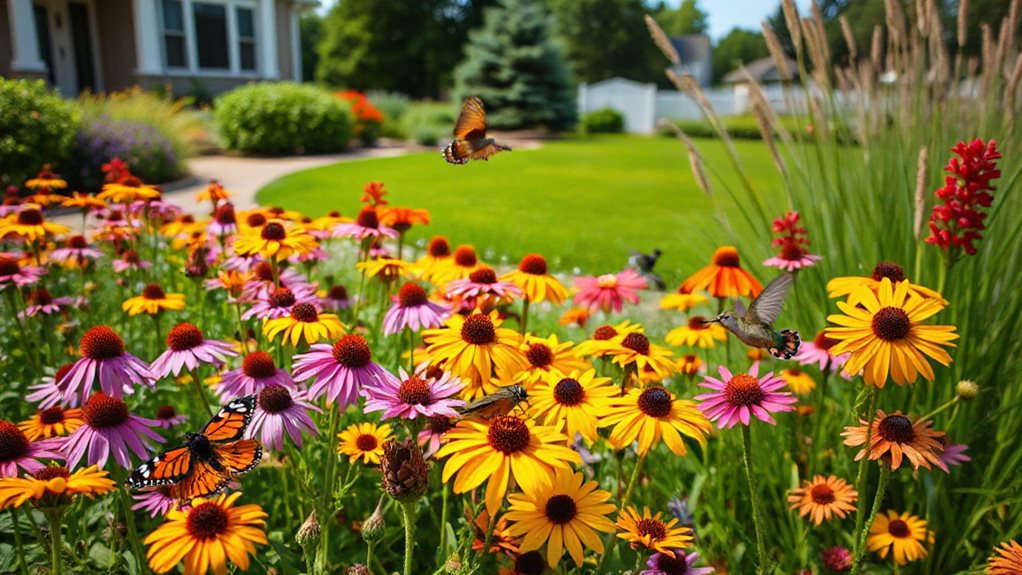
Because your garden plays a key role in local ecosystems, choosing native plants helps sustain the wildlife that depends on them.
Aim for 70% native coverage to support birds, butterflies, and pollinators, especially since studies show this level enhances biodiversity.
You’ll create essential habitat, provide food and shelter, and contribute to conservation—effortlessly making a lasting impact right outside your door.
Attract Birds, Bees, and Butterflies Naturally
What if your yard could become a thriving sanctuary for birds, bees, and butterflies—simply by choosing the right plants?
You’ll support chickadees and caterpillars by planting native oaks, host milkweed for monarchs, and attract pollinators with asters and coneflowers.
Native plants offer nectar, shelter, and food, enhancing biodiversity while reducing maintenance—your surroundings becomes a resilient, living habitat.
Pick Natives That Thrive in Your Soil and Climate

While your yard’s potential starts with the plants you choose, it truly flourishes when those plants align with your soil and climate.
Test your soil’s texture, pH, and drainage to match natives like Butterfly Weed for sand or Coneflower for clay. Pick species suited to your precipitation, sun exposure, and temperature, ensuring they thrive with minimal care.
Expand Your Native Garden for Free
You can multiply your native garden at no cost by tapping into nature’s own propagation methods, from collecting seeds to dividing established plants.
Gather ripe seeds locally, stratify or scarify as needed, then sow in prepared beds.
Divide perennials during dormancy, or take cuttings from juvenile growth, using rooting hormone to enhance success.
Transplant plugs into mulched, weed-free spaces after hardening off, expanding your plot sustainably while preserving genetic diversity.
Final Note
You’ll save time and money by choosing native plants suited to your soil and climate. They need less water, especially when paired with drip irrigation, and many thrive without mowing thanks to no-mow mixes and groundcovers. With 70% native coverage, you’ll support birds, bees, and butterflies naturally. Once established, these plants require minimal care, reducing long-term maintenance. You can even expand your garden for free through division and seeding.

Nathan McPhail is a garden and home DIY expert who writes practical, easy-to-follow advice for homeowners and gardeners. Through Yardique, he shares hands-on tips covering gardening, lawn care, landscaping, home improvement, repairs, tools, and outdoor living. His focus is on helping readers solve everyday household and yard problems with straightforward guidance, useful techniques, and practical solutions.