
Aerate the compacted soil now, cutting a full‑width swath (about 70‑80 % of the cut area) to expose more surface and let sunlight hit the grass directly; then, when the moisture drops below 40 %, run a tedding pass with fast impeller speeds and a roll clearance of 1/16‑3/32 in to fluff the wet material and keep stems cracked for airflow. Hold off irrigation, let the sun’s peak heat (10 AM‑4 PM) and a light sand‑compost topdressing drive evaporation, and monitor moisture with a sensor to avoid re‑sogginess—more details await if you keep going.
TLDR
- Aerate compacted soil to improve drainage and create pathways for water to escape.
- Mow in wide swaths (70‑80% of the cut area) to expose more surface to sunlight and air.
- Tedding when moisture drops below 40% and using fast impeller speeds to fluff and accelerate drying.
- Apply a potassium‑carbonate solution before tedding to break stems and double drying rates.
- Hold off irrigation, use soil moisture sensors, and let peak sun (10 AM‑4 PM) dry the lawn naturally.
Why Aerating Your Lawn Speeds Up Grass Drying
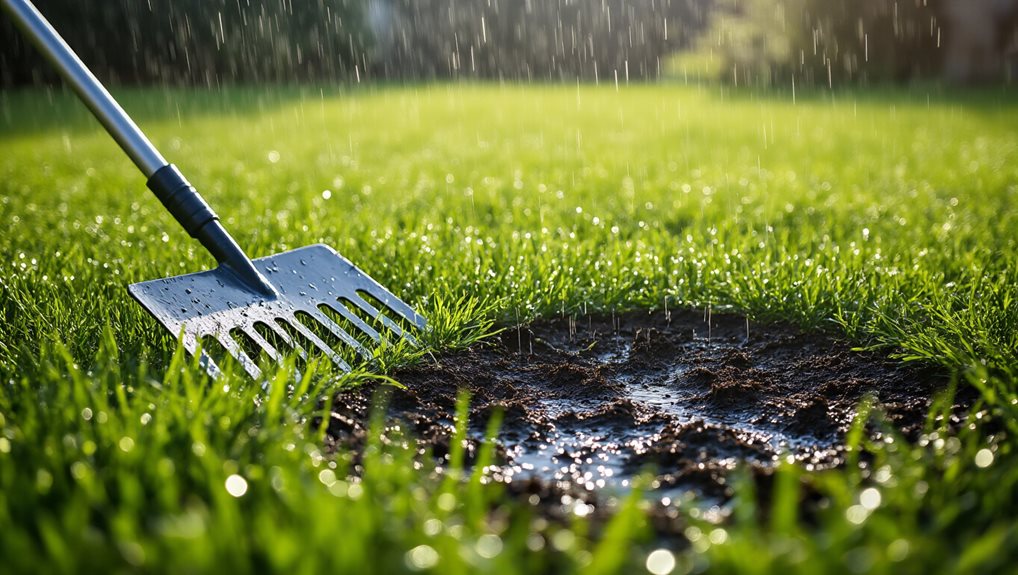
Aerating your lawn speeds up grass drying by breaking up compacted soil layers, usually a quarter to half an inch thick, which creates pathways for air, water, and nutrients to reach the roots more efficiently. You’ll notice improved air exchange, allowing oxygen to fuel thicker, greener growth, while deeper water absorption reduces puddles. Stronger roots develop, enhancing drought tolerance and accelerating turf recovery, so your lawn feels healthier and more united. Improved drainage also helps prevent waterlogged spots after heavy rain. A practical step is to time aeration with local rainfall patterns to maximize soil loosening and moisture movement, supporting faster drying and healthier turf soil structure.
How Wide Swaths Increase Sun Exposure for Faster Drying
Why does a wider swath matter when you’re trying to dry a soggy lawn quickly? A full‑width swath covers about 70‑80% of the cut area, boosting exposed surface area 2.8 times, so sunlight reaches more stomata, keeping them open for early moisture loss, while consistent sun exposure also helps reduce surface compaction and supports healthier regrowth daily maintenance and efficient drying.
Tedding and Mechanical Conditioning: Quick‑Field Curing Tips
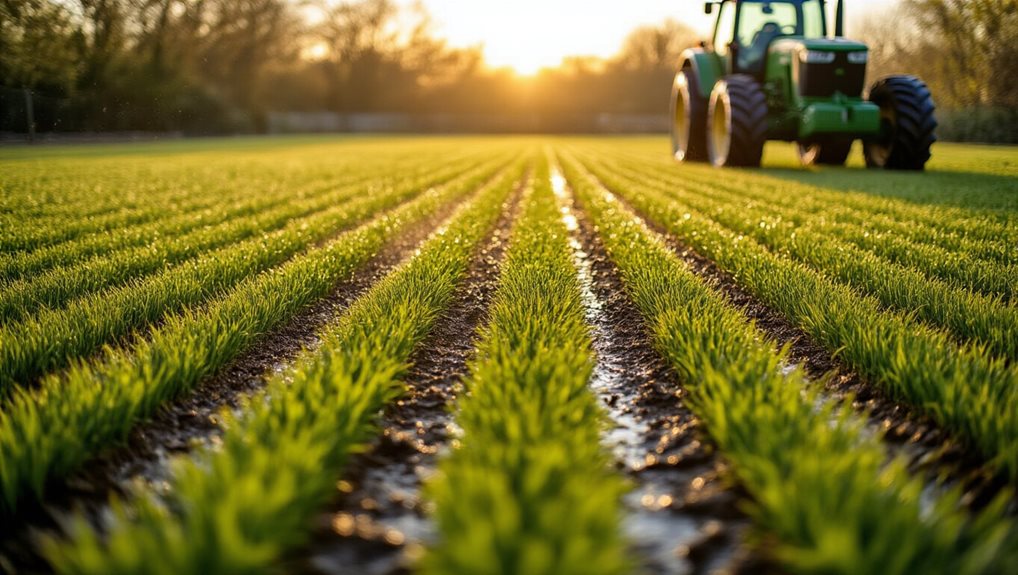
You should start conditioning the lawn as soon as the moisture content drops below 40%, because the mechanical action enhances the drying rate dramatically. By applying a tedding pass right after mowing, you fluff the wet material, expose more surface area, and can combine this with a light chemical spray to accelerate moisture loss. Just keep the equipment speed within manufacturer limits to avoid stem damage, and you’ll see the field cure noticeably faster. Use a grid‑like planning approach to track pass frequency and moisture outcomes across the field for consistent results crop rotation and improved soil management.
Conditioning Increases Drying Rate
How do tedding and mechanical conditioning increase drying speed on a soggy lawn? You’ll find that fast impeller speeds elevate first‑day drying by 13 % in grass, while proper roll clearance (1/16–3/32 in.) prevents leaf loss and keeps 90 % of stems cracked for quicker moisture release. Aggressive pressure (2.4–4.5 N/mm) and flail abrasion further accelerate curing, shaving half a day to a full day off the timeline.
Tedding Before 40% Moisture
A tedding pass before the crop reaches roughly 40% moisture is key to preserving leaf integrity while accelerating drying. You’ll want to run the tedder 2–4 hours after a morning cut, especially in damp weather, to break clumps and fluff the windrow, which enhances sun exposure and airflow. This timing cuts curing time by up to 12 hours, limits leaf shatter, and keeps nutrients intact.
Combine Chemical and Mechanical Methods
After tedding at around 40 % moisture, the next step is to pair that mechanical action with chemical conditioning to accelerate drying. Spray a potassium‑carbonate solution while rolling or flailing to break stems and dissolve wax, then rake the wet bottom into the windrow for air exposure.
This combo doubles drying rates, especially on alfalfa, and reduces storage loss, keeping your lawn’s recovery on track.
Using Heat to Accelerate Moisture Loss After Mowing
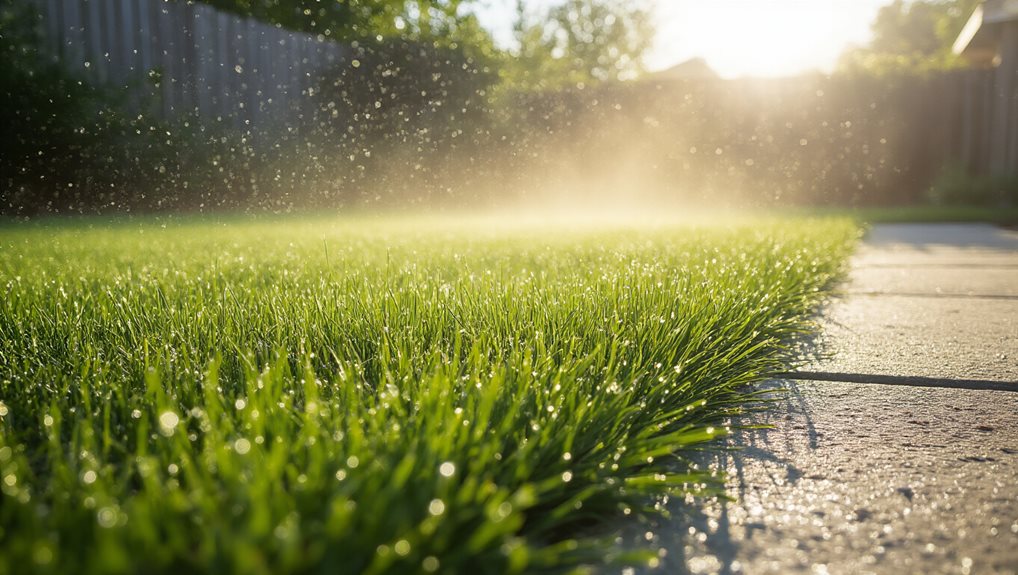
Mowing shortens the grass blades, which immediately exposes a larger surface area to direct sunlight and speeds up evaporation. After mowing, let the sun hit the lawn at peak heat, ideally between 10 AM and 4 PM, and keep the height at 2-3 inches for maximum absorption. Aerate briefly, then apply a light sand-compost topdressing; this traps warmth, drives moisture upward, and lets your soggy lawn dry 20-30% faster, keeping the community’s green spaces thriving. Incorporating drought-tolerant strategies can further reduce moisture losses by promoting smarter water use and resilience in the landscape.
Holding Back Irrigation: Harness Natural Evaporation
You’ll maximize natural evaporation by holding back irrigation and letting the soil dry on its own, especially after a heavy rain.
Installing soil‑moisture sensors lets you monitor exact moisture levels, so you water only when the readings show the lawn truly needs it.
This approach reduces waste, prevents over‑watering, and lets the environment do the work of drying the soggy grass.
With Maximizeirationiration
How can you let nature do the heavy lifting when your lawn is soggy?
Schedule watering around temperature and wind, using weather‑station data to align with peak evapotranspiration.
Reduce irrigation frequency in cooler months, favoring one weekly session, and expose turf to afternoon sunlight while avoiding peak heat.
Optimize soil texture, add organic matter for drainage, and let wind accelerate surface drying.
Use Soil Moisture Sensors
Ever wondered how a simple sensor can keep your lawn from staying soggy while letting nature do the work? You install a moisture probe 6‑12 inches deep, connect it to your controller, and let it compare real‑time readings to your set threshold; when soil stays wet, it shuts off irrigation, and when it dries, it reactivates. This precision cuts water use up to 62 %, prevents overwatering, and adapts automatically with seasonal changes, giving you confidence that your lawn thrives without waste.
Choosing Soil Types and Managing Moisture for Optimal Drying
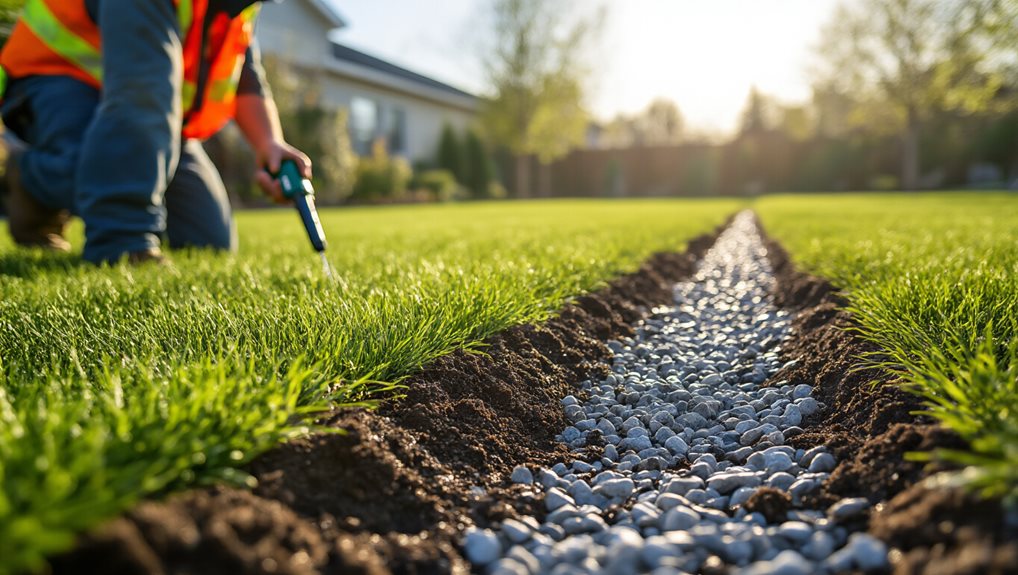
What soil you have determines how quickly a soggy lawn can dry, and understanding each type’s water‑retention traits lets you tailor amendments for faster drainage. Loamy soil already balances moisture and flow, while clay needs compost, biochar, or mulching to break its tight matrix; sandy soil benefits from organic matter and mulches to hold water; silty and chalky soils require careful amendment and pH tweaks, and selecting grasses that match these conditions reinforces drainage and community resilience. phosphorus deficiency
Timing Aeration and Mowing at the Right Moisture Threshold
Choosing the right soil type sets the stage, but the next step—timing aeration and mowing—determines whether the lawn actually dries out efficiently. Water lightly one to two days before, aiming for a moderately moist bed that a screwdriver slides through with little resistance; then mow 1.5‑2 inches shorter than usual, rake debris, and aerate when soil temperature sits between 55‑75°F, ensuring cool‑season grasses thrive in early spring or fall and warm‑season varieties in late spring to early summer.
Monitoring Drying Progress and Preventing Re‑Sogginess
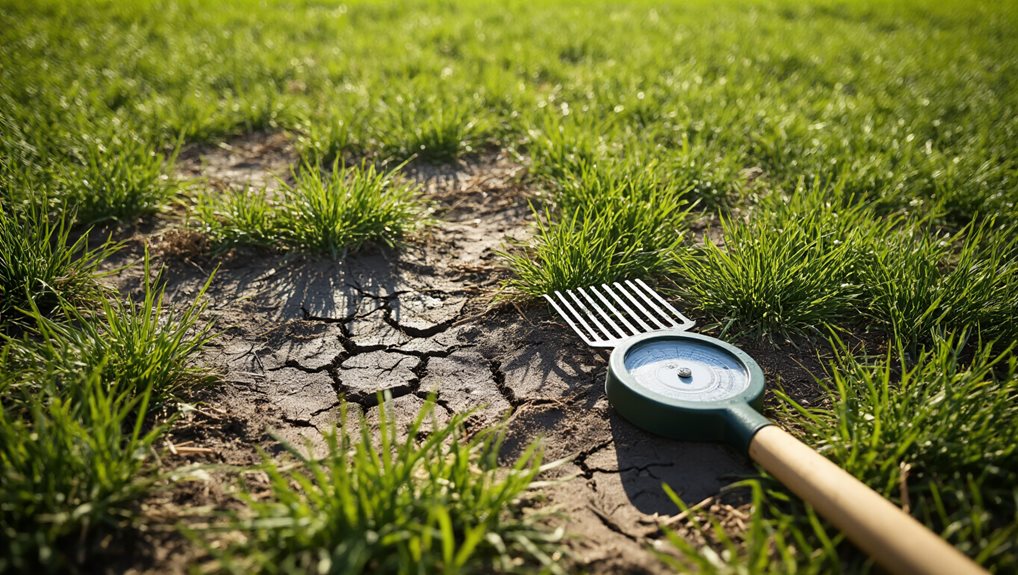
How can you tell whether your lawn is truly drying out or just appearing drier on the surface? Use a handheld moisture meter or Spectrum TDR 350 to record readings after wilting, then log daily averages on TurfBase. Probe depth with tile or open‑faced tools, compare wetting fronts, and pair data with irrigation runtimes and ET estimates. This systematic monitoring shows real drying progress and helps you prevent re‑sogginess.
Final Note
By aerating, widening swaths, and tedding, you increase airflow and sun exposure, which speeds moisture evaporation. Pair these steps with targeted heat after mowing and hold back irrigation to let natural drying dominate. Choose well‑draining soil, time interventions when the lawn’s moisture level is ideal, and monitor progress to avoid re‑sogginess. Following this systematic approach will restore a healthy, dry lawn efficiently without unnecessary water waste.

Nathan McPhail is a garden and home DIY expert who writes practical, easy-to-follow advice for homeowners and gardeners. Through Yardique, he shares hands-on tips covering gardening, lawn care, landscaping, home improvement, repairs, tools, and outdoor living. His focus is on helping readers solve everyday household and yard problems with straightforward guidance, useful techniques, and practical solutions.