You’ll notice stunted growth and purpling on older leaves first, especially in cool or acidic soils where phosphorus uptake is limited. Leaves may turn dark green, then develop red or purple tints along the edges, with yellowing and necrotic spots appearing as tissue declines. Weak stems, poor root development, and delayed flowering are common due to impaired energy transfer. You’ll also see fewer fruits and increased stress sensitivity. These signs often worsen if underlying soil or environmental issues aren’t addressed. There’s more to how these symptoms connect to plant health than meets the eye.
TLDR
- Older leaves turn purplish or dark green due to chlorophyll buildup and anthocyanin accumulation.
- Stunted growth occurs with shortened stems, fewer leaves, and delayed plant maturity.
- Reddish-purple discoloration appears on leaf undersides, veins, and stems as deficiency progresses.
- Yellowing, necrotic spots, and premature drop of lower leaves signal advanced phosphorus shortage.
- Weak root development and reduced flowering lead to lower yields and poor stress tolerance.
What Is Phosphorus Deficiency in Plants?
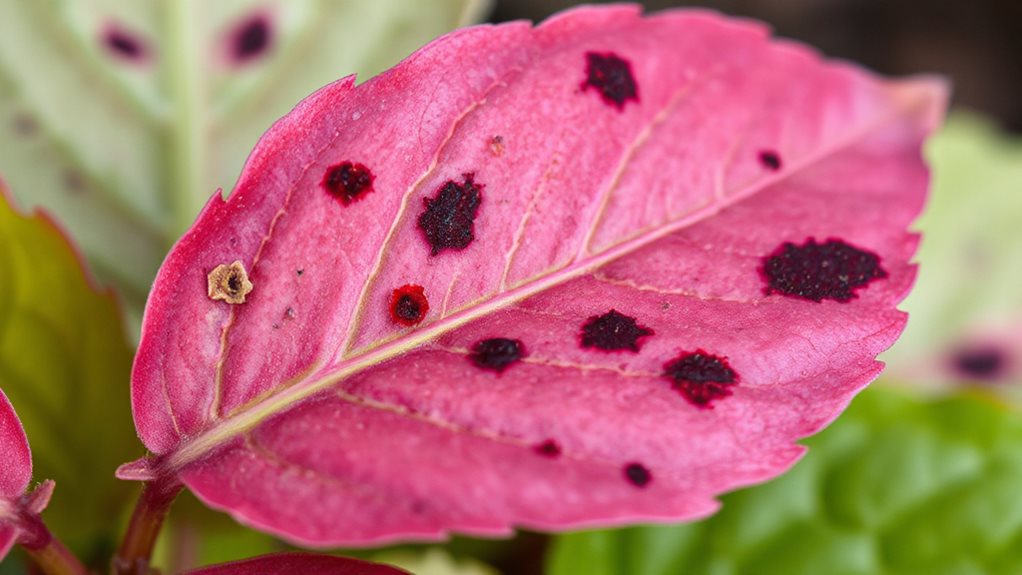
A lack of phosphorus strikes at the heart of your plant’s energy system, disrupting everything from root growth to reproduction.
You’ll notice slowed development, poor flowering, and weak roots as energy transfer falters.
Older leaves turn purplish or dark green, then develop necrotic spots.
Cold, compacted soils or imbalanced pH often limit uptake, so maintaining proper soil conditions helps your plants thrive and stay resilient.
Plants rely on phosphorus to convert sunlight into usable energy, a process essential for transferring energy during photosynthesis. A soil test can confirm low phosphorus levels and guide fertilizer recommendations.
Stunted Growth: A Classic Sign of Low Phosphorus
You’ll notice your plants aren’t reaching their expected height, mainly because low phosphorus slows cell division and weakens stem development.
Their growth stays dwarfed, with shortened internodes and a spindly appearance, especially during early vegetative stages.
Without enough phosphorus, energy transfer falters, directly limiting the strong, steady growth your crops need.
Adequate soil nutrients like nitrogen, phosphorus, and potassium are essential because they are absorbed through water and support processes such as photosynthesis and root strength.
Reduced Plant Height
When phosphorus levels drop, your plants won’t waste time hiding the problem—stunted growth emerges quickly as one of the most visible signs of deficiency.
You’ll notice reduced plant height, slower leaf elongation, and shorter cells due to impaired division and expansion.
In low phosphorus, cell production slows and the cell cycle lengthens, directly limiting upward growth and overall vigor.
Shortened Stem Development
Stunted growth isn’t just about shorter plants—it shows up clearly in how stems develop when phosphorus runs low. You’ll notice thinner, spindly stems in rice, lettuce, and tobacco, with reduced elongation and brittle structures.
Purple or reddish tints in wheat stems signal P deficiency, while poor nutrient transport weakens overall stem function. These signs, though subtle, reveal serious imbalances affecting your plant’s strength and growth.
Dwarfed Growth Pattern
Plants hit a growth wall when phosphorus runs low, showing a dwarfed growth pattern that’s hard to miss once you know what to look for.
You’ll notice shorter stems, fewer leaves, and a compact, stunted shape.
Older leaves may turn purplish or die off, while cold, dry, or acidic soils worsen the problem.
This slowed growth delays maturity and reduces yields, so checking soil conditions early helps your plants thrive like their well-fed neighbors.
Why Leaves Turn Dark or Blue-Green
You’ll notice your plant’s leaves turning dark green or blue-green because phosphorus shortage slows down carbohydrate use, causing sugars to build up in the cells.
This buildup increases chlorophyll production, making the leaves appear darker than normal, especially on older foliage. At the same time, low phosphorus limits ATP formation, reducing energy transfer and worsening the plant’s ability to process and distribute nutrients efficiently.
Blueberries also demonstrate how soil moisture and nutrient balance interact, since maintaining proper moisture and pH is important for nutrient uptake.
Carbohydrate Buildup In Cells
Your plant’s telltale dark or blue-green leaves under phosphorus deficiency stem from a critical imbalance in carbohydrate metabolism, driven by reduced photosynthetic efficiency and disrupted energy flow.
You’ll notice sugars and starches build up in leaf cells because limited phosphorus slows carbohydrate use and export.
This accumulation, especially of sucrose and starch, directly inhibits carbon metabolism, reducing growth while increasing oxidative stress your plant must manage.
Chlorophyll Concentration Increase
Darker leaves under phosphorus stress aren’t just a visual oddity—they signal a physiological shift driven by chlorophyll accumulation as photosynthesis falters.
You’ll notice blue-green hues because limited Pi impairs ATP synthase and electron flow, reducing photosynthetic efficiency.
Despite lower energy output, chlorophyll builds up, deepening leaf color.
SPAD readings rise, and fluorescence transients reveal early P deficiency, helping you catch it before irreversible damage occurs.
Reduced Phosphorus Utilization
Although phosphorus is essential for energy transfer and metabolic function in plants, reduced utilization disrupts these processes and triggers distinct visual symptoms, beginning with abnormal leaf coloration.
You’ll notice older leaves turning dark green or developing a blue-green tint, as impaired phosphorus transport limits ATP production and sugar metabolism. This discoloration, often shiny or dull, signals early deficiency and sets the stage for further physiological stress.
Purple or Reddish Tints? Check for Phosphorus Lack
Spotting unusual hues on your plants? If you see reddish-purple tints along lower leaf edges, especially in cool or acidic soils, phosphorus deficiency might be the culprit.
Older leaves often show purpling first, with stems and veins turning red as it progresses. Dark green foliage may precede vivid violet hues, signaling carbohydrate imbalances. Check soil conditions and consider a nutrient test to confirm. Plants under nutrient stress may also show other symptoms like yellowing from nitrogen lack or potassium edge burn, so test and amend soil with a balanced fertilizer and monitor watering practices to aid recovery—especially maintaining proper soil pH.
Yellowing and Dropping Lower Leaves
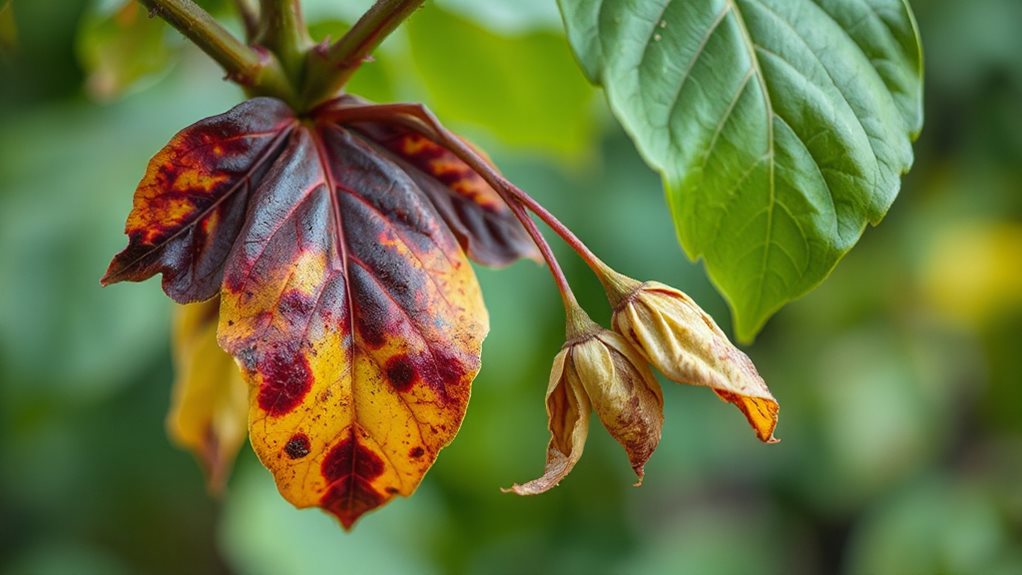
You’ll notice yellowing starting on the lower, older leaves as phosphorus gets pulled toward new growth, often showing a dark green or dull tint before turning pale yellow.
If the deficiency continues, those leaves will yellow further, develop dark spots, and eventually die, leading to premature drop that signals serious nutrient stress.
Keep an eye on soil pH, temperature, and moisture—since cold, waterlogged, or acidic conditions all limit phosphorus uptake and worsen symptoms.
Areca palms often show similar stress patterns when nutrient uptake is limited, especially in clustered growth situations.
Yellowing Older Foliage
Often, the first clear sign of phosphorus deficiency appears in your plant’s older leaves, where subtle changes begin long before outright yellowing.
You’ll notice dark green, purplish, or bluish tones developing, followed by stiff, curled foliage.
As the deficiency progresses, yellow splotches emerge and spread across the darkened leaves, signaling advanced stress and the need for prompt nutrient correction.
Premature Leaf Drop
As the discoloration in older leaves intensifies from dark green to purplish or bronze-purple hues, especially on the undersides, you’ll start to see those same leaves become thin, brittle, and increasingly prone to falling off—particularly at the lower canopy.
You’ll notice smaller, distorted foliage dropping early, often preceded by interveinal chlorosis. Cool, wet soils or poor pH balance worsen this premature leaf drop, so maintaining proper soil conditions helps your plants retain healthy foliage longer.
Dead Spots and Dying Leaf Tips
When phosphorus levels drop too low, your plants can’t maintain healthy cell function, and you’ll start seeing dead spots emerge—especially on older leaves where symptoms first appear.
You’ll notice brown, stiff splotches spreading from edges toward the center, often with purple or bronze hues.
As deficiency worsens, necrosis advances to leaf tips, causing dry, dying tissue along margins and veins, signaling urgent need for correction.
Smaller Leaves and Leaf Curling
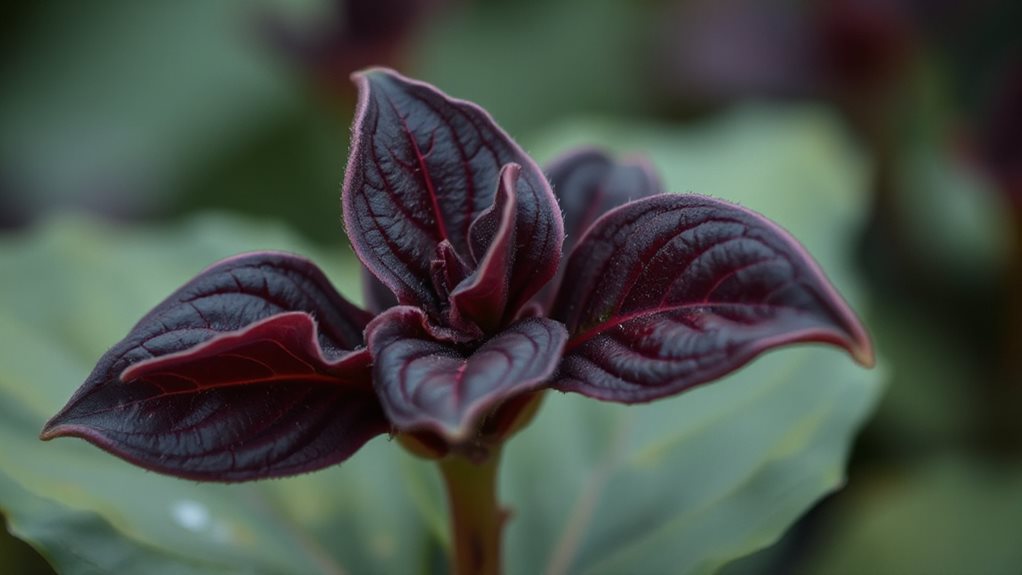
You’ve likely noticed dead spots and dying leaf tips on older foliage as early signs of phosphorus deficiency, but as the shortage persists, the symptoms shift focus to the development of new growth.
You’ll see smaller leaves due to impaired cell division, while stunted shoots and thin blades alter leaf shape. Though leaf curling is rare, it can occur under stress, often alongside purpling on older leaves.
Delayed Flowering and Crop Maturity
Although flowering might seem like a straightforward stage in a plant’s life cycle, phosphorus deficiency can markedly disrupt this process by interfering with key molecular pathways.
You’ll notice delayed blooms because low phosphorus triggers bGLU25 to move and sequester GRP7, enhancing FLC and repressing flowering.
This delay stunts reproductive growth, pushing maturity back and reducing yields, especially in crops like cannabis where timing and nutrient balance are critical for quality harvests.
Fewer, Smaller Fruits and Seeds
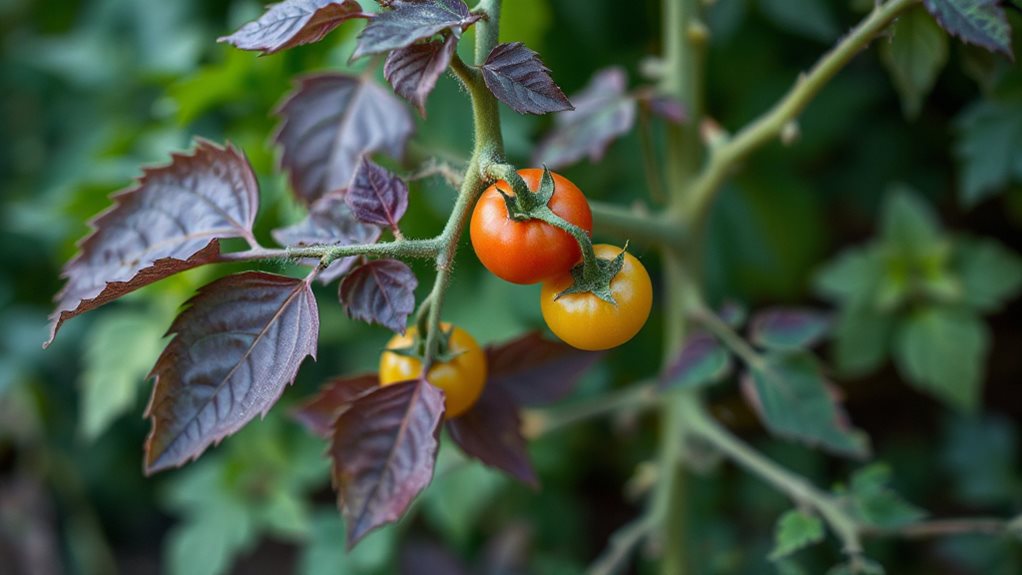
Phosphorus deficiency doesn’t just delay flowering—it directly undermines the quantity and quality of the harvest by limiting fruit and seed production.
You’ll notice fewer, smaller fruits and seeds due to impaired energy transfer and photosynthesis.
Poor root development restricts nutrient uptake, stunting growth.
In strawberries, soybeans, and citrus, expect deformed, acidic, or undersized produce, with up to 50% yield loss if unaddressed.
Weak Roots and Drought Stress
When your plants lack phosphorus, their roots never develop the strength or depth needed to withstand environmental pressures, leaving them highly vulnerable to drought stress.
You’ll notice shallow growth, poor water uptake, and stunted development, especially in cold or compacted soils.
Even with moisture, weak roots struggle, while low phosphorus limits energy for stress responses—making your plants more sensitive to dry, hot conditions that further reduce their resilience and productivity.
Imbalanced Growth: Roots Over Shoots
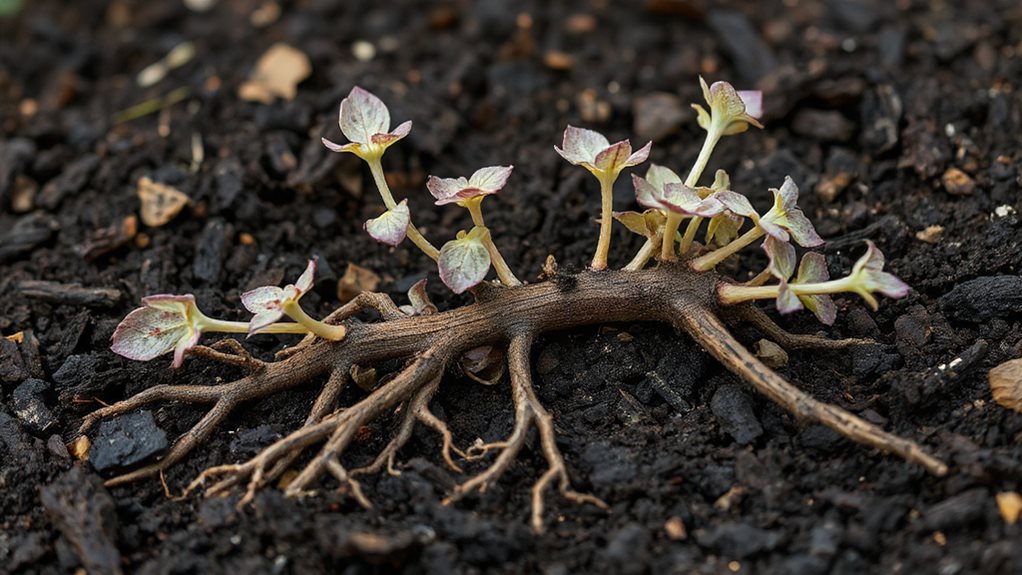
Weak roots struggling in dry soil set the stage for another visible consequence: your plants start diverting resources in ways that upset their natural balance.
You’ll notice stunted shoots and smaller, darker leaves as phosphorus deficiency slows cell division and elongation. Your plant prioritizes root growth, elevating the root-to-shoot ratio. This shift, driven by hormonal changes and carbohydrate buildup, means less energy for shoots, delaying maturity and limiting overall vigor.
How Phosphorus Deficiency Weakens Plant Defenses
While your plant scrambles to survive under phosphorus deficiency, it doesn’t just slow down growth—it actively dismantles key defense systems, leaving itself vulnerable to both environmental stresses and pathogens.
You’ll notice weakened immunity, reduced disease resistance, and impaired stress responses due to low energy and altered signaling.
Prioritizing phosphorus uptake over defense, your plant becomes more susceptible to drought, infections, and soil-borne threats, undermining its overall resilience and long-term health.
Final Note
You’ll notice phosphorus deficiency when plants grow slowly, develop purplish leaves, or show weak roots and poor fruit production. These signs mean your plants aren’t getting enough phosphorus, which is crucial for energy transfer and root development. You can correct this with balanced fertilizers or soil amendments like bone meal. Regular soil testing helps you catch shortages early, ensuring healthier growth. Acting quickly supports strong development and enhances resilience against stress.

Nathan McPhail is a garden and home DIY expert who writes practical, easy-to-follow advice for homeowners and gardeners. Through Yardique, he shares hands-on tips covering gardening, lawn care, landscaping, home improvement, repairs, tools, and outdoor living. His focus is on helping readers solve everyday household and yard problems with straightforward guidance, useful techniques, and practical solutions.