
Space your tomatoes 18–36 inches apart, depending on whether they’re determinate or indeterminate, and allow 3–5 feet between rows for airflow. Position kale, lettuce, and cabbage with 12–24 inches between plants to support healthy growth. Interplant fast-growing radishes between slower crops to maximize space. Use raised beds with staggered, grid-based layouts to enhance yield. Avoid overcrowding, which invites disease and stunts growth, and adjust spacing for your climate and soil—your garden’s success starts with smart spacing, and there’s more to optimizing it than just distance.
TLDR
- Space tomato plants 18–36 inches apart based on type, with indeterminate varieties needing more room than determinate ones.
- Plant kale 12–24 inches apart and cabbage 12–24 inches apart, with 2–3 feet between rows for airflow and growth.
- Thin lettuce seedlings to 8–15 inches apart, depending on variety, to prevent crowding and ensure head development.
- Use interplanting strategies like pairing radishes with lettuce to maximize space, reduce weeds, and improve soil.
- In raised beds, space plants in a grid pattern to optimize yield, improve airflow, and reduce water and pest issues.
How Far Apart to Space Tomatoes for Best Yield
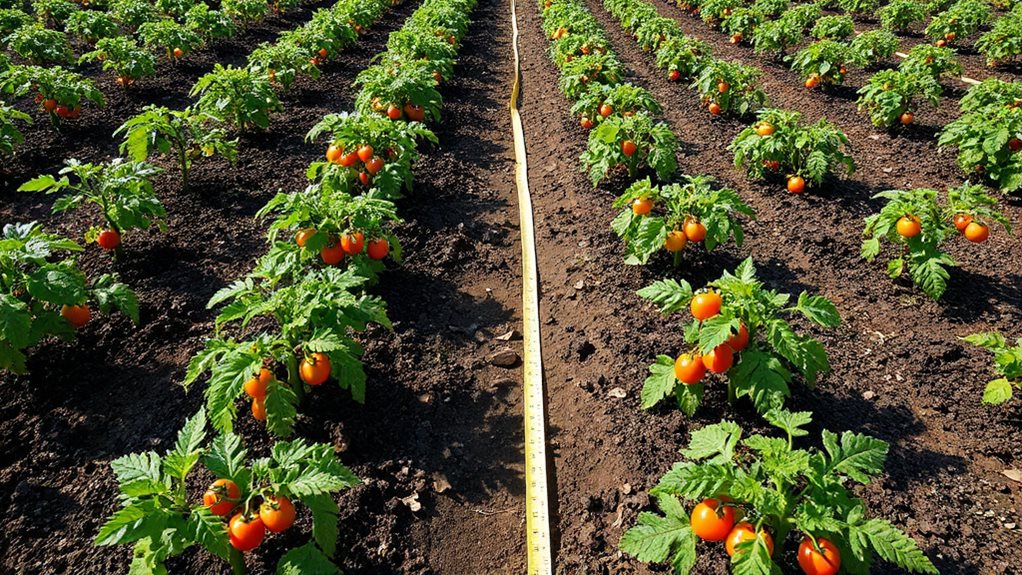
Maximize your tomato harvest by spacing plants correctly from the start. For determinate types, space 18–24 inches apart, especially if staking, while indeterminate varieties need 24–36 inches, with 36 inches ideal for larger vines. Use 24–36 inches for caging and up to 48 inches for sprawling plants. Allow proper spacing so each plant can establish a strong root system and mature before frost by counting back from your average first fall frost to match variety days to maturity.
Maintain row spacing of 3–5 feet to guarantee airflow, reduce disease, and support healthy, productive plants. Proper spacing ensures that each plant receives adequate sunlight, which is critical because full sun exposure directly influences fruit development and overall yield.
Ideal Spacing for Kale, Lettuce, and Cabbage
You’ll want to space full-sized kale plants 18–24 inches apart, with rows 2–3 feet apart to allow room for growth and easy access.
For lettuce, start seeds 1–3 inches apart and thin them to 8–15 inches depending on the variety, ensuring good airflow to prevent disease.
Though cabbage spacing isn’t specified here, treat it like other brassicas—12–18 inches between plants and 24–30 inches between rows works well for healthy head development.
Most Maryland gardeners should choose varieties suited to their local planting zone to ensure winter survival and proper timing of plantings.
Kale Spacing Guidelines
While growing conditions and kale varieties may vary, providing adequate space between plants is essential for healthy growth and maximum yield.
Space plants 12–18 inches apart in rows 2–3 feet apart for ideal airflow and sunlight.
Use 12-inch square foot spacing in raised beds, adjust for variety size, and thin direct-seeded crops to 8–12 inches to guarantee strong, harvest-ready plants.
Lettuce And Cabbage Tips
When planning your garden layout, giving lettuce and cabbage the right amount of space from the start sets the stage for healthy plants and strong yields.
Space heading lettuce 1–3 inches apart in rows 8–15 inches apart, while leafy types can be densely seeded and thinned.
Transplant cabbage 12–24 inches apart, with 36 inches between rows to support full growth and airflow, reducing disease risk.
Fill Gaps Early: Interplant Radishes and Lettuce
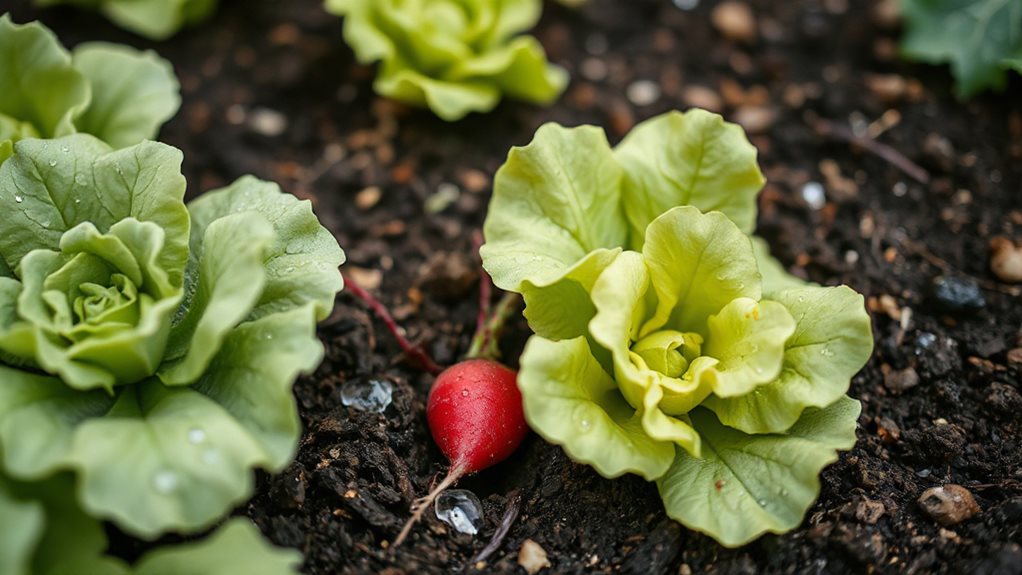
Get a head start on your growing season by tucking radishes between rows of slower-germinating lettuce, making the most of every inch of garden space from day one.
You’ll loosen compacted soil, deter pests like aphids, and improve aeration while maximizing yields.
Their complementary root depths prevent competition, and fast-maturing radishes free up room for lettuce to thrive, creating an efficient, harmonious pairing perfect for small-space gardeners.
Keep soil consistently moist for both crops, since seedlings benefit from regular watering to establish strong roots and avoid stress consistent moisture.
Space Plants Evenly in Raised Beds (No Rows!)
Skip traditional rows and space your plants evenly in all directions to maximize every inch of your raised bed.
By staggering plants instead of lining them up, you’ll fit more in less space while improving airflow and light exposure.
Keep a consistent distance between each plant—like 3 inches for carrots or 12 inches for peppers—so they grow efficiently without wasting room.
Consider using raised beds with an open-base design to improve drainage and root access for healthier plants.
Even Spacing In All Directions
Though traditional row gardening has long dominated backyard plots, spacing your plants evenly in all directions within raised beds frees a smarter, more productive approach.
You’ll maximize space using staggered, zig-zag patterns that eliminate wasted pathways. By positioning plants uniformly—just far enough apart to thrive—you increase yields, suppress weeds, and retain soil moisture, all while easily reaching every corner of your 4-foot-wide bed.
Skip Rows, Maximize Space
You’ve already seen how even spacing in all directions enhances productivity by eliminating wasted pathways and making the most of your raised bed’s footprint.
Skip rows entirely—intensive planting in wide beds increases yield up to four times.
Closer plants shade soil, reduce weeds, and maximize space.
Use trellises, eliminate walkways, and follow center-out planting for lush, efficient gardens that thrive without traditional row spacing.
Stagger For Better Growth
When planning your raised bed garden, staggering plantings can markedly increase both yield and harvest duration by ensuring crops mature at different times.
You’ll maximize space without rows, allowing closer, even spacing that reduces weeds and compaction.
This method enhances productivity, supports continuous cycles, and enhances growth, giving you up to four times more produce while maintaining healthy, well-drained soil throughout the season.
Use Square Foot Gardening for Perfect Spacing
Tap into the efficiency of square foot gardening to revolutionize how you grow vegetables in compact spaces. You maximize yield by organizing crops in grid-based layouts, eliminating wasted pathways and reducing space needs by up to 80%. This method conserves water, cuts costs by half, and minimizes weeds and pests, all while protecting soil health—giving you a smarter, simpler way to grow more with less. Many gardeners pair this approach with compost bins to recycle kitchen scraps and enrich soil for better yields.
What Happens When You Plant Too Close?
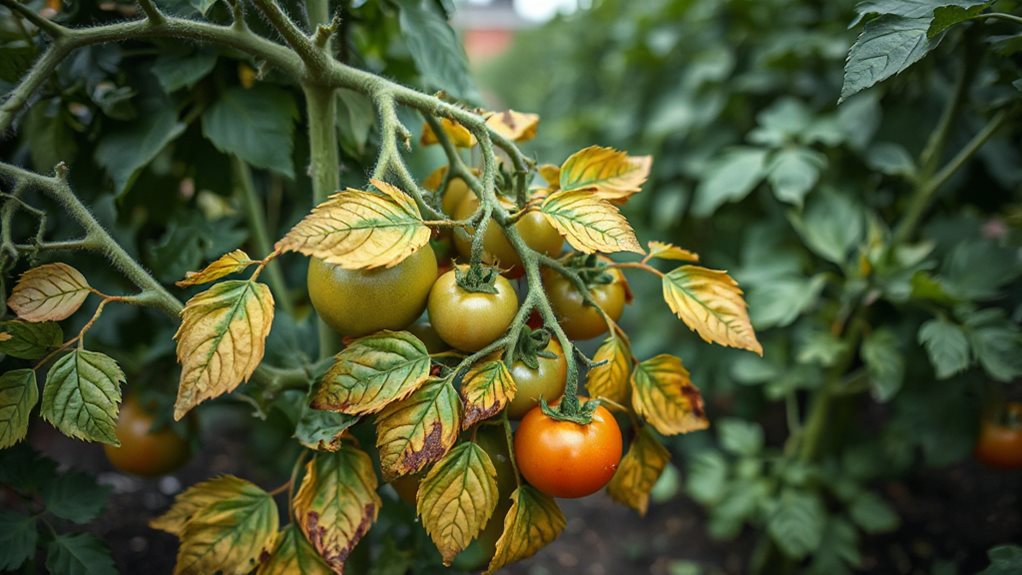
While maximizing space in your garden may seem efficient, planting too close sets the stage for a cascade of problems that undermine both plant health and productivity.
You’ll face restricted airflow, increasing humidity and disease risks like powdery mildew.
Crowded plants compete for water and nutrients, receive less sunlight, yield poorly, and make harvesting harder, ultimately stressing both crops and gardener.
Adapt Spacing for Sun, Soil, and Climate
Because your garden doesn’t exist in a vacuum, adapting plant spacing to match your specific sun exposure, soil conditions, and local climate is essential for healthy growth and strong yields.
You’ll prevent disease with wider spacing in hot, humid areas, conserve moisture in dry regions with closer planting, and balance nutrient access in poor soils. Adjusting spacing helps your plants thrive where they are.
Common Garden Spacing Mistakes That Hurt Yield
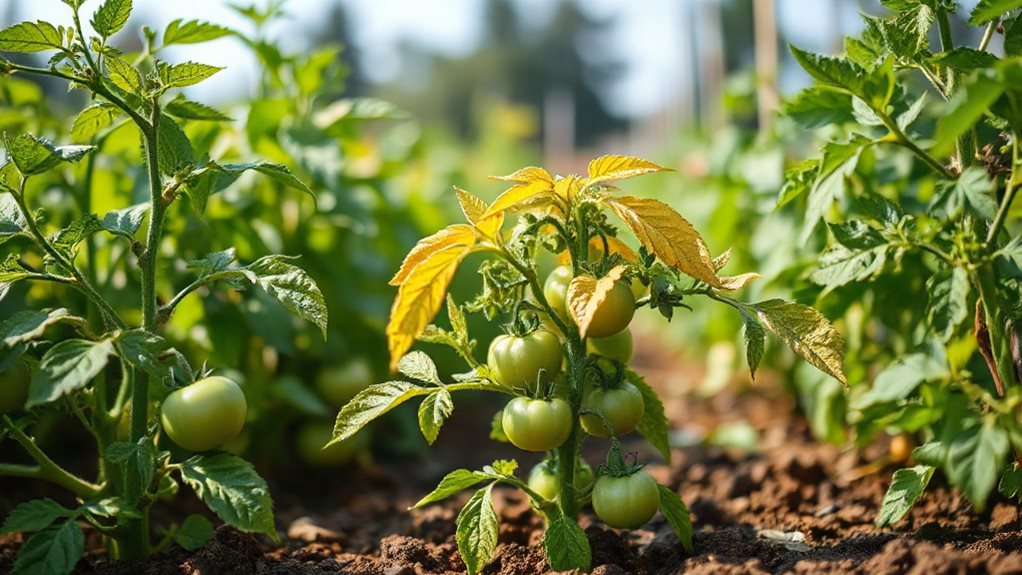
You’ve already taken steps to adjust spacing based on your garden’s sun, soil, and climate, but even with those factors in mind, common mistakes can still undermine your harvest.
Crowding plants restricts airflow and invites disease, while spacing too widely wastes space and cuts yield. Ignoring seed packet advice or skipping thinning leads to competition, poor growth, and lower productivity. Ideal spacing follows a bell curve—too close or too far both reduce total output.
Final Note
You’ll maximize yield and plant health by spacing vegetables properly, based on their needs and your garden’s conditions. Crowding leads to competition, disease, and poor airflow, while smart spacing—like square foot gardening or interplanting—boosts efficiency. Adjust for sun, soil, and climate to get the best results. Avoid common mistakes by measuring carefully and planning ahead, ensuring each plant has room to thrive without wasting space or resources.

Nathan McPhail is a garden and home DIY expert who writes practical, easy-to-follow advice for homeowners and gardeners. Through Yardique, he shares hands-on tips covering gardening, lawn care, landscaping, home improvement, repairs, tools, and outdoor living. His focus is on helping readers solve everyday household and yard problems with straightforward guidance, useful techniques, and practical solutions.