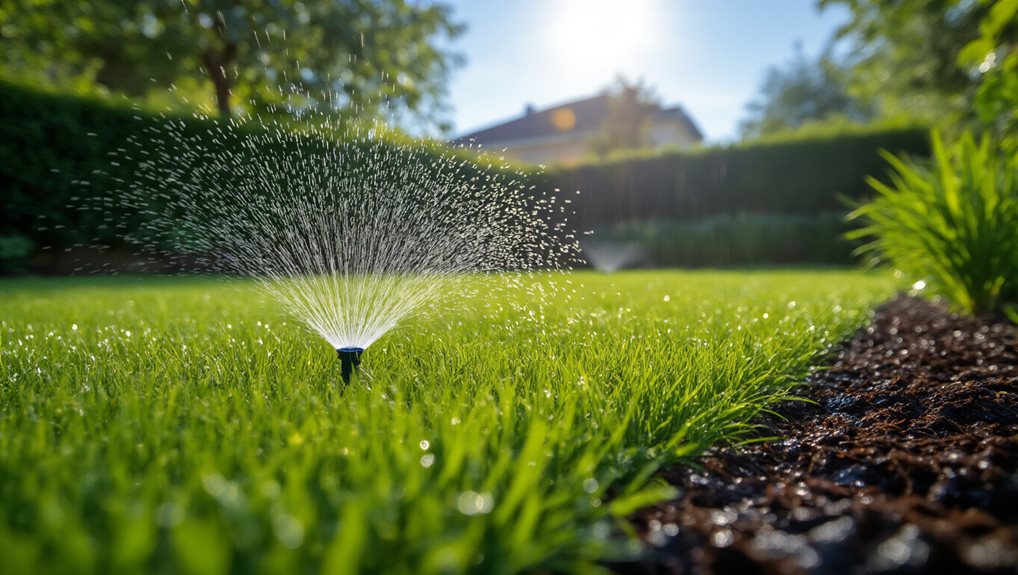
Water your lawn early, between 4 A.M. and 10 A.M., when cooler temperatures, higher humidity, and light winds let the soil absorb moisture efficiently, keeping roots deep and foliage dry; aim for 1–2 inches per week, increasing to 2 inches during extreme heat, and deliver that amount in a single burst of 30‑45 minutes to avoid runoff. Use a catch‑can to measure depth, let the soil dry between sessions, and avoid evening watering to prevent disease, then you’ll uncover more detailed tips.
TLDR
- Water early, between 4 A.M. and 10 A.M., to take advantage of cooler temperatures, lower wind, and reduced evaporation.
- Apply deep, infrequent irrigation (1–1.5 inches per week) in 2–3 sessions, allowing soil to dry between water to promote 6–8 inches root depth.
- Use a catch‑can test to set burst runtime that delivers 1–2 inches without runoff; adjust for soil type and heat factor.
- Keep foliage dry after watering and avoid evening irrigation to prevent fungal diseases and anaerobic soil conditions.
- Monitor soil moisture and adjust frequency during heat spikes or droughts, adding extra sessions or increasing weekly total by ~0.5 inches as needed.
Why Early Morning (4‑10 A.M.) Is the Optimal Time to Water a Lawn in Heat
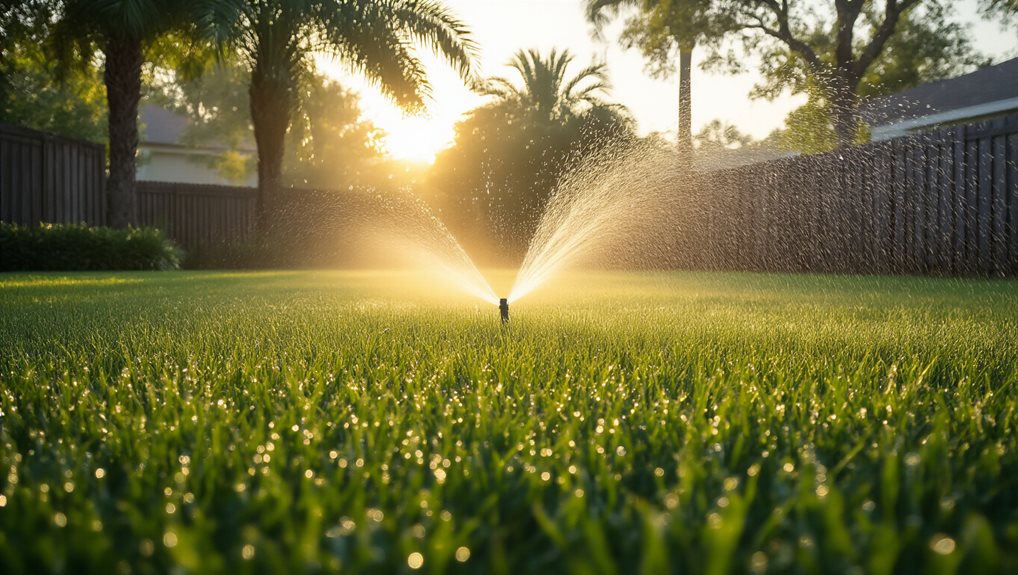
Ever wonder why the best time to water your lawn in scorching weather is between 4 A.M. and 10 A.M.? You’ll find that cooler temperatures and higher humidity let water soak deeply, while low wind reduces runoff and evaporation. Roots are most active then, absorbing moisture efficiently, and foliage dries quickly, lowering disease risk. This timing conserves water, supports turf health, and aligns with natural plant rhythms. This timing also aligns with efficient watering practices, helping meet the recommended 1‑inch weekly water goal without over‑watering. low wind
Deep Watering for Heat‑Resistant Lawn Roots
How often should you water to build a heat‑resistant lawn? Water deeply two to three times weekly, allowing soil to dry between sessions, so roots grow six to eight inches down.
Apply roughly 1–1.5 inches per week, adjusting for sandy or clay soils, and use smart irrigation to monitor moisture.
This schedule promotes drought‑tolerant, resilient grass that thrives in hot weather.
Calculate Weekly Water Volume: 1‑2 Inches Normally, 2 Inches in Extreme Heat
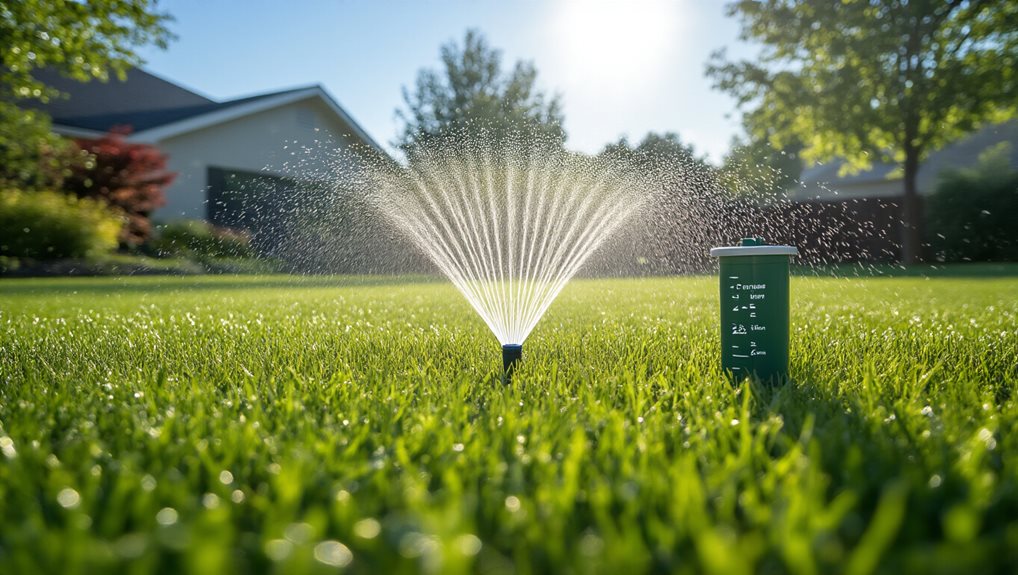
You’ll first measure the water depth your sprinklers deliver, then multiply that depth by the lawn’s square footage to get the total gallons needed per inch.
If temperatures stay below 85 °F, aim for 1–1.5 inches weekly, but when extreme heat hits, increase the target to 2 inches to compensate for higher evaporation.
Adjust the calculated volume by the heat factor, ensuring you meet the plant’s water‑use requirements without over‑watering.
Measure Calculate Water Depth
When the temperature spikes, figuring out exactly how much water your lawn needs becomes essential, and the container test method offers a quick, reliable way to gauge water depth. Place four straight‑sided containers in a grid, run sprinklers for a set time, then read the shallowest level; aim for 1‑2 inches weekly, increasing to 2 inches during extreme heat.
Adjust for Heat Levels
What happens when the mercury climbs above 80 °F? You’ll need to augment your lawn’s weekly water to two inches, especially on sun‑exposed patches, and increase watering sessions to three or four per week. Aim for one‑inch deep applications, spacing them early morning or late evening to reduce evaporation. Adjust for soil type, grass variety, and local climate to keep the turf thriving and the neighborhood feeling united.
Set Burst Duration to Deliver 1‑2 Inches of Water Without Runoff
You’ll start by timing each sprinkler burst, using a rain gauge or a straight‑sided container to confirm that the water applied reaches the target 1‑2 inch depth.
Then you’ll compare that timing to how quickly your soil absorbs water, watching for the moment runoff begins so you can stop the burst before any loss occurs.
Measure Burst Timing
How do you set the burst duration so your lawn receives the right amount of water without runoff?
Place catch cans across each zone, run a test burst, then measure the average depth. If you see about half an inch, a 30‑minute session is spot‑on; less means extend the burst, more means shorten it.
Adjust for temperature and sun exposure, using the cycle‑soak split to keep water infiltrating rather than pooling.
Measure Soil Absorption
Ever wondered how to fine‑tune your irrigation so the soil actually absorbs the water you apply instead of letting it run off? Use a tensiometer or TDR probe to gauge moisture after each burst, noting when the reading stabilizes at 1‑2 inches depth.
Adjust timing until the soil’s water tension stays low, ensuring full absorption without runoff.
How to Measure Water Depth With a Sprinkler Cycle or a Simple Catch‑Can
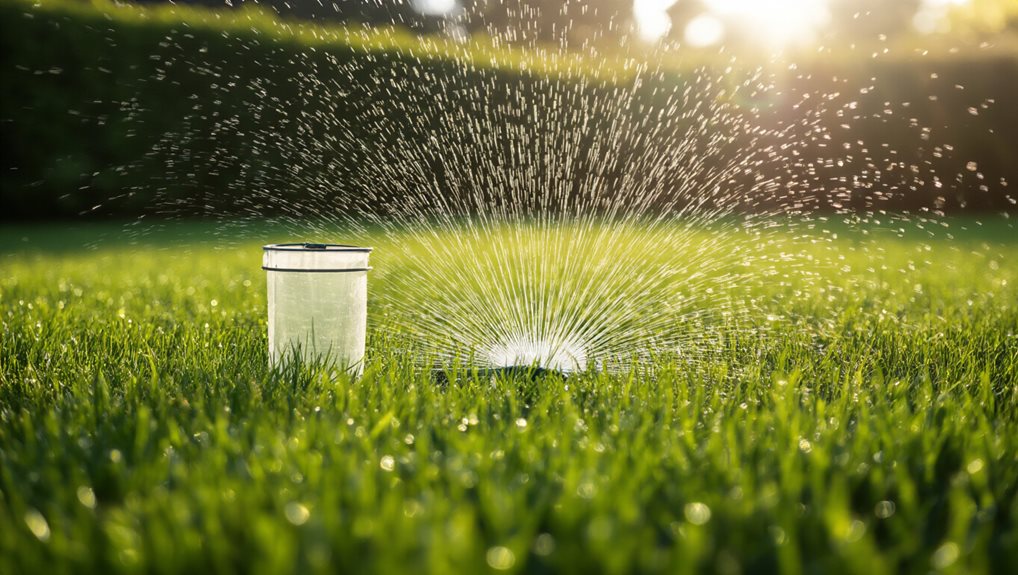
Ever wondered how to quantify the exact amount of water your sprinkler delivers? Place 1.5‑2 ft‑away catch‑cans, add a second at the spray edge, and arrange a grid of four to test uniformity. Run the zone for ten minutes, then measure depth in each can, average the readings, and calculate the precipitation rate (average inches ÷ minutes × 60). Adjust heads or runtimes accordingly. In addition, ensure you test under the same soil and weather conditions to compare results across zones and seasons uniformity testing.
Midday Mist: 5‑10 Minute Spritz for Heat‑Stressed Grass
After measuring your sprinkler’s output, you can put that data to work by adding a brief, 5‑10‑minute midday mist to protect heat‑stressed grass. This short spritz cools blades, reduces leaf temperature, and offers a quick hydration boost without deep soaking, so you avoid waste while showing your lawn you care. Grid layout helps planners track which zones you mist and ensures even coverage across the lawn.
Target only stressed zones, keep the duration brief, and watch for runoff.
Adjust Watering Frequency During Heat Spikes and Drought
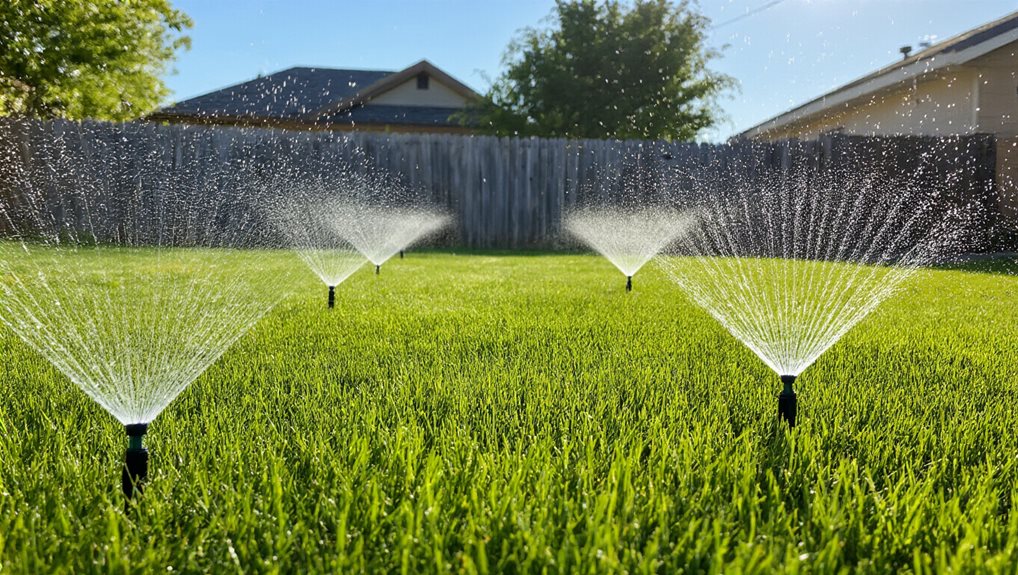
How often should you water when a heat spike hits or a drought persists? In hot spikes, aim for three to four sessions weekly, delivering about 0.4 inches each, which totals 1.2–1.6 inches per week.
In arid zones add a fifth day or increase by 0.5 inches weekly.
Use early‑morning runs, avoid daily short bursts, and measure output with a cans test to ensure soil reaches six inches depth.
Mowing Height Tricks That Protect Moisture and Reduce Evaporation
Why does mowing height matter when the sun beats down on your lawn? Keeping blades at three to four inches shades soil, cuts evaporation, and encourages deeper roots that tap lower moisture, while longer leaf area enhances photosynthesis. Follow the one‑third rule, never removing more than a third of the blade, and adjust heights by grass type—cool‑season grasses thrive at three‑four inches, warm‑season at one‑two. This protects water, reduces stress, and unites your lawn’s health. In addition, maintaining proper soil moisture through mindful irrigation supports the plant during hot spells, which aligns with best practices for both lawn care and structural integrity during curing environments. water conservation
Use Grass‑Clipping Mulch to Retain Water After Irrigation
Ever wondered how a thin blanket of grass clippings can keep your lawn hydrated after you water it? Apply a light, even layer of dry clippings after each irrigation; they’re 80‑85% water, shield soil from sun and wind, and act like a sponge, cutting evaporation up to 25%.
This mulch also returns nitrogen and potassium, strengthens roots, and reduces irrigation frequency, saving water and money.
BS3882 Topsoil helps ensure the base soil is well-structured and less prone to compaction, supporting long-term moisture retention and root health in lawn areas.
Common Pitfalls to Avoid: Evening Watering, Over‑Watering, and Fertilizer Stress
You might think evening watering saves time, but if the soil stays wet overnight it can promote fungal disease and encourage weed seeds to germinate.
Over‑watering, especially shallow, frequent applications, deprives roots of oxygen, leads to shallow root systems, and makes the lawn more vulnerable to heat stress.
Applying fertilizer when the grass is already stressed by excess moisture can burn the turf, so you should water the day before and after fertilizing to avoid nutrient shock.
Evening Watering Risks
Do you know that watering your lawn after 6 PM can turn a healthy yard into a breeding ground for disease? Evening moisture lingers, promoting fungal spores, especially in humid climates where night humidity traps water.
Cool nights shock warm grass, and fertilizer applied then can amplify stress.
Limit watering to early mornings, monitor dampness, and keep foliage dry to protect your community’s lawn.
Over‑Watering Consequences
When you water your lawn too often or apply too much water at once, the soil becomes saturated, pushing oxygen out of the pore spaces that roots need to breathe, and this oxygen deprivation forces the grass to develop shallow, weak root systems that are highly vulnerable to drought, disease, and insect attack.
Over‑watering also creates anaerobic conditions that foster mold, mildew and root rot, leaches nutrients, promotes pest habitats, and reduces drought tolerance, leaving your lawn yellowed, wilted, and prone to damage.
Final Note
By watering early, you let the soil soak deeply before the heat peaks, reducing evaporation and promoting resilient roots. Aim for 1‑2 inches per week, adjusting to 2 inches during extreme heat, and use a sprinkler cycle or catch‑can to verify depth. Keep mowing high, mulch clippings, and avoid evening watering or over‑application, which can cause runoff and stress. These practices together sustain a healthy lawn while conserving water and minimizing heat‑related damage.

Nathan McPhail is a garden and home DIY expert who writes practical, easy-to-follow advice for homeowners and gardeners. Through Yardique, he shares hands-on tips covering gardening, lawn care, landscaping, home improvement, repairs, tools, and outdoor living. His focus is on helping readers solve everyday household and yard problems with straightforward guidance, useful techniques, and practical solutions.