Your plant’s leaves turn pale when chlorophyll drops, which can happen for several reasons. Insufficient light limits photosynthesis, while excess sun can bleach shade‑loving species. Nutrient deficiencies—especially nitrogen, iron, magnesium, potassium, or sulfur—produce characteristic yellowing patterns, from uniform pale‑green to interveinal chlorosis. Improper watering either suffocates roots (overwatering) or stresses them (underwatering), both leading to discoloration. Extreme soil pH can lock out essential minerals, and pests or diseases may disrupt leaf metabolism. If you keep reading, you’ll discover how to diagnose and correct each issue.
TLDR
- Nutrient deficiencies (e.g., nitrogen, iron, magnesium) cause uniform or interveinal yellowing, often starting on older or younger leaves.
- Improper soil pH can lock up nutrients, especially iron, leading to pale foliage despite adequate fertilizer.
- Light issues—insufficient light reduces chlorophyll, while excessive direct sun bleaches shade‑loving plants—produce pale or white leaf patches.
- Watering problems: overwatering causes root oxygen loss and yellowing; underwatering creates dry, brittle, pale edges and curling.
- Pests and diseases (e.g., powdery mildew, thrips, viruses) manifest as irregular yellowing, spots, or mosaic patterns on leaves.
What Causes Leaf Paleness? A Quick Overview
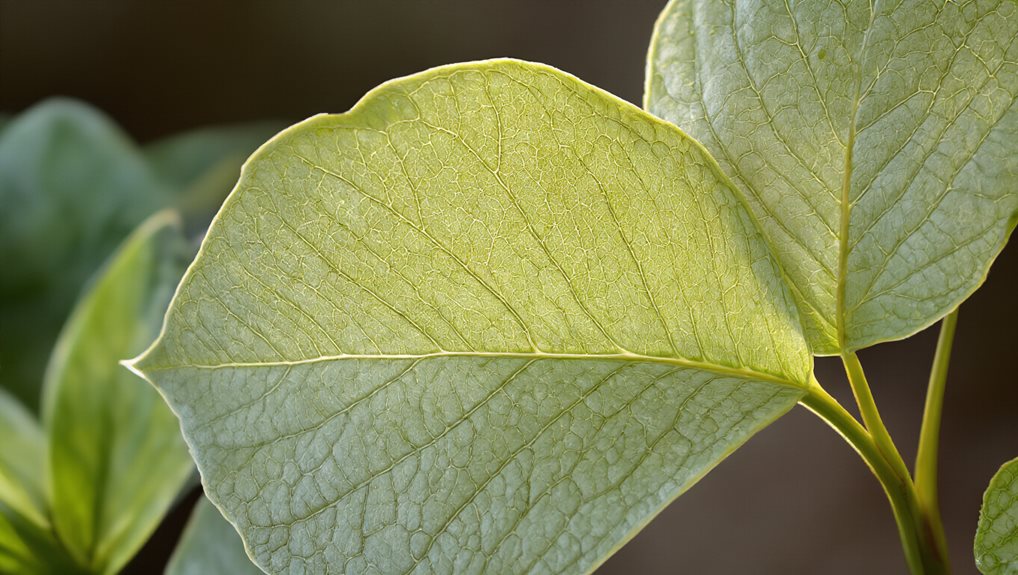
Why do plant leaves turn pale? You might notice older foliage yellowing first, a sign of nitrogen deficiency, while interveinal chlorosis on older leaves points to magnesium lack.
Young tops turning yellow between veins suggests iron scarcity, and uniform yellow on newest growth hints at sulfur shortfall.
Soil pH imbalance can also mask nutrients, making leaves pale despite their presence.
Testing and proper fertilization restore balance. Overwatering can cause root suffocation, leading to pale leaves.
Light Deficiency → Pale Leaves: What Happens and How to Fix It
When light is scarce, your plant’s chlorophyll production drops, causing the leaves to lose their vivid green and turn pale. You can restore the normal color by moving the plant to a spot that meets its species‑specific light requirements, or by adding supplemental grow lights during dim periods.
Pruning dense foliage and ensuring even light distribution also help prevent the issue from recurring.
Chlorophyll Production Decline
If your plant’s leaves are turning pale, it’s usually a sign that chlorophyll production has dropped because the plant isn’t getting enough light. Reduced illumination slows the synthesis of this green pigment, exposing carotenoids and triggering interveinal yellowing.
To restore vigor, boost light exposure, balance soil pH, and consider iron chelates or nitrogen foliar sprays, ensuring roots receive adequate oxygen and nutrients.
Optimal Light Relocation Strategies
Where does your plant need more light, and how can you reposition it to stop the pale‑leaf syndrome?
Shift the pot toward a bright window, ensuring the shaded side faces the glass, or place a grow light at a 45‑degree angle to deliver even, indirect illumination.
Keep humidity stable, avoid temperature spikes, and monitor stem and leaf recovery over the next weeks.
Excess Sun Bleaches Shade‑Loving Plants → Pale Leaves
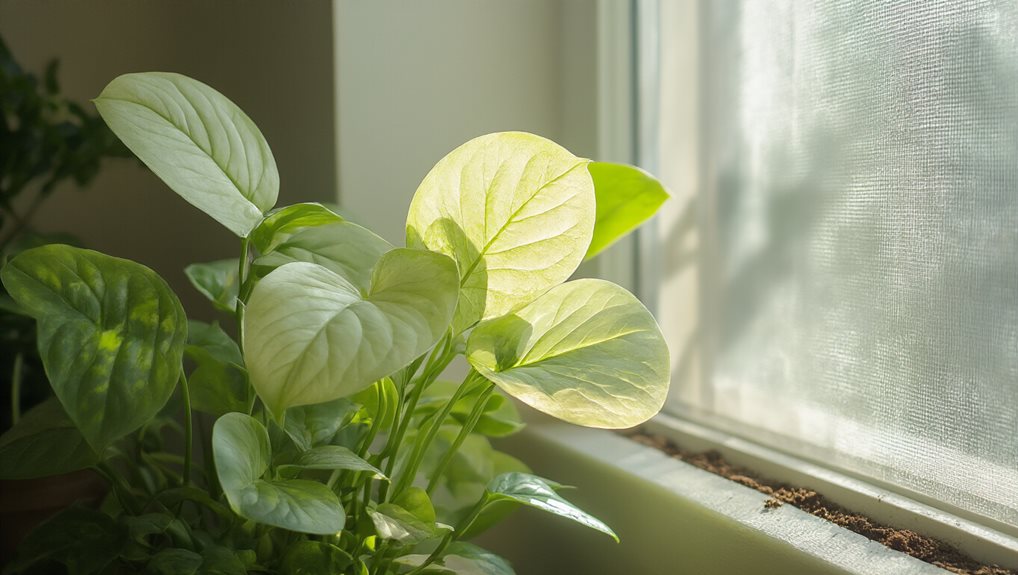
You’ll notice that shade‑adapted plants turn pale when they receive more direct sunlight than they’re built for, because the excess light breaks down chlorophyll and bleaches the foliage.
To prevent this, position these plants in partial shade, provide afternoon cover, and monitor exposure so the leaves stay healthy and retain their natural hue.
Additionally, understanding how to manage light exposure can help maintain vibrant color by reducing stress on pigment molecules high‑pressure and preserving leaf pigment integrity.
Shade‑Adapted Plants Bleach
Why does a plant that thrives in shade turn pale when suddenly exposed to bright sunlight? Your shade‑adapted leaf, with fewer pigments, thin palisade cells, and limited NPQ capacity, absorbs excess photons that overwhelm its defenses, causing photoinhibition and a pinkish‑white flush.
Gradual acclimation, using shade cloth or filtered light, keeps cells alive, reduces curling, and preserves growth while you protect its delicate foliage.
Excess Light Triggers Chlorophyll Loss
How does bright sunlight turn a shade‑loving leaf from green to ghostly white? Excess light overwhelms photosynthetic capacity, breaking down chlorophyll and bleaching tissue while veins stay green. You’ll see yellow or white patches on upper leaves, curled edges, and wilting despite watering.
To prevent it, relocate plants to indirect light, increase humidity, and avoid midday sun, keeping intensity matched to their shade‑adapted needs.
Identifying Nitrogen Deficiency: Yellowing Starts at the Base
When nitrogen is lacking, the first visible sign appears on the older, lower leaves, where a uniform pale‑green or yellowish hue spreads from the leaf tip and edges toward the base, often forming a V‑shaped pattern that follows the midrib.
Additionally, phosphorus deficiency can cause leaves to develop a dark green or purplish tint in some plants, and the overall growth may slow, with leaves sometimes showing a general pale appearance even before other symptoms become evident. nitrogen nutrients
Identifying Iron Deficiency: Interveinal Yellowing on Young Foliage
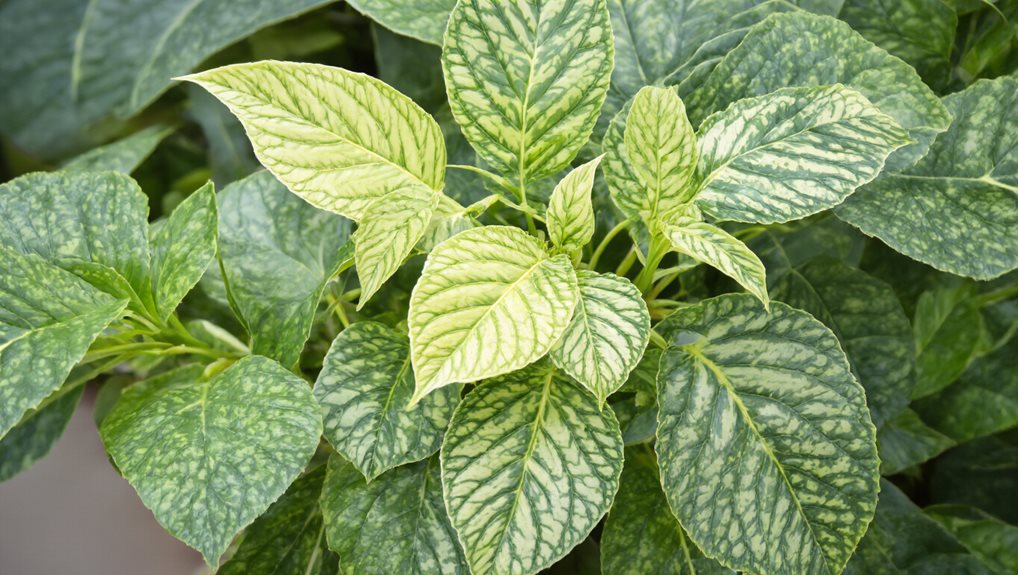
Ever notice the yellow patches appearing between the veins of a plant’s newest leaves while the veins themselves stay vivid green? That pattern signals iron deficiency—interveinal chlorosis on young foliage, beginning at tips or margins and spreading inward.
Young leaves turn pale yellow, veins remain green, and severe cases bleach to white with brown tips.
Check soil pH, run tissue tests, and treat with chelated iron to restore vigor. Proper nutrient balance and attentive soil management support long-term plant health, especially when iron availability is affected by alkaline conditions Iron Availability in Soils.
Identifying Magnesium Deficiency: Green Veins on Yellow Patches
What you’re seeing on your plant’s foliage—bright yellow patches between the veins while the veins themselves stay vivid green—is a classic sign of magnesium deficiency.
The interveinal chlorosis starts on older lower leaves, then spreads upward, often accompanied by rusty‑brown spots and occasional purpling.
Recognize that veins remain green, unlike iron or potassium issues, and act promptly with magnesium‑rich fertilizer to restore vigor.
Crop rotation benefits help keep soil balanced and can support long‑term soil health, reducing nutrient imbalances that contribute to deficiencies.
Identifying Potassium Deficiency: Bright Yellow Leaf Margins
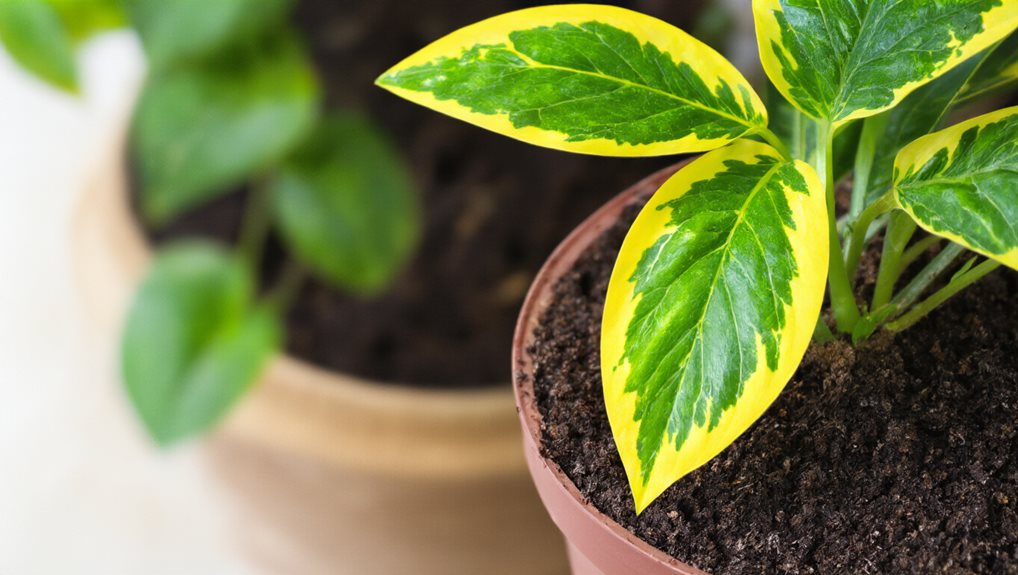
Why do your plant’s edges turn bright yellow before the rest of the leaf? This bright marginal chlorosis signals potassium deficiency; the margins yellow while veins stay green, then darken to grey, brown, and necrotic spots.
Leaves may curl, scorch, and drop, especially older lower ones. Watch for dull blue‑green foliage, reduced growth, and increased wilting as the deficiency spreads upward.
To improve resilience during overwintering, consider grouping pots together for added insulation and ensuring proper moisture management to prevent stress that can mimic nutrient deficiencies. potassium deficiency
Identifying Sulfur Deficiency: Uniform Yellowing of New Growth
After noting the bright yellow margins that signal potassium deficiency, turn your attention to the uniform yellowing that appears on the newest leaves, a hallmark of sulfur deficiency. You’ll see pale‑green coloration spreading across young foliage while older leaves stay greener, stunted growth, thin stems, and reduced height. Watch for interveinal chlorosis, occasional brown tips, and eventual leaf drop, which together confirm sulfur shortage.
Over‑ vs. Under‑Watering: Spotting Water‑Related Causes of Pale Leaves
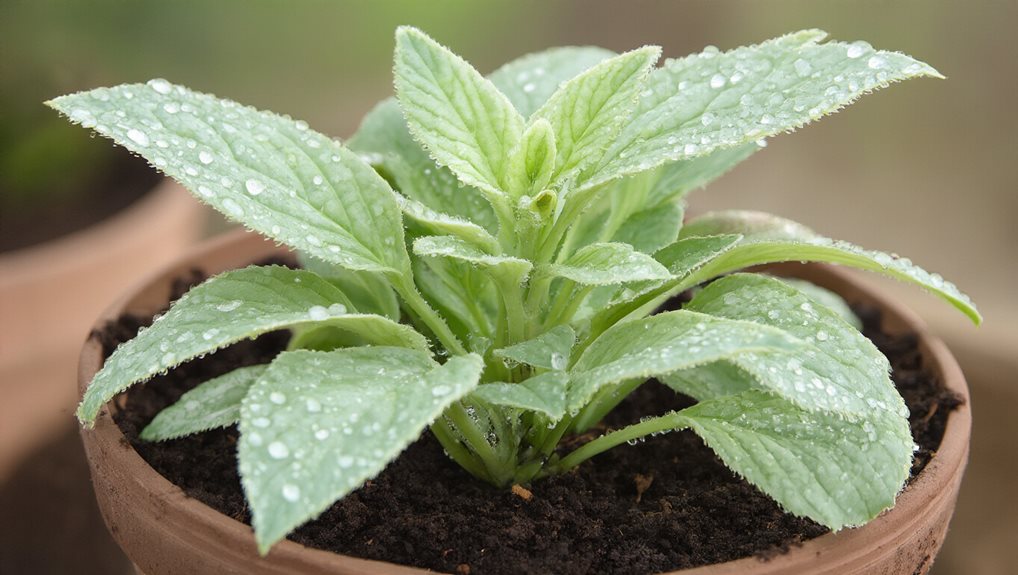
You’ll notice overwatering when lower leaves turn yellow with dark veins, become soft and mushy, and the soil stays soggy, while underwatering shows up as dry, brittle edges that curl inward, brown tips, and a rapid drop in soil moisture. Checking the weight of the pot and feeling the top inch of soil can tell you whether the roots are suffocating or dehydrated, and adjusting your watering schedule accordingly will prevent the pale, weakened foliage you’re seeing. By balancing moisture—watering only when the surface feels dry and ensuring proper drainage—you’ll keep the plant’s nutrient uptake steady and its leaves vibrant.
Overwatering Signs
How can you tell whether your plant’s pale leaves stem from too much water rather than too little? Look for yellowing on lower and inner leaves that spreads quickly, soft limp textures, and persistent wilting even after watering.
Mushy stems, rotten soil odor, and fungus gnats signal root rot, while blisters or wart‑like lesions on leaf tops reveal edema. These signs together confirm overwatering.
Underwatering Indicators
Where can you spot the tell‑tale signs that a plant is thirsty rather than water‑logged? You’ll notice leaves arching down or curling like potato chips, dry brittle tips that brown inward, and a pale, interveinal yellowing that starts on older foliage.
Soil feels dry, pulls away from pot sides, and compacted patches resist absorption, while overall growth slows and older leaves drop, signaling dehydration.
Soil Moisture Management
When the soil stays soggy for days, the roots can’t get the oxygen they need, and the plant’s leaves often turn pale as a result.
You’ll notice yellowing, limp foliage, and occasional blisters when overwatering floods cells, while under‑watering yields crisp, brown tips.
Check drainage, feel moisture depth, and adjust watering frequency to keep roots aerated and prevent rot, ensuring your garden feels thriving together.
Why Soil pH Can Hide Nutrients and Turn Leaves Pale
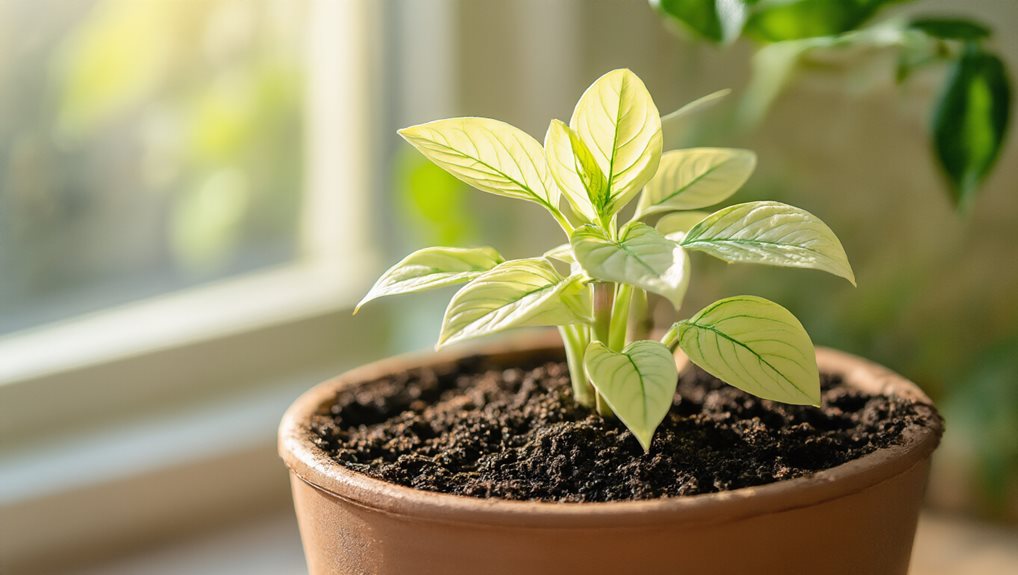
Ever notice how your plant’s leaves turn pale even though you’re feeding them regularly? Soil pH can lock up nutrients, making them invisible to roots; acidic soils (pH < 6.0) bind phosphorus, nitrogen, and potassium, while alkaline soils (pH > 7.5) precipitate phosphorus and micronutrients like iron and zinc. Staying within the 5.5‑7.5 range keeps nutrients soluble, ensuring vibrant foliage and healthy growth.
Pests & Diseases That Cause Pale Leaves: Spotting the Signs
How can you tell whether pale leaves stem from a pest or a disease rather than a nutrient issue? Look for white powdery mildew, black sooty mold, or yellowing that starts on older leaves and moves up—signs of fungal or bacterial infections.
Spot irregular yellow flecks from thrips, aphid‑produced sticky honeydew, or mosaic patterns and crinkling that indicate viral attacks; these visual clues help you pinpoint the cause.
Final Note
By pinpointing the exact cause—whether it’s insufficient light, nutrient imbalance, improper watering, pH issues, or pests—you can restore your plant’s vigor quickly. Adjust lighting, amend soil with the right fertilizers, regulate moisture, test and correct pH, and treat infestations as needed. Consistent monitoring and timely interventions will keep the foliage healthy, preventing future pallor and promoting sturdy growth.

Nathan McPhail is a garden and home DIY expert who writes practical, easy-to-follow advice for homeowners and gardeners. Through Yardique, he shares hands-on tips covering gardening, lawn care, landscaping, home improvement, repairs, tools, and outdoor living. His focus is on helping readers solve everyday household and yard problems with straightforward guidance, useful techniques, and practical solutions.