Drooping leaves usually mean the plant’s water balance is off, the light isn’t right, temperature or humidity is stressing it, or pests are attacking. First, feel the soil a couple of inches deep; if it’s dry and crumbly, the plant is likely under‑watered, but if it’s soggy, you may have over‑watered. Check that the pot isn’t too heavy, and examine the roots for crowding or rot. Next, assess light: too little makes stems weak, while harsh direct sun can scorch leaves. Also, verify that drafts, radiator heat, or low humidity (below 40 %) aren’t causing turgor loss. Finally, look for signs of aphids, spider mites, or fungus gnats, which can sap vigor. If you keep exploring, you’ll uncover more detailed steps to diagnose and fix the issue.
TLDR
- Insufficient water or drying soil causes limp, drooping leaves; check moisture 1–2 inches deep.
- Over‑watering can mimic drought; look for yellow lower leaves, mushy stems, or a musty, moldy smell.
- Inadequate light or harsh direct sun stresses foliage; ensure proper intensity and clean dust from leaves.
- Extreme temperature or humidity (cold drafts, radiator heat, RH < 35 % or > 65 %) leads to turgor loss and drooping.
- Pests (aphids, spider mites, fungus gnats) and disease damage vascular tissue, causing limp leaves despite proper watering.
Diagnose a Drooping Houseplant in 5 Minutes
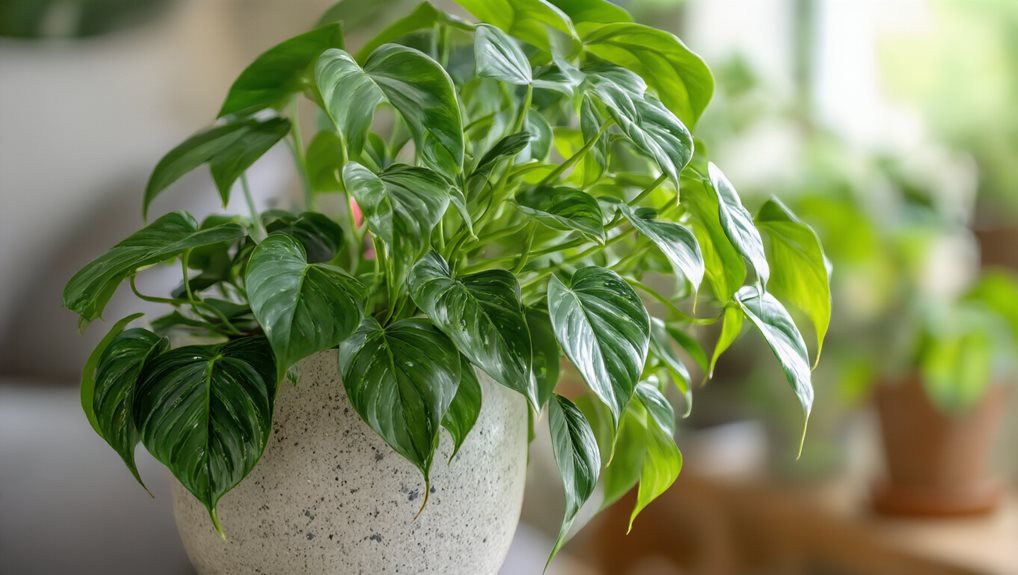
How can you tell if a houseplant’s drooping is a quick fix or a sign of deeper stress? First, feel the soil 1‑2 inches deep; dry, crumbly texture and light pot weight point to dehydration. Next, assess light—insufficient or overly harsh illumination can weaken stems. Then, check temperature and humidity for drafts or radiator heat. Finally, examine roots for transplant shock or crowding, and scan leaves for pests or disease. This rapid check guides you toward the right remedy. Overwatering can also cause drooping by suffocating roots.
Spot Over‑Watering Signs on a Drooping Houseplant
After checking soil moisture, light, and temperature, the next step is to recognize that over‑watering often masquerades as drought‑induced droop. Look for yellowing lower leaves, soft mushy stems, and a faint moldy smell, plus fungus gnats hovering near wet soil.
Wilting despite saturated ground, brown leaf tips, and root rot signs—grey, slimy roots—confirm excess water, prompting immediate drainage correction.
Water safety and proper extinguisher use are essential in fire safety contexts to prevent spread and injury, reinforcing the importance of following the right procedures in emergencies. Fire safety and the dedicated training you receive can help you act quickly and effectively in real situations.
Spot Under‑Watering Signs on a Drooping Houseplant
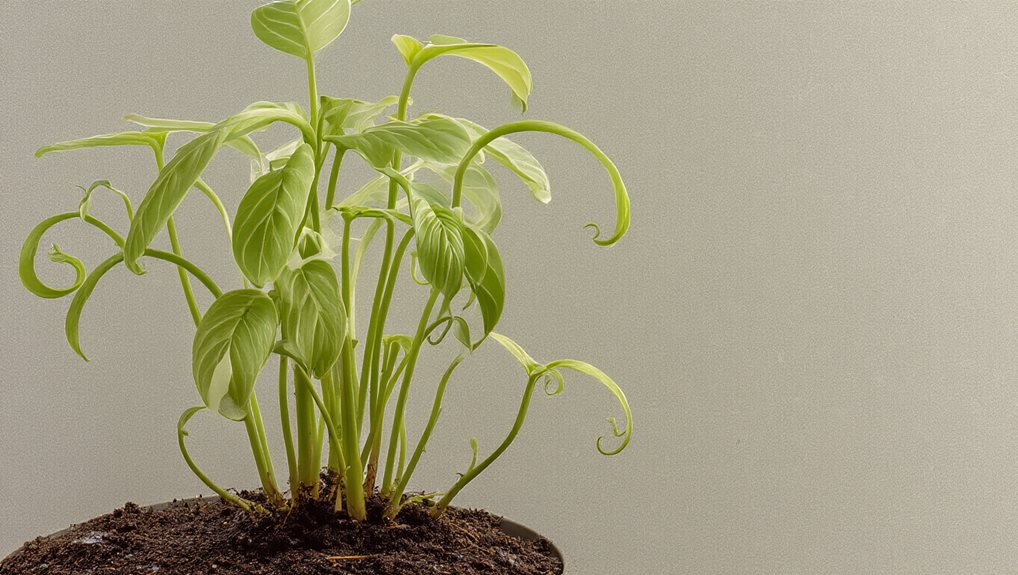
Ever notice a houseplant that looks like it’s wilting even though the soil feels bone‑dry? You’ll see limp, drooping leaves that arch down or coil as the plant conserves water, brittle, paper‑thin foliage that feels dry and crispy, and brown tips or edges without yellowing. The soil will be hard, light, and pull away from the pot walls, creating gaps that signal insufficient moisture. Dry Soil Signs can also be accompanied by a general sense of leaf stress and reduced turgor in new growth.
Check Light Levels When Your Houseplant Is Drooping
If the leaves are limp and the soil feels bone‑dry, you’ve already ruled out watering issues; the next step is to examine the light the plant receives. Insufficient light reduces photosynthesis, causing pale, drooping foliage, especially in variegated specimens that need brighter spots; conversely, shade‑loving plants may suffer from excess direct sun. Dust on leaves blocks light, so gently wipe them. Adjust placement to a window with appropriate intensity, checking for steady, vibrant growth. main light
Assess Temperature & Humidity for a Drooping Houseplant
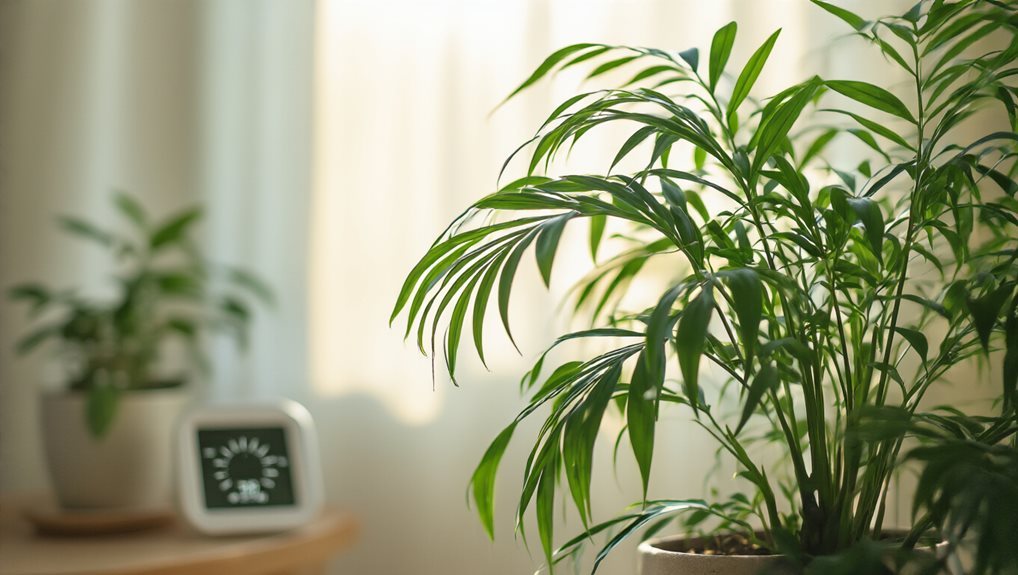
You should first check for any cold drafts sneaking in from windows, doors, or vents, because even brief exposure can trigger wilting.
Next, monitor humidity levels, as low moisture in the air amplifies heat stress while sudden fluctuations can shock the plant’s stomata.
Finally, note any nearby heat sources such as radiators or heaters, since localized warmth can cause rapid water loss despite adequate soil moisture.
Check Draft Draft Air Draft
How can you tell whether a hidden draft is sabotaging your houseplant’s health? Check windowsills, storm‑window panes, and door gaps for displaced glass or cracks that let cold air slip in, because even a brief exposure below 60 °F can cause limp, drooping leaves. Feel airflow with your hand, move the plant away from the source, and watch for recovery over several days.
Humidity Fluctuations
Ever notice that your houseplant’s leaves droop even though you’ve been watering on schedule? Low humidity below 40 % accelerates leaf moisture loss, causing crispy edges and faster soil drying, while high humidity above 65 % traps vapor, yellowing leaves and inviting rot; aim for 35‑65 % RH, monitor with a hygrometer, and adjust with humidifiers, pebble trays, or ventilation to keep your plant thriving.
Radiator Heat Effects
Why does your houseplant wilt as soon as the radiator kicks on?
Dry heat from a nearby radiator spikes temperature to 80°F, dries leaf surfaces, and raises soil temperature, disrupting turgor and halting photosynthesis.
Keep plants at least six feet away, use reflective shields, and monitor leaf and soil temps with a thermometer; aim for 65‑75°F daytime and stable night temperatures to prevent drooping.
Identify Pests or Disease Causing a Drooping Houseplant?
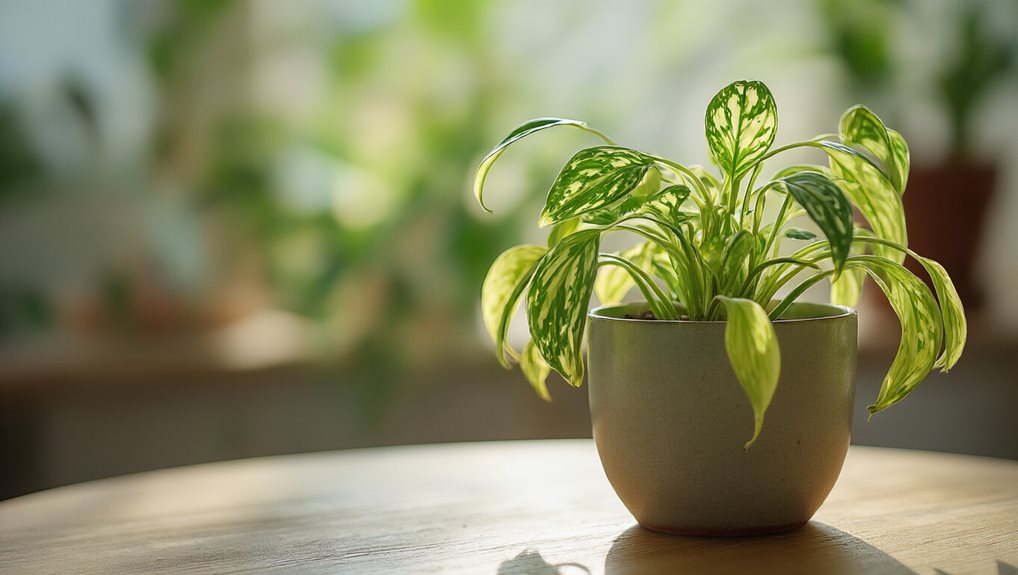
What’s causing your houseplant’s leaves to droop often boils down to a hidden infestation or disease that saps essential fluids, disrupts nutrient transport, and weakens structural support. Check for aphids, mealybugs, spider mites, scale insects, whiteflies, or fungus gnats—each clusters on undersides, clusters, or soil, leaving honeydew, webbing, or discoloration. Spotting these signs lets you treat promptly, restoring vigor and community harmony. Controlling dust and maintaining clean growing conditions can also help reduce stress on plants and support healthier foliage over time. ventilation and air quality
Final Note
By pinpointing the exact cause—whether it’s watering, light, temperature, humidity, or pests—you can act quickly to revive your plant. Adjust watering schedules, relocate the plant to appropriate lighting, stabilize environmental conditions, and treat any infestations promptly. Consistent observation and timely interventions will prevent future drooping, ensuring the plant remains healthy and lively.

Nathan McPhail is a garden and home DIY expert who writes practical, easy-to-follow advice for homeowners and gardeners. Through Yardique, he shares hands-on tips covering gardening, lawn care, landscaping, home improvement, repairs, tools, and outdoor living. His focus is on helping readers solve everyday household and yard problems with straightforward guidance, useful techniques, and practical solutions.