Yes, solarizing your soil can effectively kill most weed seeds and seedlings in the top 12 inches, especially when you use clear plastic during hot, sunny weather. You’ll get the best results if the soil is moist and sealed tightly, letting temperatures soar high enough to disrupt seed viability and kill emerging weeds. Annual weeds are far more vulnerable than deep-rooted perennials, which often survive. For stronger, faster control and broader pathogen suppression, combining organic matter with solarization—called biosolarization—can enhance effectiveness. Keep going to uncover how climate, timing, and soil prep shape your success.
TLDR
- Solarizing soil with clear plastic can kill over 90% of weed seeds in the top 10 cm when temperatures reach 35–60°C.
- Effectiveness depends on sustained heat, moisture, and at least 4–6 weeks of full sun exposure.
- It works best on annual weeds and shallow seed banks, with reduced impact below 12 inches.
- Persistent perennials like nutsedge and bindweed often survive due to deep rhizomes or tubers.
- Combining solarization with biosolarization or mulching improves weed control and long-term suppression.
What Is Soil Solarization and How Does It Work?
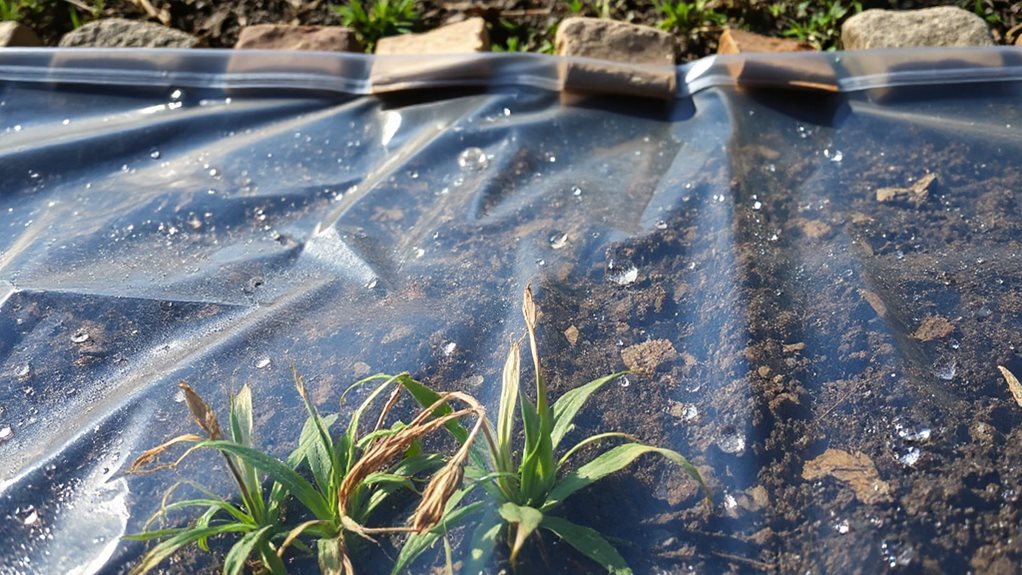
While you’re looking for an eco-friendly way to tackle stubborn weeds and soilborne pests, soil solarization offers a powerful, chemical-free solution that employs the sun’s energy to disinfect garden beds.
You trap solar heat under clear plastic, raising soil temperatures high enough to kill pathogens, while moist, well-prepared soil enhances effectiveness, giving your plants a healthier start. This method can achieve lethal soil temperatures of 35–60 °C (95–140 °F), effectively suppressing a wide range of weeds, pests, and pathogens in the top 30 cm of soil. Coconut coir and other moisture-retentive mulches can help keep soils evenly moist during the solarization period for better results.
Can Solarization Kill Weeds and Seeds Effectively?
You’ve seen how soil solarization harnesses the sun’s power to sanitize garden beds by trapping heat under clear plastic, and now it’s time to investigate just how well this method tackles weeds and their persistent seeds.
You’ll find it reduces fall and winter weed emergence by 94–96%, kills over 90% of seeds at 10 cm deep, and works best when soil’s moist and sunny.
Solarization is most effective when combined with proper soil preparation to ensure even heat penetration.
How Deep in the Soil Does Solarization Work?
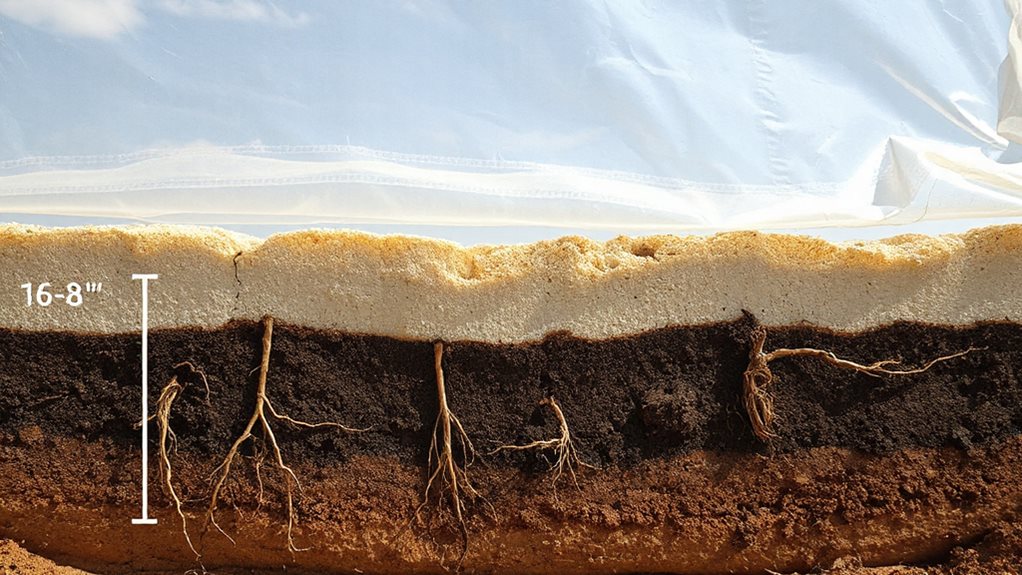
You can expect solarization to heat the top 6 to 12 inches of soil, where most weed seeds and pathogens reside, especially when you loosen the soil and keep it moist.
Moisture helps carry heat deeper, so watering thoroughly before laying plastic enhances effectiveness, particularly down to 12 inches.
While clear plastic can push high temperatures to about 126°F at 1 inch deep, the impact drops sharply below 12 inches, making shallow seed banks easier to target than deeply buried ones.
Seedlings and newly germinated plants are more vulnerable to cold and stress than dormant seeds, so protecting immature grass seedlings can be important when timing solarization or replanting.
Topsoil Heat Penetration
Beneath the surface, solarization’s effectiveness hinges on how deeply heat penetrates the soil, with the upper 4 to 6 inches being the primary zone where pests and weed seeds face lethal temperatures.
You’ll maximize results by tilling 6–12 inches deep, moistening soil to 12 inches, and using clear 4–6 mil plastic. These steps enhance heat conduction, ensuring the topsoil reaches and sustains the 120°F+ needed for effective control.
Seed Depth Limitations
While solarization effectively suppresses weed seeds and soilborne pathogens, its impact diminishes with depth, making it most reliable in the top 5 cm (about 2 inches) of soil where temperatures consistently reach lethal levels.
You’ll see near-total seed kill at 5 cm, strong effects at 10 cm, and variable results deeper.
Focus on shallow layers, avoid deep tillage, and combine with stale seedbed techniques to maximize control where it matters most.
Moisture Enhances Effectiveness
Maximizing the depth and effectiveness of soil solarization hinges on proper moisture management, as water dramatically improves heat conduction through the soil profile.
You’ll get the best results when surface layers reach at least 70% field capacity and moisture extends down to 60cm.
Moisture helps carry heat deeper, enhancing seed and pest control—just avoid over- or under-watering.
Why Does Moist Soil Improve Solarization Results?
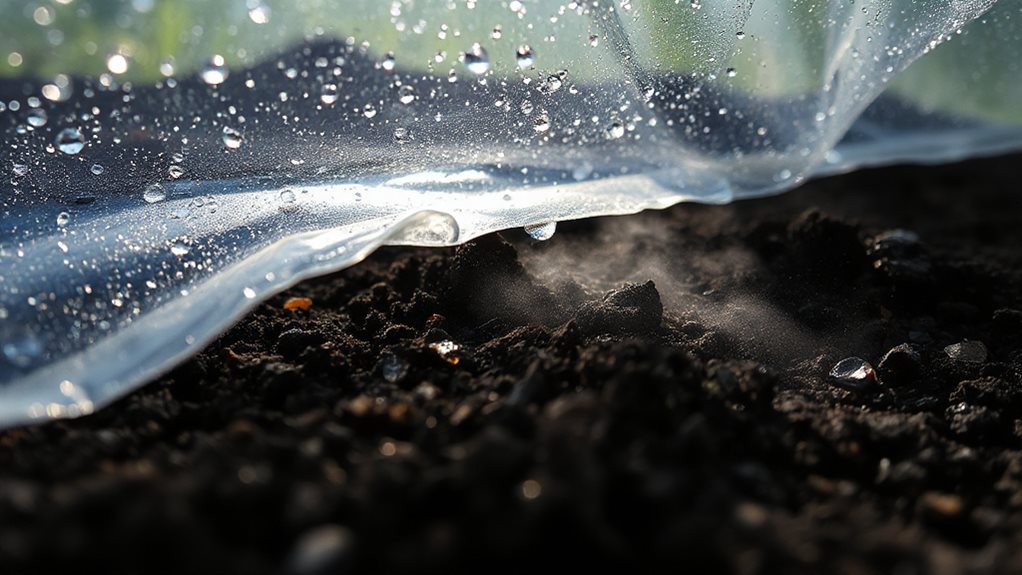
Soaking your soil to field capacity before solarization sets the stage for far more effective weed control.
Moisture enhances heat conduction, carrying thermal energy deeper, while stimulating weed seed germination and increasing cellular vulnerability.
Trapped humidity under plastic creates a steam-like effect, enhancing kill rates.
Together, these factors maximize solarization’s power, ensuring broader, more consistent weed suppression across the soil profile.
For best results, avoid applying pre-emergent herbicides around the same time and ensure soil is moist but not saturated so solarization can proceed without runoff or reduced effectiveness.
Does Solarization Work in Cool or Cloudy Climates?
Could your cool or cloudy climate still allow solarization to work? Yes, but with adjustments.
You’ll need 8–10 weeks during hot, fog-free periods, especially near coasts. Inland areas succeed reliably June–August.
Aim for daily highs above 85°F and monitor soil—top 6 inches must hit 110–125°F.
Cloudy days reduce heat, so consistent sun is critical for success.
Use gentle, eco-friendly cleaners and avoid runoff to protect nearby plants when preparing the area, especially if using vinegar solutions for spot treatment.
Solarization vs Tarping: Which Kills More Weeds?
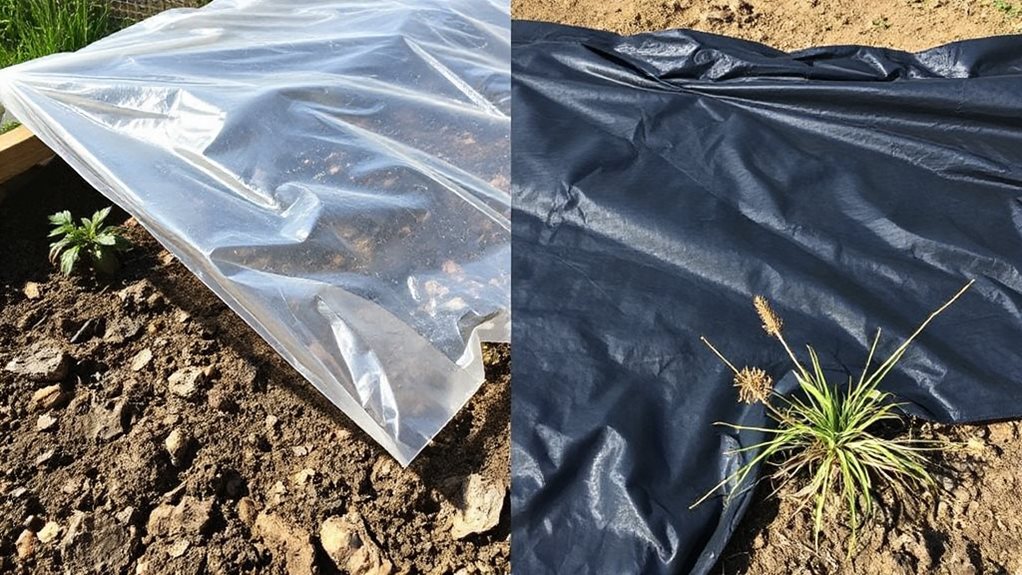
Even if your region doesn’t offer long stretches of intense heat, you can still manage weeds effectively—though the method you choose makes a big difference.
Solarization kills more weeds quickly using clear plastic to trap heat, especially in sunny summers. Tarping with black plastic blocks light over months, better for larger areas or off-season rest, though it’s slower and less consistently effective.
Is Biosolarization Faster Than Regular Solarization?
When it comes to speeding up weed control in your fields, biosolarization pulls ahead of regular solarization by cutting the required time substantially.
You’ll see effective weed and seed kill in just four weeks, with key reductions happening in five to nine days thanks to VFAs from organic biomass.
Unlike solarization, which needs four times longer, biosolarization works faster and suits cooler, less sunny areas, making it a practical, efficient choice for your sustainable farming goals.
What Other Pests and Pathogens Does Solarization Kill?
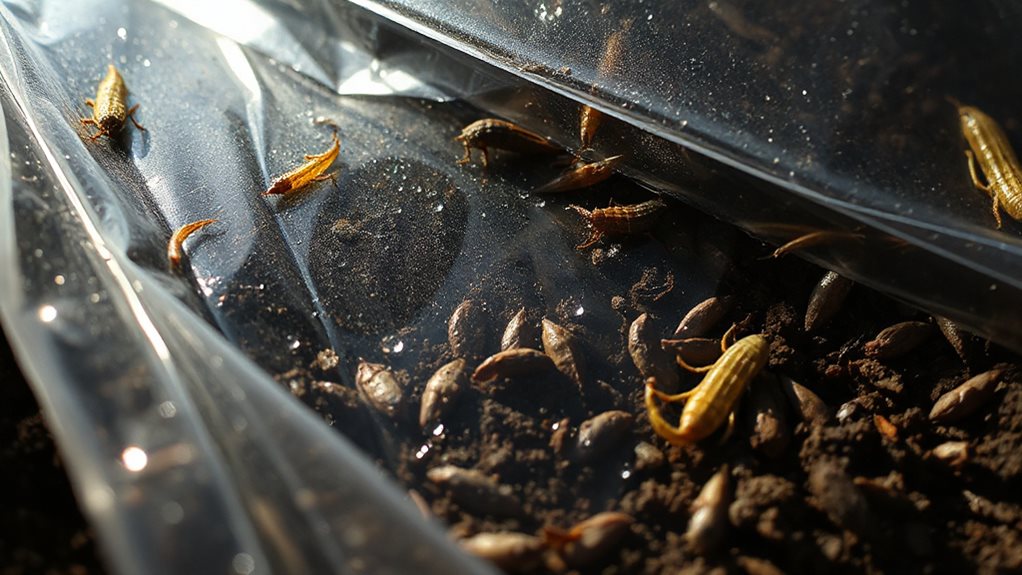
You can effectively kill many soilborne fungi and bacteria by solarizing your soil, including those that cause Verticillium wilt, Fusarium wilt, and tomato canker, as the heat penetrates up to 8 inches deep.
Solarization also knocks down nematode populations—like root-knot and lesion nematodes—driving survivors deeper so they take months to rebound.
While the process breaks down organic matter and enhances beneficial microbes, some heat-tolerant pests may need longer exposure or cooler-season timing to fully control.
Soilborne Fungi And Bacteria
While solarization primarily targets weeds, it also delivers a powerful blow to a wide range of soilborne fungi and bacteria that threaten crop health.
You’ll find it effectively controls *Verticillium*, *Fusarium*, and *Rhizoctonia* species, plus pathogens like *Streptomyces scabies* and *Clavibacter michiganensis*.
Though some microbes resist, most harmful fungi and bacteria weaken, giving your crops a stronger, healthier start.
Nematodes And Root Pests
Soil solarization doesn’t stop at fungi and bacteria—it also takes on nematodes and other root-damaging pests that quietly undermine plant health. You’ll find *Meloidogyne incognita* and *Belonolaimus longicaudatus* especially vulnerable, with heat over 40°C cutting their numbers fast.
Though deeper-dwelling pests may survive, 4–6 weeks of coverage typically slashes infestations by 99%, enhancing yields and giving your crops a stronger start.
Organic Matter Breakdown
Breaking down organic matter isn’t just about recycling nutrients—solarization actively converts this process into a powerful tool for pest and pathogen control. You speed up decomposition, releasing ammonium and potassium while generating heat and volatile compounds.
These biotoxic byproducts suppress fungi, bacteria, and pests. As organic matter breaks down, you also free substrates that enhance beneficial microbes, enhancing soil health and long-term suppression of harmful organisms.
What Should You Plant After Solarizing Soil?
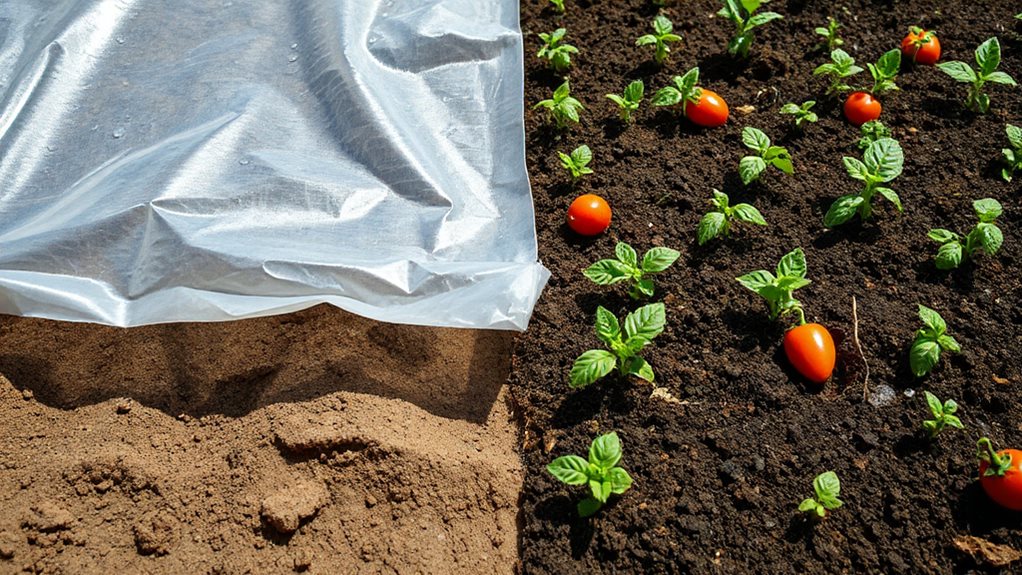
Once the plastic comes off and the soil has cooled, you can jump right into planting—whether that means sowing seeds directly, setting in transplants, or establishing fall crops, there’s no need to wait.
Rotate crops to prevent disease, mulch transplants right away, and consider cover crops like tillage radishes to enhance organic matter and soil health.
Which Weeds and Pathogens Survive Solarization?
You’ll find that some weed seeds survive solarization simply because they’re buried too deep, where soil temperatures don’t get hot enough to kill them.
Heat-tolerant pathogens like *Pythium* and *Rhizoctonia* can also persist, especially in fields with a history of disease pressure.
Plus, persistent perennials such as nutsedges and bindweed often bounce back thanks to their deep, protected rhizomes and root systems.
Deep-Buried Weed Seeds
Although burial depth has little consistent effect on weed seed longevity over time, solarization can still effectively target deeply buried seeds when conditions are optimized.
You can enhance deep seed kill by maintaining moist soil, securing plastic tightly, and leaving it in place for 4–6 weeks. Moisture improves heat conductance, while sustained temperatures above 45°C disrupt cells and denature proteins, effectively reducing viable seeds even at depth.
Heat-Tolerant Soil Pathogens
Solarization effectively reduces many soilborne pathogens, but some heat-tolerant organisms can persist even under intense conditions. While Verticillium, Fusarium, and nematodes weaken under high heat, beneficial microbes like Trichoderma and Bacillus often survive and rebound quickly.
These allies help suppress surviving pathogens, restoring balance. Though crown gall or bacterial canker may linger at lower depths, proper timing and clear mulch improve results, giving your garden a cleaner start.
Persistent Perennial Weeds
Surviving the intense heat of soil solarization are certain resilient perennial weeds whose deep-rooted systems evade the upper-layer temperatures that typically suppress annuals and shallow pests.
You’ll find field bindweed, bermudagrass, nutsedge, and perennial pepperweed persisting through deep rhizomes, tubers, or rootstocks.
Even with tight plastic, moisture, and strong sun, regrowth is common—so you’ll likely need repeated treatments or combined methods for real control.
Final Note
You can effectively suppress weeds and soilborne pathogens using solarization, especially in warm, sunny climates. By trapping heat under clear plastic, you raise soil temperatures enough to kill many weed seeds and pests within the top 6–12 inches. Moist soil enhances heat transfer, improving results. While some deep or heat-resistant weeds may survive, solarization—especially biosolarization—offers a chemical-free way to prepare clean ground. After treatment, plant desired crops promptly to reduce reinfestation.

Nathan McPhail is a garden and home DIY expert who writes practical, easy-to-follow advice for homeowners and gardeners. Through Yardique, he shares hands-on tips covering gardening, lawn care, landscaping, home improvement, repairs, tools, and outdoor living. His focus is on helping readers solve everyday household and yard problems with straightforward guidance, useful techniques, and practical solutions.