You get steady nutrition for your plants with slow-release fertilizer because it gradually releases nutrients over time. Coatings or organic materials break down slowly, feeding your plants just what they need, when they need it. This reduces burn, runoff, and wasted applications. It’s ideal for gardens, lawns, and containers, lasting months with fewer applications. Matching the right type to your soil and timing enhances results—there’s more to learn about getting the most from every granule.
TLDR
- Slow-release fertilizer feeds plants gradually, reducing the risk of burn and nutrient loss.
- Coatings or organic materials control nutrient release based on temperature, moisture, and microbes.
- It typically lasts 3–6 months, requiring fewer applications than fast-release fertilizers.
- Apply in spring or fall, watering lightly after to activate the fertilizer.
- Prevents runoff and supports healthy growth in lawns, gardens, and containers with steady nutrition.
What Is Slow-Release Fertilizer?
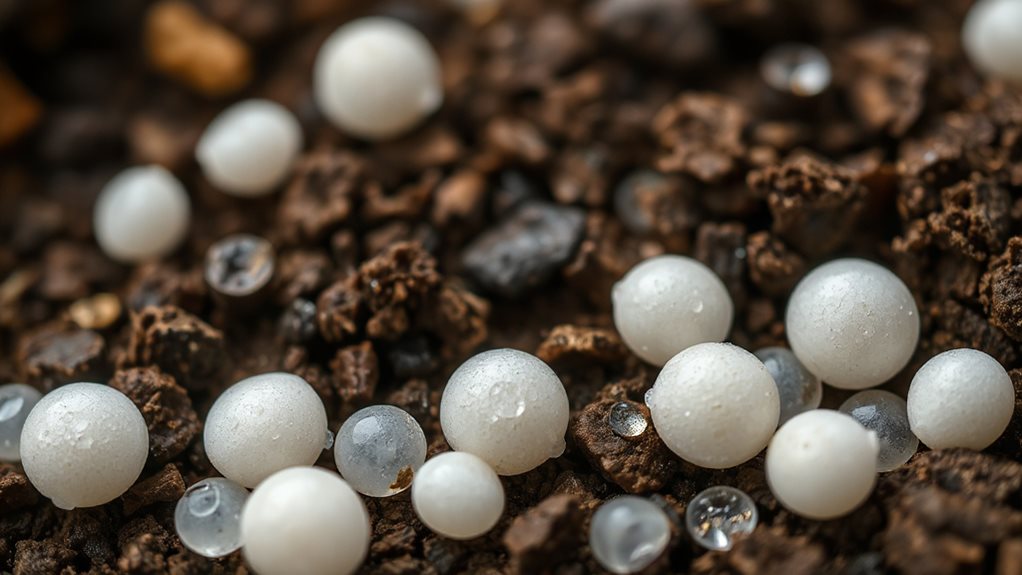
What if your plants could get a steady supply of nutrients instead of a sudden, overwhelming burst? Slow-release fertilizers do just that, gradually breaking down to deliver nutrients over time. They’re less likely to burn plants, reduce leaching, and feed your soil steadily. You’ll enjoy healthier growth with fewer applications, especially when using blends with over 40% slow-release nitrogen. This gradual release happens because soil microbes break down organic matter in organic fertilizers. Slow-release products also help minimize nutrient runoff by supplying nutrients at a pace plants can use.
How Does Slow-Release Fertilizer Work in Soil?
You’ll see how slow-release fertilizers work by gradually breaking down through chemical and biological processes in the soil.
Coatings like polymers or sulfur let water in slowly, while microbes and moisture help decompose nutrients such as nitrogen over time.
This controlled release keeps plants fed steadily, reducing waste and protecting your soil from nutrient spikes.
Tank mixing requires checking product compatibility and following manufacturer instructions, since combining fertilizers with pesticides can affect effectiveness and safety, especially when mixing products.
Controlled Nutrient Release
While the soil warms with the season, water vapor begins seeping through the resin coating of slow-release fertilizer granules, dissolving the nutrient-rich core inside.
You’ll see nutrients steadily diffuse out, matching your plant’s needs. Temperature, coating thickness, and soil moisture control release—ensuring efficiency, reducing waste, and protecting your garden and the environment—all while providing strong, consistent growth without burning or runoff risks.
Gradual Breakdown Process
Because slow-release fertilizers rely on natural processes to deliver nutrients over time, their effectiveness hinges on how they break down in the soil.
You’ll see microbes decompose organic materials like compost, while moisture and warmth gradually erode coatings on granules. These processes release nutrients steadily, matching your plants’ needs and supporting a thriving, balanced soil ecosystem everyone can feel good about nurturing.
Top 5 Types of Slow-Release Fertilizers
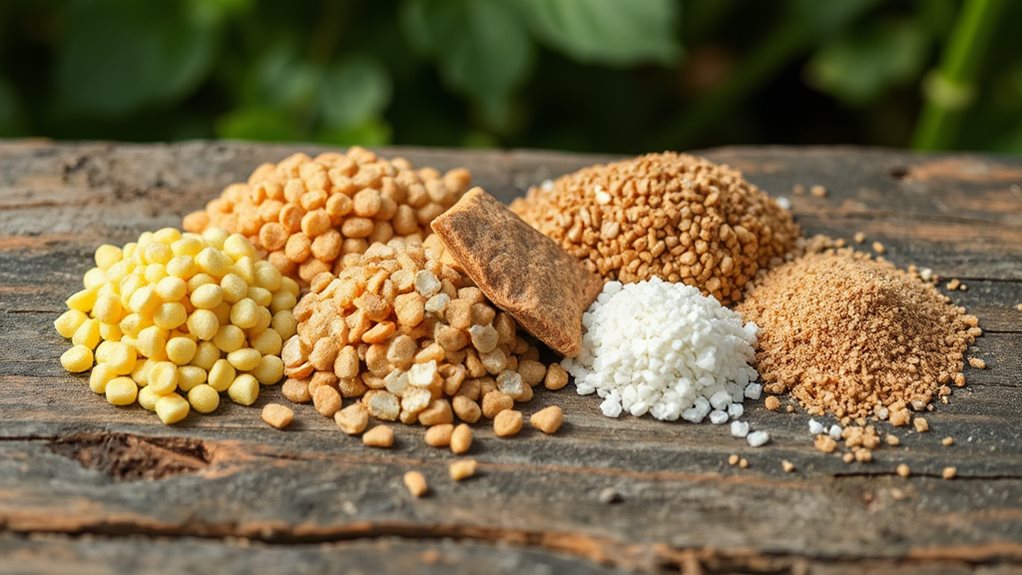
Among the most reliable options for sustained plant nutrition, polymer-coated granules stand out as a top choice for gardeners and professionals alike. You’ll appreciate their predictable, temperature-driven release over 2–16 months.
Sulfur-coated urea offers shorter control, while IBDU, methylene urea, and inhibitor-based formulas rely on moisture, microbes, and soil conditions—giving you flexible, long-term feeding with less risk of burn. Primer types vary in drying time and composition, with latex primer drying fastest in typical conditions.
Why Choose Slow-Release Over Regular Fertilizer?
Choose slow-release fertilizer to give your plants a steady, reliable supply of nutrients while protecting your lawn and the environment.
You’ll feed roots gradually, reduce burn and runoff, and mow less often.
With better soil health, fewer applications, and lower pollution risk, you’re not just growing greener grass—you’re supporting smarter, sustainable practices that benefit your community and planet alike.
Slow-release options often provide feeding that lasts up to 12 weeks, reducing how often you need to reapply.
Where to Use Slow-Release Fertilizer for Best Results
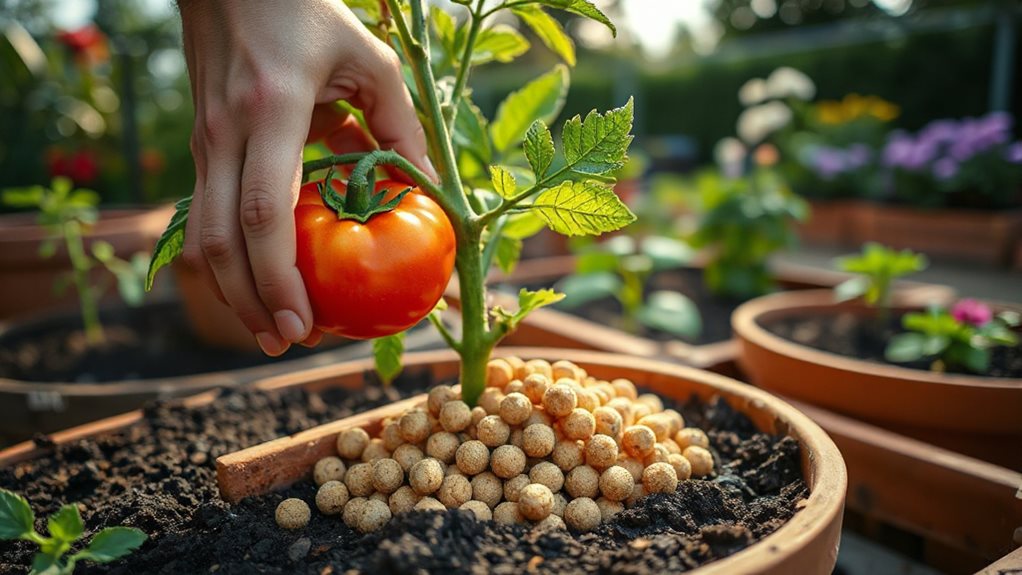
You’ve seen how slow-release fertilizer supports healthier plants and a cleaner environment—now let’s examine where it delivers the best results. Use it on lawns for steady growth with less mowing, in gardens to enhance vegetables and fruits, on flowering plants for lively blooms, in containers to prevent overfeeding, and around shrubs and trees for long-term nutrition that builds strong roots and reduces runoff. Lab-verified soil testing with nutrient analysis can help match slow-release formulas to your soil’s needs.
How to Apply Slow-Release Fertilizer Correctly
You should time your slow-release fertilizer application to match your plant’s growth cycle, applying it in early spring or at planting to guarantee nutrients are available when needed most.
Place the fertilizer at the right depth—work granules into the top 3–4 inches of soil or inject liquids deeper to position nutrients where roots can access them efficiently.
After applying, water the area thoroughly to activate the coating and maintain consistent moisture, which helps control nutrient release and prevents runoff.
Timing And Frequency
Typically, timing your slow-release fertilizer applications correctly guarantees plants receive steady nutrition precisely when they need it most.
Apply in early to mid-spring before last frost for strong starts, then every 8–10 weeks through summer.
In fall, feed 6–8 weeks before frost to strengthen roots and spring green-up.
Most formulas last 3–6 months, so you’ll need just 1–4 applications yearly, reducing effort while maintaining healthy, resilient growth.
Proper Spacing And Depth
When applying slow-release fertilizer, getting the spacing and depth right guarantees nutrients reach plant roots efficiently and remain available over time.
Work granular products into the top 3–4 inches of soil around established plants, or mix into the top two inches before seeding.
Apply half the amount in one direction, then the other half perpendicularly for even coverage, preventing stripes and ensuring uniform feeding.
Watering After Application
Properly watering after applying slow-release fertilizer guarantees nutrients are efficiently delivered to the root zone while minimizing environmental risks.
Lightly water with a quarter-inch right after application to activate release, but avoid oversaturating. If dry, pre-moisten soil first. Water within 48 hours to prevent storm runoff, ensuring even distribution without puddling or erosion.
How Slow-Release Fertilizer Helps the Environment
While conventional fertilizers can flood the soil with nutrients all at once, slow-release fertilizers steadily deliver essential elements over time, noticeably reducing the risk of environmental harm.
You help protect waterways by minimizing runoff and leaching, lower greenhouse gas emissions through controlled nitrogen release, and support healthier soils with balanced nutrient supply—making your gardening choices more sustainable, effective, and kind to the planet we all share.
5 Common Slow-Release Fertilizer Mistakes to Avoid
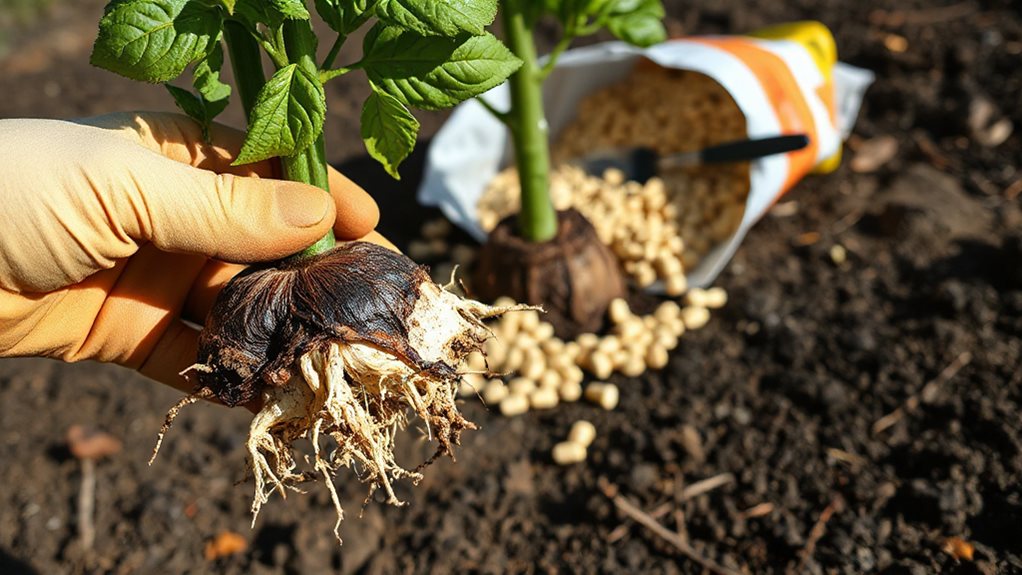
Though slow-release fertilizers offer a smarter way to feed plants over time, skipping key best practices can undermine their benefits and even harm your garden. You might overapply, causing nutrient imbalances or leaf burn, or choose low-quality types with fillers that disrupt soil health.
Ignoring soil tests leads to wrong choices, while poor timing limits uptake. Always match the fertilizer to your plant’s needs, apply correctly, and let soil biology do the rest.
Final Note
You now understand how slow-release fertilizer steadily feeds nutrients to plants, reducing waste and minimizing runoff. By choosing the right type and applying it correctly, you’ll support healthier growth while protecting the environment. Avoid common mistakes like overapplication, and target areas where plants need sustained nutrition. This efficient approach saves time and resources, making it a smart, responsible choice for your garden and the planet.

Nathan McPhail is a garden and home DIY expert who writes practical, easy-to-follow advice for homeowners and gardeners. Through Yardique, he shares hands-on tips covering gardening, lawn care, landscaping, home improvement, repairs, tools, and outdoor living. His focus is on helping readers solve everyday household and yard problems with straightforward guidance, useful techniques, and practical solutions.