You’ll notice yellow or white spots along the edges of older leaves, which gradually turn brown and scorch as potassium levels drop. Since potassium is mobile, it moves to new growth, leaving older leaves deficient first. Leaves may curl, feel tough, and take on a dull, bluish tint. Weak stems, stunted plants, and smaller fruits often follow. A soil test confirms low potassium, guiding effective treatment with proper fertilizers and pH adjustments—key steps that lead to stronger, healthier crops.
TLDR
- Older leaves show yellow or white spots along edges, progressing to browning and scorching as potassium moves to new growth.
- Leaves curl slightly and develop a dull, blue-green or bronzed appearance due to impaired cell function and water regulation.
- Weak, thin stems and stunted plant growth occur from poor cell development and reduced lignin in potassium-deficient plants.
- Fruit size and yield decrease as sugar transport fails, sometimes before visible leaf symptoms appear.
- Crop-specific signs include uneven ripening in tomatoes and apples, with necrotic spots and poor flavor development.
What Are the First Signs of Potassium Deficiency in Plants?
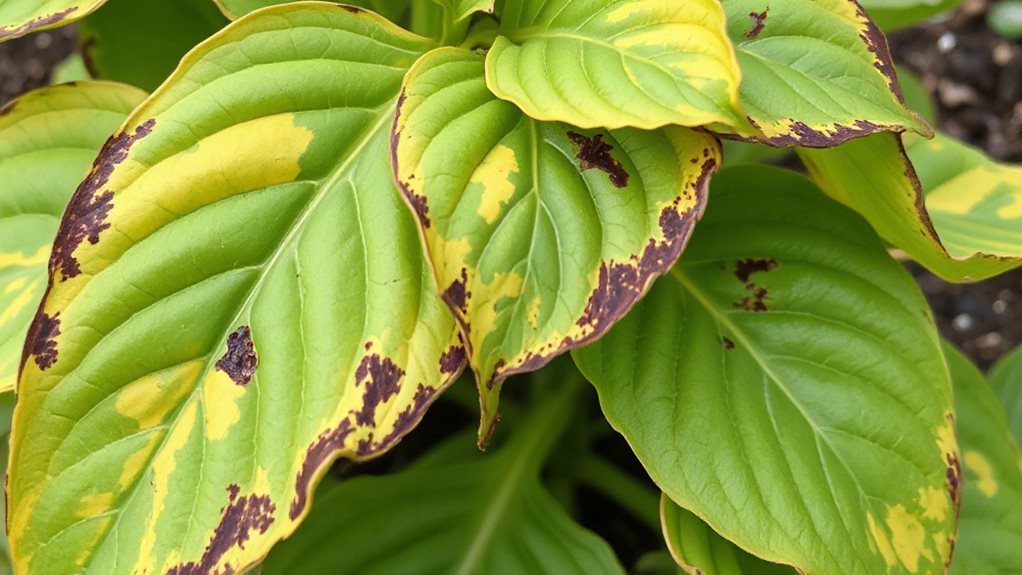
While potassium deficiency can sneak up on your plants without immediate warning, the first signs often appear along the edges of older leaves, where small yellow or white spots begin to form.
You’ll notice yellowing that spreads inward, eventually turning brown and scorching the margins. Leaves may curl slightly, feel tougher, and show a dull, blue-green or bronzed appearance, signaling it’s time to act. This progression typically starts on lower leaves because potassium is a mobile nutrient within the plant, redistributing from older to younger tissues when deficient. Soil tests can confirm low potassium levels and guide appropriate fertilizer application.
Why Do Older Leaves Show Potassium Deficiency First?
You’ve probably noticed yellowing or scorching along the edges of your plant’s older leaves, and now you’re wondering why these lower leaves are the first to show trouble.
That’s because potassium is mobile, moving from older to younger tissues when needed. Your plant prioritizes new growth, pulling potassium from older leaves, which then show symptoms first due to depleted reserves.
A soil test can confirm low potassium levels and guide corrections with N-P-K testing using either at‑home kits or lab analysis.
How Does Potassium Deficiency Weaken Stems and Stunt Growth?
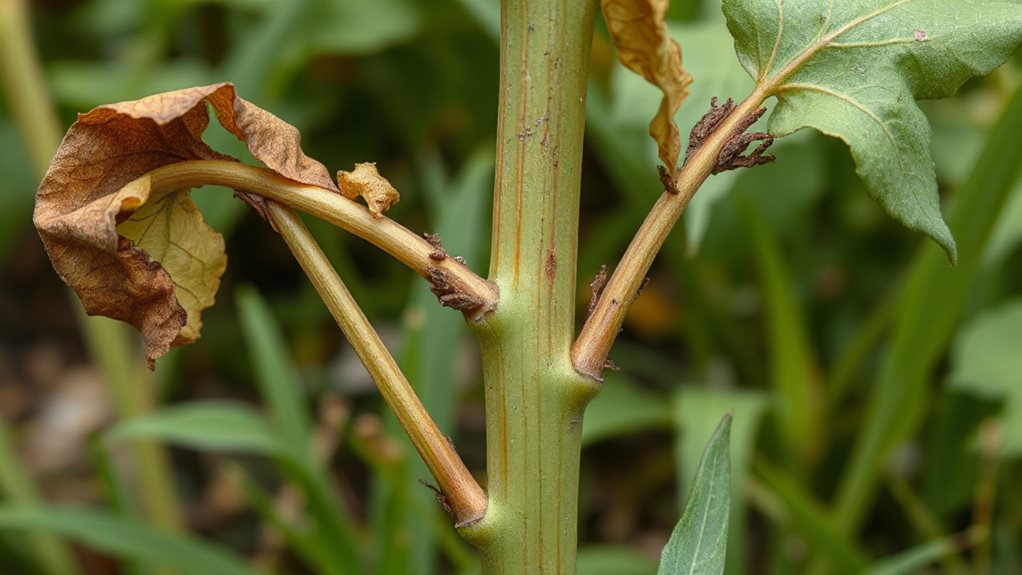
Because potassium plays a central role in cell development and water regulation, its absence quickly takes a toll on your plant’s structure and growth.
You’ll notice thinner stems with fewer cells and reduced lignin, leading to weak, limp stalks.
Stunted growth, woody tissue, and poor cell wall strength become obvious, especially in tomatoes, as your plant struggles to support itself and expand normally.
Regular soil testing can identify low potassium levels so you can correct them with targeted amendments, such as potassium-rich fertilizers or balanced fertilization.
Why Do Fruits Stay Small and Yields Drop?
When potassium runs low, your plants can’t produce or move sugars effectively, and that’s when fruit size and yields start to suffer.
You’ll notice smaller fruits, even before leaf symptoms appear, because photosynthesis drops and sugar transport slows.
Without enough potassium, carbs don’t reach fruits properly, limiting growth.
Fewer, smaller fruits mean lower yields, especially when leaf K falls below 1.2%.
Mulching with acidic organic materials can help retain soil moisture and support nutrient uptake for better fruit development, especially in shallow-rooted crops like blueberries and other fruiting plants with consistent moisture needs.
What Are the Crop-Specific Symptoms in Tomatoes, Potatoes, and Apples?
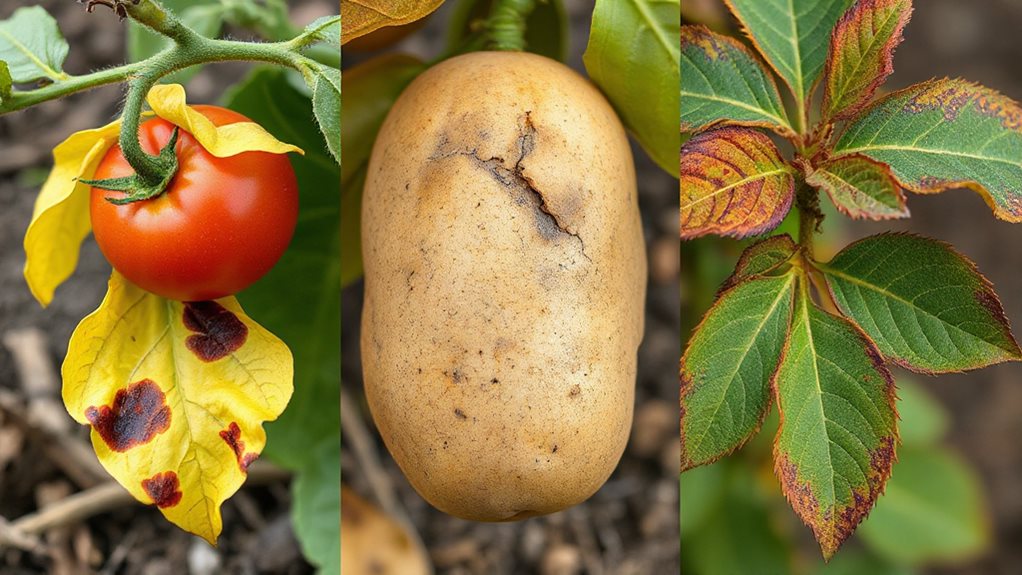
You’ll notice tomato leaves starting to bronze, with yellow edges and necrotic spots between the veins, especially on older growth.
As potassium runs low, your apple fruits may ripen unevenly, showing discolored patches and reduced size due to poor nutrient flow.
Watch for these signs during fruit set, since that’s when potassium demand spikes in both crops.
Grapevines also show browning when nutrient balance or watering is off, so check soil and watering practices for soil testing and other issues.
Tomato Leaf Bronzing
Often, potassium deficiency reveals itself first in older tomato leaves, where you’ll notice a distinct bronzing on the upper surfaces.
You’ll see leaf margins turn brown and curl, while interveinal areas fade to pale gray.
Yellow and orange patches develop, and necrotic spots appear as symptoms progress.
Leaves cup upward, with veins turning brownish-gray, and fruit ripens unevenly, showing green patches near stems.
Apple Fruit Discoloration
While tomato leaf bronzing clearly signals potassium deficiency in solanaceous crops, fruit-bearing trees like apples show distinct symptoms that affect both foliage and fruit quality.
You’ll notice poor color development, reduced sugar content, and weak flavor in apples, along with undersized, poorly colored fruit that drops early.
Tan or brown leaf edges often accompany these issues, signaling underlying nutrient stress that impacts storage and taste.
What Causes Potassium Deficiency: and How Can You Fix It?
When potassium levels in your plants start to drop, the problem often stems from a combination of soil, chemical, and environmental factors that restrict availability or hinder uptake. Sandy or chalky soils leach potassium quickly, while pH imbalances and excess calcium or nitrogen limit absorption.
Fix it by testing soil, adjusting pH to 6.0, using balanced fertilizers, improving drainage, and avoiding overwatering or compaction to restore nutrient flow.
Final Note
You’ll notice potassium deficiency first in older leaves, where yellowing and scorching begin at the edges. This nutrient shortage weakens stems, stunts growth, and reduces fruit size and yield. Crops like tomatoes, potatoes, and apples show distinct symptoms, from blotchy ripening to poor tuber quality. The cause often lies in poor soil supply or imbalance. You can correct it by applying potassium-rich fertilizers and maintaining proper soil pH, ensuring your plants regain strength and productivity efficiently.

Nathan McPhail is a garden and home DIY expert who writes practical, easy-to-follow advice for homeowners and gardeners. Through Yardique, he shares hands-on tips covering gardening, lawn care, landscaping, home improvement, repairs, tools, and outdoor living. His focus is on helping readers solve everyday household and yard problems with straightforward guidance, useful techniques, and practical solutions.